Chickens usually get aggressive when you crowd them, shuffle the pecking order, or leave them competing for food, water, roosts, or nests. Stress from bright lights, loud noise, illness, parasites, injuries, or sudden changes can also make them peck, chase, and fight. You can prevent this by giving them more space, spreading out feeders and waterers, keeping routines calm, and checking for health problems early. A few simple fixes can change flock behavior fast and more.
Common Causes of Chicken Aggression
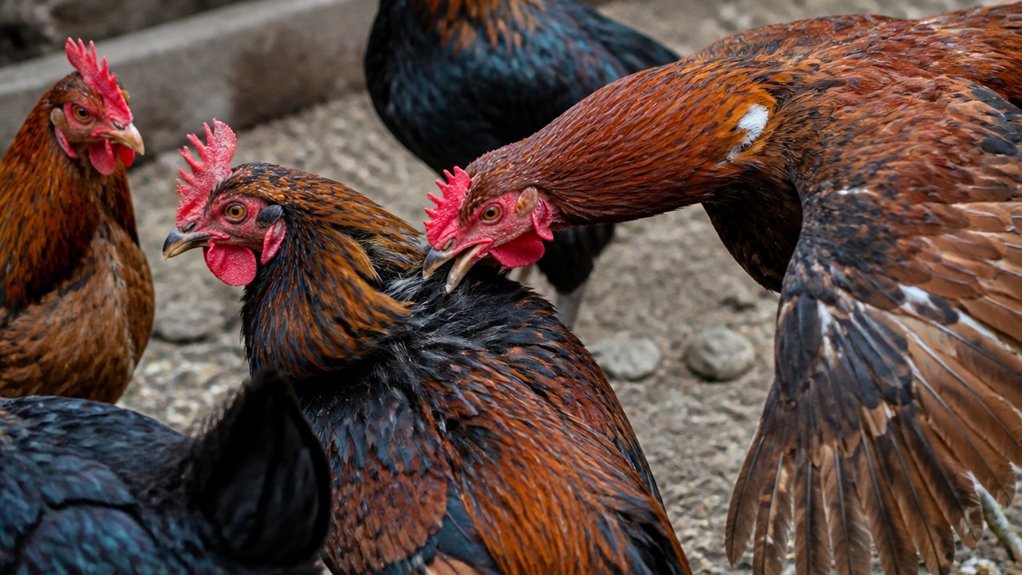
Chicken aggression often starts with a few common stressors: overcrowding, competition for food or water, lack of space, and changes in the flock’s pecking order.
You may also see trouble when birds can’t escape dominant hens or when new chickens join too quickly. Illness, parasites, and injuries can make a chicken cranky and trigger pecking. Bright lights, loud noise, and sudden routine changes can raise tension, too.
If you handle birds roughly or let boredom build, they may redirect frustration toward flock mates. Watch for feather pulling, chasing, and repeated pecking, because these usually signal a deeper problem. By spotting these causes early, you can adjust conditions before aggression spreads and harms the whole flock. Proper saddle fitting can also help reduce injury and stress during aggressive interactions.
How Crowding and Feed Stress Chickens
When birds are packed too tightly, stress rises fast because they can’t move away from each other, establish space, or escape a pushy flock mate. You’ll notice more jostling, feather pulling, and restless pacing when the coop feels cramped.
Crowded birds can’t get space, so stress builds fast and jostling, feather pulling, and pacing increase.
Limited feeders and waterers add pressure, so weaker birds get bumped aside and miss meals. That hunger stress makes everyone sharper and less patient.
- Give each chicken enough room to walk, stretch, and rest without constant contact.
- Spread out feed and water stations so birds don’t have to compete in one spot.
- Keep supplies full and clean so birds don’t associate mealtime with frustration.
- Using gravity chicken feeders for weekends away can help ensure consistent feed delivery, reducing competition and stress during your absences.
When you reduce crowding and make feed easy to reach, you lower tension and help your flock stay calmer, healthier, and far less likely to lash out.
Why the Pecking Order Turns Violent
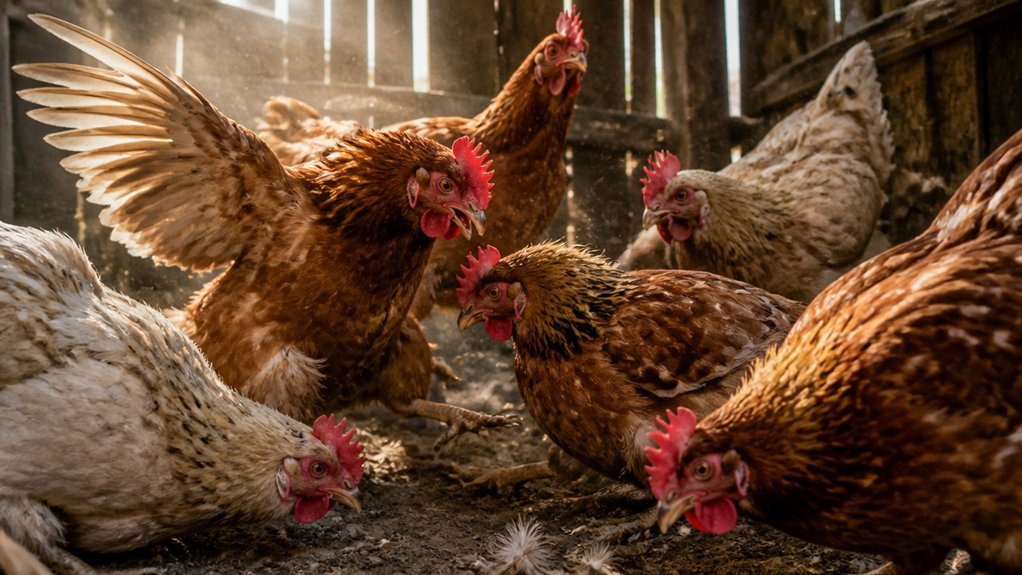
When the dominance hierarchy shifts, your chickens can turn from cautious rivals into outright attackers. A lack of enough pecking enrichment or appropriate pecking blocks can increase boredom and frustration, leading to more aggressive behaviors. If space gets tight or resources run short, they can’t keep peace and start fighting harder for access. That tension often turns the pecking order violent.
Dominance Hierarchy Shifts
Even a stable pecking order can turn violent when the flock’s balance changes. When you add a new bird, remove a leader, or separate hens and reunite them, every chicken starts testing rank again. You’ll often see chasing, chest bumping, and sharp pecks as each bird tries to claim its place. A change in band size or the way birds are identified can sometimes influence how quickly they adjust to new hierarchies. Handle these shifts carefully:
- Introduce newcomers slowly so hens can adjust without a full fight.
- Watch for repeated targeting, because one bird may be bullied while others copy the behavior.
- Recheck the flock after any disruption, since former leaders can lose status fast.
If you step in early, you can calm the group before the competition turns into lasting aggression.
Space And Resource Stress
Crowding and shortages can turn the pecking order into a flashpoint, because chickens guard the basics they need most: feeder space, water, roosts, and nesting boxes.
When you pack birds too tightly, the stronger hens can block weaker flockmates from eating or drinking, and that stress quickly sparks pecking, chasing, and feather pulling. You’ll also see fights flare when perches are too few or nests fill up at the wrong time.
To calm things down, give each bird enough room, add extra feeding and watering stations, and spread resources so no single spot becomes a bottleneck. You should watch for bullied birds, then separate injured or targeted chickens fast.
Using appropriate coop hardware, such as secure latches and properly designed doors, can help prevent raccoon and predator interference that might also contribute to stress and aggression among your flock.
Better spacing lowers tension, protects access, and keeps aggression from becoming routine.
How to Prevent Chicken Aggression
You can prevent chicken aggression by keeping your flock calm and reducing stress in the coop. Make sure they’ve got enough space to move, eat, and roost without crowding. Providing adequate ventilation helps maintain fresh air circulation, which can reduce territorial disputes and overall tension among hens. When you meet those needs, you lower tension and cut down on fights.
Reduce Flock Stress
Stress often triggers pecking, chasing, and bullying, so keeping your flock calm is one of the easiest ways to reduce aggression. You can do that by sticking to a steady routine, because chickens feel safer when feeding, cleaning, and coop checks happen at consistent times.
- Minimize loud noises and sudden movements around the flock.
- Keep handling gentle and brief, especially with nervous birds.
- Watch for heat, hunger, thirst, or illness, then fix problems fast.
- Ensuring proper electrolyte balance in their water can help reduce stress-related behaviors during hot weather.
You should also avoid introducing too many changes at once, since unfamiliar birds, new equipment, or shifting schedules can unsettle them. When you lower stress, you help your chickens stay relaxed, focused, and less likely to pick on each other.
Provide Proper Space
When chickens don’t have enough room, they’re more likely to peck, chase, and compete over food, water, and roosting spots. Give each bird enough coop and run space so they can move, stretch, and rest without crowding.
Keep feeders and waterers spread out to reduce guarding and make it harder for one hen to dominate the group. Add extra roosts, nesting boxes, and shaded areas so birds can choose different spots instead of fighting for the same one.
If you keep a mixed-age flock, separate young birds until they’re big enough to hold their own. You should also expand their range during the day if possible. More space lowers tension, supports healthy behavior, and helps your flock stay calmer and more balanced.
Providing walk-in coop features like multiple access doors and removable trays also makes cleaning easier, maintaining a healthier environment that reduces stress and aggression.
How to Calm Aggressive Chickens Safely
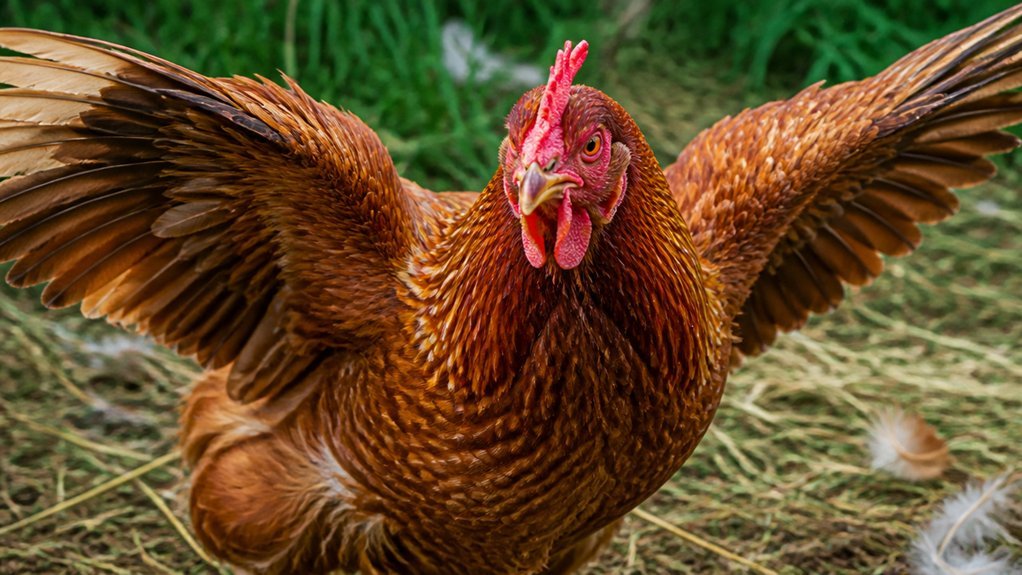
If a chicken starts acting aggressively, stay calm and move slowly so you don’t escalate the situation. Keep your body low, avoid staring directly, and give the bird space to retreat.
Stay calm, move slowly, and give the bird space to retreat without escalating aggression.
You can use a lightweight barrier, like a board or broom, to guide it away without grabbing.
- Block and redirect: Step between birds, then separate the trigger bird from the flock.
- Use quiet handling: Speak softly, move steadily, and avoid sudden motions that can raise stress.
- Reward calm behavior: Offer feed after the bird settles, so it links peace with comfort.
Protect your face and hands, and wear gloves if you need to move a bird. Consistent calm responses help reduce tension and keep your flock safer. Proper harness fitting and safe handling techniques can also prevent triggering aggression in your chickens.
When Aggressive Chickens Need a Vet
Sometimes aggression isn’t just a behavior issue—it can signal pain, illness, or injury. If your chicken suddenly attacks flockmates, isolates itself, stops eating, limps, or shows swelling, wounds, coughing, diarrhea, or pale combs, you should call a vet.
You also need help if aggression starts after an egg-laying problem, a head injury, or a possible parasite burden. Don’t wait when the bird keeps worsening or you can’t spot the cause.
A vet can check for infection, fractures, respiratory disease, mites, or reproductive disorders and guide treatment before the problem spreads. If injuries or pecking wounds are evident, applying a gentle, non-stinging wound spray like poultry wound care can aid recovery and reduce further stress. While you wait, separate the bird, provide clean water, and keep handling gentle.
Quick care can protect the chicken’s health and reduce stress across the flock.
Frequently Asked Questions
Can Certain Chicken Breeds Be Naturally More Aggressive?
Yes, you can find some chicken breeds that act more aggressive than others, especially roosters. You’ll notice game breeds, Leghorns, and some ornamental birds can be feistier, but handling and breeding also shape behavior.
Does Rooster Age Affect Aggressive Behavior?
Yes, you’ll often notice roosters become more assertive as they mature, especially around 6 to 12 months. You can reduce aggression with consistent handling, enough space, and avoiding triggers like crowding or competing roosters.
Can Weather Changes Make Chickens Fight More?
Yes, weather changes can make your chickens fight more. Heat, cold, storms, and sudden pressure shifts stress them, so they peck and chase more. You can reduce conflict with shade, shelter, fresh water, and space.
Are Aggressive Chickens Safe Around Children?
Not always; you should supervise children closely around aggressive chickens, since they can peck, flap, and scratch. You can reduce risk by separating the bird, teaching calm handling, and using barriers or adult-only access.
Can Aggression Spread to Other Flock Members?
Yes, one aggressive bird can trigger pecking, bullying, and stress in others, especially if you don’t intervene. You should isolate the aggressor, add space and resources, and watch the flock closely.
In Summary
If you want calmer chickens, start by spotting what’s driving the aggression: crowding, feed stress, or a shaky pecking order. Give your flock enough space, steady food and water, and plenty of enrichment to keep them busy. Watch for bullied birds and separate anyone who’s hurting others. Handle aggressive chickens calmly and safely, and call a vet if behavior changes suddenly. With the right care, you can help your flock stay peaceful.