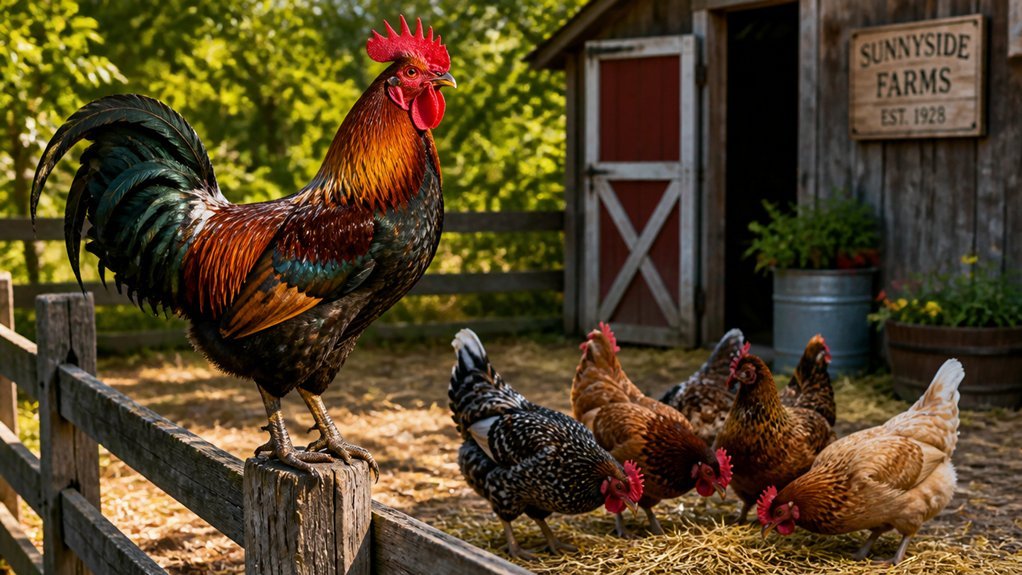
Roosters help shape your flock’s social life by guiding hens, settling tension, and setting clear boundaries. You’ll often see them use posture, crowing, and steady movement to show rank and keep order. They may direct hens to food, interrupt bullying, and signal when the flock should regroup. A good rooster can reduce stress and improve harmony, while an aggressive one can upset it. Keep going, and you’ll see how they do it.
Roosters’ Role in Chicken Social Life
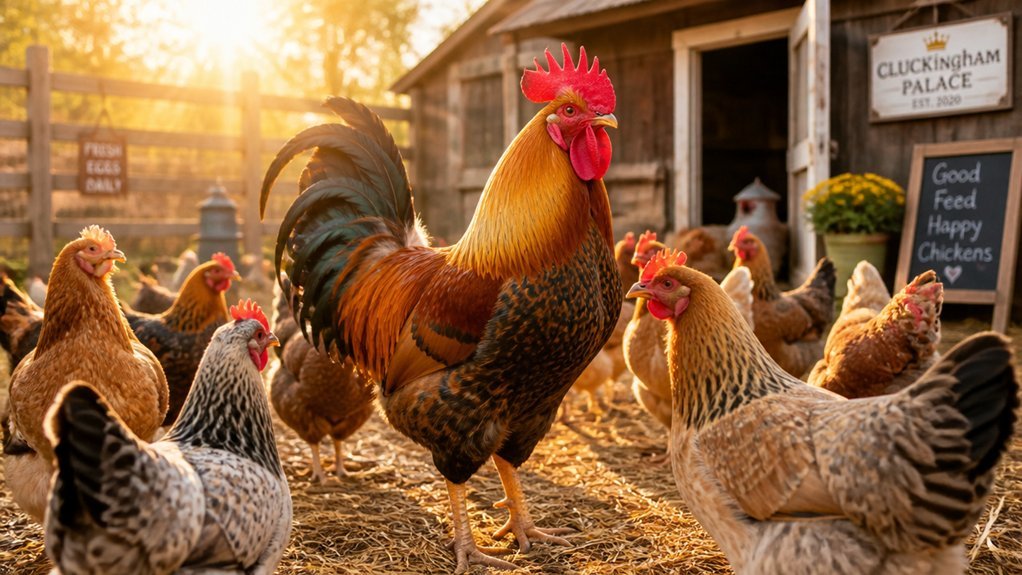
Roosters often shape the social order of a flock by guiding movement, signaling danger, and settling disputes before they escalate. You’ll notice that a rooster helps keep hens and younger birds organized, especially when space, food, or nesting spots get crowded.
He may step between squabbles, assert rank, and calm tension with confident posturing. In a stable flock, you can see his presence reduce chaos because other chickens often follow his lead and adjust their behavior.
He also protects the group by staying alert and checking for threats, which lets the flock stay together more safely. When you understand his role, you can read flock dynamics more easily and manage your birds in a way that supports balance, security, and smoother daily interaction. Electrolytes and vitamins are vital to help keep both roosters and hens healthy during periods of stress like heat waves, ensuring their social stability remains intact.
How Roosters Communicate With the Flock
You’ll notice roosters use sharp alarm calls to warn the flock about danger and keep everyone on alert. They also rely on posture and body language to signal confidence, stress, or calm, so you can read their mood if you watch closely. By using these cues well, they help keep the flock steady and harmonious. Additionally, roosters may display specific behaviors like raising their combs or spreading their wings as signals of dominance or reassurance, supporting flock harmony and cohesion.
Alarm Calls And Alerts
When danger looms, roosters often become the flock’s early warning system, sounding sharp alarm calls that alert hens and chicks to stay close and take cover.
You’ll hear different calls for different threats, and those changes help you respond fast. A sudden, repeated cry can signal a hawk overhead, while a lower, urgent call may warn of trouble on the ground. By calling out, the rooster reduces panic and gives the flock a better chance to move as a group.
If you keep chickens, you can learn to recognize these sounds and notice when something nearby has changed. His alerts don’t just warn of predators; they also help you understand the flock’s mood and overall sense of safety.
Posture And Body Language
A rooster’s posture says a lot before he makes a sound. You can read his intent in the way he stands, struts, and turns his head. When he stretches tall, he’s showing confidence; when he lowers his body, he’s signaling caution. His tail angle, wing tension, and step rhythm all help you understand what he’s communicating to the flock. Additionally, observing his perching behavior can reveal his comfort level and leadership status within the group.
- Upright stance: he’s alert and watchful.
- Bristled feathers: he’s keyed up or challenged.
- Head tilt: he’s checking movement nearby.
- Quick pacing: he’s directing attention and guiding direction.
You’ll notice these cues shift fast as he scans the yard. By watching his body language, you can follow his lead and see how he keeps everyone aware without a single crow.
Tending Flock Harmony
Even more than posture, a rooster helps keep the flock steady through small, timely signals. You can watch him cluck softly, stretch his neck, or give a quick alarm call to guide hens without panic. He’ll often find food, then announce it so the flock gathers in an orderly way. A rooster may also use specific vocalizations or body language to communicate his intentions, helping to maintain flock organization. If tension rises, he may step between birds, peck the ground, or change position to redirect attention. His sounds and movements help you see how he keeps routines clear and reduces confusion. When danger appears, he warns the group, and when all’s safe, he settles them again. By reading these cues, you can understand how a rooster supports harmony, spacing, and trust within the flock each day.
How Roosters Set the Pecking Order
You can see roosters use dominance signals like posture, crowing, and chest displays to show who’s in charge. They don’t just signal rank; they also enforce it by stepping in when another bird challenges their place. A clear identification system among the flock helps reinforce their authority and maintain order.
Dominance Signals
Roosters don’t just crow to announce themselves—they also use a range of dominance signals to establish who’s in charge. You’ll notice these cues in their posture, movements, and spacing. A rooster may stand taller, puff his feathers, or angle his body toward others to show confidence.
- Upright stance signals authority.
- Slow, deliberate strutting says he’s calm and certain.
- Wing drops or tail lifts can reinforce rank.
- Direct eye contact warns others to yield.
When you watch closely, you’ll see that these signals help keep the flock organized without constant conflict. By reading them, you can better understand how roosters communicate status and maintain social balance among chickens.
Order Enforcement
Those dominance signals don’t just show status—they help roosters enforce the flock’s pecking order in real time. You’ll see a rooster step between hens, lower his head, or give a sharp peck to redirect another bird’s move.
He doesn’t rule by brute force alone; he uses timing, posture, and repeated cues to keep everyone in line. If a younger rooster challenges him, he’ll respond quickly to remind the flock who leads access to food, space, and mates.
You may notice that this constant correction reduces chaos and limits serious fighting. In your flock, that order can make feeding and resting smoother, because each bird learns its place. When a rooster enforces rank consistently, the whole group settles into predictable, lower-stress social behavior. Proper use of hardware cloth ensures that the flock’s environment remains secure, supporting their social stability.
Rooster Behavior at Feeding Time

At feeding time, a rooster often steps in as a traffic director, moving hens away from crowded spots and claiming the best access for himself. You’ll notice he doesn’t just eat; he watches, waits, and signals when to peck or step aside. His presence can keep the group moving, so you see less jostling and fewer squabbles around the feed. He checks the feeder first. He pecks quickly, then looks around. He nudges hens from tight spaces. He settles the flock into a looser rhythm. You may also see him pause and let a favored hen eat near him. That simple sharing helps shape daily interaction and keeps feeding time orderly without much fuss. Additionally, a confident rooster’s (push for dominance) can influence flock dynamics and social hierarchy, promoting a more organized feeding environment.
How Roosters Protect the Flock
You’ll often hear a rooster sound the alarm with sharp warning calls when danger’s near. Those calls help the flock react fast and stay together. A rooster’s bold defense not only alerts hens but also acts as a natural predator deterrent, protecting the entire flock from potential threats. He’ll also face predators head-on, using bold defense to give the hens time to get to safety.
Warning Calls
When danger creeps near, roosters often sound a sharp warning call to alert the flock and break their normal routine.
You’ll notice the hens freeze, lift their heads, and listen closely. That instant signal helps everyone stay aware and react fast.
- You hear a sudden change in tone.
- The flock stops pecking and scans around.
- Hens move closer together for safety.
- The rooster keeps calling until the threat passes.
His voice acts like a shared alarm system, letting you see how chickens communicate without chaos.
It also keeps the group organized, because each bird knows when to stay still and when to move. With one call, he turns scattered activity into quick, coordinated attention.
Additionally, the predator deterrent lights can help reduce the likelihood of actual threats approaching, supporting the rooster’s efforts in keeping the flock safe.
Predator Defense
A rooster does more than crow when danger appears—he steps in to protect the flock. You’ll often see him stand tall, scan the yard, and react fast when a hawk, fox, or stray dog gets too close.
He may freeze, sound an alarm, or charge to draw the threat away from hens and chicks. In a flock, this behavior gives the others time to run for cover. You can also notice how he keeps hens grouped together, which helps him guard them more effectively.
His bold moves don’t guarantee safety, but they improve the flock’s odds. When you understand this role, you’ll see that predator defense is a key part of how roosters support chicken socializing and survival. Proper placement of mobility features and secure fencing can further enhance their ability to protect the flock.
How Roosters Affect Hen Bonds
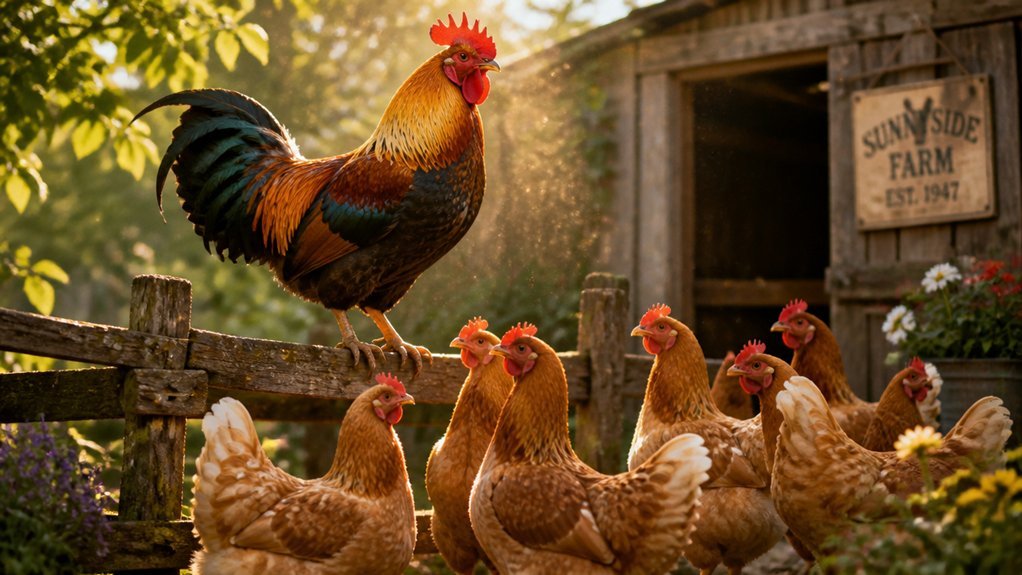
Roosters can strengthen hen bonds by creating a clear social structure that hens quickly learn to navigate. You’ll often notice hens clustering more calmly when a rooster keeps order, because he reduces petty squabbles and helps each bird find her place.
Roosters can strengthen hen bonds by creating calm, predictable order that helps hens settle into the flock more easily.
That steadier environment lets hens interact with less stress and more trust.
- He can interrupt bullying before it escalates.
- He may guide hens toward shared foraging spots.
- He can signal when the flock should regroup.
- He often keeps routines predictable, which supports harmony.
When you watch your flock, you’ll see that hens don’t bond because the rooster forces friendship; they bond because his presence makes social life smoother. With fewer disruptions, they can form stronger, more consistent relationships with one another.
Rooster Courtship and Mating Signals
As you watch a rooster court the hens, you’ll notice that his signals are usually clear and deliberate: a lowered wing, a tidbit of food, a soft vocal call, or a careful step toward a hen he’s interested in. You can read these gestures as his way of announcing intent without forcing attention.
He’ll often circle, pause, and display before moving closer, letting the hen decide whether to accept him. If she stays calm and follows, he’s likely succeeded. If she turns away, he usually backs off and tries another hen.
You may also hear brisk clucks or see him stand tall to look more appealing. These courtship signals help hens assess him quickly and keep flock interactions orderly.
Roosters and Play Behavior
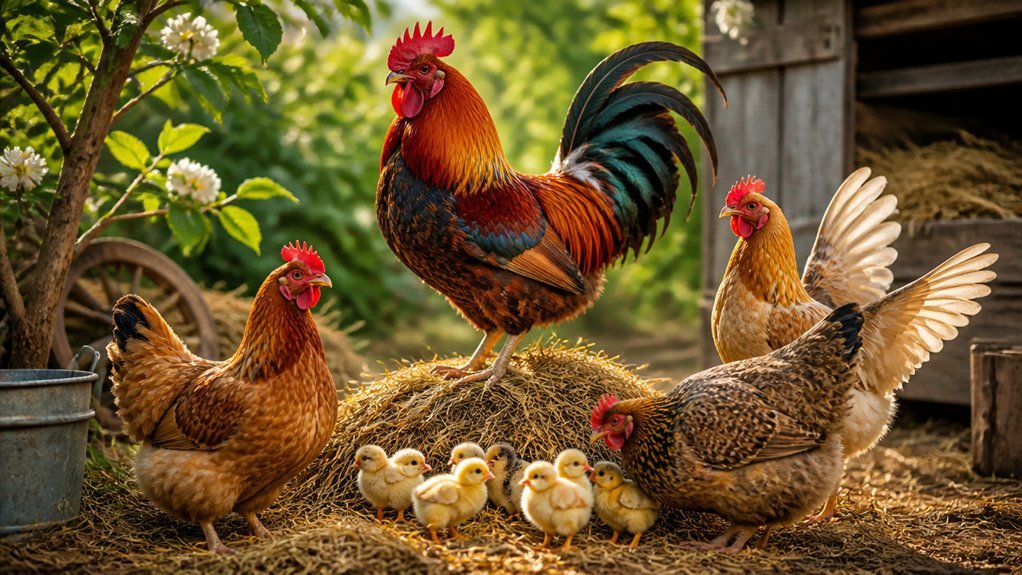
Though they’re often seen as serious flock leaders, roosters also join in playful, low-stakes behavior that helps keep social bonds relaxed. You’ll notice them chasing leaves, pecking lightly at the ground, and darting after hens in short bursts that look more like games than chores.
These moments help you read flock mood and see who’s comfortable together.
- They test space without pressure.
- They invite others into brief chases.
- They practice quick footwork and balance.
- They signal confidence through calm movement.
When you watch closely, you’ll see play isn’t random; it keeps daily flock interactions lively and helps everyone stay connected.
When Rooster Aggression Becomes a Problem
Playful chasing and pecking can look harmless, but you need to watch for the point where a rooster’s behavior stops being social and starts becoming dangerous.
If he rushes you, lowers his head, flares his feathers, or jumps with spurs aimed at your legs, he’s no longer just showing confidence. You may also notice he blocks hens from feed, pecks hard enough to draw blood, or won’t back down when you step in.
At that point, you should respond quickly and calmly. Keep your movements steady, use a barrier when needed, and don’t reward lunging with attention. Consistent handling helps, but repeated attacks signal a bird that’s unsafe around people.
Protect your flock, watch his triggers, and correct trouble before it escalates.
What Happens When You Keep Multiple Roosters
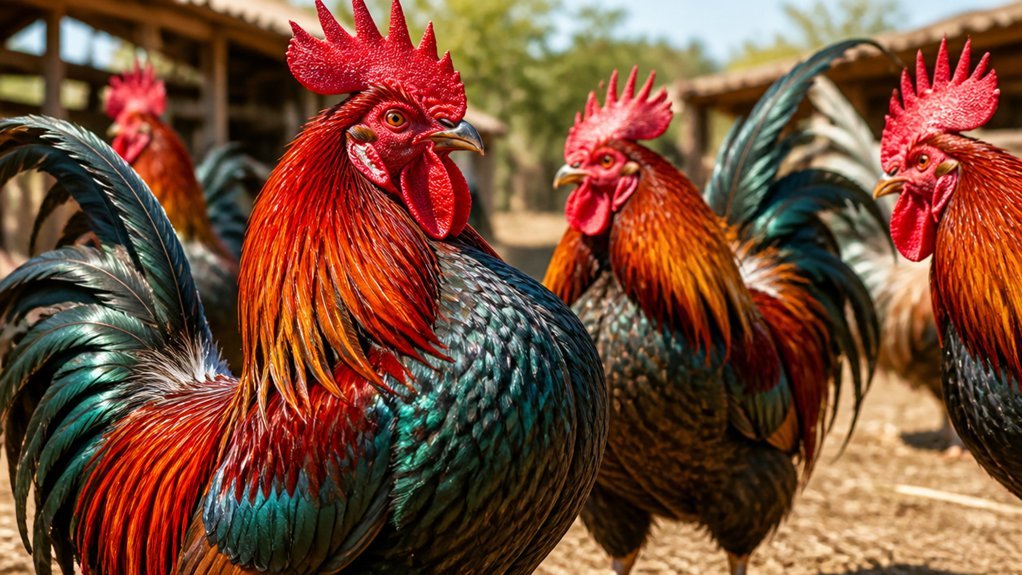
Keeping multiple roosters can work, but it usually changes the flock’s social balance fast. You’ll notice them sorting out rank, territory, and access to hens, and that can lead to constant posturing.
- You may see more sparring.
- One rooster often claims the best space.
- Subordinates can stay alert and avoid conflict.
- The flock may become noisier and more tense.
If you keep them together, give them room, cover, and separate feeding spots so they’re not forced into competition. You’ll get fewer clashes when each bird can move away instead of fight for status.
Careful observation matters, because some roosters settle into a workable hierarchy while others never relax.
Do Hens Need a Rooster to Socialize?
Not really—hens don’t need a rooster to socialize. You’ll usually see them building their own pecking order, sharing food, dust-bathing together, and keeping close contact through clucks and body language.
A rooster can add extra structure to the flock, but hens can still form strong bonds and communicate well without one. If you watch carefully, you’ll notice them grooming, foraging, and resting in familiar groups. They often prefer certain companions and may stick together when they feel uneasy.
Your role is to give them space, enrichment, and enough room to interact naturally. That setup supports healthy social behavior far more than a rooster’s presence alone. Social life in chickens comes from flock dynamics, not from one bird leading the rest.
Choosing a Rooster for Your Flock
When you choose a rooster for your flock, look for calm, alert behavior rather than aggression. You want a bird that watches over hens without bullying them or you.
Choose a calm, alert rooster who protects the flock without bullying hens or people.
Pick one with bright eyes, steady posture, and smooth feathers, because these traits often show good health and confidence.
- Check how he treats hens during feeding.
- Watch for steady crowing, not constant noise.
- Handle him gently to see if he settles quickly.
- Ask about age, breed, and temperament from the breeder.
A good rooster can guide flock movement, warn of danger, and help keep order. Avoid birds that charge, peck hard, or chase everything. If you choose carefully, you’ll build a safer, calmer flock with better social balance.
Frequently Asked Questions
How Do Roosters Learn Flock Rules?
You learn flock rules by watching older birds, copying their pecking order, and testing boundaries. Roosters absorb cues through repeated interactions, harsh corrections, and rewards, so you’ll see them quickly adjust behavior and social timing.
Do Roosters Recognize Individual Hens?
Yes, you’ll usually see roosters recognize individual hens by sight, voice, and behavior. You’ll notice them favor familiar hens, court preferred mates, and respond differently to each hen’s signals and rank in the flock.
Can Roosters Change Behavior With Seasons?
Yes, you’ll often see roosters change behavior with seasons: they crow more, guard harder, and court hens when breeding heats up. In winter, they may relax a bit and conserve energy.
What Sounds Do Roosters Make at Night?
You’ll hear roosters crow, though they’re usually quieter at night. They may give short warning clucks, low chirps, or restless calls if something disturbs them, but a full crow often means dawn’s coming.
How Long Do Roosters Live?
Roosters usually live 5 to 8 years, though you can sometimes keep them 10 years or more with good care, proper diet, safe housing, and low stress. Their lifespan varies by breed and health.
In Summary
Roosters play a big part in your flock’s social life. They help keep everyone connected with calls, body language, and clear pecking order cues. They may guide hens to food, watch for danger, and keep the group organized. But you’ll also need to watch for aggression, especially if you keep more than one rooster. In many flocks, hens can socialize just fine without one, but the right rooster can add balance and structure.