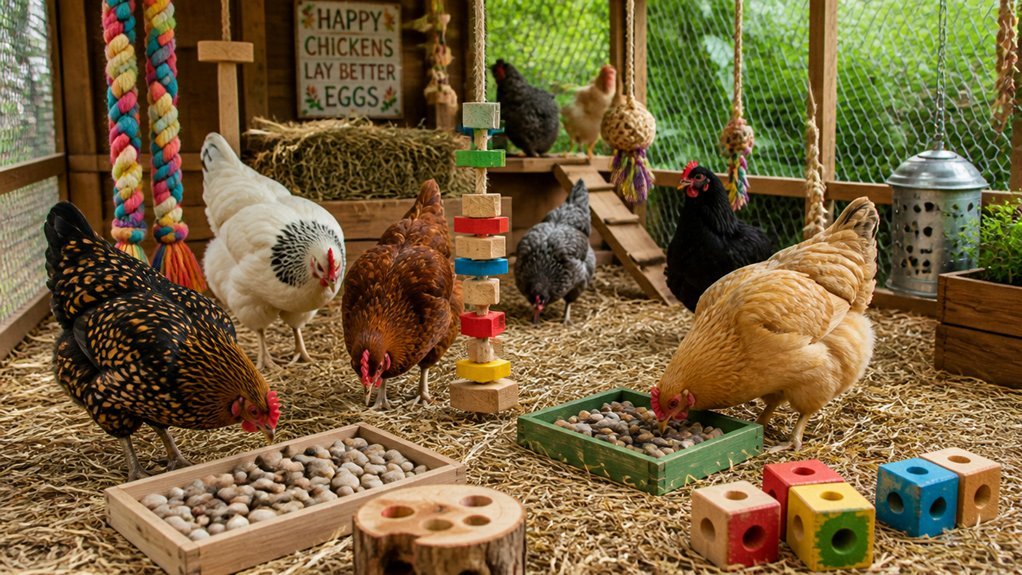
You can use enrichment to help chickens socialize by giving them shared things to do, like pecking blocks, foraging mats, hanging greens, dust baths, and simple toys. Place multiple feeders, waterers, perches, and hideaways around the coop so birds can relax without crowding. Rotate items often to keep them curious and engaged. Start with short, calm group sessions and watch for relaxed body language. With a few smart changes, your flock can become friendlier and more settled over time.
How Chicken Enrichment Helps Socializing

Chicken enrichment helps socializing by giving your flock shared activities that encourage calm, positive interaction instead of boredom-driven pecking or isolation. When you add varied, engaging experiences, your chickens focus on exploring together instead of competing over nothing.
They learn to watch, follow, and copy one another, which strengthens flock cohesion. Enrichment also reduces stress, and calmer birds’re more likely to tolerate close contact and share space without constant squabbles.
You’ll often notice shy hens becoming more confident when they’ve a group activity to join. That social support matters because chickens naturally rely on flock dynamics for safety and comfort.
Engaging with multi-level swing designs and interactive toys can further promote social bonding and physical activity, making the flock more harmonious overall.
How to Enrich a Chicken Coop
You can enrich your chicken coop by adding sturdy perches and roosts that give your flock places to rest and socialize.
Include a dust bath area so they can clean themselves and stay comfortable.
Add hideaways and simple toys to keep them busy, reduce stress, and encourage natural behavior.
Using appropriate roosting bars can also improve their comfort and safety during overnight rest.
Perches And Roosts
When you add perches and roosts, you give your flock more than a place to sleep—you create vertical space that encourages natural chicken behavior, reduces boredom, and helps birds sort out their social order.
Place sturdy roosts at different heights so confident hens can choose higher spots while shy birds still have options. Use smooth, rounded edges to protect feet, and space bars wide enough to prevent crowding. You can also vary perch widths to challenge balance and keep birds active.
Install them securely so they don’t wobble when chickens jump up or down. By offering several elevated choices, you encourage movement, reduce squabbles, and make your coop feel more interesting and safe. Additionally, incorporating proper ventilation around roost areas helps maintain a healthy environment during different weather conditions.
Dust Bath Areas
A good dust bath gives hens a place to groom themselves, control pests, and relax. You can create one by filling a shallow box, tire, or corner of the run with dry soil, sand, or wood ash. Keep the mix loose and fine so your birds can toss it through their feathers.
Place the bath in a dry, sunny spot where rain won’t turn it muddy. Check it often and top it off when scratching scatters the material. You’ll help your flock stay cleaner, reduce mites, and spend time together in a natural behavior that builds comfort.
If the area gets damp, replace the wet material right away. A well-kept dust bath keeps your coop healthier and your hens more content every day, especially if you choose a bottomless design that ensures proper drainage.
Hideaways And Toys
Hideaways and toys give your flock places to retreat, explore, and stay mentally engaged. You can add simple shelters like wooden crates, low tunnels, or lean-to panels so timid birds can slip away from pecking mates. Place them where hens still see the rest of the coop, because feeling hidden without feeling isolated reduces stress. Using brightly colored and durable poultry leg bands can help identify birds quickly during enrichment activities or health checks. For toys, hang cabbage heads, mirror-safe shiny objects, or treat balls that release scratch grains slowly. Rotate items often so your chickens don’t lose interest. You can also offer branches for perching and leaf piles for pecking. These features encourage movement, curiosity, and calm social interaction. When your birds explore together, they build confidence, reduce boredom, and spend less time fighting.
Set Up Safe Flock Social Spaces
You can set up enclosed shared areas where your chickens can meet and move around safely together. Add shelter so they’ve got a calm place to retreat from sun, wind, or stress. Include perches too, so they can rest, watch each other, and feel secure while they socialize. Ensuring easy access with wide access doors helps reduce stress during cleaning and interaction times.
Enclosed Shared Areas
When you want to bring chickens together without triggering squabbles, an enclosed shared area gives the flock a safe place to explore, peck, and socialize under supervision.
You can use a fenced pen, covered run, or divided yard section to let birds see each other without full contact at first. Keep the space large enough for moving away from tension, but simple enough for you to watch every interaction. Add scattered treats, scratching material, or hanging greens to encourage calm activity and shared interest.
Introduce the birds briefly, then extend the sessions as they stay relaxed. If one chicken starts chasing or blocking others, end the meetup and try again later.
Consistent, low-pressure visits help birds build familiarity and reduce territorial behavior over time. Using enrichment activities like hanging vegetables or providing different textures can further promote positive social interactions.
Shelter And Perches
Provide shelter and perches in any shared chicken space so birds can relax without feeling trapped. You should place low roosts, boards, and hiding spots around the run so every hen can step away, rest, or watch calmly. Use multiple perches at different heights, but keep them easy to reach to avoid squabbles and falls. Add partial cover with shrubs, panels, or tarps so timid birds don’t feel exposed. Consider weather-resistant materials to ensure the shelter withstands changing conditions and provides consistent protection.
| Item | Purpose | Placement |
|---|---|---|
| Low perch | Resting | Near feed |
| Tall perch | Observation | Center area |
| Hide box | Escape | Quiet corner |
| Shade panel | Comfort | Sunny side |
| Ramp | Access | Beside perch |
Check for sharp edges, wobble, and crowding. Safe shelter helps your flock mingle, settle, and build trust.
Use Treats to Build Chicken Trust

Start by offering small, healthy treats so your chickens learn to associate you with something positive. Hold out a few bits of leafy greens, oats, or mealworms, and let them come to you at their own pace. When you stay calm and consistent, you show them you’re safe. Use the same gentle approach each day so trust can grow naturally. A high-quality dried mealworm, like those with a crisp texture and no artificial additives, can make a great reward. Nutritional quality is key to maintaining their health while building trust.
- You lower fear when you move slowly.
- You spark curiosity when you speak softly.
- You strengthen confidence when treats appear reliably.
- You deepen trust when you never chase or grab.
Keep sessions brief and relaxed, then stop before they lose interest. Over time, your flock will start looking to you with anticipation instead of caution, which makes every interaction easier and kinder.
Try Toys That Encourage Pecking
You can keep your chickens engaged with pecking blocks that give them a safe outlet for natural behavior. Hanging treat toys add movement and a fun challenge, while foraging mats encourage them to scratch and peck for hidden rewards. Incorporating a variety of interactive enrichment features can further stimulate their natural instincts and promote healthy behaviors. These toys help build confidence and make social time more interactive.
Pecking Blocks
Pecking blocks give chickens a safe, satisfying way to peck, scratch, and stay busy. You can place one in a run or coop to spark natural foraging and reduce boredom.
When your birds discover the block, you’ll often see calm, focused activity replace feather fussing and restlessness.
- You help ease tension.
- You give shy hens something rewarding to explore.
- You encourage healthy movement and curiosity.
- You create moments that feel peaceful for both you and your flock.
Choose a sturdy block that fits your birds’ size and pecking strength. Rotate its location sometimes so it stays interesting.
If you notice steady use, you’re giving your chickens a simple enrichment tool that supports better social behavior without drama or confusion.
Hanging Treat Toys
Hanging treat toys give your flock a moving target that rewards natural pecking and keeps curious birds engaged. You can fill them with scratch grain, cabbage, or mealworms, then hang them at beak height where hens can reach without crowding. This setup encourages turn-taking, so shy birds get a chance to join in while bold birds stay busy.
Rotate the toy’s contents and location to keep interest high and reduce squabbling. Choose sturdy, easy-to-clean designs that swing a little when pecked, because motion makes the challenge more fun. Supervise new toys at first, and remove anything damaged.
With a well-placed hanging treat toy, you’ll add variety, spark friendly competition, and give your flock a simple way to interact.
Foraging Mats
Foraging mats turn snack time into a low-stress search game, giving your chickens something to peck, scratch at, and investigate.
You can spread pellets, seeds, or chopped greens across the mat, and your flock will gather fast. This shared activity helps timid birds join in without pressure and gives bolder hens a calm outlet for energy.
- You’ll see curious pecks and relaxed body language.
- You’ll reduce boredom-related squabbles.
- You’ll encourage gentle group interaction.
- You’ll build trust through repeat feeding routines.
Place the mat on clean, dry ground and rotate foods often. If one bird guards the spot, offer two mats so everyone gets a turn.
Add Perches, Dust Baths, and Hideouts
When you add perches, dust baths, and hideouts, you give your chickens more than entertainment—you give them ways to feel secure, stay active, and interact on their own terms.
Place perches at different heights so birds can choose spots that match their confidence. Use sturdy, narrow bars or branches so they can balance comfortably.
Offer a dry dust bath in a sheltered area, and your flock will scratch, roll, and preen together, which builds calm social routines.
Add simple hideouts like crates, panels, or shrubs so timid birds can step away without feeling trapped. When chickens can move between open and sheltered spaces, they’re more likely to relax around one another.
Rotate these features occasionally to keep the setup fresh and encourage gentle exploration.
Introduce New Chickens With Enrichment

You can introduce new chickens in a shared space that feels safe and familiar.
Add enrichment like treats, perches, and dust baths so they stay busy and less focused on each other. This helps lower तनाव?
Safe Shared Spaces
To help new chickens settle in safely, set up a shared space that offers plenty of enrichment and clear escape routes. You can reduce tension by giving every bird room to choose distance, perch, or hide. Use sturdy barriers, multiple feed and water points, and low platforms so no chicken feels trapped.
Keep the area calm and bright enough for easy monitoring, but not harsh.
- Place scatter-fed greens in separate spots.
- Add a tunnel or crate for quick retreat.
- Offer dust-bath material in more than one corner.
- Rotate safe objects so the flock can explore without crowding.
Watch body language closely; if feathers flare or chasing starts, widen the space. When birds can move freely, trust grows and introductions feel less stressful.
Distraction Through Enrichment
Keeping new chickens busy can lower tension during introductions, because interest in food, novelty, and movement often beats pecking at a newcomer. You can scatter scratch grains, hang greens, or offer a treat ball so the flock focuses on the environment instead of the new bird.
Move perches, add straw piles, or place safe mirrors and branches to spark curiosity. When you introduce the newcomer, keep enrichment simple and familiar so stress stays low. Watch how they react, and remove anything that causes guarding or frantic chasing.
You’re aiming for calm engagement, not chaos. By giving them something rewarding to investigate, you help them share space, build confidence, and settle into a more peaceful flock routine.
Prevent Pecking Order Fights
When chickens are introduced to new flockmates, pecking order disputes can flare up quickly, so give them plenty of enrichment to redirect that energy.
When chickens meet newcomers, enrichment helps redirect pecking order tensions and keeps the flock calmer.
You can lower tension by offering scattered scratch, hanging greens, and a few safe pecks that keep busy beaks occupied. Rotate toys and add fresh bedding so the flock has something new to inspect instead of each other.
- Toss feed in wide areas to reduce crowding.
- Hang treats high enough to spark calm competition.
- Provide multiple water and food stations.
- Use sturdy obstacles so weaker birds can slip away.
These simple changes help you avoid frantic squabbles and keep introductions steadier.
When birds stay engaged, they’re less likely to challenge every newcomer and more likely to settle into a peaceful routine.
Watch Chicken Body Language During Play
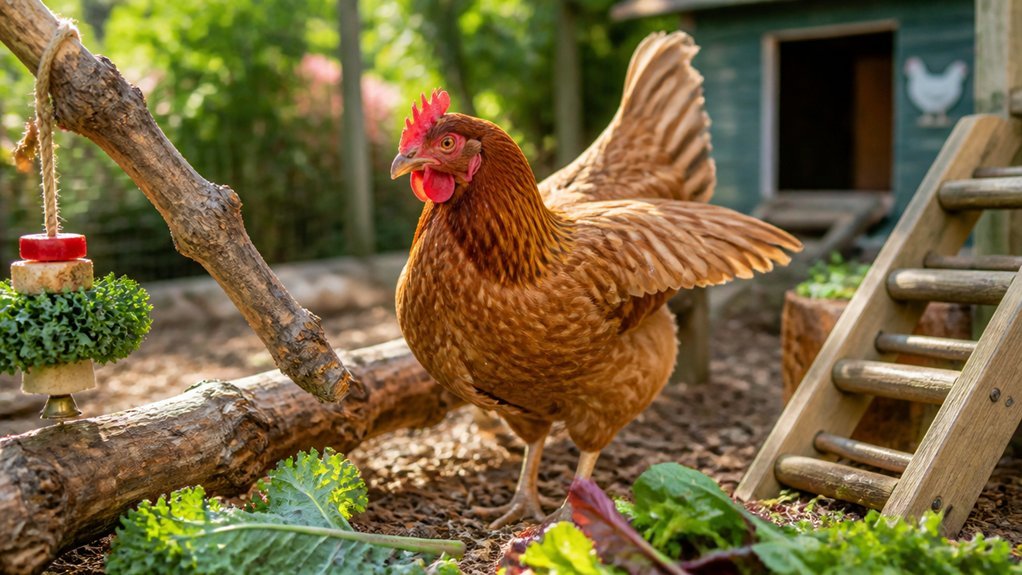
Watch closely while your chickens play, because their body language tells you whether the fun is staying friendly or turning tense. You can spot relaxed birds by loose feathers, steady movement, and curious pecks at toys or treats.
When they flap lightly, chase briefly, or swap positions, they’re usually just practicing social skills. If one bird freezes, ducks its head, or keeps edging away, step in before the play gets rough.
Raised hackles, lunging, pinned eyes, and sharp pecks mean stress, not fun. You should also watch for one chicken blocking access or guarding enrichment too hard.
Shift the item, add space, or pause the session so everyone can reset. By reading these signals, you help your flock enjoy enrichment without turning playtime into conflict.
Choose Enrichment for Different Ages
Chicks, pullets, and adult hens need different kinds of enrichment, so match the activity to their age and ability. You’ll keep them safer and happier when you tailor each option to their stage.
Tailor enrichment to chicks, pullets, and hens, and you’ll keep every bird safer, calmer, and happier.
- Offer chicks shallow peck trays with fine grit. They’ll feel curious, busy, and secure.
- Give pullets low perches, soft hurdles, and hanging greens. They can test balance without fear.
- Provide adult hens dust baths, sturdy boxes, and treat balls. They’ll relax, scratch, and bond.
- Choose calm group activities that fit every bird’s strength. You’ll reduce stress and help shy hens join in.
Watch for wobbling, hesitation, or crowding, then adjust. When you respect age differences, you build trust and encourage friendlier flock behavior.
Rotate Enrichment to Prevent Boredom

Swap out toys, perches, and treat puzzles regularly so your flock stays curious and engaged. When you rotate enrichment every few days, you give your chickens new sights, textures, and challenges without overwhelming them.
One week, hang leafy greens; the next, offer a mirror, a dangling cabbage, or a different foraging box. You can also move items to fresh spots so birds explore rather than ignore them.
Watch which objects draw the most pecks, scratching, or hopping, then keep those in rotation and retire the rest for a while. This simple habit helps your flock stay active, mentally sharp, and socially interested.
It also makes each return feel novel, so your chickens won’t treat enrichment like background clutter in their coop.
Stop Bullying With Better Coop Design
Rotating toys and treats keeps chickens interested, but a well-designed coop also helps keep the pecking order from turning mean. You can ease tension when every bird has room to move, hide, and feed without crowding.
Add multiple feeders, waterers, and roosts so no hen guards the whole space.
- Give timid birds escape routes so they don’t freeze in fear.
- Break up sightlines with panels or corners to cut chasing.
- Keep perches at similar heights to reduce status fights.
- Offer separate dust-bath and feed zones so calmer birds can rest.
When you build for choice, you protect confidence. Your flock feels safer, and safer birds act gentler.
Common Chicken Enrichment Mistakes
Even good enrichment can backfire if you make it too busy, too sudden, or too hard for your flock to use. You might crowd the run with toys, ladders, and hanging treats, then wonder why timid birds stay away.
You can also scare chickens by swapping items too fast; they need time to inspect new objects. Avoid enrichment that rewards only the boldest hen, because weaker birds’ll lose access and tension can rise.
Don’t use slippery, sharp, or unstable materials that invite injury. Skip treats that create mess without interest, since they attract pests and teach nothing useful.
Instead, choose a few simple options, place them where all birds can reach them, and watch how your flock responds before you add anything else.
Build a Daily Chicken Socializing Routine
Once you’ve kept enrichment simple and safe, you can use it as part of a steady socializing routine. Start at the same time each day so your chickens learn to expect you. Begin with calm talk, then offer a favorite treat or toy, and let them approach on their own. Keep sessions short so they stay curious, not stressed.
- Show up daily and stay gentle.
- Change one enrichment item to spark interest.
- Watch for relaxed clucks, pecks, and body language.
- End before they lose focus, so they’ll greet you tomorrow.
When you repeat this pattern, your flock builds trust, feels secure, and responds with more confidence. That consistency turns simple enrichment into a warm, rewarding bond.
Frequently Asked Questions
How Often Should I Replace Chicken Enrichment Items?
Replace chicken enrichment items whenever they’re worn, dirty, or ignored—usually every few weeks to monthly. You should rotate toys sooner if your flock gets bored, and you’ll keep them engaged, safe, and curious.
Can Enrichment Help Shy Chickens Become Friendlier?
Yes, you can use enrichment to help shy chickens become friendlier by creating positive interactions, reducing stress, and encouraging curiosity. You’ll need patience, but regular treats, toys, and gentle routines often build trust.
What Enrichment Works Best for Solo Backyard Chickens?
You’ll get the best results with food puzzles, scatter feeding, dust baths, perches, and safe foraging toys. You can rotate items often, so your solo chicken stays busy, curious, and less stressed.
Do Chickens Prefer Toys Over Natural Materials?
Chickens usually prefer natural materials over toys. You’ll often see them pecking leaves, grass, logs, dirt, and treats more enthusiastically than plastic objects. Still, you can offer both, since variety keeps them curious and engaged.
How Can I Tell if Enrichment Is Overstimulating My Flock?
You can tell enrichment’s overstimulating your flock if they crowd away, peck aggressively, freeze, pant, or stop eating and dust bathing. You should remove the stimulus, simplify the setup, and watch them settle.
In Summary
Enrichment helps you build a calmer, friendlier flock by giving your chickens safe ways to explore, peck, and interact. When you set up social spaces, offer treats, and rotate toys, you encourage trust and reduce boredom. A better coop layout can also cut bullying and stress. Keep your routine simple and consistent, and your chickens will feel more comfortable around you and each other every day.