Chickens form friendships because you get safer, calmer flock life when you stick with trusted birds. Familiar companions help you spot danger, share space, and reduce stress during feeding, roosting, and resting. You recognize each other by appearance, calls, and routine behavior, then strengthen bonds through grooming, closeness, and calm interactions. Stable pecking order and gentle introductions also help those ties grow, and there’s more to learn about how those bonds work.
Why Chickens Form Bonds

Chickens form bonds because social connection helps them feel safe, find food, and reduce stress. When you watch a flock, you’ll see that companionship shapes daily choices.
A bonded chicken often stays nearer to trusted flockmates, which can lower alarm and make movement through the coop smoother. You also help reinforce these ties by keeping routines steady, because predictable conditions encourage calm behavior.
Bonds support group cooperation around roosting, foraging, and resting, so birds don’t waste energy on constant tension. When one hen settles, others often follow, creating a more stable flock.
If you keep chickens, you’ll notice that social comfort improves overall well-being and helps each bird cope with changes in the environment more easily. Electrolyte balance plays a key role in maintaining hydration and reducing stress, further supporting their social bonds.
How Chickens Recognize Each Other
So how do flockmates tell one another apart? You’d be surprised how much they notice. Chickens use faces, body size, comb shape, feather patterns, and even voice to pick out familiar birds. If you keep a flock, you may see them memorizing these clues quickly. They also learn who usually appears nearby, so routine helps them sort friends from strangers. A hen can spot a familiar coop mate in a crowded yard because her brain stores visual details well. She may also respond to distinctive calls and movements. Additionally, chickens recognize each other through visual memory, enabling them to distinguish friends from foes. You’ll notice that repeated positive contact strengthens recognition, making daily interactions smoother. When chickens can identify one another, they waste less energy on uncertainty and can focus on eating, exploring, and staying comfortable together.
How Chicken Flock Hierarchy Builds Trust

Once flockmates can recognize one another, they can also settle into a clear pecking order, and that order helps the group feel safer. You’ll notice that each bird learns who yields first at feed, roost, and dust bath spots, so fewer arguments break out.
When the order stays consistent, chickens don’t need to test every interaction, and that predictability lowers stress. You can see trust grow because birds spend less energy guarding resources and more time moving together, foraging, and resting nearby.
A stable hierarchy also reduces confusion during small disruptions, like a new sound or sudden movement, because flockmates look to familiar leaders and follow established cues. In that calm routine, you get a flock that feels organized, secure, and more willing to share space without constant challenge. Proper identification methods, such as numbering, help maintain this stability by ensuring each bird’s role and status are clearly recognized.
What Helps Chickens Become Friends
You’ll see chickens start to bond when you give them shared space to explore and settle in together.
Gentle socialization helps them feel safe, so they can peck, preen, and relax around one another. With time and calm interaction, their friendships often grow stronger.
Providing ample headroom and access doors allows for easier inspection and interaction, further supporting their social bonds.
Shared Space
A shared space can help chickens build friendships because it gives them regular, low-stress opportunities to see and learn from one another. When you let hens use the same run, yard, or coop area, they notice each other’s routines, feeding habits,, and body language. That familiarity can reduce tension and make daily interactions feel predictable.
You’ll often see chickens foraging side by side, dust bathing near each other, or resting within sight, and these repeated moments build comfort over time. Shared space also lets birds choose their own distance, which helps them control social contact.
As they move through the same area, they naturally establish a calm rhythm that supports trust, recognition, and lasting flock connections. Incorporating protective wire fencing helps create a safe environment that encourages these positive interactions.
Gentle Socialization
Gentle socialization builds on shared space by giving chickens small, positive experiences with each other that feel safe and manageable. You can help by introducing new flockmates slowly, so they meet, peck nearby, and watch one another without pressure.
Short supervised visits let them learn each other’s sounds, movements, and routines. When you offer treats, fresh water, or dust bath areas during these encounters, you create calm associations.
Chickens often relax when nothing threatens them, so patience matters. If you rush them, they may stay wary or aggressive. Instead, repeat quiet, low-stress contact until they recognize one another as part of the group.
Over time, these brief interactions can turn strangers into familiar companions and build real bonds. Proper harness fit and ensuring comfortable interactions also support positive socialization experiences.
Signs a Chicken Has a Best Friend
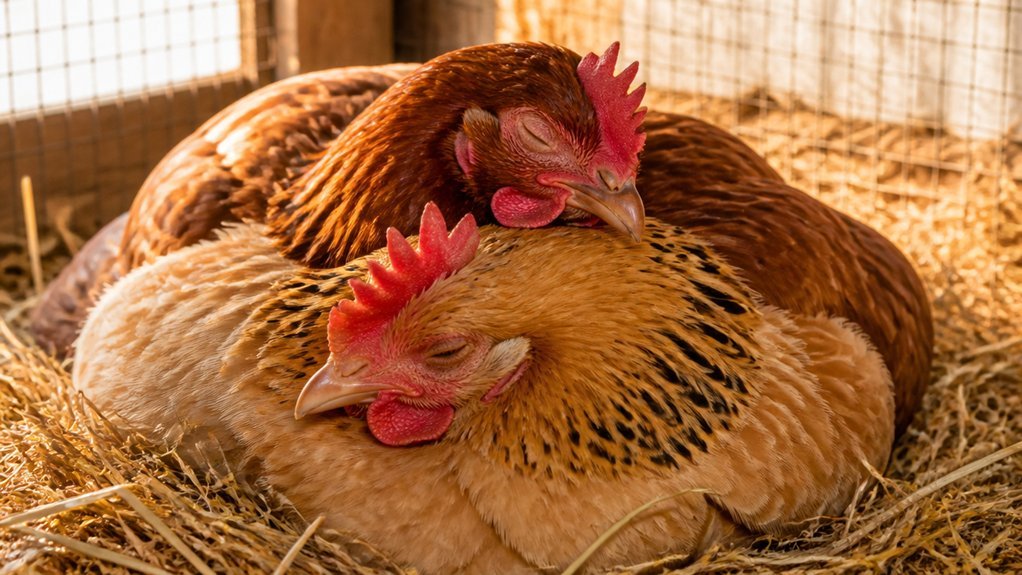
Ever wonder whether your chicken has a true favorite? You can spot a best friend by watching who stays together most of the day.
Your chicken may choose one flockmate for dust bathing, foraging, and resting nearby instead of mixing evenly with the group. When another bird approaches, your chicken often lets that companion eat first or follow closely without fuss.
Your chicken may favor one flockmate for dust bathing, foraging, and resting close by.
You might also notice synchronized behavior: both birds move, scratch, and settle at the same time. They usually keep a steady pecking order relationship, but they seem more relaxed around each other than around others.
If one wanders off, the other often trails behind. These patterns show trust, comfort, and a lasting social bond within the flock. Consistent companionship indicates a strong connection and mutual trust between the pair.
How Chickens Show Affection
You can often spot chicken affection in gentle preening, when one bird softly picks through another’s feathers to help keep it clean and comfortable.
You’ll also notice closeness as a sign of trust, with chickens choosing to stay near a favorite flockmate while they rest, forage, or relax. These simple behaviors show that chickens don’t just live together—they build real bonds.
Additionally, mutual grooming and resting in close proximity are behaviors that support long-term gut health, highlighting the importance of social bonds in poultry wellbeing.
Gentle Preening Behavior
A soft nudge from one chicken to another can say a lot: gentle preening is one of the clearest ways chickens show trust and affection. When you watch two birds calmly nibbling at each other’s feathers, you’re seeing social care in action.
One chicken removes dirt, loose feathers, and tiny irritants while signaling comfort and acceptance. You’ll notice they usually reserve this behavior for flock mates they know well, since preening requires closeness and confidence. It can help strengthen bonds, reduce tension, and keep feathers in better shape.
If a chicken lets another preen around the head or neck, that’s a strong sign it feels safe. In your flock, this quiet grooming can reveal who’s truly connected and who’s building a lasting bond. Proper placement of perches and appropriate roosting height can also contribute to building trust and comfort among flock members.
Close Proximity Bonding
When chickens feel safe with one another, they often show it by simply staying close. You’ll notice bonded birds resting side by side, foraging within a few feet, or following each other around the yard. This close spacing isn’t random; it signals trust and comfort. A natural dust bath mix containing organic herbs and minerals can also help maintain their health and reduce stress, promoting even stronger bonds. When a chicken chooses to stand near another, she’s saying that bird feels familiar and dependable. You may also see pairs or small groups settle together at dusk, sharing warmth and security. Even a brief pause next to a flockmate can strengthen their connection.
Why Pair Bonds Matter in the Coop

Even in a small flock, pair bonds can shape daily life in powerful ways, giving chickens a steady companion that helps lower stress, ease competition, and support safer foraging. You’ll often see one bird stay close to another, and that connection can make the coop feel more predictable.
Even in a small flock, pair bonds can lower stress and make the coop feel more predictable.
When you understand these bonds, you can manage space, feed, and enrichment better, because bonded birds may move, rest, and explore with more confidence.
- A steady partner can reduce anxiety.
- Bonded birds often share access more calmly.
- Closer companions may spot danger sooner.
- Stronger social ties can improve flock stability.
You can support these relationships by giving chickens enough room, multiple resources, and quiet areas to choose from.
How Chickens Bond Through Grooming
Grooming is one of the clearest ways chickens strengthen their social ties, because a bird that picks through a flockmate’s feathers is doing more than cleaning—it’s building trust. When you watch hens preen each other, you’ll notice they target hard-to-reach spots, especially around the head and neck. That help creates comfort and familiarity, and it often happens between birds that already recognize one another well.
| Grooming action | Bonding effect |
|---|---|
| Feather picking | Shows care |
| Head nibbling | Builds trust |
| Preening hard spots | Increases closeness |
| Mutual grooming | Reinforces friendship |
You can see grooming as a quiet conversation in feathers: one chicken offers attention, and the other accepts it. That exchange helps stable pairs and small groups stay connected.
How Stress Affects Chicken Bonds

Stress can quickly reshape chicken bonds, because a flock under pressure focuses less on friendship and more on safety. When you notice sudden noise, crowding, hunger, or predators, your chickens may huddle, freeze, or jostle for space.
That stress can weaken gentle pecking rituals and make trusted companions seem less important. You’ll often see more guarding, less preening, and fewer relaxed moments together.
- Stress narrows attention to danger.
- Calm lets chickens share space peacefully.
- Reliable routines help bonds recover.
- A secure coop supports steady social behavior.
If you keep their environment predictable, you help them relax and reconnect. Over time, calmer birds interact more often, and their bonds become stronger again.
How Age and Breed Shape Chicken Bonds
When you mix chickens of different ages, you’ll often see older birds set the social tone while younger ones learn where they fit in.
Breed temperament also shapes these bonds, since calmer breeds may form easier friendships than more assertive ones.
Age Differences
Age can shape chicken friendships in surprising ways: younger birds often form quick, playful bonds, while older hens and roosters tend to prefer stable companions they already know.
You’ll notice chicks chase, peck, and nap together as they learn flock rules. As they mature, you’ll see them narrow their circle and invest more in familiar partners. Age also affects how easily a bird accepts newcomers, so patience matters when you mix generations.
- Young birds explore social ties fast.
- Older birds value routine and trust.
- Mixed-age flocks need gentle introductions.
- Watching bonds helps you spot stress.
When you understand age gaps, you can read flock behavior better and support calmer, stronger chicken friendships over time.
Breed Temperament
Breed temperament shapes chicken friendships just as much as age does. If you keep calm, curious breeds like Orpingtons or Silkies together, they’ll often pair up quickly, share feed, and roost side by side.
More assertive breeds, such as Leghorns or Gamefowl, may dominate space and limit close bonds unless you give them room and careful introductions. You can usually see gentle birds form tighter social circles because they tolerate pecking order disputes without constant conflict.
When you mix breeds, watch each bird’s energy and confidence, since matching personalities often matters more than matching appearance. By choosing compatible breeds and easing introductions, you help your flock build trust, reduce stress, and develop stronger, calmer friendships over time, even as they mature.
Do Chickens Bond With Humans?
Yes—chickens can bond with humans, and they often do so more than people expect. When you spend time with them, they learn your voice, your routine, and your presence.
Yes—chickens can bond with humans, learning your voice, routine, and presence over time.
They may follow you, settle nearby, or greet you with excited clucks. These reactions show trust, not trickery.
- Your calm behavior helps them feel safe.
- Repeated contact builds recognition and comfort.
- Gentle handling can strengthen their confidence around you.
- Respecting their space lets the bond grow naturally.
You’ll notice each bird’s personality shapes the connection. Some stay curious and bold, while others remain cautious but still warm up over time.
Chickens don’t bond like dogs or cats, yet they can still form real, meaningful attachments to you.
How to Help Chickens Form Friendships
To help chickens form friendships, give them steady routines, calm handling, and plenty of space to explore one another on their own. You can reduce stress by offering the same feed times, shelter, and roosts each day. Keep the flock in a roomy, enriched run so birds can approach, retreat, and peck at the ground without crowding. Add perches, dust baths, and scattered treats to encourage shared activity. Watch interactions closely, but don’t interfere unless needed.
| Support | What You Do | Benefit |
|---|---|---|
| Routine | Feed consistently | Builds confidence |
| Space | Spread resources out | Limits tension |
| Enrichment | Add perches and baths | Encourages social play |
When you introduce newcomers, do it gradually. Let chickens see and hear each other first, then share short supervised time.
When Chicken Bonds Break Down
Even a close chicken bond can weaken when stress, crowding, illness, or a sudden flock change disrupts the pecking order. You’ll notice chasing, feather pulling, or one bird hiding while another guards food and perch space. Don’t ignore these signs; bonds can break fast when trust feels unsafe.
- Reduce competition by adding feeders, waterers, and roost room.
- Check for sickness, injury, or parasites, then treat problems quickly.
- Reintroduce new birds slowly so your flock can reset calmly.
- Watch for bullying patterns, because repeated pressure teaches fear, not friendship.
When you act early, you protect social stability and help chickens rebuild cooperation. A calmer coop gives them room to reconnect, settle disputes, and regain confidence in each other.
Frequently Asked Questions
Can Chickens Remember Individual Faces for Months?
Yes, chickens can remember individual faces for months, sometimes longer. You’ll notice they recognize familiar people and flockmates, helping them avoid threats, build routines, and interact with you more confidently over time.
Do Roosters and Hens Form Different Types of Friendships?
Yes, you’ll usually see roosters and hens socialize differently: roosters often befriend several hens and protect them, while hens form tighter grooming and foraging bonds with other hens, though personalities can blur those patterns.
Can Chickens Bond Across Different Breeds?
Yes, you can see chickens bond across breeds. They recognize familiar flockmates, share space, and rely on each other for safety. Personality, raised together, and calm introductions matter more than breed differences.
Do Chickens Grieve When a Bonded Friend Dies?
Yes—you’ll often see chickens act distressed when a bonded friend dies. They may call, search, eat less, and stay withdrawn for days. You can help by keeping routines steady and offering extra company.
Can Bonded Chickens Synchronize Their Daily Routines?
Yes, bonded chickens can synchronize their daily routines. You’ll often see them eat, dust-bathe, roam, and rest together, because they watch each other closely and adjust to the same social rhythm.
In Summary
So, when you watch your chickens, you’re seeing more than flock behavior—you’re seeing real social bonds at work. Chickens form friendships to feel safe, reduce stress, and keep daily life running smoothly. If you give them enough space, stable companions, and gentle care, you can help those bonds grow stronger. And when one bird loses a friend or the flock changes, you’ll notice how deeply those relationships matter.