Chickens naturally establish territory through pecking order, body language, and routine use of space. You’ll see them claim roosts, feeders, nest boxes, and dust baths, then defend those spots with pecks, blocking, and chases. Stronger birds usually take higher perches, while quieter hens yield. You can reduce fights by giving more room, extra feeders, and multiple nest boxes. Watch their signals closely, because the ways they settle in can tell you plenty more.
How Chickens Claim Space

When chickens claim space, they do it through a mix of pecking order, body language, and routine. You’ll see them move with purpose, step into preferred spots, and return to the same nesting or dust-bathing areas each day.
When you add new birds, they’ll quickly test boundaries and sort out where each one fits. You can help by giving them enough room, multiple feeders, and clear access points, so they don’t need to fight for everything.
Chickens also rely on confidence; a bird that holds its ground and walks steadily often keeps its place. If you watch closely, you’ll notice they establish control by repeating choices, not by constant conflict.
Signs of Chicken Territory
You’ll notice chicken territory in the way they peck, posture, and jostle for rank. These pecking order signals show other birds who’s in charge.
You may also see boundary marking behaviors, like scratching, standing guard, or patrolling a favored area. Using pecking enrichment with appropriate blocks can also reinforce natural territorial behaviors.
Pecking Order Signals
A chicken flock’s pecking order does more than keep order—it marks territory, too. You’ll see it when one bird steps forward first, claims the best perch, or nudges others aside at feed time.
These quick, confident moves tell the rest of the flock where each chicken belongs. You may notice lower-ranking hens yielding space, turning away, or waiting before they approach a resource. That hesitation shows respect for the flock’s social map.
Roosters can reinforce this structure with upright posture, chest-forward displays, and sharp vocal warnings. When you read these signals, you understand who leads, who follows, and how your chickens settle shared space without constant fighting.
A stable pecking order helps your flock live together with less stress and clearer boundaries overall. Understanding breed behavior can further inform how your flock naturally establishes these territories.
Boundary Marking Behaviors
Boundary cues go beyond rank and start shaping the flock’s space. You’ll notice hens pause at familiar edges, stretch their necks, and stare down newcomers before they cross in. They may scratch the ground, kick bedding outward, or dust bathe in the same spots each day to leave scent and visual markers.
Roosters often patrol fence lines, crowing from high perches to announce where the flock claims ground. Your birds also use wing flares, brief chases, and quick pecks near feeders or nesting boxes to reinforce these borders. If another chicken drifts too close, you’ll see instant correction.
To reinforce their boundaries, hens often use protective behaviors, which include the repeated marking of territory and signaling to other flock members. These repeated actions tell every bird where it belongs and help reduce conflict by making the flock’s territory clear without constant fighting.
Roosting Spots Chickens Defend
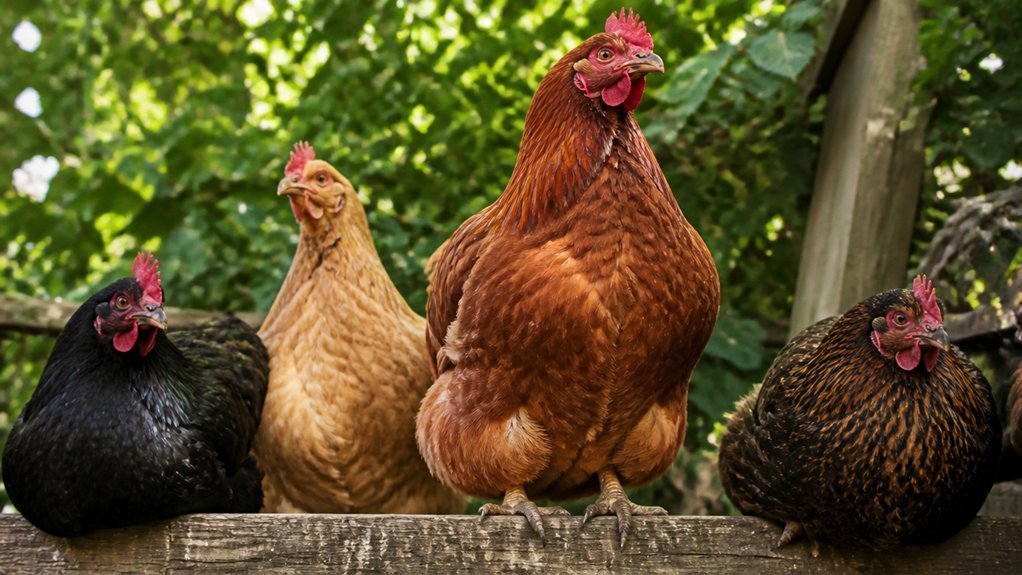
Perching at dusk, chickens quickly claim their favorite roosts and will chase off flockmates that get too close. You’ll notice this defense when one hen fluffs up, stretches her neck, and blocks the perch with sharp pecks or a quick lunge.
Higher, sturdier spots usually draw the strongest birds, while lower bars often go to younger or more submissive flockmates. If you move roosts around, you may trigger more squabbles as everyone rechecks position and status.
Give each bird enough space so she can settle without jostling. Multiple roost bars, arranged at similar heights, can reduce conflict because hens won’t need to fight for one prime spot.
When you watch at night, you’re seeing social order in action, not random fussing or noise. Providing enough space for each bird helps minimize competition and supports their natural territorial behaviors.
Feeding Areas Chickens Guard
At feeding time, chickens often guard the best spots around the dish and will rush in, peck, or shoulder flockmates aside to get first access. You’ll see this most when feed is limited, fresh greens appear, or treats drop in one place. To reduce squabbles, spread food out and give them enough room. Proper feed spillage control features, such as enclosed ports and individual access points, help minimize competition and ensure all chickens get their share.
Nest Boxes and Dust Baths
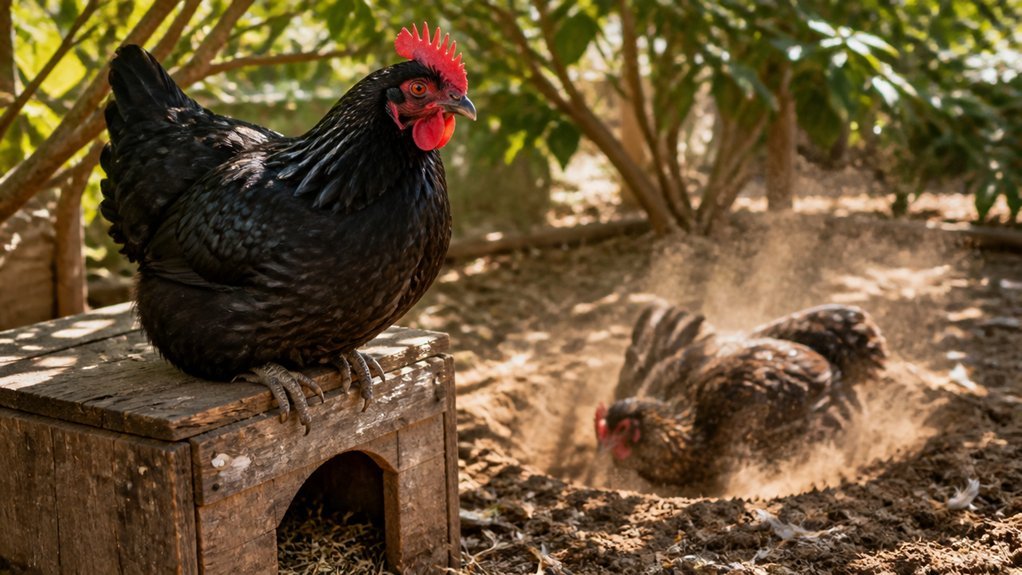
Nest boxes and dust baths can also become claimed spaces in a chicken flock. You’ll often see hens choose one nest box as their favorite, then return to it daily. If you provide enough boxes, you can reduce competition and let each bird settle into a routine. Using multiple watering stations can also help prevent disputes over shared resources like water, which is important for maintaining a peaceful environment. Dust baths work the same way. When you offer several dry, loose spots, chickens often pick one area and treat it like their own. You can help by placing boxes in quiet, dim corners and keeping dust-bath sites clean, dry, and roomy. This gives birds options without forcing direct rivalry.
Warning Signs of Territorial Aggression
You’ll notice territorial aggression when a hen pecks sharply at other chickens and chases them away.
She may also guard nest areas closely, blocking access with quick, assertive moves.
When you see these signs, you can tell she’s trying to claim space and protect it.
Additionally, she might wear a chicken saddle to prevent feather damage during these conflicts.
Aggressive Pecking Behavior
Aggressive pecking often shows up when a chicken starts defending space, resources, or position in the flock. You’ll notice quick, sharp strikes aimed at another bird’s head, neck, or body. This behavior can escalate when you crowd birds, limit feed, or introduce a new chicken too fast.
If you see repeated pecking, watch for raised feathers, stiff posture, fixed staring, and chasing. You can reduce tension by adding more feeders, spreading out water, and giving each bird room to move.
Move the most aggressive bird only if necessary, and avoid punishing the flock, since stress can make pecking worse. Instead, separate injured birds right away and reintroduce them slowly once the pecking settles. Proper territory establishment helps minimize conflicts and establishes clear boundaries within the flock.
Guarding Nest Areas
When a hen starts guarding a nest box, her behavior can look more focused and defensive than general pecking. You may notice her crouching low, blocking entry, and snapping at birds that come near. She might fluff her feathers, hiss, or lunge when another chicken approaches her chosen spot. These signs tell you she’s claiming space, not just reacting randomly. Using galvanized steel or durable materials for nesting boxes can also help minimize damage caused by aggressive pecking.
Watch for:
- repeated blocking at the nest entrance
- vocal warnings like hissing or growling
- quick strikes toward intruders
If you see this, give her space and check that the coop has enough nesting areas. Crowded boxes can intensify territorial aggression, while extra room often calms the flock.
How to Reduce Chicken Territory Fights

To cut down on chicken territory fights, start by giving every bird enough space, feed, water, and hiding spots so they don’t have to compete. Spread out resources instead of clustering them, and add extra perches, boxes, and shade if your flock feels crowded.
You can also rearrange the coop or run now and then, which helps reset claimable spots and lowers obsession with one corner. Introduce new birds slowly, with fencing that lets them see each other before mixing.
Watch for bullying, then separate aggressive hens briefly so tension cools off. Keep roosters balanced, because too many can spark constant challenges.
When you manage space, access, and introductions well, your chickens relax, establish order faster, and fight far less.
Optimal walk-in coop access height and features like multiple large doors and removable trays can facilitate easier cleaning, reducing stress and territorial disputes caused by clutter or discomfort.
Frequently Asked Questions
How Do Chickens Choose a Flock Leader?
You’ll usually see one chicken become leader through pecking order, confidence, and assertive behavior. You can spot her by watching who eats first, claims space, and calmly controls conflicts within the flock.
Do Chickens Recognize Individual Humans?
Yes, you can see chickens recognize individual humans by voice, face, and routine. They’ll approach people who feed them, avoid strangers, and remember kindness or threats, especially when you interact with them consistently.
Can Territory Behavior Change With Seasons?
Yes—your chickens’ territory behavior can change with seasons. You’ll see them roam more in warm months, then cluster tighter in cold weather. You can expect shifts from breeding, food availability, and daylight changes.
Do Hens and Roosters Defend Areas Differently?
Yes, you’ll usually see roosters defend territory more aggressively, while hens guard nest sites and nearby resources. You’ll notice roosters patrol, chase, and alarm-call more, but hens can still peck, posture, and protect chicks fiercely.
How Does Flock Size Affect Territorial Behavior?
Larger flocks usually create tighter hierarchies, so you’ll see more pecking and squabbles over space. Smaller flocks often defend areas less aggressively, but you’ll notice each bird claiming more personal room and resources.
In Summary
By watching your flock closely, you can see how chickens naturally claim space, guard resources, and protect their favorite spots. When you understand their roosts, feeders, nest boxes, and dust baths, you’ll spot trouble early and keep peace in the coop. If aggression starts, you can make small changes that reduce stress and fighting. With a few simple adjustments, you’ll help your chickens share territory more calmly and live together more comfortably.