You manage group dynamics in a small chicken flock by respecting the pecking order, choosing birds with similar size and temperament, and giving everyone enough space, feeders, perches, and roosts. Introduce new chickens slowly after quarantine, first through a barrier and then with brief supervised contact. Watch for chasing, feather pulling, or feeding exclusion, and separate bullies quickly. Keep routines steady, and you’ll find the flock settles faster when you know what to watch for next.
Understand Chicken Pecking Order Hierarchies

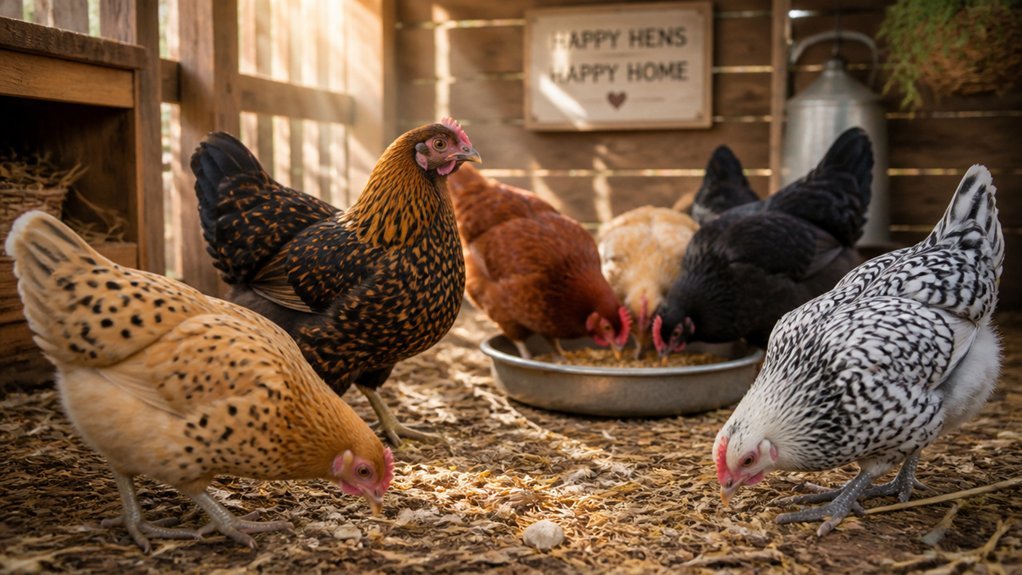
If you watch a flock long enough, you’ll notice a pecking order that helps keep things organized. You can see it when one bird nudges another away from feed, dust bathing spots, or the best perch. This hierarchy isn’t random; it lets your chickens avoid constant fighting because each bird knows its place. Providing appropriate coop protection and ample space helps maintain this order and reduces stress among the flock. You should watch for brief squabbles, raised hackles, and quick pecks, especially after a change in the group. Those moments usually settle fast when the order stays clear. Don’t rush to interrupt every minor dispute, because chickens often sort things out on their own. Instead, observe calmly, keep resources plentiful, and notice which birds lead, yield, or challenge. That helps you manage stress and spot real problems early.
Choose Compatible Chickens for Your Flock
Now that you know how flock hierarchies work, you can make better choices when adding new birds. Pick chickens that match your flock’s size, temperament, and age range.
Calm, steady birds usually blend better with a peaceful group, while very dominant hens can spark tension. If you already keep bantams, choose others of similar size so bigger birds don’t bully them.
Calm, steady birds fit peaceful flocks best, while dominant hens and mixed sizes can stir up trouble.
You should also consider breed traits: some breeds are gentle and social, while others are bold and pushy. Healthy birds matter too, because weak or stressed chickens can’t hold their own.
When you select compatible chickens, you reduce conflict and help your flock stay balanced. Understanding flight zones and pecking order can further assist in maintaining harmony. Watch how your current birds behave, then choose newcomers that fit that energy instead of fighting it.
Introduce New Chickens Without Drama
Introducing new chickens slowly can keep the peace in your flock. You’ll lower stress when you let everyone see, hear, and smell each other before any direct contact. Use a secure barrier so the birds can observe safely.
- Quarantine newcomers first.
- Let them share sight and sound.
- Make the first meeting brief.
- Watch for chasing or pecking.
You should stay nearby during early interactions and separate birds if tempers flare. Introduce one chicken at a time when possible, because smaller changes feel less threatening. Evening introductions often work well since birds settle down naturally.
Keep your tone calm, and don’t rush the process. When you move at the flock’s pace, you help birds adjust, reduce bullying, and build a stable pecking order without a messy showdown. Proper housing and secure barriers also contribute to a smooth introduction process.
Manage Space, Feed, and Roosting to Prevent Fights
Give your flock enough space so birds can move away from each other instead of squabbling over every corner. Set up multiple feed stations so no single chicken can guard the food and pick fights. You should also spread out roosting spots, since crowded nighttime perches can trigger more conflict. Incorporating waste-reducing features in your feeders can help minimize mess and prevent feeding disputes.
Adequate Space Allocation
When chickens don’t have enough room, tension rises fast and even mild birds can start fighting over feed, roosts, and personal space.
You can calm your flock by giving each bird enough floor area to move, scratch, and retreat without bumping rivals. Spread out roosts so no single perch becomes a choke point, and leave clear paths between coop features. If birds can’t dodge one another, they’ll peck more often and guard corners.
One effective way is to use weather-resistant covers that adapt to seasonal changes, ensuring your coop or run remains comfortable and safe from predators and the elements.
- Give extra floor space.
- Separate roost bars.
- Avoid dead-end corners.
- Add outdoor range room.
Watch how your flock uses the coop: crowded pauses, blocking, and repeated pecking usually mean you need more space. When movement feels easy, birds settle faster and hierarchy stays steadier.
Balanced Feed Stations
Space helps, but feed layout can still spark fights if too many birds crowd one dish. You can cut tension by placing several feeders apart so timid hens don’t get trapped by bolder flock mates.
Keep each station at the same height and fill it before birds rush in, since empty gaps invite pecking and guarding. Use long troughs or multiple small feeders so every bird gets access at once.
You should also match feeder size to flock size and watch for wet feed that clumps and slows eating. Separate feed from roosting spots, because birds that compete near sleep areas often bicker more.
For added protection and to prevent unwanted pests from disturbing feeding, consider pest-proof feeders that keep feed safe and reduce competition. When you spread resources evenly, you reduce bottlenecks, calm the pecking order, and help your flock eat without constant conflict.
Keep Chickens Calm During Flock Changes
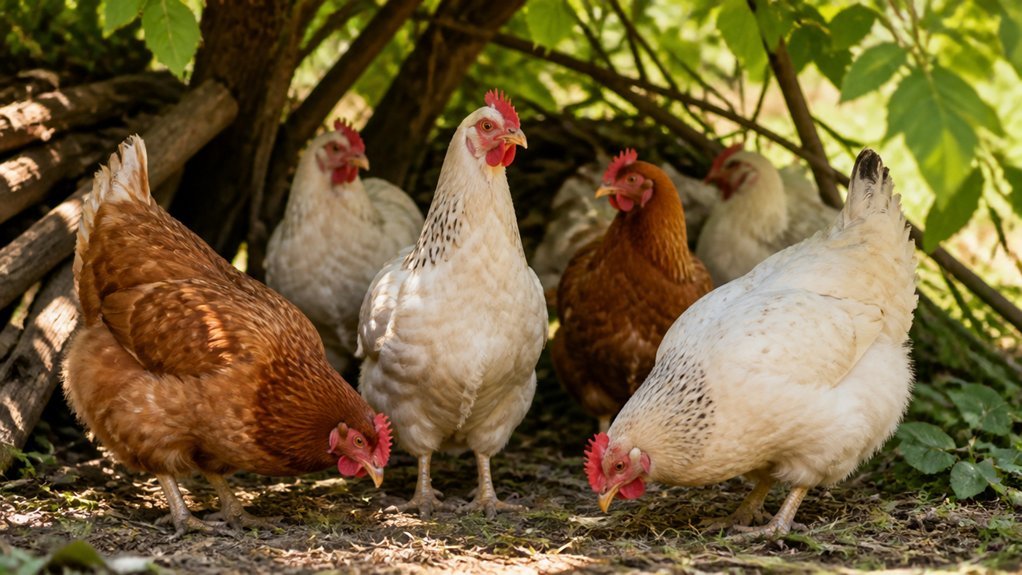
If you’re adding new birds, removing old ones, or reshuffling the flock, keep the change low-stress by making it gradual and predictable. Move birds at the same time each day, and keep routines like feeding, watering, and roosting consistent.
You can reduce confusion by using short separation periods, then reuniting the flock in a familiar space. Offer extra room, multiple entry points, and plenty of access to resources so birds don’t crowd each other.
- Introduce changes slowly.
- Keep daily schedules steady.
- Use familiar surroundings.
- Give every bird easy access.
Handle birds calmly and avoid sudden noises or chasing. When you stay patient, your flock adapts faster and settles into the new arrangement with less tension. Maintaining proper electrolyte balance during changes can also support their hydration and reduce stress.
Spot Pecking Order Bullying Early
Even a healthy pecking order can turn into bullying, so watch for birds that are repeatedly chased, pinned away from feed, or pecked until they stay isolated. You’ll spot trouble faster if you know what normal looks like: brief squabbles, then calm. Bullying keeps happening and targets the same hen. A good understanding of wound care options and preventative measures can help maintain flock harmony and reduce injuries.
Stop Ongoing Chicken Flock Conflicts
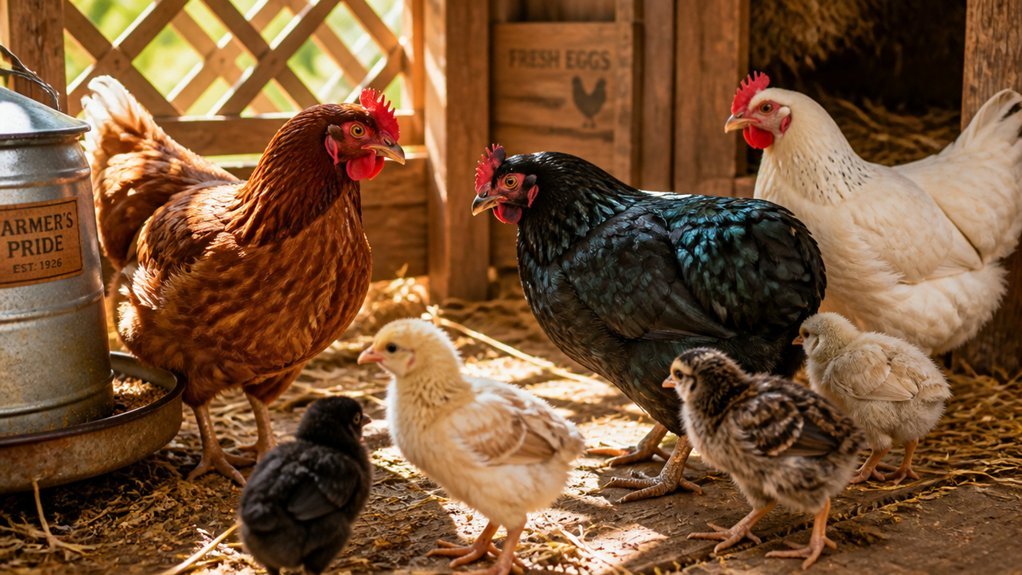
Once a fight becomes a habit, you need to interrupt it fast: separate the aggressor, give the bullied bird safe access to food and water, and change the flock setup so the same birds don’t keep meeting in tight spots. A good strategy is to implement secure locking features on coop doors and access points to prevent raccoon tampering, which can add another layer of safety for your flock. You can also reduce triggers by adding more feeders, perches, and hiding places. Watch for chasing, feather pulling, and blocking behavior, then step in before injuries start. If one bird keeps starting trouble, confine it briefly and reintroduce it after the flock settles. Keep routines steady, because sudden changes can spark more stress.
Frequently Asked Questions
How Often Should I Clean the Coop to Reduce Stress?
Clean your coop weekly, and spot-clean droppings daily to keep odors low and birds calmer. You’ll reduce stress by keeping bedding dry, ventilation good, and feeders tidy, so your chickens feel safer.
What Treats Are Safest for Mixed-Age Chickens?
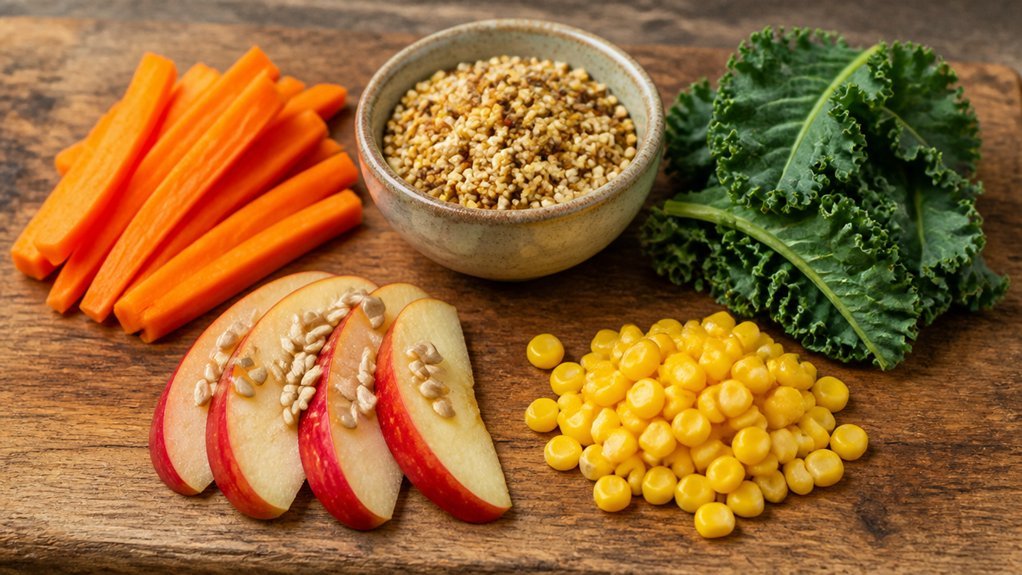
You can safely offer mixed-age chickens chopped leafy greens, mealworms, oats, berries, and cooked eggs. Give treats sparingly, keep pieces small, and avoid salty, sugary, moldy, or toxic foods like avocado and chocolate.
Can a Rooster Help Stabilize Flock Behavior?
Yes, you might find a rooster helps steady flock behavior by setting routines, warning of danger, and discouraging bullying. Still, you’ll need to monitor aggression, because some roosters can increase stress or fighting instead.
Do Different Chicken Breeds Bond at Different Speeds?
Yes, you’ll usually notice breed differences: some chickens bond fast, while others stay cautious longer. You can speed things up with calm introductions, enough space, and consistent routines that help everyone feel secure.
Should I Separate Hens During Molting Periods?
No, you usually shouldn’t separate hens during molting unless bullying or injury appears. You can reduce stress by keeping them together, offering extra protein, and providing quiet, dust-free shelter while they regrow feathers.
In Summary
Managing a small chicken flock means you need to stay alert, patient, and consistent. When you understand the pecking order, choose compatible birds, and introduce newcomers carefully, you’ll cut down on stress and fighting. Give your chickens enough space, feed, and roosting spots, and watch for bullying before it gets worse. If conflicts keep happening, step in early to restore peace and keep your flock healthy, calm, and balanced.