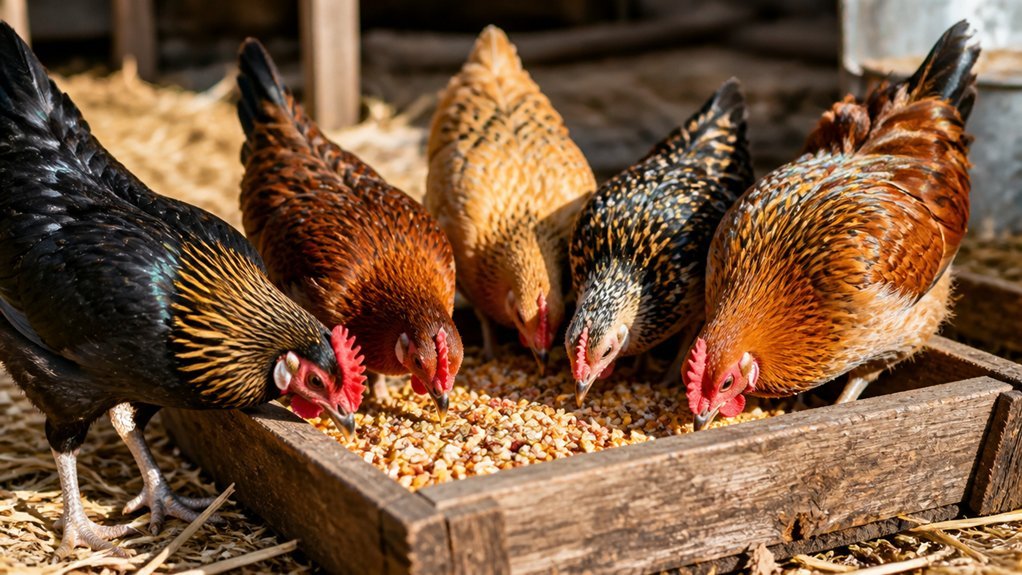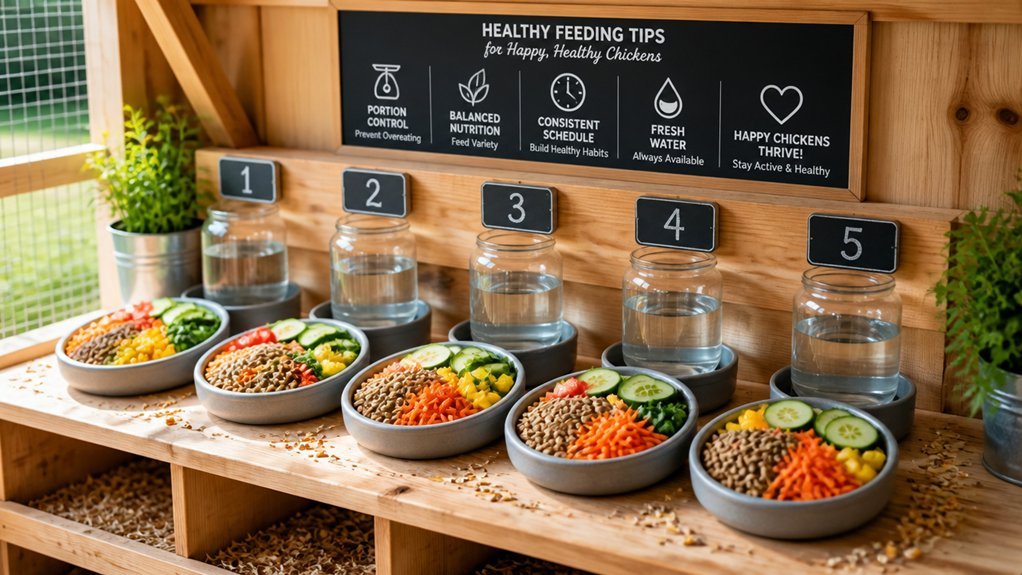
To prevent chicken obesity, feed your flock on a set schedule, ideally morning and late afternoon, so birds don’t snack all day. Measure portions for each size and age group, then adjust based on leftovers. Use a balanced layer or grower feed as the main ration, and keep treats small and rare. Watch body condition through the seasons, since cold weather and lower activity can change needs. Keep going, and you’ll pick up a few more smart feeding tweaks.
Set a Chicken Feeding Schedule
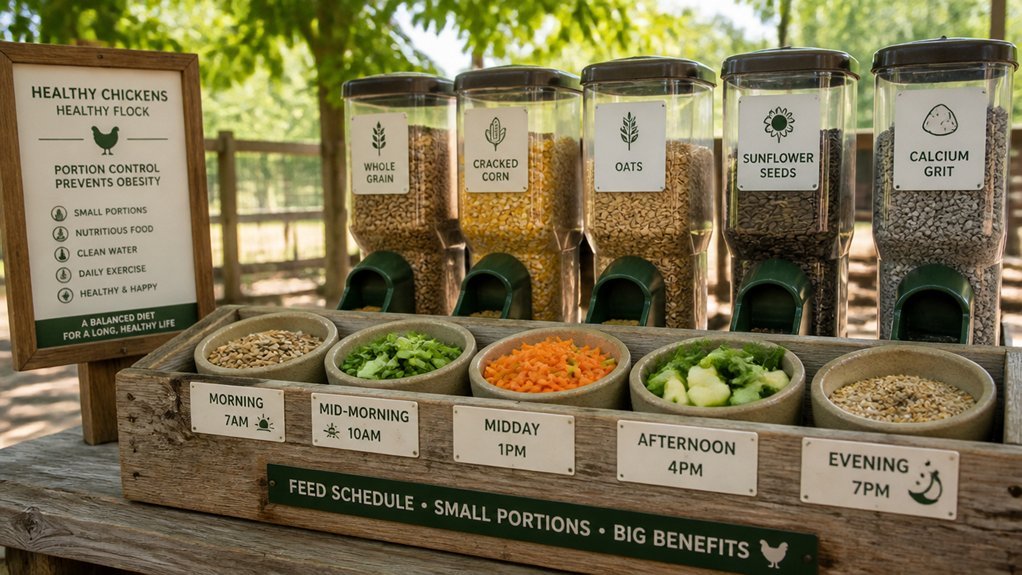
Setting a regular feeding schedule helps you control how much your chickens eat and reduces the chances of overeating. You can feed them at the same times each day so they learn when to expect food and stay calmer around the coop.
A regular feeding schedule helps chickens eat calmly, expect meals, and avoid overeating.
Morning and late afternoon work well for many flocks, since steady timing supports healthy habits. Keep treats on a routine, too, so you don’t accidentally encourage constant snacking.
When you stick to a schedule, you can spot changes in appetite faster and notice which birds are eating normally. That makes it easier to catch problems early and keep your flock’s routine consistent.
A predictable pattern also helps you manage daily chores, reduce waste, and support better long-term health for your chickens. Regular feeding schedules can also align with no-waste feeders designed to minimize waste, ensuring that feed is utilized efficiently and reducing leftover spillage.
Portion Feed to Match Your Flock
Once you’ve got a feeding schedule in place, the next step is to portion feed based on your flock’s actual needs. Watch each bird’s size, age, and activity level, then measure feed instead of guessing. If you overfill the feeder, chickens may keep eating out of boredom. Start with a modest amount and adjust after you see what’s left at the end of the day. Proper protein levels and balanced nutrition are essential to prevent overfeeding and maintain healthy weight management.
| Bird type | Portion cue | Watch for |
|---|---|---|
| Small hens | Less feed | Empty feeders too fast |
| Standard hens | Moderate feed | Steady eating |
| Large birds | Slightly more | Weight gain or leftovers |
You can also split feed into two servings, which helps you control intake and spot changes quickly.
Choose the Right Feed for Healthy Chickens
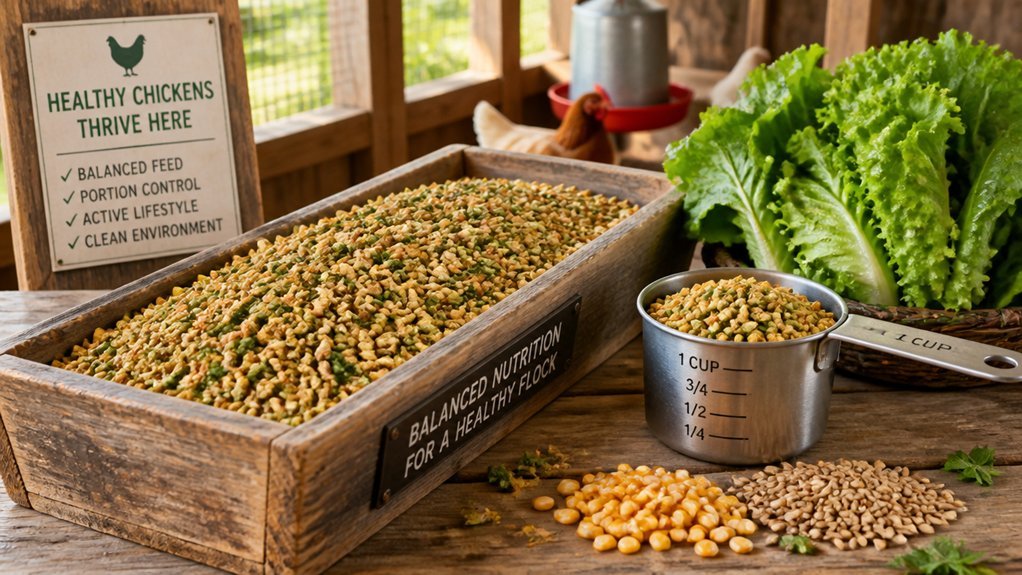
Portioning feed is only part of the equation; the feed itself matters just as much. You should choose a balanced layer or grower feed that matches your chickens’ age and purpose, because the right formula supports steady energy without excess calories. Check the label for adequate protein, vitamins, and minerals, and avoid feeds loaded with unnecessary fillers or sugary additions. If you keep mixed-age birds, separate their feed when you can so each hen gets what she needs. Additionally, selecting feeds with proper mineral balance, including calcium and trace minerals, is essential for maintaining healthy weight and preventing obesity. Fresh, quality feed also helps your flock stay active and maintain a healthy body condition. Store feed in a cool, dry place to protect nutrients and prevent spoilage. When you give chickens the right nutrition, you make it easier for them to stay fit, productive, and healthy.
Limit Chicken Treats Without Imbalance
Treats can be a helpful reward, but too many will quickly add extra calories and throw off your flock’s diet. You should keep treats to a small share of what they eat, then balance every snack with a complete feed. Offer vegetables, greens, or grains sparingly, and skip high-fat leftovers and sugary bits. Aiming for balanced nutrition ensures your chickens remain healthy and productive.
| Treat Choice | Best Approach |
|---|---|
| Greens | Offer in small amounts |
| Grains | Use as an occasional reward |
| Kitchen scraps | Keep them rare |
| Complete feed | Stay as the main ration |
Adjust Feeding for Age and Season
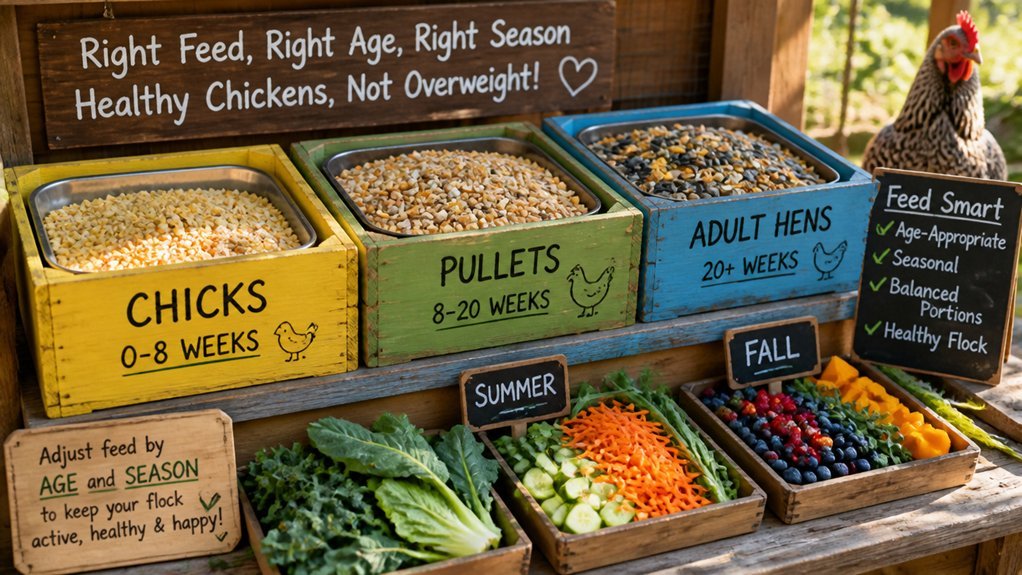
Age and season also shape how much you should feed your chickens. Chicks need protein-rich feed and frequent access because they grow fast, while laying hens need balanced rations to support eggs without packing on excess weight. Using appropriate poultry grit can also aid digestion and nutrient absorption during different stages of growth. Older birds usually slow down, so you can reduce portions slightly if they’re less active. In hot weather, chickens often eat less, so keep feed fresh and offer it during cooler parts of the day. In cold weather, they burn more energy and may need a bit more feed to stay warm. Watch body condition, not just the feeder. If a bird feels heavy or looks round, cut back. If she seems thin, increase feed carefully. Adjusting for age and season helps you keep your flock healthy and fit.
Frequently Asked Questions
How Can I Tell if My Chicken Is Overweight?
You can tell if your chicken’s overweight by feeling for thick fat over the breast, seeing a rounded belly, and noticing slower movement or labored breathing. Compare her body shape to other healthy flockmates regularly.
What Exercise Helps Chickens Burn Calories Safely?
You can help your chickens burn calories safely by encouraging foraging, short supervised walks, dust-bathing, climbing low ramps, and pecking at scattered treats. Keep sessions gentle, and don’t force activity if they seem stressed.
Do Breeds Differ in Their Tendency to Gain Weight?
Yes, you’ll see big differences. You should expect heavier breeds to gain weight more easily, while active, lightweight breeds stay leaner. You can manage risk by matching feed, exercise, and portions to each bird’s breed.
Can Chickens Lose Weight Without Reducing Egg Production?
Yes, you can help chickens lose weight without hurting egg production by trimming treats, boosting activity, and balancing protein and minerals. You’ll need gradual changes, not sudden feed cuts, to keep laying steady.
What Health Problems Can Obesity Cause in Chickens?
Obesity can cause you chickens breathing trouble, leg strain, heat stress, fatty liver disease, heart problems, reduced fertility, and lower egg quality. It can also make them less active and more prone to illness.
In Summary
By setting a steady feeding schedule, portioning feed correctly, choosing the right nutrition, limiting treats, and adjusting for age and season, you can help your flock stay healthy and active. These simple habits make it easier to prevent chicken obesity before it starts. Keep an eye on your birds, watch their body condition, and make small changes when needed. With consistent care, you’ll support strong, happy chickens and a more productive flock.