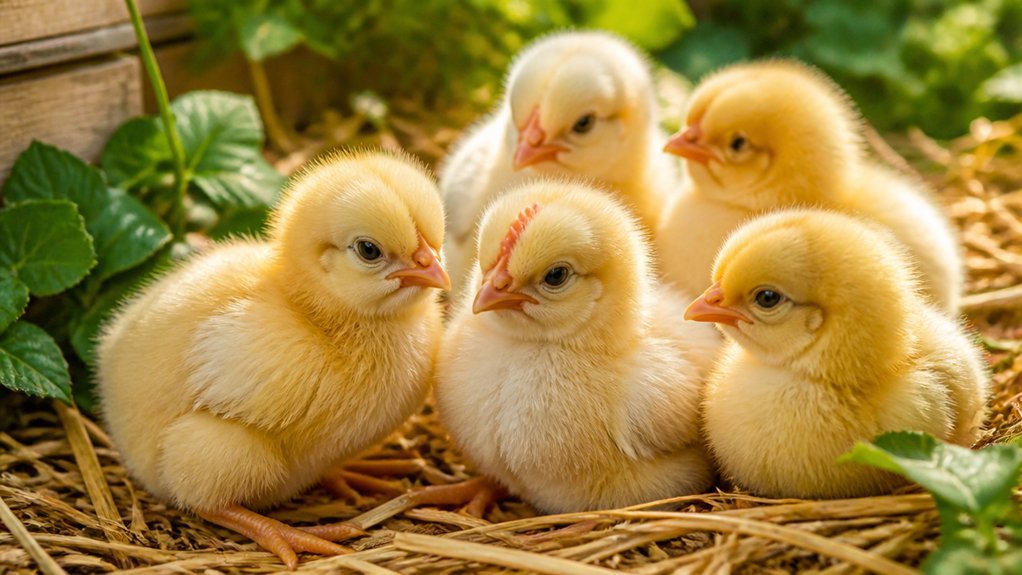
To calm timid chickens, you should keep their world predictable and gentle. Move slowly, speak softly, and avoid grabbing from above or chasing them. Offer treats from an open palm, feed at the same time each day, and give them quiet, low-stress spaces with good lighting and room to escape. Introduce new birds gradually and keep noise low. If you keep going, you’ll pick up even more simple ways to build trust.
What Makes Chickens Timid?
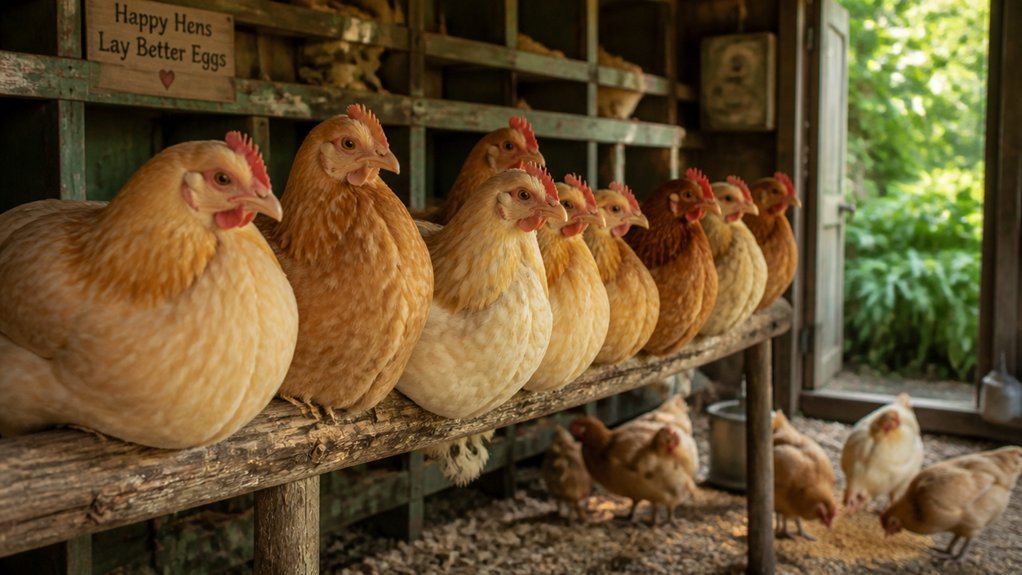
Chickens can turn timid for a few simple reasons: poor handling, sudden changes, loud noises, crowded living conditions, or past experiences with predators. A well-designed coop with predator protection, proper ventilation, and comfortable space can help reduce their stress levels and make them more confident. When you approach too fast or grab them roughly, they learn to fear your hands. If you move them to a new coop, add unfamiliar birds, or change routines, they may become uneasy. Harsh weather, flashing lights, and constant disturbance can keep them on edge. You can also see shyness after a scare, because chickens remember danger and protect themselves by staying alert. Their breed, age, and early care can shape this response too. If you understand these triggers, you can reduce stress and help your flock feel safer around you.
Spot the Signs of a Nervous Hen
A nervous hen will usually give you clear clues before she panics. You can spot her by watching for stiff posture, quick head bobs, and wide, alert eyes. She may freeze when you approach, then dart away in short bursts.
A homemade or commercial pecking deterrent spray can also help reduce stress-related feather pecking and keep her comfortable.
Listen for sharp clucking or sudden distress calls, which often mean she feels exposed. A timid hen may also keep to the edge of the flock, avoid roosting near others, or hesitate before stepping into new spaces.
You might notice feather puffing, crouching, or tail tucking when she feels threatened. Some hens peck less, drink less, and stay on guard instead of relaxing. When you recognize these signals early, you can respond calmly and help her feel safer.
Create a Quiet, Low-Stress Coop

You can help timid chickens relax by keeping the coop softly lit and free from harsh glare.
Cut down on sudden noises, and keep the space calm so they don’t stay on edge.
A simple, gentle layout also helps them move around without fear.
Using appropriate lighting that mimics natural sunlight can encourage natural behaviors and reduce stress.
Soft Lighting
Soft lighting can make a timid flock feel safer by reducing harsh shadows and sudden contrasts that trigger alarm. You can swap bright bulbs for warm, lower-wattage lights and place them where they spread evenly across the coop. Use frosted covers or indirect fixtures to soften glare, and let daylight filter in through covered windows or translucent panels. When evening comes, dim the light gradually so your chickens can settle without feeling startled. Keep the interior consistently lit enough for them to see perches, feed, and water, but avoid harsh beams that spotlight movement. This gentler setup helps nervous birds relax, explore, and approach you with more confidence. Proper lighting with consistent airflow from well-ventilated fans further supports their comfort, reducing heat stress and agitation. Over time, calmer lighting can support easier handling and better flock harmony.
Reduce Noise
Noise can keep timid chickens on edge, so a quiet coop helps them feel safer and more settled. You can lower stress by closing squeaky doors, padding latches, and keeping radios, barking dogs, and loud tools away from the coop. Move calmly when you enter, and speak softly so your flock learns your presence isn’t a threat. Consistent quiet builds trust. Using weatherproofing measures can also minimize unexpected sounds from environmental factors that might stress your flock further.
Gentle Coop Layout
A gentle coop layout gives timid chickens fewer reasons to panic by keeping their world easy to read and hard to startle. You should place feeders, waterers, and roosts in consistent spots so your birds learn the space quickly. Keep walkways open and wide enough that no chicken feels trapped when you enter. Use low perches and short ramps to prevent awkward jumps and sudden flapping. Add solid walls or partial partitions to block outside movement and reduce visual surprises. You can also create quiet corners with bedding or straw where shy birds can retreat. Incorporate walk-in coop doors at least 50 inches high to facilitate easy access for cleaning and handling your chickens without causing stress. Avoid clutter, sharp shadows, and bright glare, since these can unsettle them. When you design the coop for calm movement, your chickens relax faster and socialize with more confidence.
Build Trust With Calm Daily Routines
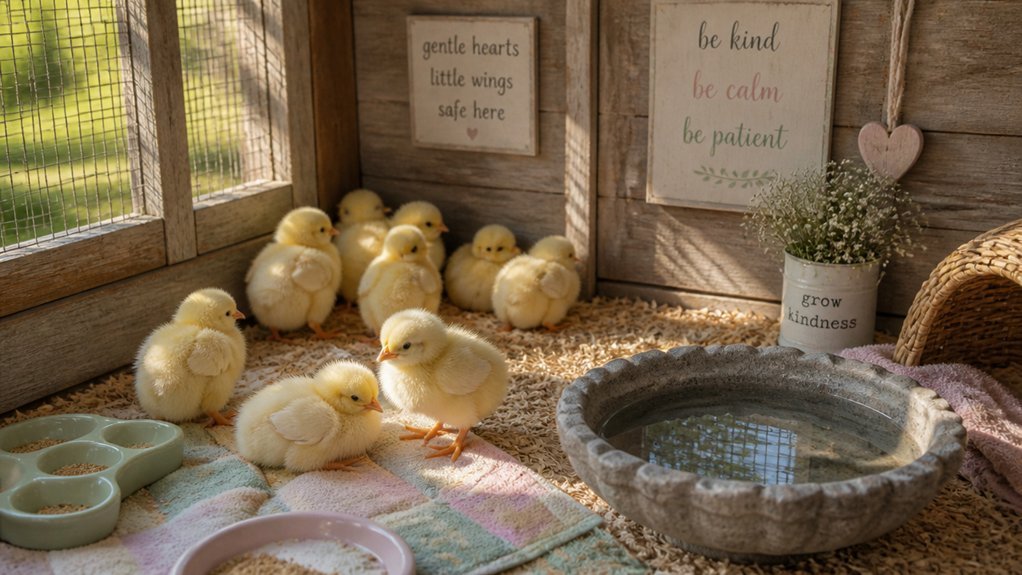
You build trust with timid chickens when you feed them at the same time each day, so they learn what to expect.
Gentle morning check-ins help them see you as a calm, safe presence. Over time, these steady routines make your flock feel more secure around you. Incorporating consistent electrolyte balance can also support their hydration and comfort during stressful times.
Consistent Feeding Times
Feeding your chickens at the same times each day helps them feel secure because they quickly learn what to expect. You reduce worry when you keep a steady schedule, and timid birds start to associate your presence with safety and food.
This predictability can make them bolder around you and each other. Choose times you can keep, then feed them promptly and calmly. Move slowly, speak softly, and set the feed down without sudden motions.
If you need to change the schedule, shift it gradually so they can adjust without stress. Over time, your chickens will come closer sooner, peck more confidently, and relax faster because your routine tells them the day is under control and nothing surprising is likely to happen.
Gentle Morning Check-Ins
Each morning, make a brief, calm visit to the coop so your timid chickens learn that your approach isn’t a threat. Move slowly, speak softly, and avoid sudden gestures that can startle them.
Let them see you in the same place, at about the same time, so your presence becomes predictable and safe. Offer a quick look at water, feed, and bedding, then step back and give them space to settle. If a bird stays relaxed, reward that confidence with a gentle tone or a small treat.
Over time, these short check-ins teach your flock that you’re part of their daily routine, not a danger. Consistency builds trust, and trust helps timid chickens relax, explore, and eventually come closer on their own. Recognizing and respecting their natural behaviors, such as their comfort zones, also promotes a more positive and trusting relationship.
Approach Timid Chickens Without Startling Them
When you first move toward timid chickens, do it slowly and calmly so they can see you coming and feel less threatened. Keep your shoulders relaxed, your steps light, and your hands low at your sides. Sudden movements can make them bolt, so let them watch you from a distance before you close in. Speak softly in the same tone each time, and pause if they freeze or shuffle away. Approach from the side instead of head-on, and stop before they seem tense. Using proper gloves can also help you maintain a gentle touch and avoid startling them.
Use Treats to Calm Chickens Faster

Offer treats to timid chickens as a way to build trust and shift their attention from fear to something pleasant. Use small, easy-to-eat options like chopped greens, mealworms, or cracked corn, and offer them from your open palm or a low dish.
Offer small treats from your open palm or a low dish to help timid chickens build trust.
Keep your movements slow and your voice soft so the treat feels inviting, not threatening. Let the chickens choose whether to come closer; don’t chase or corner them.
Repeat this routine at the same time each day so they start linking you with good things. When a timid chicken pecks from your hand, reward that brave choice by staying calm and steady.
Over time, your flock will relax faster because they’ll expect treats, feel safer around you, and begin to associate your presence with comfort. Maintaining high-quality dried mealworms can also encourage positive interactions since chickens love their crunch and nutritional benefits.
Socialize Chickens by Sitting Nearby
Once timid chickens start taking treats from you, sit nearby and let them get used to your presence without pressure. Choose a calm spot in the run or coop, then stay still, quiet, and relaxed.
You can read, check your phone, or simply watch them while they forage. Keep your movements slow so you don’t startle them. Over time, they’ll connect your presence with safety instead of danger.
If they freeze or back away, do nothing and give them space. Repeat these short sessions daily, and let them see you as a normal part of their environment.
Your calm routine helps them settle faster and makes later handling much easier. Consistency builds trust, and trust turns nervous birds into confident flockmates.
Let Timid Chickens Come to You

Stay low and keep still so your timid chickens can approach at their own pace. You can help them feel safer by avoiding sudden movements and letting them set the distance.
When they get close, offer treats gently from your hand to build trust.
Stay Low And Still
Crouch or sit low near your timid chickens and keep your movements slow and quiet so you don’t seem threatening. Hold that position and let them decide whether to approach.
When you stay still, you give them space to watch your body language and relax at their own pace. Avoid reaching out, looming over them, or making sudden turns, because each of those actions can trigger alarm.
Breathe evenly, speak softly if you talk at all, and keep your hands close to your body. If a bird edges nearer, remain calm and let her investigate you.
Your stillness teaches her that you’re not a threat, and repeated calm encounters help build trust. With patience, timid chickens usually grow bolder and start coming closer on their own.
Offer Treats Gently
Hold a small treat in your open palm and let the timid chicken choose whether to come forward and take it. Keep your hand low, steady, and calm so you don’t pressure her. You’re building trust, not chasing contact.
Try these steps:
- Stand quietly and avoid sudden movements.
- Offer tiny treats like chopped greens or grains.
- Wait patiently until she approaches on her own.
- Praise her softly, then end on a positive note.
If she backs away, stay still and try again later.
Repeating gentle, predictable interactions helps her link you with safety and food. Over time, she’ll grow braver, and you’ll see her confidence rise.
Hand-Feed Shy Chickens the Right Way
What’s the easiest way to win over a shy chicken? You offer food from your hand in a calm, steady way. Start with small, familiar treats like mealworms, oats, or chopped greens.
Hold your palm low and still, and let the bird approach on its own. Don’t chase her or push your hand toward her face; that can scare her off. Speak softly, move slowly, and keep your posture relaxed.
If she hesitates, place the treat just in front of you, then shorten the distance over several sessions. Reward every brave step with the same calm routine.
Short, positive feeding moments teach her that your hand means safety and good things, so she’ll grow bolder without feeling pressured or threatened.
Handle Chickens Gently and Briefly
Once your chicken accepts hand-feeding, you can begin brief, gentle handling to build trust. Pick her up slowly, support both breast and feet, and keep her close to your body so she feels secure.
Stay calm, move smoothly, and end the session before she starts to squirm.
- Approach from the side, not above.
- Lift with steady, even pressure.
- Hold her for a few seconds at first.
- Return her to the ground quietly.
You should handle her in the same quiet place each time, so she learns the routine. Keep sessions short and predictable, then repeat them often.
If she stiffens or flaps, lower her and try again later. With patience, your chicken’ll learn that your hands aren’t a threat and that brief contact is safe.
Reward Calm Chicken Behavior
When your chickens stay calm, reward that behavior right away so they connect your presence with good things.
Offer small treats for brave steps, like approaching you or staying relaxed during handling.
Consistent rewards help timid chickens feel safer and more willing to trust you.
Calm Behavior Rewards
Rewarding calm behavior helps your timid chickens learn that quiet, relaxed moments are safe and worth repeating. You can reinforce this with gentle praise, a soft voice, and a predictable routine.
When you notice them standing still, pecking calmly, or approaching without panic, respond right away so they connect the behavior with your attention.
- Use a consistent cue when they stay relaxed.
- Offer brief, calm interaction instead of sudden movement.
- Keep your body low and your gestures slow.
- End each session before they get startled.
You’ll build trust faster when you stay patient and steady. Calm rewards work best when you’re consistent, because your chickens start expecting peaceful handling and fewer surprises.
Treats For Bravery
Offer small treats to your timid chickens the moment they stay calm, approach you without bolting, or tolerate gentle handling. Use tiny, healthy rewards like mealworms, chopped greens, or a few grains so you can reinforce bravery without overfeeding.
Keep treats in your pocket, and deliver them quickly after the good behavior so your chickens connect the reward with their choice. Speak softly and move slowly while you offer each treat.
If one bird hangs back, toss a piece a short distance away, then let her advance at her own pace. Repeat these moments daily, and you’ll build trust faster.
Over time, your chickens will start to see you as a safe source of food, comfort, and predictable kindness.
Introduce New Chickens Calmly
To keep timid chickens relaxed, introduce any new birds slowly and in a controlled way. Start by housing the newcomers nearby, so your flock can see and hear them without direct contact.
Then let them share a fence line for short sessions, while you watch for steady posture and normal pecking.
When they seem calm, use supervised mingling in a roomy pen.
- Give both groups access to familiar feed and water.
- Keep sessions brief at first.
- Separate any bird that becomes overly pushy.
- Repeat calm meetings daily until the flock settles.
You’ll help timid hens build confidence when you move at their pace and keep each step predictable.
Avoid Common Mistakes That Scare Chickens
Sudden movements, loud noises, and rough handling can spook timid chickens fast, so keep your approach calm and predictable. Don’t grab birds from above, chase them around the coop, or crowd them into tight corners. Move slowly, speak softly, and let them see your hands before you touch them.
If you need to pick one up, support its body securely and keep the hold brief. Avoid forcing interaction when a chicken freezes or pulls away; give it space and try again later.
Don’t change routines without reason, because sudden shifts in feeding, cleaning, or coop access can undo trust. Watch your own timing too, and approach when the flock is relaxed and busy. Patience helps timid chickens feel safe enough to settle.
Calm Chickens During Noise
Noise can unsettle timid chickens just as quickly as rough handling, so your goal is to make loud moments feel less threatening. You can help them stay steady by pairing sudden sounds with calm, predictable care. Try these steps:
- Keep voices low when you enter the coop.
- Use a radio or white noise at a soft, steady level.
- Offer treats while clattering doors, tools, or feeders nearby.
- Move slowly and let them watch you before you approach.
You’ll build confidence through repetition, not force.
If a tractor, barking dog, or thunderstorm starts, stay relaxed and avoid rushing them. Your calm posture tells your flock there’s no danger, and that lesson sticks. Over time, they’ll settle faster and feel safer around everyday noise.
When Chicken Fear Needs Help
If your chicken’s fear doesn’t ease with time, gentle handling, and routine, it may need extra help. Watch for signs that go beyond shyness: refusing food, hiding constantly, losing weight, feather picking, or panicking at every approach.
You should also check for bullying, parasites, injury, poor lighting, or sudden coop changes that might be causing stress. When you rule out simple triggers, contact a poultry-experienced vet for advice.
You can describe the bird’s behavior, appetite, droppings, and flock dynamics so the vet can narrow down the problem. In the meantime, keep her in a quiet, secure space, offer familiar feed, and avoid forcing contact. With the right support, you can protect her health and help her feel safe again.
Frequently Asked Questions
Can Timid Chickens Ever Become Affectionate Pets?
Yes—if you handle them gently, keep routines steady, and offer treats, you can earn their trust. You’ll see them relax, follow you, and sometimes enjoy petting, though each chicken’ll show affection differently.
How Long Does It Take to Calm a Nervous Chicken?
You’ll usually see a nervous chicken relax in days to weeks, but full trust can take months. If you handle her gently, keep routines steady, and offer treats, you’ll speed the process.
Do Certain Chicken Breeds Stay Shy Longer Than Others?
Yes, you’ll often find some breeds stay shy longer than others. You may notice Mediterranean breeds act skittish, while calmer types relax sooner. Your handling, routine, and patience still shape confidence most.
Can Calming Music Help Chickens Feel Safer?
Yes, you can try calming music, and some chickens may relax with it. You’ll need to keep volume low and watch their reactions, since gentle sounds might reduce stress, but silence often works better.
Should Timid Chickens Be Socialized Differently From Chicks?
Yes, you should socialize timid chickens more slowly than chicks. You’ll use gentler, shorter sessions, let them approach you, and reward calm behavior. Chicks usually adapt faster, while timid birds need extra patience.
In Summary
By keeping your coop calm and your routine steady, you help your timid chickens feel safe enough to relax and trust you. Move slowly, speak softly, and give them time to adjust to new people, flockmates, and sounds. When you avoid sudden scares and handle them gently, you make socializing easier for everyone. If fear seems extreme or lasting, watch closely and get extra help when needed.