

The best fruits for chicken treats are berries, apples, melons, bananas, pears, grapes, and tropical fruits like mango, pineapple, and papaya. You should wash them well, remove seeds, pits, cores, and tough peels, then cut them into small pieces. Offer fruit only as a small treat, about 10% of the diet, and no more than a few times a week. If you want the safest options and prep tips, there’s more to know.
Fruits Chickens Can Eat
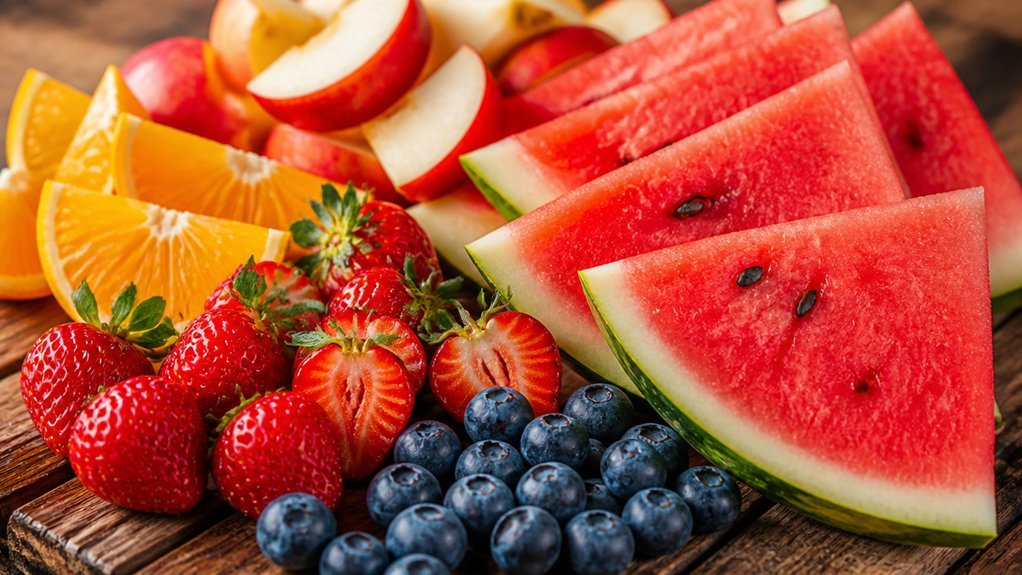
Chickens can safely enjoy a variety of fruits as occasional treats, including berries, apples, melons, bananas, and grapes. You can offer strawberries, blueberries, raspberries, and blackberries for a sweet, nutrient-rich snack.
Apples work well too, but you should remove the seeds and core first. Watermelon, cantaloupe, and honeydew give your flock juicy hydration and easy chewing. Bananas are soft and simple to peck, while grapes make a fun bite-sized reward.
You can also try pears, peaches, and cherries after removing pits and seeds. Always wash fruit before serving it, and cut larger pieces into manageable sizes. By choosing safe fruits, you give your chickens variety, enrichment, and a tasty treat they’ll quickly learn to recognize and keenly chase. Incorporating fresh, safe treats into their diet can support overall health and egg production.
How Much Fruit Chickens Can Eat
You should keep fruit portions small, since treats only need to make up a tiny part of your chickens’ diet. A few bite-sized pieces per bird is plenty, and you can adjust based on flock size and the fruit’s sugar content. Additionally, enrichment benefits can be maximized by offering a variety of safe, natural fruits in moderation.
Offer fruit only a few times a week so you don’t crowd out their regular feed.
Fruit Portion Sizes
Even healthy fruit needs portion control, because too much can unbalance a chicken’s diet and add extra sugar. You should keep fruit treats small and let feed stay the main meal. A good rule is to offer bite-sized pieces that fit easily in your hand, so your flock can enjoy flavor without overeating. Incorporating nutritional balance is essential to prevent dietary deficiencies and maintain optimal health.
| Chicken size | Fruit portion |
|---|---|
| Chick | 1 small piece |
| Adult hen | 2 to 3 small pieces |
| Large rooster | 3 to 4 small pieces |
Choose soft, fresh fruit and remove seeds, pits, and peels that may cause trouble. If you notice messy droppings or picky eating, cut back. Small portions help you reward your chickens while keeping their diet balanced and healthy.
Feeding Frequency Limits
Fruit should stay an occasional treat, not a daily staple, so your flock doesn’t fill up on sugar instead of feed. Offer fruit two or three times a week at most, and keep the amount small enough that it never replaces balanced chicken feed.
You can use fruit as a reward, a training aid, or a hot-weather snack, but always limit it to about 10% of the diet. If you notice loose droppings, reduced feed intake, or picky eating, cut back right away. Remove uneaten pieces before they spoil, especially in warm weather.
Rotate fruit with other healthy treats like vegetables, herbs, or grains so your birds get variety without overdoing sugar. Consistency matters more than quantity, so small portions work best.
How to Prep Fruit for Chickens
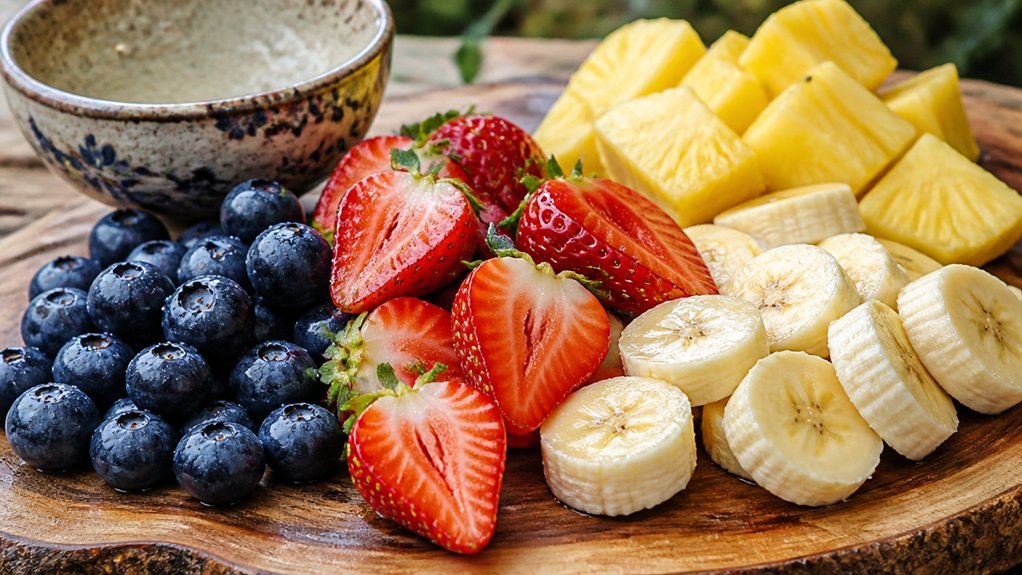
To keep fruit safe and easy for chickens to eat, wash it well, remove seeds or pits, and cut it into bite-sized pieces. You should serve fruit fresh, since softer pieces are easier for your flock to peck and swallow. If you’re offering larger fruits, like melons or apples, chop them into small chunks so birds don’t struggle with tough edges. You can also mash very soft fruit a little to make it simpler for chicks or smaller hens. Serve only a few pieces at a time, and mix fruit with their regular feed or other treats for variety. If you use frozen fruit, let it thaw first so it’s not too hard or cold. Clean up leftovers promptly to keep the coop tidy and reduce spoilage. Proper feed spillage control features can help minimize waste and keep the coop cleaner.
Fruits Chickens Should Never Eat
You should avoid fruits with toxic seeds or pits, since they can harm your chickens. AVOID seeds and pits containing toxins or harmful substances, as they pose health risks. Citrus fruits can also upset their digestion, so it’s best to limit or skip them. Never feed moldy or spoiled fruit, because it can make your flock sick.
Toxic Seeds And Pits
Some fruits can look harmless but still pose a serious risk to chickens because their seeds or pits contain toxic compounds. You should always remove pits, stones, and large seeds before offering fruit. Cherry, peach, apricot, plum, and apple seeds can release harmful substances if cracked or chewed. A hungry hen won’t know the danger, so your job is to keep treats safe. Using safe and appropriate treats can help prevent accidental ingestion of harmful parts.
If you’re unsure, skip the fruit entirely. Offer only flesh that’s fully cleaned, cut, and checked. Small, safe portions protect your flock and keep treat time healthy and stress-free.
Citrus Fruit Risks
Citrus fruits like oranges, lemons, limes, and grapefruits aren’t a good choice for chickens because their acidity can upset digestion and their strong oils may irritate the crop. If you offer these fruits often, you may see loose droppings, reduced appetite, or general discomfort. You should also skip citrus peels, since they contain even more pungent oils than the flesh. While a tiny nibble probably won’t cause lasting harm, you’re better off choosing gentler treats like berries, melon, or apple slices without seeds. Keep your flock’s fruit snacks mild and easy to digest so they stay healthy and keen to eat. When you want variety, stick with low-acid options that support hydration without stressing their digestive health.
Moldy Or Spoiled Fruit
Even if fruit looks harmless at first glance, moldy or spoiled pieces should never go to chickens. You might think a soft spot is fine, but decay can hide harmful bacteria and fungi that upset your flock’s digestion.
A disinfectant or cleaning routine can help prevent the spread of harmful microbes from spoiled treats. In some cases, mold produces toxins that can make chickens sick fast. Don’t feed bruised fruit that smells sour, leaks juice, or shows fuzzy growth. If you wouldn’t eat it yourself, don’t offer it to your birds.
Toss leftovers promptly, and keep treat bowls clean so old fruit doesn’t ferment in the coop. By choosing fresh, clean fruit only, you protect your chickens from avoidable illness and keep treats safe, simple, and beneficial.
Top Fruits Chickens Can Eat Safely
When you’re choosing fruit treats for chickens, stick to safe, simple options like apples, berries, bananas, melons, and grapes.
You can offer apples, but remove the seeds first, since they contain compounds you don’t want your flock to nibble on. Bananas work well in small pieces, and your birds usually enjoy their soft texture.
Melons, including watermelon and cantaloupe, give you a hydrating treat on warm days. Grapes are fine when you cut them in half so they’re easier to eat.
You can also rotate these fruits to keep treats interesting without overfeeding. Serve fruit only as a supplement, not a meal, and keep portions modest so your chickens still eat their balanced feed.
For added nutritional value, choose fruits that provide essential vitamins and minerals, aligning with the importance of ingredient purity and quality control in their diet.
Best Berries for Chickens
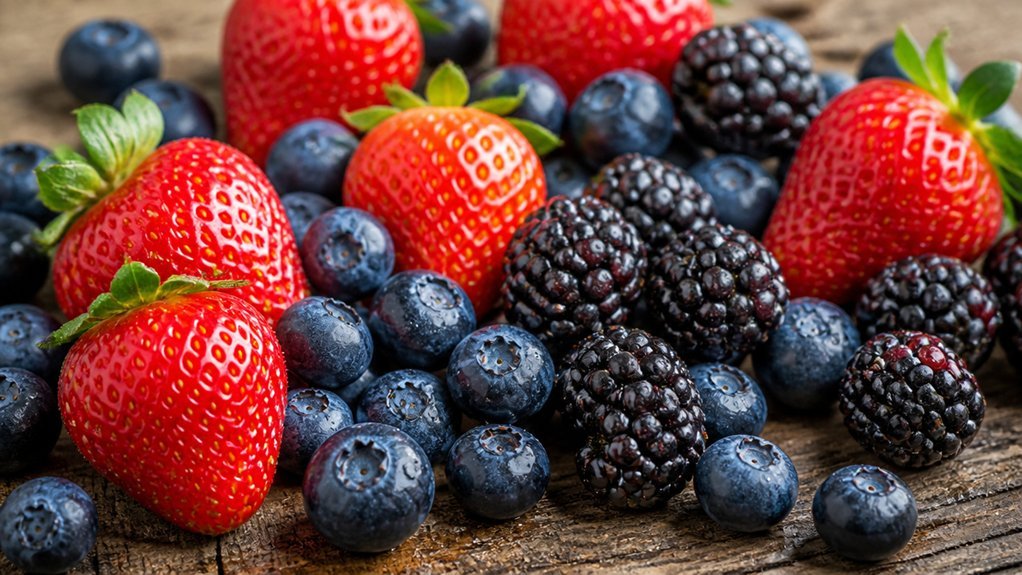
Berries are some of the best fruit treats you can offer your chickens because they’re small, easy to eat, and packed with flavor. You can safely feed several kinds in moderation, and your flock will usually gobble them up fast. Try these favorites:
Berries make a tasty, bite-sized treat chickens love, and they’re easy to enjoy in moderation.
- Blueberries — bite-sized and easy for chicks and adults to peck.
- Strawberries — sweet, juicy, and best when sliced into manageable pieces.
- Raspberries — soft and fragrant, with a texture chickens enjoy.
- Blackberries — rich in taste, but mash them slightly for smaller birds.
Wash berries well before serving, and remove any moldy or overripe ones. Offer them as a treat, not a meal, so your chickens still eat their balanced feed. Incorporating a variety of treats, like berries, can also support digestive health and immune support with natural antioxidants like those found in berries.
A small handful goes a long way and keeps treat time fun and healthy.
Best Melons for Chickens
Melons can make a cooling, hydrating treat for your chickens, especially on hot days. You can offer watermelon, cantaloupe, or honeydew in small pieces so your flock can peck and enjoy the juicy flesh. These fruits give water, flavor, and a little natural sweetness without much fuss.
Remove the rind if it’s tough, and discard any seeds if they’re large or hard. You’ll want to serve melon as a treat, not a meal, so keep portions modest and limit frequency. Fresh, ripe melon works best because spoiled fruit can upset your chickens’ digestion.
If you freeze small chunks, you can create an invigorating snack that encourages pecking and helps your birds stay comfortable during hot weather.
Best Apples and Pears for Chickens
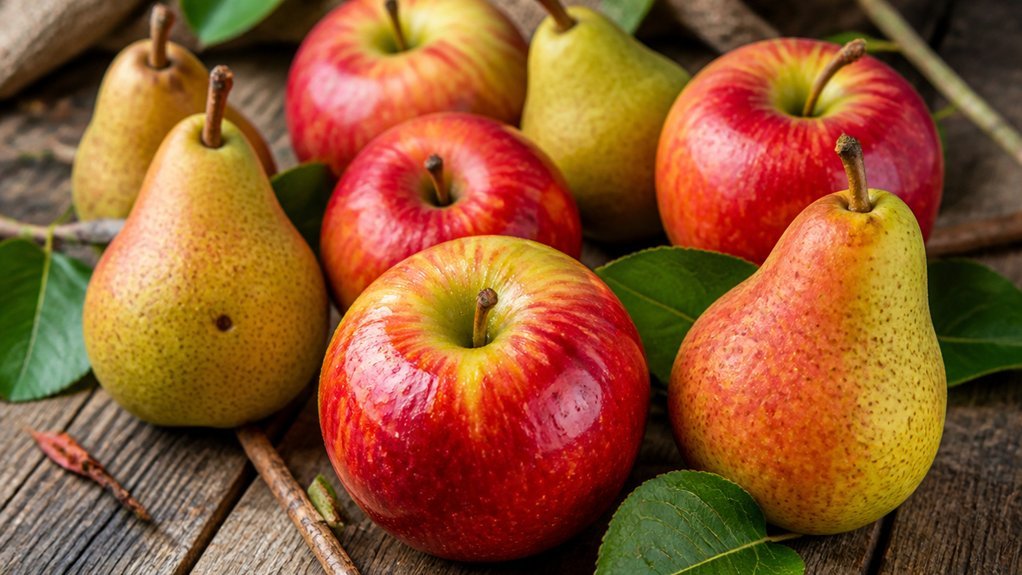
When you offer apples to your chickens, crisp varieties like Fuji, Gala, and Honeycrisp make a tasty treat.
You can also serve pears, but choose ripe ones and cut them into small pieces so your birds can eat them safely. Just be sure to remove the seeds and core before you feed either fruit.
Apple Varieties For Chickens
Crisp, sweet apples make a great chicken treat, and you can offer many common varieties as long as you remove the seeds first.
You’ll find that chickens usually enjoy mild, juicy fruit best, especially when you keep pieces small and easy to peck.
- Gala: Sweet and soft, so your flock can eat it easily.
- Fuji: Very crisp and sugary, which often gets quick interest.
- Honeycrisp: Juicy and invigorating, though a little pricier.
- Red Delicious: Soft enough for easy nibbling, but not overly tart.
You can also use Granny Smith in small amounts if your birds like tangy flavors.
Offer apples as an occasional treat, not a meal replacement, so your chickens stay balanced and healthy.
Pear Choices And Prep
Pears can be just as welcome as apples in your chicken treat rotation, as long as you choose ripe fruit and prepare it well. Pick firm-ripe pears with no mold, bruising, or sour smell, and skip anything overripe and mushy.
Wash them first, then cut them into small pieces so your hens can peck safely. Remove the core, seeds, and stem, because you don’t want hard bits or unnecessary extra sugar in the coop.
You can offer peeled or unpeeled pear slices, but keep portions modest since fruit should stay a treat, not a staple. Bartlett, Anjou, and Bosc all work well, and your flock will usually enjoy the soft, juicy flesh.
Feed pears fresh and discard leftovers before they spoil.
Best Tropical Fruits for Chickens
If you want to add a sweet, revitalizing treat to your flock’s diet, tropical fruits can be a great choice in moderation.
You can offer these options to bring variety and extra moisture to their snack time:
- Mango – Remove the pit and skin, then serve small pieces for easy pecking.
- Pineapple – Trim off the tough skin and core; offer only the soft flesh.
- Papaya – Scoop out the seeds and cube the fruit for a soft, fragrant treat.
- Banana – Slice it into bite-size pieces for a quick, energy-rich snack.
You should always wash fruit first and cut it small enough to prevent waste.
Tropical fruits can add interest to your chickens’ diet, and your flock’ll usually enjoy their bright flavors and soft textures.
How Often Chickens Can Have Fruit
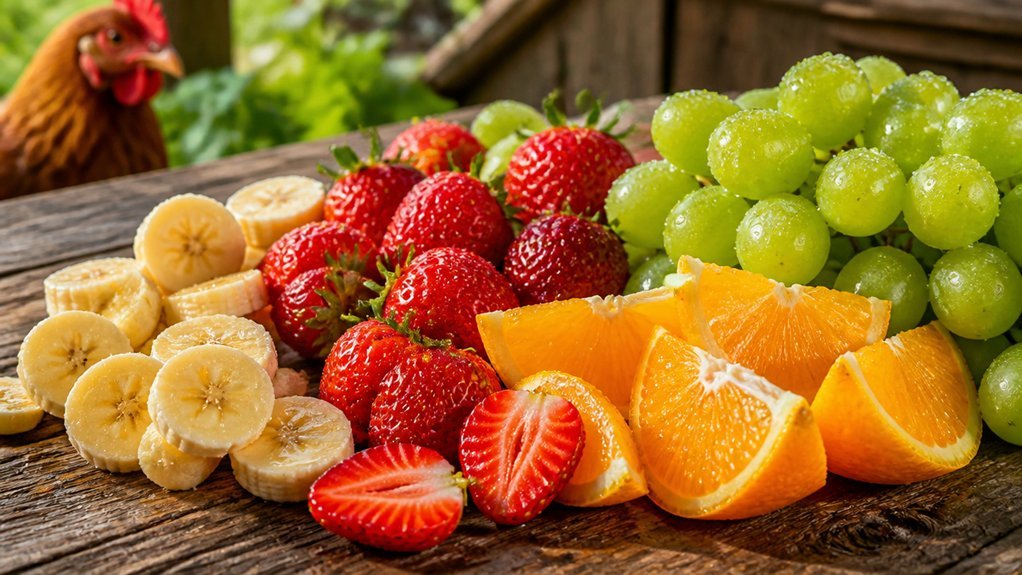
Fruit should stay an occasional treat for chickens, not a daily staple, since too much can throw off their balanced feed. You can offer fruit one to three times a week in small amounts, depending on the rest of their diet.
Keep treats under 10% of what they eat so their layer or grower feed still does the heavy lifting. If you give fruit too often, your chickens may fill up on sugar and miss key nutrients.
Watch their droppings and energy level, and cut back if you notice loose stools or picky eating. Always remove uneaten fruit quickly so it doesn’t attract pests or spoil.
Seasonal Fruit Treat Ideas for Chickens
Seasonal fruit treats can keep your flock interested while still fitting into a healthy feeding routine.
Seasonal fruit treats can keep your flock engaged while supporting a healthy feeding routine.
In spring, you can offer soft strawberries or blueberries; they’re easy to share and fun to peck. In summer, chilled watermelon or cantaloupe can help your chickens enjoy a revitalizing snack.
In fall, diced apples and pears add variety without much fuss. In winter, thawed frozen berries or small citrus bits can brighten dull days.
- Spring: strawberries
- Summer: watermelon
- Fall: apples
- Winter: berries
You should always wash fruit well, remove seeds or pits, and cut pieces small enough for quick eating. Rotate treats by season so you can use fresh produce from your kitchen or garden and keep mealtime interesting for your flock.
Signs Fruit Treats Upset Chickens
When treats don’t agree with your chickens, you’ll usually notice it quickly. Watch for droppings that turn watery, unusually foul, or more frequent after fruit.
You may see birds become sluggish, refuse feed, or keep to themselves instead of scratching around. Some chickens also get a messy vent, swollen crop, or mild gas from too much sugary fruit.
If you notice head shaking, beak wiping, or sudden pecking at the mouth, they might be dealing with irritation from sticky pieces or spoiled fruit. Remove the fruit right away, offer clean water, and skip more treats for a day or two. If symptoms last, get advice from a poultry vet.
To stay safe, feed small portions and only fresh, washed fruit.
Frequently Asked Questions
Can Fruit Treats Help Chickens During Hot Weather?
Yes, you can offer fruit treats to help chickens cool down in hot weather. You’ll want to use chilled, bite-sized pieces sparingly, since fruit adds hydration and comfort but shouldn’t replace their regular feed.
Should Baby Chicks Eat Fruit Treats?
You shouldn’t give baby chicks fruit treats yet; they need starter feed for growth. If you offer any, keep it tiny, soft, and occasional. Remove uneaten pieces quickly so you don’t encourage mold or pests.
Can Chickens Eat Frozen Fruit Safely?
Yes, you can feed chickens frozen fruit safely, but you should thaw it first or offer small pieces. You’ll reduce choking risk and help them eat it easily, especially on hot days.
Do Fruit Seeds Pose a Choking Risk for Chickens?
Yes, you should watch fruit seeds, because larger pits and hard seeds can choke chickens. You’ll want to remove apples’ cores, cherries’ pits, and similar seeds, then offer bite-sized pieces safely.
Can Fruit Treats Attract Pests to the Coop?
Yes, you can attract pests if you leave fruit scraps in the coop. You should offer small amounts, remove leftovers quickly, and keep feed sealed so flies, ants, rodents, and wasps don’t linger.
In Summary
Fruit can be a healthy, tasty treat for your chickens when you offer it in moderation. You can choose safe options like berries, melon, apples, and bananas, and always prep them properly by removing seeds and pits. Keep fruit treats occasional, watch how your flock reacts, and avoid anything toxic. When you stick to these simple steps, you’ll give your chickens variety without upsetting their diet or digestive system.


