You can tell chickens are happy and socializing when they look loose, bright-eyed, and smooth-feathered, with wings tucked and steady, relaxed movements. They’ll make soft clucks, peeps, and mellow chatter while scratching, foraging, dust bathing, and eating side by side. Happy flocks also preen each other, share space without chasing, and handle brief pecking calmly. Curious birds may even approach you confidently, and there’s more to spot if you keep going.
Relaxed Body Language in Happy Chickens
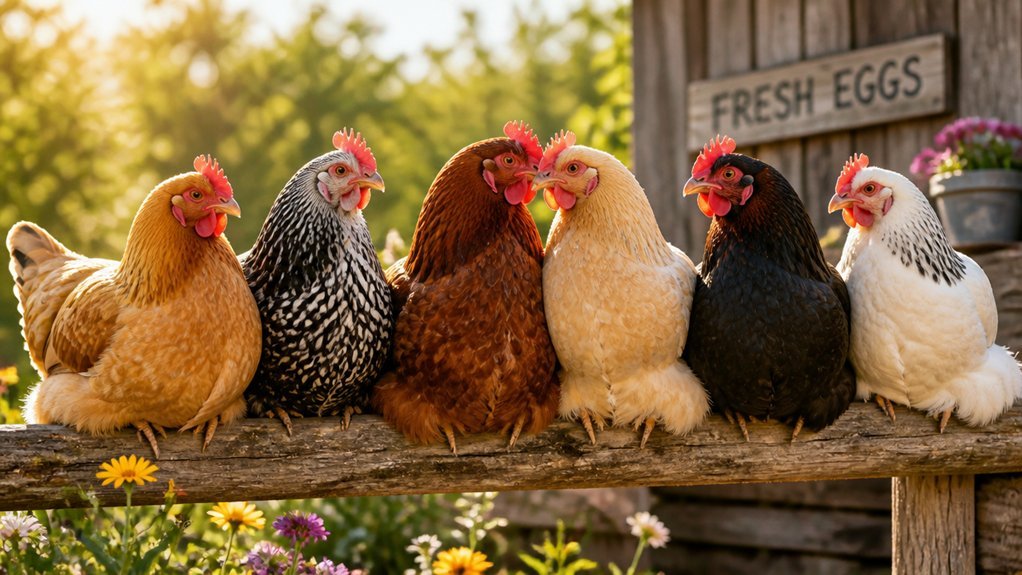
When chickens feel content, their bodies usually look loose and easy rather than tense. You’ll notice their feathers lie naturally, not puffed up from stress, and their wings stay tucked close without stiffness.
A happy chicken often stands balanced, with weight evenly spread on both legs, and it moves with a calm, unhurried rhythm. You may see its eyes half-lidded or bright and alert, showing comfort instead of fear.
The comb and wattles usually look healthy and relaxed, not sharply pulled back. If you watch closely, you’ll also spot steady preening, gentle stretching, and a willingness to settle nearby. These quiet signals help you judge that your flock feels safe, comfortable, and at ease in its space.
Soft Clucking and Content Sounds
You’ll often hear gentle clucks when your chickens feel safe and content. Their relaxed flock chatter usually means they’re comfortable and settled in together. These soft sounds are a good sign that your birds are happy and at ease. Additionally, observing your chickens engaging with enrichment toys like swings, xylophones, or mirrors indicates they are actively exploring and enjoying their environment.
Gentle Content Clucks
Gentle clucks and soft, low chatter are often a good sign that your chickens feel calm and content. You’ll hear these quiet sounds when your flock is resting, pecking, or moving around without stress. They’re different from sharp alarm calls because they stay even, mellow, and steady. When you spend time nearby, your birds may keep clucking softly while they explore or settle in. That usually means they trust their space and feel comfortable with you. Recognizing these signs of contentment can help you ensure your flock is healthy and happy.
Relaxed Flock Chatter
Relaxed flock chatter is one of the clearest signs that your chickens feel safe and content. You’ll hear soft clucks, quick murmurs, and quiet peeps as they move around the run, scratch for treats, or settle near one another.
These sounds usually stay low and steady, not sharp or frantic. When your flock chatters like this, they’re keeping in touch, reinforcing social bonds, and showing that the space feels comfortable.
You may notice the noise rise a bit when you approach, because they expect food or attention, but it should still sound calm. If you listen often, you’ll learn your flock’s normal rhythm and spot stress more easily. Proper coop protection and a secure environment help promote this relaxed communication.
Happy chickens don’t stay silent; they communicate in a relaxed, social way.
Content Chickens Scratch and Explore Together
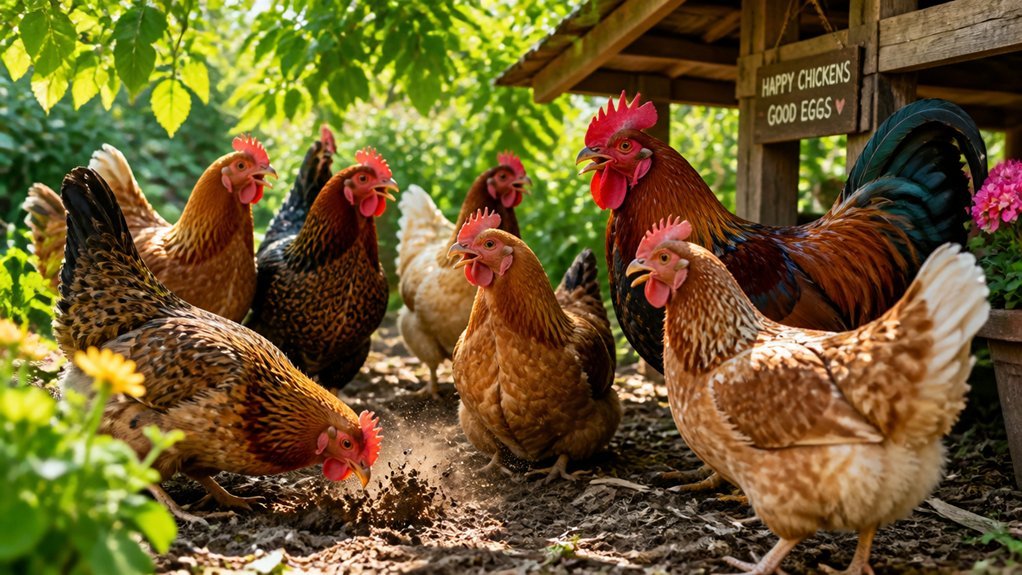
Happy chickens often scratch the ground side by side, pecking through soil, leaves, and bedding with curious focus. You’ll notice they fan out, then drift back together as they uncover bugs, seeds, and tiny treats.
This shared foraging shows they feel safe enough to roam, yet still choose each other’s company. Their movements stay calm and steady, not frantic, and they keep exploring without seeming tense.
When you watch this behavior, you’re seeing a flock that’s engaged, comfortable, and mentally active. Moreover, their ability to share feeding activities indicates strong social bonds and good overall health protein content.
Mutual Preening Shows Social Trust
When you see chickens preening each other, they’re showing trust and comfort within the flock. This grooming helps them remove loose feathers and strengthen their bond. Additionally, mutual preening indicates social bonding, which is essential for maintaining flock harmony.
Why Chickens Preen Together
A few chickens will gently groom each other’s feathers, and that mutual preening is a strong sign of trust within the flock. You’ll often see it when birds relax near one another and want to strengthen their social bond.
Preening together also helps you spot calm, friendly behavior because the birds stay close without tension. It’s one way your flock shows it feels safe and connected.
One additional sign is when chickens exhibit natural dust bathing, demonstrating they feel comfortable and secure in their environment.
- Watch for steady, peaceful feather grooming.
- Notice which birds choose each other again and again.
- Look for relaxed body posture while they preen.
When you see this, you’re observing more than grooming—you’re seeing social comfort in action. Happy chickens don’t avoid one another; they share quiet moments that keep flock life smooth.
Trust Signals in Preening
Mutual preening is one of the clearest trust signals in a flock, because chickens only groom birds they feel safe around. When you see two birds standing still while each one nibbles at the other’s feathers, you’re watching a calm, cooperative exchange.
They’re not competing, guarding, or avoiding each other; they’re choosing close contact. That matters, because chickens stay alert around birds they don’t trust, and they won’t lower their guard for just anyone.
Preening also shows that your flock recognizes social partners and accepts shared space without tension. If your chickens willingly let another bird work around the head, neck, or back, you can read that as a strong sign of comfort.
It’s a simple behavior, but it speaks volumes about flock harmony.
Healthy Bonds Through Grooming
Healthy grooming routines tell you a lot about how secure your chickens feel with one another. When you watch birds gently nibble feathers, you’re seeing mutual preening, a calm behavior that builds social trust.
You’ll notice relaxed bodies, soft clucks, and no pecking at the skin. That means your flock isn’t just sharing space; they’re strengthening bonds.
- Check for reciprocity: each bird should take turns grooming.
- Look for comfort: birds stay close without tension or chasing.
- Watch the aftermath: preened chickens often settle, rest, and forage together.
- Use appropriate perches: providing comfortable, stable roosting bars can support natural behavior and social comfort.
If you spot these signs, your chickens likely feel safe, connected, and socially balanced. Support that trust by keeping enough space, clean feathers, and a low-stress coop.
Calm Flocks Stay Close Without Fighting
When chickens feel safe and settled, they usually cluster together without constant squabbling. You’ll notice they share space calmly, step aside without pecking, and keep a relaxed pecking order. Instead of chasing, they move around one another with little fuss, which shows the group has found balance.
You can watch for steady feeding, quiet resting, and chickens choosing to stay near flockmates rather than isolating themselves. Even when they compete for a treat, they shouldn’t erupt into repeated fights.
A peaceful flock doesn’t mean every bird is inseparable; it means they tolerate each other and recover quickly from minor disagreements. Proper enclosure design can help reduce stress and negative interactions among hens, fostering this peaceful environment. When you see this easy rhythm, your chickens likely trust their environment and each other.
Dust Bathing Signals Comfort and Well-Being
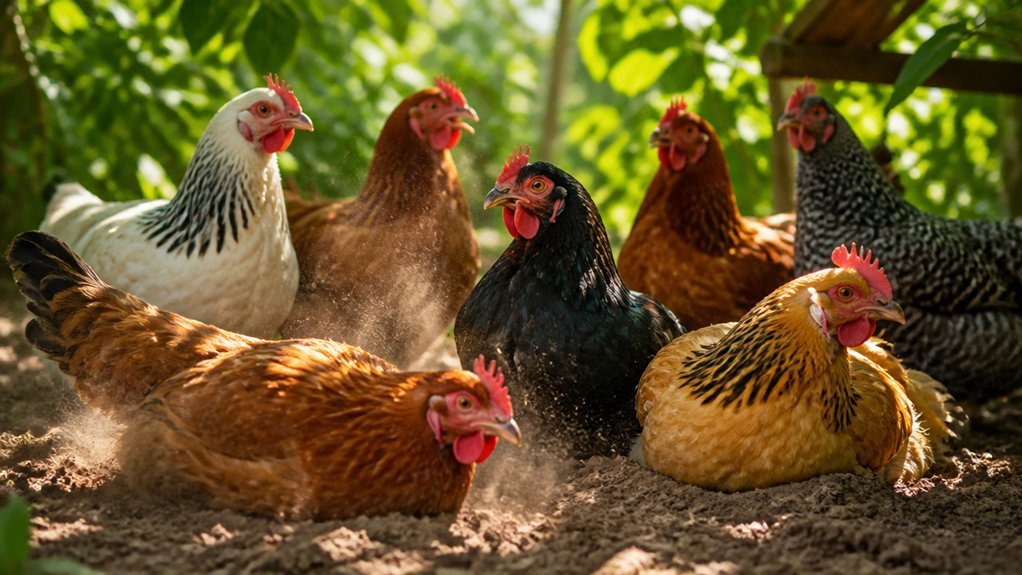
A content chicken will often flop down and dust-bathe with enthusiasm, kicking dirt through its feathers and tossing it over its back. When you see this, you’re watching a bird that feels safe, relaxed, and comfortable in its space.
Dust bathing helps your flock manage oil, loosen debris, and scratch away pests, so a chicken that does it often usually feels well. You may notice gentle wing spreading, calm eyes, and slow, deliberate movements.
Providing a bottomless design in your dust bath encourages better drainage and airflow, supporting your chickens’ health and comfort.
- Let your hens choose a dry, loose patch.
- Watch for relaxed posture and unhurried rolling.
- Provide fine soil, sand, or dry dust for regular baths.
If your chickens dust-bathe together nearby, that’s another good sign they’re at ease with one another and with you.
Content Chickens Eat and Drink Calmly
You’ll notice happy chickens eat calmly, pecking at feed without rushing or fighting. They also drink steadily, taking quick sips and moving away without stress. A peaceful feeding behavior indicates their immune system health is strong and they feel secure in their environment.
Calm Feeding Behavior
Happy chickens usually eat and drink in a relaxed, steady way, without frantic pecking, pushing, or nervous scanning. You’ll notice they keep a comfortable pace, share space politely, and return to the feeder or dish without fuss. That calm behavior tells you they feel safe and unpressured around flockmates and people.
- You see even spacing at feed time.
- You notice soft, unhurried pecks instead of jostling.
- You spot birds that settle quickly after eating.
When your chickens feed like this, you’re likely meeting their needs well. They don’t act tense, and they don’t guard food obsessively. Instead, they move with confidence and ease, which is a strong sign their routine feels secure and familiar.
Steady Water Intake
Steady water intake is another easy sign your flock feels content and secure. When you watch them drink at a normal pace, with no jostling or frantic pecking, you’re seeing birds that trust their surroundings. They’ll approach the waterer, take a few sips, and step away without fuss.
| Behavior | What You See | What It Suggests |
|---|---|---|
| Regular sipping | Birds drink often | Normal routine |
| Smooth approach | No rushing | Low stress |
| Brief pauses | They drink, then leave | Comfort and balance |
You should also notice that each hen keeps a steady rhythm through the day instead of crowding the source or avoiding it. Consistent drinking helps them stay hydrated, maintain energy, and keep their bodies working well. A calm flock usually treats water as a routine part of the day, not a source of tension or competition.
Relaxed Group Eating
When your chickens gather to eat without pushing, squabbling, or guarding the feeder, it’s a strong sign they feel safe and settled. You’ll notice each bird taking turns, pecking calmly, and lifting its head to check the group. That easy rhythm shows trust, good flock balance, and enough feed space for everyone.
If you see relaxed group eating, your flock isn’t competing for every bite; they’re comfortable sharing. Watch for these signs:
- Birds stand close without tension.
- No one chases others from the feeder.
- Hens keep eating while others move around.
You can support this calm behavior by offering multiple feeding spots, fresh feed, and enough room to gather naturally. When mealtime stays peaceful, your chickens likely feel happy and socially secure.
Gentle Pecking Keeps the Flock in Balance
Gentle pecking is a normal way chickens sort out their social order, and it often helps keep the flock calm. You’ll notice brief, light pecks that end quickly, with no chasing or feather pulling. This behavior lets each bird reinforce its place without escalating tension.
In a healthy flock, you see this exchange during feeding, roosting, or brief disagreements, and then the group moves on. When you watch closely, you can tell the difference between harmless reminders and bullying. Calm chickens usually settle after these quick interactions, keep their spacing, and return to routine.
If pecking stays mild, it often signals a stable group where birds understand one another and share the space peacefully.
Curious Chickens Approach People Confidently

Curious chickens often walk up to you without panic, watching closely as you move around the coop or yard. That calm approach shows they trust you and feel safe in their space.
Curious chickens may stroll right up to you, calmly watching as you move through their coop or yard.
Instead of darting away, they may follow your boots, peck nearby, or tilt their heads as if they’re trying to figure out what you’re doing. You can encourage this by moving slowly and offering treats by hand.
- They stay near you instead of hiding.
- They inspect new objects or sounds with interest.
- They return after brief pauses, showing confidence.
When your flock treats you like part of the scene, you’re seeing social, relaxed behavior that usually means they’re comfortable and content around people.
Bright Eyes and Smooth Feathers Signal Health
Bright eyes and sleek, smooth feathers are good signs that your chickens are healthy and comfortable. When you watch your flock, look for clear, alert eyes that don’t seem watery or dull. Healthy feathers should lie flat and feel soft, not ragged, greasy, or missing in patches.
This usually means your birds are eating well, grooming themselves, and handling stress better. You’ll also notice they move with more energy and keep up with the group. If a chicken’s eyes look cloudy or its feathers puff up constantly, something may be wrong. Check for parasites, poor diet, or illness right away. By noticing these details early, you can protect your chickens’ health and keep their social behavior strong.
Frequently Asked Questions
How Can I Tell if a Chicken Is Bored, Not Happy?
You’ll notice boredom if your chicken stares listlessly, pecks repeatedly, plucks feathers, or ignores treats and flockmates. You can fix it by adding space, perches, dust baths, foraging toys, and varied food.
What Causes Chickens to Stop Socializing With the Flock?
You’ll usually see chickens stop socializing when illness, injury, bullying, stress, predators, overcrowding, or a sudden coop change makes them feel unsafe. You should separate the affected bird, check health, and restore calm quickly.
Do Chickens Show Happiness Differently at Different Ages?
Yes, you’ll notice chicks, pullets, and adult hens show happiness differently. You’ll see chicks peep and cluster, pullets explore and preen, and adults relax, dust bathe, and mingle calmly with the flock.
How Many Chickens Should Live Together for Healthy Social Behavior?
You should keep at least three chickens together, though five to eight usually works better. You’ll see healthier pecking order behavior, less loneliness, and more natural socializing when they’ve got enough companions and space.
Can Stress or Illness Hide Signs of a Happy Chicken?
Yes, stress or illness can hide those signs. You’ll notice fewer bright behaviors, less grooming, drooping posture, and isolation. Check appetite, droppings, and energy, and act quickly if anything seems off.
In Summary
When you watch your chickens, you can spot happiness in plenty of small ways. You’ll see relaxed body language, hear soft clucks, and notice them scratching, exploring, and eating together. They may preen each other, stay calm in a close flock, and approach you with curiosity. Bright eyes and smooth feathers also show they’re doing well. Keep observing these signs, and you’ll know your flock feels safe, social, and content.