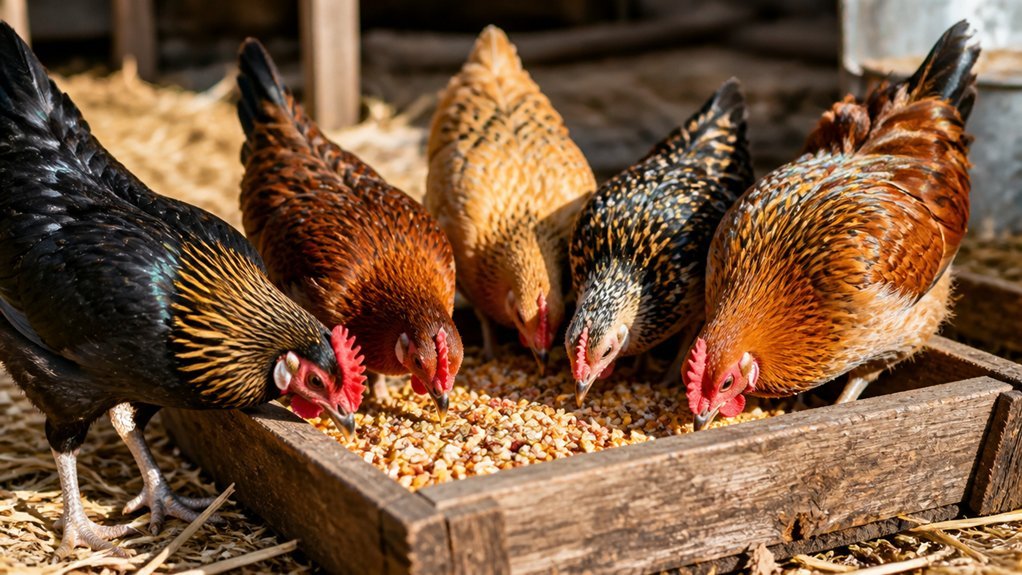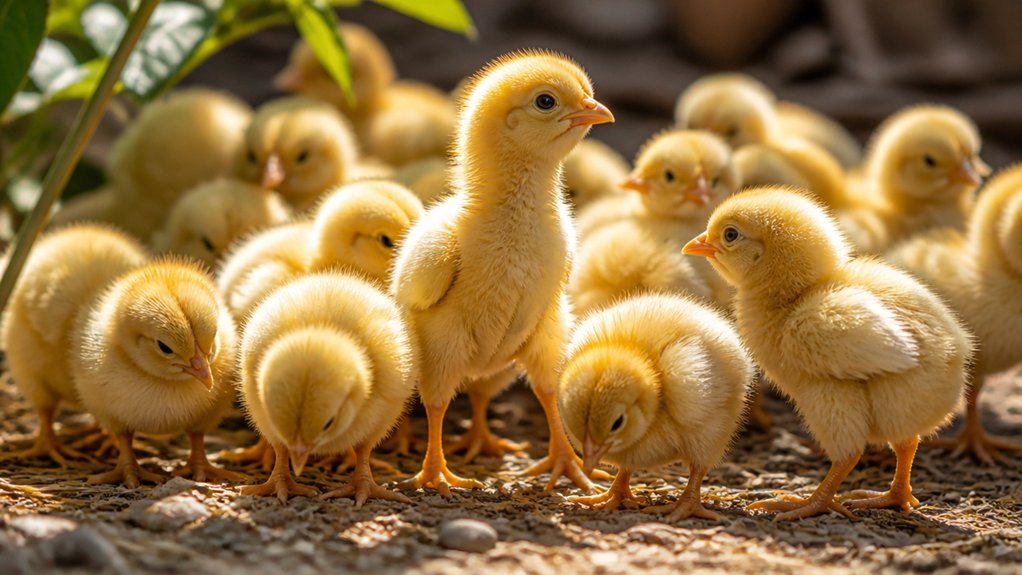
You’ll see chicks peck, scratch, chirp, and jostle as they explore and figure out their place in the group. That’s normal social sorting, and a pecking order often forms quickly through small pecks, posturing, and brief chases. Healthy chicks mingle, eat, rest, and recover easily after minor squabbles. If one bird gets chased, pinned, or can’t reach food and water, you may need to step in. There’s more to watch for as the flock settles.
Normal Chick Behavior to Expect
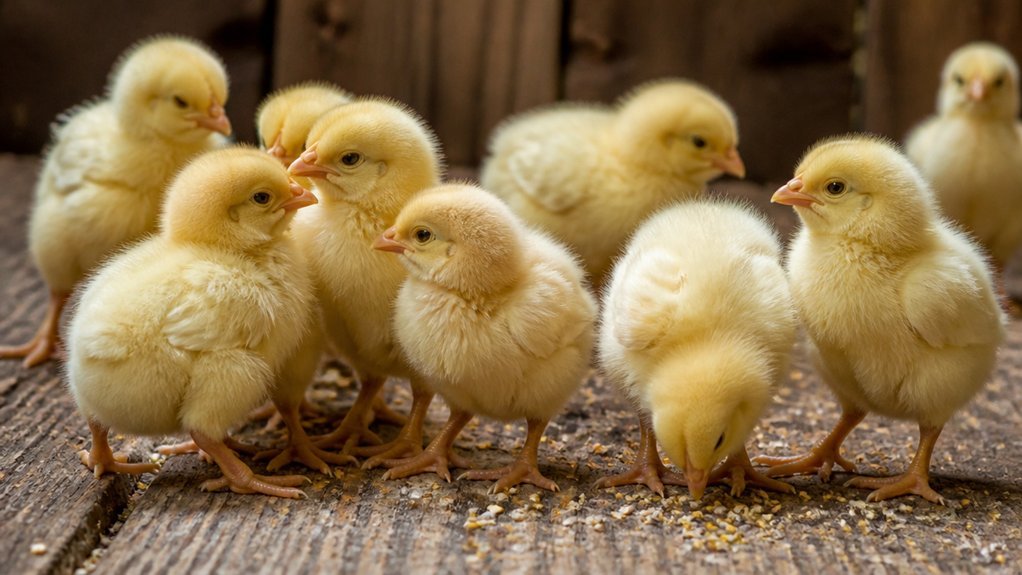
When chicks are healthy and comfortable, you’ll usually see them pecking, scratching, chirping, and exploring their space with quick bursts of energy. You’ll notice them darting after crumbs, testing bedding with their feet, and gathering under warmth before wandering off again.
They often sleep in short stretches, then wake to drink, eat, and investigate anything new. Soft peeping, alert head movements, and frequent preening are normal signs that they’re settling in. You should expect some brief startle reactions, too, because chicks stay watchful and curious.
A well-designed chick brooder with proper ventilation and temperature control helps them act naturally and feel secure, preventing stress and supporting healthy behavior.
How Chicks Establish a Pecking Order
When you watch chicks interact early on, you’ll notice quick pecks, nudges, and posturing that help set boundaries. You can see stronger chicks use small dominance displays to claim space, food, and attention. Over time, these repeated interactions help form a stable group order that lowers conflict. The development of this social hierarchy] relies on consistent behaviors and establishes a balance within the flock.
Early Social Interactions
From the moment chicks start mixing, they begin sorting out rank through quick, repeated interactions like pecks, pushes, and brief chases. You’ll notice each bird testing the others’ responses, learning who yields and who pushes back. These early exchanges help you see how a pecking order forms without constant conflict. A chick that retreats often may slip lower in rank, while one that holds its ground can rise. You should watch for patterns, not single events, because the group settles through many small encounters. Recognizing signs of social stability can help you determine when the hierarchy has been established, leading to a more harmonious flock. As chicks get familiar with one another, their interactions usually become less frequent and less tense. That shift tells you the hierarchy is taking shape, letting the flock share space more smoothly and with fewer disruptions overall.
Dominance Displays
Dominance displays let chicks signal status without constant fighting, and you’ll often see them stand taller, flap, peck, or block another bird’s path to claim space. You can watch a chick test another with a quick peck, then pull back if the other bird refuses to yield.
You’ll also notice brief chases, sideways posture, and raised feathers that make a bird look bigger. These actions help you read which chick feels confident and which one gives way.
When you understand these cues, you can spot tension before it turns into repeated aggression. You should watch for any bird that monopolizes food or preferred spots, since those moments often reveal how chicks negotiate rank through posture, timing, and a few sharp, clear movements. Additionally, maintaining consistent temperature accuracy and proper probe placement with a brooder thermometer ensures that environmental conditions support healthy development and reduce stress-related behaviors.
Stable Group Order
Once chicks have tested one another, the group usually settles into a stable pecking order that reduces daily conflict. You’ll notice that each bird learns its place through repeated, low-level interactions, not constant fighting. Higher-ranked chicks eat first, claim better spots, and move with more confidence, while lower-ranked birds step aside and avoid challenges. Proper size fitting ensures that each chick can establish its place comfortably without excessive competition. You can support this balance by giving enough space, feed, and hiding areas so no chick has to compete too hard. When the hierarchy stays clear, the flock becomes calmer, and you’ll see fewer injuries, less stress, and smoother daily routines overall.
Why Chicks Start Sorting the Pecking Order Early
You can spot early social signals in chicks almost as soon as they meet, and those first pecks and postures tell you who’s testing whom. They quickly try out rank because each chick wants to claim space, food, and safety before habits set in. This early sorting helps the flock stay stable, so you see fewer constant challenges once the hierarchy starts forming. Using comfortable bedding can support natural behaviors and make the process smoother for young chicks.
Early Social Signals
Even in the first days after hatching, chicks start reading each other’s signals and reacting fast. You’ll notice tiny cues doing big work: posture, eye contact, and quick pecks tell others who’s calm, bold, or unsure. These early messages help you see how a group begins to organize itself without much drama. Observing their playpen environment closely can give you insights into their social development.
Rapid Rank Testing
As chicks keep meeting one another, they quickly test strength, confidence, and timing to figure out who moves first and who yields. You’ll notice tiny pecks, side steps, and brief chases as each chick probes another’s response.
These aren’t random scuffles; they’re fast checks that help you see how rank starts to form. A chick that holds its ground, moves with purpose, or reaches feed first often gains a better position. One that hesitates or backs away may slide lower in the lineup.
Because chicks learn from each encounter, they adjust their behavior on the next try. In this way, you can watch the group sort itself early, with each interaction revealing where everyone stands. Maintaining proper feeding practices and environment helps support healthy social development during these interactions.
Flock Stability Needs
Those quick pecks and brief chases do more than settle one moment’s dispute—they help the flock stay steady. When you watch chicks, you’re seeing them build rules that cut confusion and limit constant challenges. A clear pecking order lets each bird know where it fits, so feeding, resting, and moving together happen with less tension. You’ll notice calmer group behavior once roles settle. Establishing these roles early is influenced by their natural social hierarchy formation, which promotes flock stability.
Signs of Healthy Chick Socializing
Healthy chick socializing shows up in calm, balanced interactions: they peck, follow, and rest together without constant aggression. You’ll notice each chick joins the group easily and leaves it just as easily, without panic or isolation. Their movements stay coordinated, and they share space while exploring feed, water, and bedding. A well-designed perch system can help encourage stable social behavior by providing comfortable roosting options that reduce stress.
- They mingle with brief, gentle pecks.
- They settle into shared resting spots.
- They eat and drink alongside others.
- They move as a loose, comfortable group.
- They recover quickly after minor squabbles.
You can also watch for steady curiosity, normal appetite, and relaxed body posture.
When chicks socialize well, you’ll see confidence building through everyday flock routines, and the group’s rhythm stays smooth and predictable.
Chick Bullying and Stress Signals
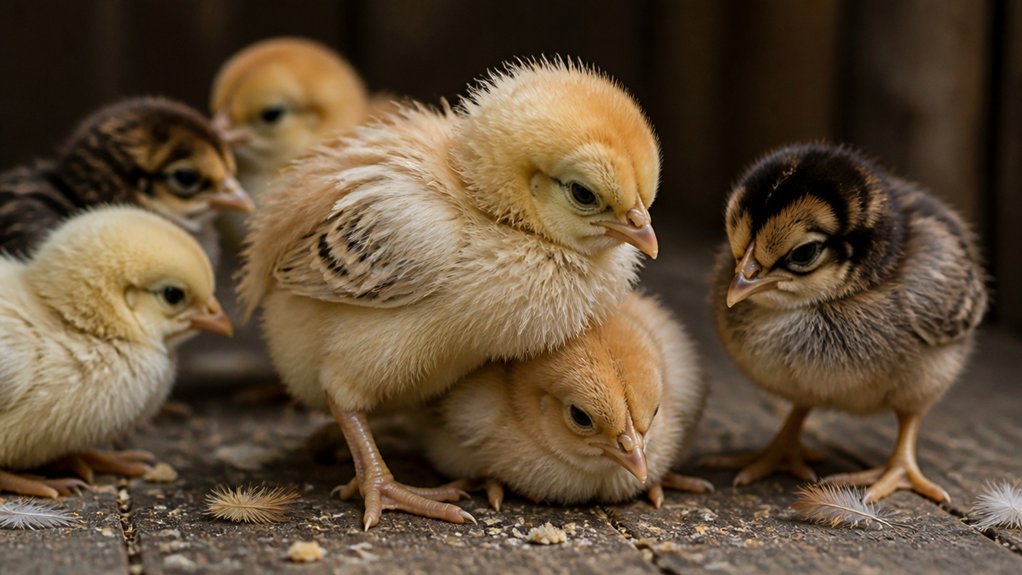
When bullying starts, you’ll usually see one chick repeatedly chasing, pecking, or blocking others away from feed, water, or resting spots. You may also notice the targeted chick shrinking back, avoiding movement, or making sharp distress calls. Watch for raised hackles, drooped wings, and uneven access to food.
| Signal | What you notice | What it means |
|---|---|---|
| Chasing | One chick pursues another | Control of space |
| Pecking | Repeated hits on body | Escalating pressure |
| Retreat | Chick backs away often | Ongoing stress |
You should treat these patterns seriously because stress can spread through the group fast. A bullied chick eats less, rests less, and loses confidence. When you spot these clues, you can track who’s doing the bullying and who’s suffering, then adjust your setup before injury or long-term fear takes hold.
Help Chicks Bond Safely
To help chicks bond safely, give them chances to mix without forcing constant competition. You can build trust by offering shared space, steady routines, and low-stress activities that let them explore together.
- Provide several feed and water spots.
- Keep lighting calm and consistent.
- Give them room to move apart.
- Watch for relaxed pecking and preening.
- Remove hazards that trigger crowding.
You should observe how they interact, then adjust space or enrichment if tension rises. Gentle contact, short group play, and predictable care help chicks learn one another’s cues.
When you stay patient, you support a smoother flock dynamic and reduce fear-based behaviors. Over time, chicks often settle into comfortable habits that make social life easier and healthier.
How to Introduce New Chicks Safely

Introducing new chicks works best when you keep the process slow, calm, and closely supervised.
Before contact, quarantine newcomers in a separate brooder for at least 2 weeks so you can watch eating, drinking, and droppings. Then let the groups see and hear each other through wire for a few days.
When you’re ready, place them together on neutral bedding with extra feed and water stations, so no chick has to guard resources. Introduce them during daylight, when everyone stays more settled. Stay nearby and give them room to adjust, but separate chicks only if one can’t access food or water.
Short, repeated meetings usually help them settle faster than one long session. The goal is steady familiarity, not instant friendship.
When Chick Behavior Needs Intervention
Sometimes chick squabbles are normal, but you need to step in if pecking turns into chasing, pinning, feather pulling, or blocking access to food and water. Watch closely, because repeated stress can stunt growth and spread injuries.
Move the aggressor, add more feeders, or widen the brooder to break tension.
- Check for bleeding, limping, or droopy wings.
- Separate any chick that can’t escape harassment.
- Offer extra hiding spots with cardboard or branches.
- Keep warmth, light, and space balanced.
- Call a vet if wounds look deep or behavior stays severe.
You should also track which birds start trouble, since patterns help you adjust placement and reduce conflict before it escalates again.
Frequently Asked Questions
How Do Chicks Choose a Favorite Sleeping Spot?
You’ll notice chicks pick spots that feel warm, safe, and familiar, often near flockmates or under shelter. They’ll return to places they’ve used before, because comfort, routine, and protection guide them.
Can Chick Personalities Change as They Grow?
Yes, they can. You’ll often see chicks become bolder, calmer, or more social as they grow, especially with experience and flock interactions. Some traits stay steady, but others can shift over time.
Do Chicks Recognize Individual Flock Mates?
Yes, chicks can recognize individual flock mates by sight, sound, and smell. You’ll often see them remember familiar companions, especially after repeated contact, which helps them stay close and navigate their flock.
How Does Brooder Size Affect Chick Interactions?
A larger brooder gives you more space, so chicks spread out, explore, and fight less; a smaller one crowds them together, raising pecking, competition, and stress, though it can also increase contact and social learning.
What Toys Help Chicks Stay Mentally Active?
You can keep chicks mentally active with pecking blocks, hanging greens, shallow litter trays, mirrors, and low perches. Rotate safe toys often, so they’ll explore, peck, and scratch without getting bored or stressed.
In Summary
By understanding chick behavior, you can spot what’s normal and what needs attention. You’ll see early pecking-order sorting, healthy social bonding, and the warning signs of bullying or stress. When you provide space, supervision, and careful introductions, you help your chicks grow into a stable flock more safely. Trust what you observe, and don’t ignore repeated chasing, injury, or weakness. Quick action can protect every chick and support healthier social hierarchy formation.