
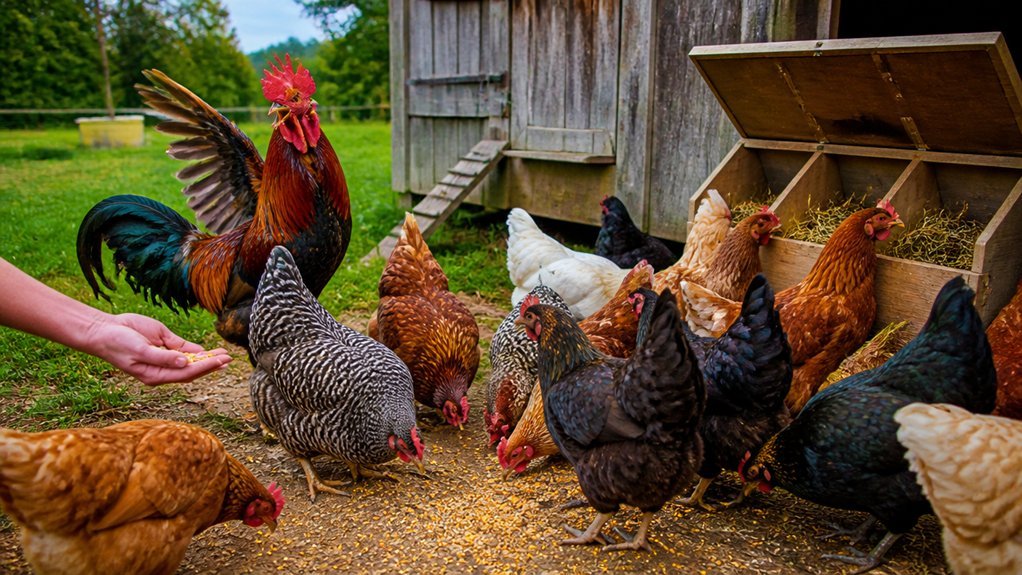
The biggest chicken socializing mistakes are moving too fast, crowding the flock, reaching from above, and handling birds before they trust you. You also shouldn’t chase, grab, or lift chickens roughly, since that turns your hands into a threat. Watch body language, give space, and keep your voice soft. Introduce new birds slowly, and use treats to reward calm behavior, not force contact. If you want better results, the next tips make it much easier.
Chicken Socializing Mistakes to Avoid
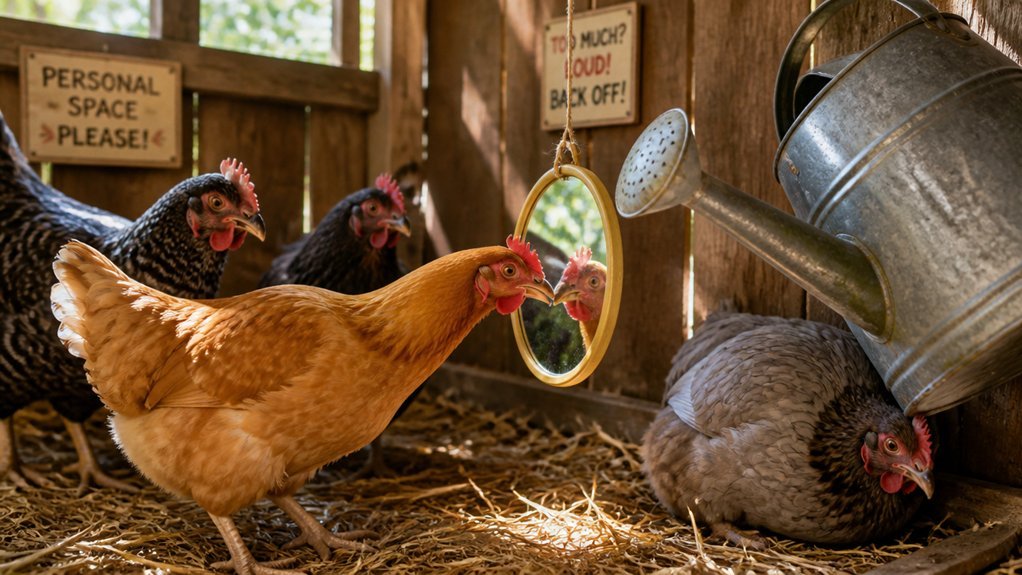
When you’re trying to socialize chickens, the biggest mistakes usually come from moving too fast or reading their behavior wrong. You can’t force trust by crowding them, chasing them, or reaching in from above. That makes you seem like a threat, and they’ll remember it.
You also shouldn’t mistake curiosity for comfort; a bird that pecks nearby isn’t always ready for closer contact. Keep your movements calm, your voice steady, and your routine consistent so they learn you’re predictable. Don’t overwhelm them with too many people, loud noises, or sudden changes at once.
Pay attention to their adjustable strap and body language to know when they feel safe and when they’re stressed. If you watch their body language, you’ll know when to back off and when to keep building confidence. Patience helps you avoid setbacks and makes social progress feel natural.
Don’t Handle Chickens Too Soon
Handling chickens too soon can undo the trust you’ve already built. When you rush to pick up a bird before it feels secure, you teach it that your hands mean stress, not safety.
Handling chickens too soon can undo trust, teaching them your hands mean stress, not safety.
Let your flock settle into its new routine first. Spend time nearby, speak softly, and offer treats from a distance before you try to touch them.
If you need to handle a chicken, move slowly and support its body fully so it doesn’t feel trapped. Keep sessions brief and calm, then return the bird to the ground right away.
You’ll make better progress by letting each chicken choose contact at its own pace. Patience now builds confidence later, and that confidence makes future handling much easier for you both to manage.
Being mindful of chick temperament and observing their responses will help ensure a positive bonding experience.
Watch Chicken Body Language

Watch your chickens closely, because their body language tells you far more than their sounds do. When you move nearby, watch for relaxed feathers, steady pecks, and slow blinking; those signs mean they feel safe.
If they crouch, freeze, or dart away, you’re moving too fast. A chicken that fluffs up, lowers its head, or raises its hackles may feel stressed or defensive. You can build trust by pausing when you see tension and resuming only when they settle.
- Relaxed posture: calm, balanced, curious.
- Tense posture: stiff, crouched, ready to bolt.
- Defensive signals: raised feathers, sharp movements, wing spreading.
Pay attention every time you interact, and let their reactions guide your pace. Considering predator protection essentials can help you better understand their signals and ensure a secure environment.
Introduce New Chickens Slowly
When you bring home new chickens, you should quarantine them first to help protect your flock from illness. After that, you can set up supervised first meetings so everyone gets used to each other safely. This slow approach helps you avoid stress, injury, and sudden pecking fights. Considering proper carrier size during introductions can also reduce handling stress for the birds.
Quarantine New Birds
Quarantine new birds before you add them to your flock, because even healthy-looking chickens can bring in illness or parasites.
Keep them separate for at least 30 days in a clean, dry space with their own feeders, waterers, and tools. Watch for sneezing, diarrhea, mites, limping, or poor appetite, and act fast if you notice problems.
This quiet period lets you check droppings, monitor weight, and spot issues before they spread. Proper quarantine procedures also help prevent predator threats and other hazards that could harm your new birds or existing flock.
- Use separate housing and equipment.
- Observe daily for signs of disease or pests.
- Handle your flock last to reduce cross-contamination.
Don’t rush this step just because the newcomers seem calm. A careful quarantine protects your birds, saves money, and gives you peace of mind.
Supervised First Meetings
After quarantine, bring your chickens together slowly under close supervision so you can catch aggression before it turns serious.
Start with short visits in a neutral pen or run, and watch how each bird reacts. Keep treats handy to reward calm behavior and distract pecking.
If one hen lunges, chases, or pins another, separate them right away and try again later. You should keep these sessions brief at first, then extend them as the flock settles.
Provide enough feeders, waterers, and space so birds don’t compete. Don’t force mingling or expect instant harmony; chickens need time to sort out pecking order.
Using secure, well-designed coop hardware like self-locking gate latches can also help prevent accidental escapes or entry by predators during integration.
Use Treats Without Spoiling Trust
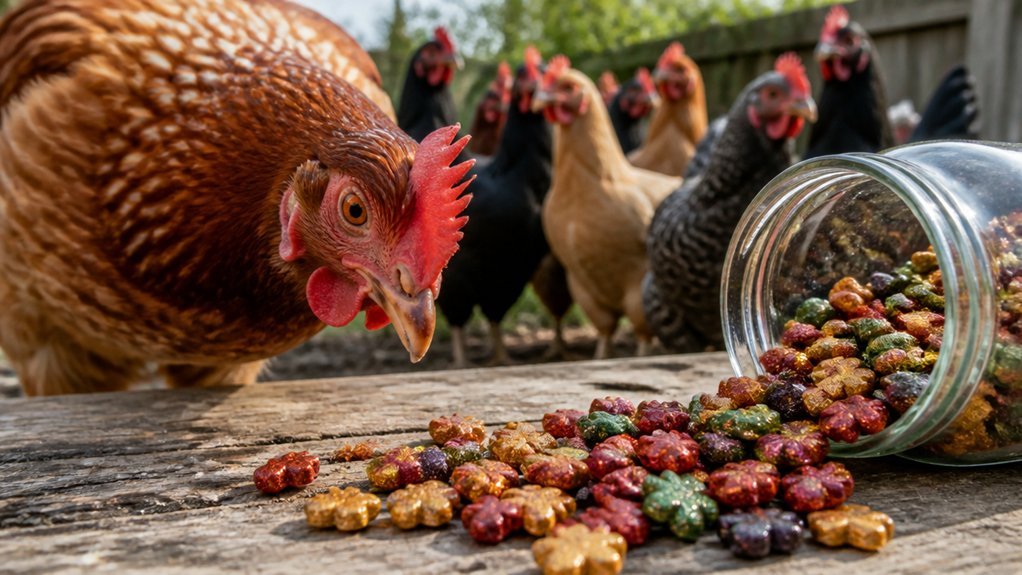
Treats can be a great way to build a positive bond with your chickens, but if you hand them out too often or only when you want something, they may start following the snack instead of trusting you.
Use treats as a reward for calm, consistent interaction, not as a bribe every time you appear. Offer small portions so they stay interested without becoming pushy, and mix rewards with normal visits, soft talk, and steady routines.
- Give treats after relaxed behavior.
- Keep portions small and occasional.
- Pair treats with everyday presence.
This balance helps your flock connect you with safety and predictability, not just food. When you stay consistent, they learn that you’re reliable, and the bond grows naturally over time. Additionally, nutritional balance is key to maintaining their trust and health, so treats should complement their overall diet rather than replace it.
Don’t Let Chickens Fear Your Hands
Once your chickens see you as a calm, predictable presence, the next step is making your hands feel safe too. Move slowly when you reach into the coop, and let them watch your approach before you touch anything.
If you grab at them from above, they’ll often react with alarm, so lower your hand gradually and keep your movements smooth. Offer treats in your open palm so they connect your hands with good experiences.
Avoid sudden restraint unless you truly need to catch one, because repeated surprise teaches them to flinch. Instead, handle them briefly and gently, then release them before they get stressed.
Using enrichment toys and providing varied, mental stimulation can also help reduce fear and build trust during handling. When your hands stop signaling danger, your chickens relax faster and trust you more during everyday care.
Teach Kids to Handle Chickens Gently
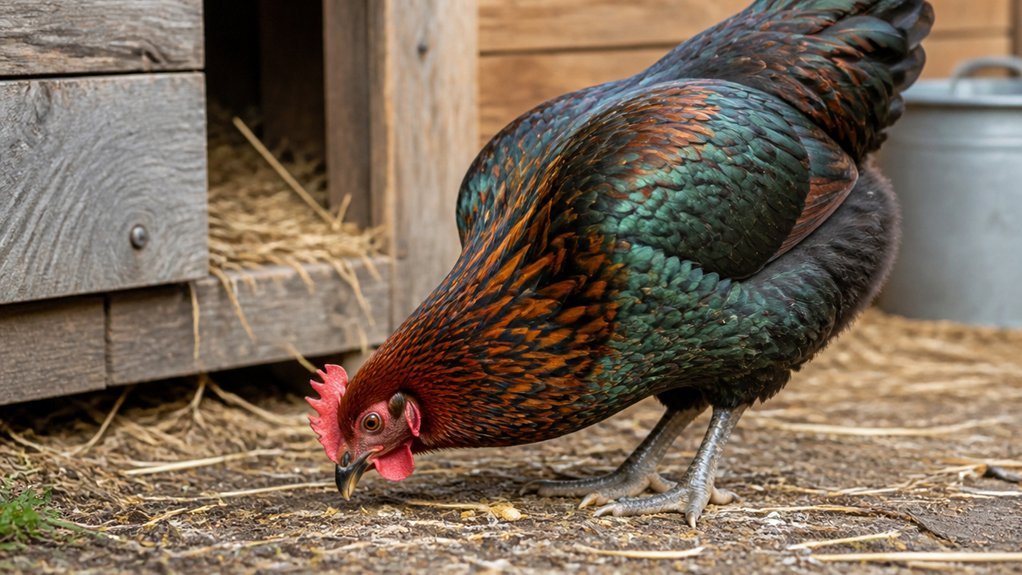
You can teach kids to hold chickens gently by supporting the bird’s body and keeping a firm but soft grip. Ask them to move slowly and stay calm, since sudden motions can scare the chicken. Show them safe handling habits so every interaction feels steady and respectful. Using appropriate roosting bars in the coop can also help provide a sense of security and reduce stress for the chickens during interactions.
Gentle Holding
Gentle hands make all the difference when kids hold chickens. You should show children how to cradle a bird with both hands, one supporting the breast and the other steadying the feet.
Keep the chicken close to the body so it feels secure, and remind kids that squeezing can hurt it. Let them practice with a calm, light grip before lifting a live bird.
- Place one hand under the chest.
- Support the legs and feet.
- Hold the chicken snugly, not tightly.
You can also explain that the bird’s wings need support so it doesn’t flap free and get startled.
When kids treat chickens like fragile pets, they build trust and learn respect. That care makes handling safer for everyone. Proper handling techniques help prevent stress and injury, ensuring a positive experience for both the chicken and the handler.
Calm Movements
Slow, calm movements help chickens stay relaxed, so show kids how to approach and handle them without sudden grabs or quick lifts. You can model a steady pace, soft hands, and quiet voices so the birds don’t feel startled.
When you crouch instead of looming, children learn that your body language matters. Let them watch you move slowly toward a chicken, pause, and wait for it to settle before touching it.
Remind them not to wave arms, rush in, or chase a bird across the pen. If a chicken steps away, give it space and try again more gently. By practicing controlled motions, you teach respect and reduce stress.
Calm handling builds trust, making each interaction easier, safer, and more enjoyable for everyone involved.
Safe Chicken Handling
When you handle chickens, support their body securely with one hand under the breast and the other steadying their legs so they feel safe, not squeezed. You should teach kids to move slowly, keep voices low, and hold the bird close to their chest. This helps prevent flapping and stress.
Always supervise young children, because quick grabs can scare a chicken and lead to scratches. Show them where to place their hands before they lift, then let them practice with a calm bird.
- Support the chest and legs.
- Keep the chicken close and still.
- Set the bird down gently.
If the chicken struggles, lower it right away and try again later. Gentle handling builds trust and makes every interaction safer for everyone.
Keep Daily Interactions Calm
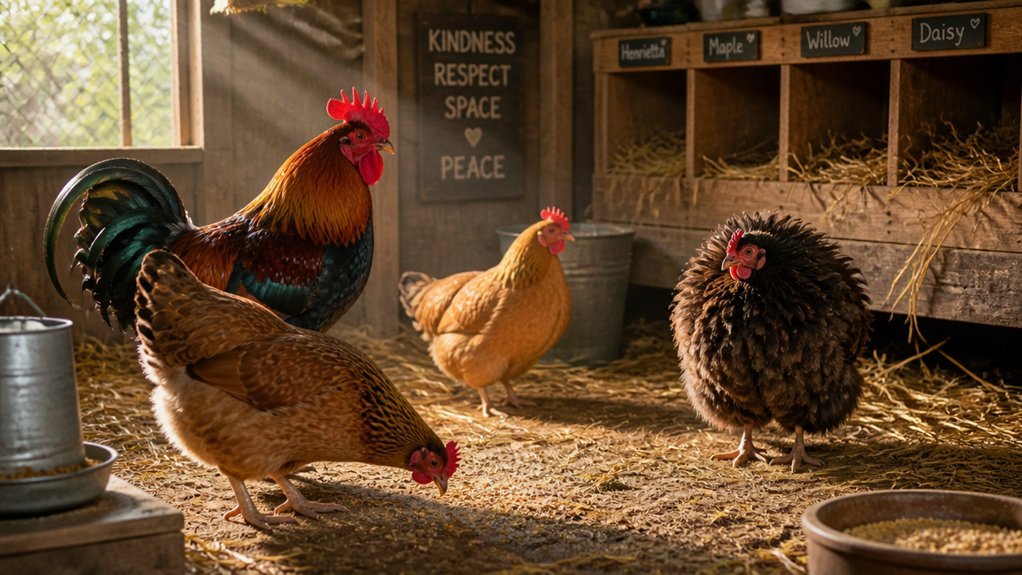
Keeping your daily interactions calm helps chickens feel safe and makes them more willing to approach you. You should move slowly, speak softly, and avoid sudden gestures when you enter the coop or run. Chickens notice your body language, so keep your shoulders relaxed and your steps steady.
Offer feed or treats in the same way each day so they can predict what happens next. If you rush, shout, or loom over them, you’ll make them wary and harder to socialize. Instead, let them come to you at their own pace.
Calm routines build trust, reduce panic, and help each bird link your presence with comfort. Over time, your quiet consistency teaches them that you’re not a threat, just part of their safe environment.
Socialize Chickens After Stress Carefully
After a stressful event, give your chickens time to settle before you try to handle or train them again. You can rush the process and make their fear worse. Watch for reduced movement, quiet clucking, or tight flock spacing, then wait until they act normal.
When you reintroduce contact, keep it brief and predictable. Use the same location, the same time, and a soft approach so they don’t feel cornered.
- Let them rest before any handling.
- Approach slowly and speak softly.
- Stop if they tense, flee, or crowd away.
You should also avoid chasing, grabbing, or forcing interaction right after stress. Instead, offer space and short, low-pressure moments. Small, careful sessions help them recover without turning one bad experience into a lasting setback.
How to Build Trust With Chickens
You build trust with chickens by showing up every day in a calm, steady way. Keep your hand movements slow and gentle so they don’t feel threatened.
Offer treats consistently, and they’ll start to link you with safety and good things.
Gentle Daily Presence
A gentle daily presence helps chickens learn that you’re safe, predictable, and worth approaching. Spend a few minutes with them at the same time each day so they can connect your arrival with routine, not stress.
You don’t need to force interaction; just be nearby while they eat, scratch, or dust bathe. Let them notice you without pressure, and they’ll start relaxing faster.
- Visit consistently so your flock can anticipate you.
- Stay in view while they carry on normal activities.
- Give them time to choose closeness on their own.
When you show up calmly and often, chickens begin to trust your presence. That trust builds the foundation for easier handling, better cooperation, and a stronger bond over time.
Calm Hand Movements
Chickens notice quick, jerky movements, so keep your hands slow and deliberate when you’re around them. When you reach toward a hen, move as if she can predict every step. Smooth motions help her stay relaxed and watch you without panic.
If you need to adjust a feeder, clean bedding, or guide a bird aside, do it with steady arms and open hands. Avoid waving, pointing, or lunging, since those gestures can trigger alarm. You build trust faster when your body looks predictable and calm.
Even small pauses matter, because chickens read posture closely. The more you practice controlled movements, the less likely they’ll scatter. Over time, your careful hand habits teach them that you’re safe, patient, and worth approaching.
Consistent Treat Sharing
When treats arrive at the same time and from the same place, your chickens start to associate you with something positive and reliable. Keep that routine steady, and don’t switch locations or scatter food randomly. Your birds learn faster when they can predict your actions, and predictability lowers their stress.
Use small portions so they stay interested without crowding you, and let them approach at their own pace.
- Offer treats after feeding or chores.
- Use the same call, bucket, or hand signal.
- Reward calm, curious behavior consistently.
You’ll build trust by showing up the same way each day. If you miss a day, get back on schedule quickly. Over time, your chickens will move closer, relax around you, and treat you like part of their safe flock routine.
Frequently Asked Questions
How Long Does It Take for Chickens to Trust a Person?
It usually takes you a few days to several months, depending on each chicken’s personality and your consistency. If you’re calm, patient, and predictable, they’ll trust you faster and approach you sooner.
Can Chickens Recognize Individual Human Faces?
Yes, chickens can recognize individual human faces, especially if you’re around them often. You’ll build stronger recognition through consistent, calm interactions, and they’ll learn to associate your face with safety, food, and routine.
What Treats Are Safest for Socializing Chickens?
You’ll do best with chopped greens, mealworms, oats, sunflower seeds, and small bits of fruit or veggies. You should avoid salty, sugary, moldy, or avocado treats, and always offer clean water nearby.
Should Nervous Chickens Be Handled Every Day?
No, you shouldn’t handle nervous chickens every day. You can stress them more. Instead, approach calmly, offer treats, and handle them briefly, only as needed, so they learn you’re safe without feeling trapped.
Do Roosters Socialize Differently Than Hens?
Yes, roosters often socialize differently than hens: you’ll see more bold displays, guarding, and courting behavior. You should watch their body language, respect space, and build trust slowly, because each bird’s personality still varies.
In Summary
By avoiding these common socializing mistakes, you’ll help your chickens feel safer, calmer, and more confident around you. Take things slowly, read their body language, and handle them gently so they learn to trust you over time. Keep your interactions predictable and positive, and don’t rush birds that need extra patience. With a little consistency and care, you’ll build a stronger bond and make daily chicken care much easier for both you and your flock.



