Mixed-age chicken groups thrive because you get the calm, steady leadership of older hens and the energy of younger birds in one flock. The older chickens show newcomers where to find food, water, and roosts, which helps everyone settle in faster. Clear age-based pecking order also cuts bullying, fights, and stress. That means better feeding, safer habits, and more resilience when conditions change, and there’s plenty more to uncover about how it all works.
Why Mixed-Age Chicken Flocks Work Well
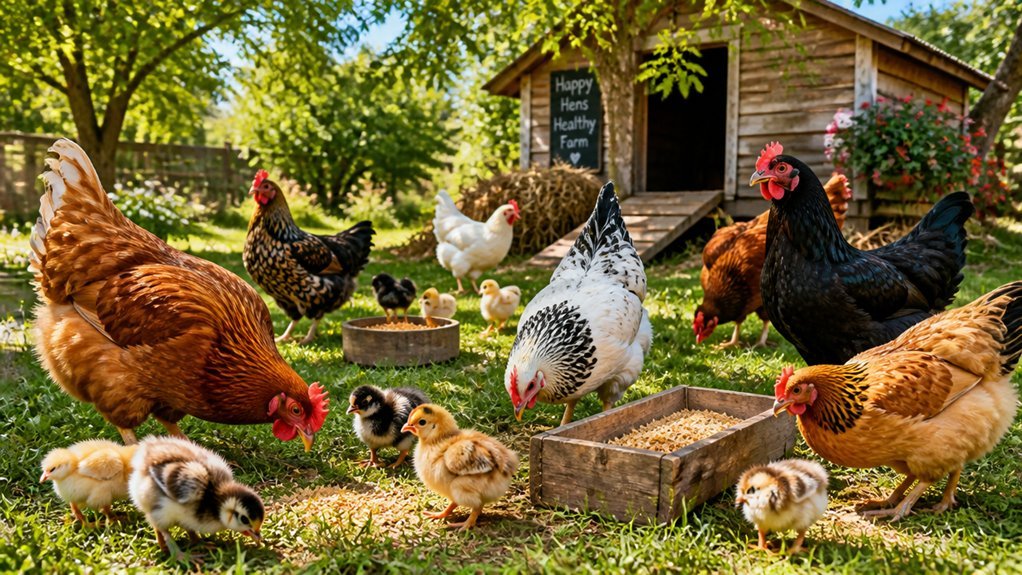
Mixed-age chicken flocks work well because each age group brings something useful to the flock. You get steady egg production from mature hens while younger birds add energy and curiosity.
Mixed-age flocks blend steady egg production with the energy and curiosity of younger birds.
Older chickens often know where to find food, water, and shelter, so newcomers can learn faster. Chicks and pullets also keep the group lively, which can help maintain an active routine in your coop.
You’ll often see that varied ages spread the flock’s daily demands more evenly, so no single group has to do everything. This balance can make your flock easier to manage and more efficient overall.
Additionally, having chickens of different ages can help prolong the productive life of your flock, as younger birds gradually mature and take over egg-laying roles. Raising chickens of different ages together creates a balanced social environment, fostering natural behaviors and reducing stress among the flock members.
How Mixed-Age Flocks Behave
In a mixed-age flock, you’ll see a clear pecking order shape daily interactions, with older birds usually setting the tone. Younger chickens often learn when to move, eat, and roost by watching and responding to the older ones. A well-designed chicken enclosure with multiple access doors and easy cleaning features can support these interactions by reducing stress and promoting health. Over time, you can notice age-based role sharing that helps the group stay organized and calm.
Pecking Order Dynamics
When you mix hens and chicks, the flock usually sorts out its hierarchy fast: older birds tend to dominate resources and space, while younger ones learn where they fit without constant fighting. You’ll notice this pecking order in small, repeated interactions, not dramatic brawls. To keep things calm, watch for: – brief chest bumps – quick pecks at feed – yielding at the roost – steady retreat by smaller birds. You can reduce tension by offering enough feeders, waterers, and hiding spots so nobody has to compete constantly. Properly designed perching arrangements can also help establish a stable hierarchy and reduce competition. Once the order settles, the group usually runs on routine, with confident birds leading movement and timid birds following cues. That stability helps you manage the flock more easily and keeps stress lower overall.
Age-Based Role Sharing
Beyond the pecking order, mixed-age flocks often split jobs by age and temperament. You’ll see older hens claim the safest roosts and lead the early forage, while younger birds dash into open ground to scout treats.
You can count on calm veterans to settle disputes, guide chicks to feed and water, and alert the flock to hawks or dogs. Meanwhile, energetic adolescents fill gaps with quick movement, dust bathing, and constant exploration.
This age-based sharing reduces pressure on any one bird and keeps the group efficient. When you watch closely, you’ll notice that each chicken’s stage of life shapes its task, and that breed selection helps the flock stay organized, resilient, and calmer throughout the day.
How Older Hens Teach Chicks

When you watch older hens with chicks, you’ll see them model flock behavior lessons, from keeping calm around the group to reading the pecking order.
They also show chicks the feeding routine, leading them to food and teaching them when and how to eat.
At night, they guide them toward safe roosting habits so the young birds learn where to settle and stay protected.
Additionally, older hens demonstrate how to balance nutrition, such as providing balanced vitamin levels, which supports overall health and shell strength in their chicks.
Flock Behavior Lessons
Older hens don’t just share space with chicks—they actively shape how the young birds behave. When you watch a mixed-age flock, you’ll see chicks copy calm posture, quick retreats, and confident exploration. They learn where to stand, when to move, and how to read warning calls by following experienced birds.
- You’ll notice chicks stay closer when danger feels near.
- You’ll see them mirror dust-bathing and preening.
- You’ll hear them respond faster to flock alarms.
- You’ll watch them respect pecking order cues.
This social coaching helps you raise steadier, smarter birds. Older hens model boundaries without constant intervention, so chicks gain flock sense through daily observation. That early education makes the group smoother, safer, and easier to manage. Recognizing and understanding poultry behavior ensures you can better support healthy flock dynamics.
Feeding Routine Guidance
At feed time, experienced hens show chicks how to join in without chaos. You’ll notice them step in first, peck steadily, then move aside so smaller birds can reach the dish. Their calm rhythm teaches chicks when to approach, how to keep distance, and where to find scattered grains.
You can use this natural pattern by placing feed in a wide tray and keeping water close by. Older hens often signal safe spots by settling near the edge, which helps chicks copy polite timing instead of rushing. Additionally, the use of anti-waste and spill prevention feeders encourages cleaner feeding behavior.
When you watch closely, you’ll see the flock settle into a smooth routine that cuts squabbles and waste. That steady example helps young birds eat confidently, stay nourished, and learn the flock’s daily cadence.
Safe Roosting Habits
As dusk settles, experienced hens often hop up first and show chicks where to land, how to balance, and which spots feel safest on the roost. You can watch them settle calmly, then copy their steady rhythm so younger birds don’t panic. Older hens also nudge chicks toward stable bars, away from drafts, and into snug spacing that reduces jostling and falling. To create a comfortable environment, ensure the roosts are appropriate in height and design, such as safe roosting that accommodates their size and behavior.
- Choose low roosts for beginners.
- Give each bird enough room.
- Keep the coop dark and quiet.
- Check for weak legs or fear.
When you guide the flock this way, you help chicks learn bedtime manners quickly. They gain confidence, sleep better, and blend into the group without chaos, while you lower stress and nighttime injuries.
Why Mixed-Age Flocks Reduce Bullying
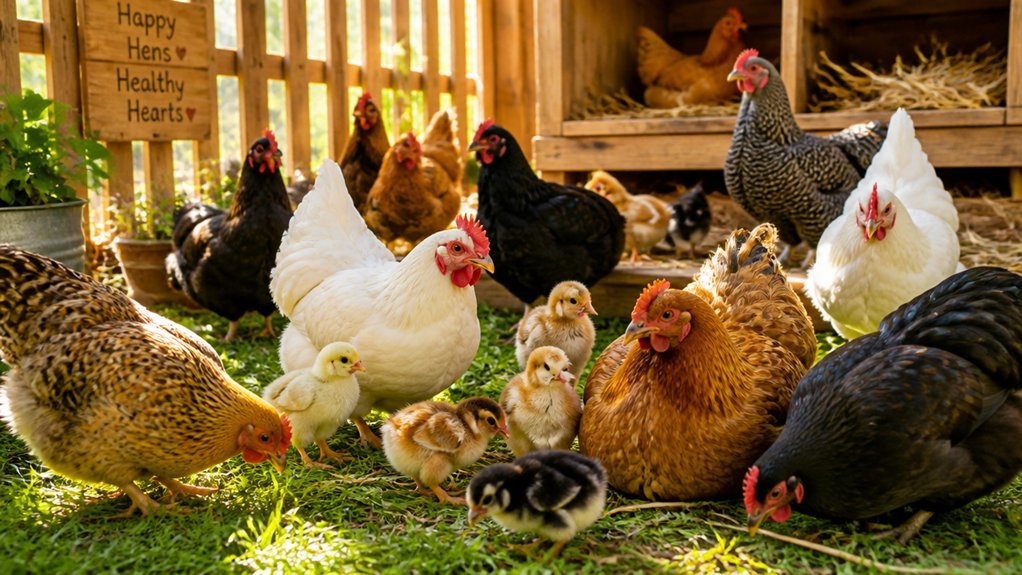
Mixed-age flocks often calm the pecking order because each bird has a clear place, so fewer chickens feel the need to fight for status all the time. You’ll usually see less bullying when older hens command respect without constant challenges and younger birds avoid taking risky top spots. The flock spreads attention across age groups, so no single bird gets targeted as often. You also benefit from calmer energy overall, since mature chickens often interrupt aggressive outbursts before they escalate. Smaller birds can stay near trusted companions, which helps them feel secure and keeps them out of repeated clashes. With less competition for rank, your chickens waste less energy on chasing, feather pulling, and intimidation, and that means a steadier, more peaceful coop for everyone living there. Additionally, integrating walk-in chicken coops can facilitate easier cleaning and better security, further promoting a harmonious environment.
How Chickens Learn Flock Rules
Chickens learn flock rules by watching and copying what older birds do every day. You’ll see younger birds follow their lead at the feeder, waterer, and coop door, and that daily repetition teaches them when to move, pause, and yield. Older chickens model calm behavior, so you can help the flock by giving them steady routines.
Providing appropriate enrichment toys can also encourage natural behaviors and reinforce positive interactions within the flock.
- Watch where the leaders go first.
- Notice how they approach food and water.
- Let chicks join supervised group time.
- Keep your setup consistent so signals stay clear.
When you keep the environment predictable, birds pick up habits faster and with less stress. You don’t need to force lessons; you just need to provide chances for observation. Over time, the whole flock begins to act like one coordinated unit.
How Mixed Ages Shape the Pecking Order
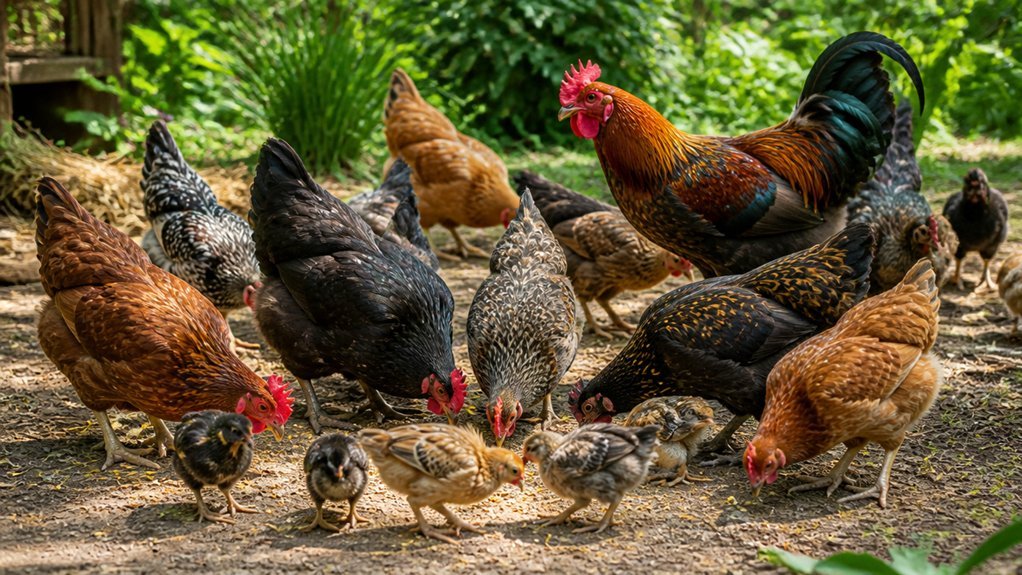
When you keep birds of different ages together, the pecking order usually sorts itself out faster because older chickens already know how to claim space, while younger ones learn when to step back. You’ll notice fewer long power struggles because each bird can read cues from a range of ages.
Mature hens often set the tone with calm confidence, and pullets usually copy their boundaries instead of challenging every bird they meet. That mix can reduce constant jostling, since one clear leader doesn’t have to defend every moment. You still need enough room, feeders, and perches so no bird feels cornered.
When you watch closely, you’ll see hierarchy forming through small, repeated signals rather than sudden fights, and that steadier pattern helps the flock settle.
Foraging Benefits of Mixed-Age Flocks
That steadier hierarchy also helps birds forage more efficiently. You’ll notice older hens often lead the way, showing younger ones where to scratch, peck, and probe. In mixed-age flocks, you get better coverage because each bird brings different skills and experience to the search.
Older hens lead the way, helping mixed-age flocks forage more efficiently and cover more ground.
- Adults spot familiar feeding spots faster.
- Younger birds copy useful techniques.
- Different ages sample varied ground layers.
- The flock wastes less time on dead ends.
You also benefit from fewer missed opportunities, since one bird’s discovery can quickly spread through the group. Chicks and pullets learn what safe, edible foods look like, while mature birds keep the search moving. This shared learning boosts daily intake and helps your flock make the most of every range session.
Why Mixed-Age Flocks Stay Calm
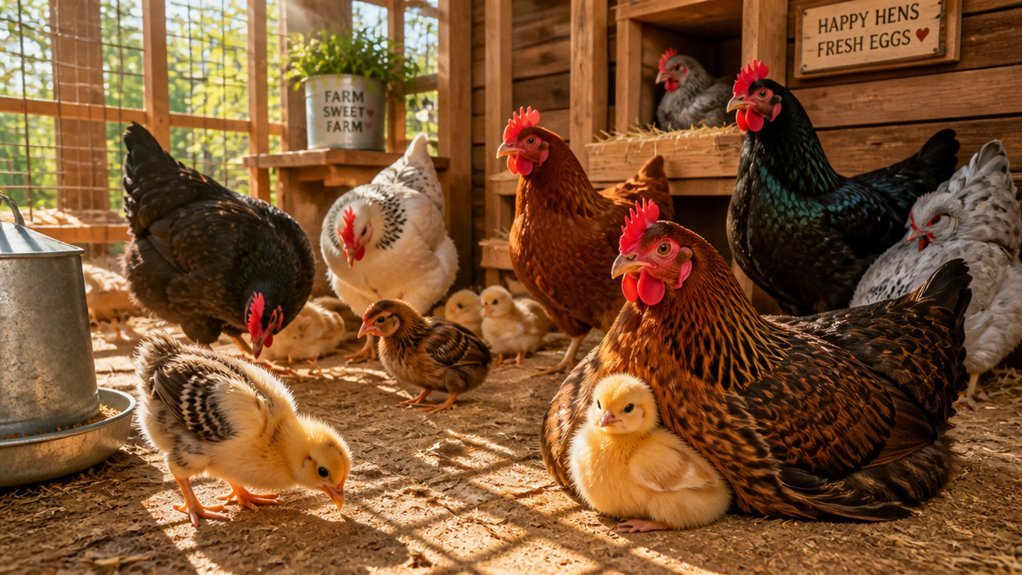
You’ll notice mixed-age flocks often stay calm because older birds set a clear pecking order that younger ones can follow. They also teach by example, so hens learn flock habits without constant squabbling.
With less competition among birds of the same age, you get fewer rivalries and a steadier group.
Age-Based Pecking Order
In a mixed-age flock, age often shapes the pecking order in a calmer, more predictable way than size alone. You’ll usually see older hens claim higher spots with fewer squabbles, while younger birds accept lower ranks and keep their distance.
That steady order helps you avoid constant challenges and noisy confrontations. You can spot the pattern in simple behaviors:
- Older birds eat first.
- Younger birds wait and watch.
- Dominant hens give quick warnings.
- Lower-ranking hens yield before conflict grows.
Because everyone understands the hierarchy, your flock wastes less energy on fights. The result is a smoother routine, calmer feeding, and less stress across the group. When rank feels settled, chickens can share space without turning every meeting into a contest.
Gentle Social Learning
Once the pecking order settles, younger chickens start learning the flock’s routines by watching older birds instead of testing every boundary. You’ll see them copy when to move to the feeder, how to scratch quietly, and where to rest without causing a fuss.
Older hens don’t need to bark orders; they model behavior through steady, repeated actions. That calm example helps chicks and pullets fit in faster, because they pick up social cues in a low-stress way. You also benefit from fewer frantic chases, since everyone tends to follow familiar patterns.
In a mixed-age flock, learning happens through observation, not confrontation, and that steady flow keeps daily life smooth, predictable, and peaceful for every bird involved.
Reduced Flock Rivalry
Because the flock already has clear role models, younger birds don’t feel the need to challenge every hen they meet. You’ll notice fewer turf wars because older chickens set the pace, claim space, and settle disputes before they spread. Mixed ages help you keep harmony by reducing competition for rank, food, and nesting spots.
- Mature hens signal boundaries fast.
- Pullets copy calm behavior instead of provoking fights.
- Shared routines cut surprise and stress.
- Stable pecking order lowers repeated squabbles.
When you combine experience with youth, your flock spends less energy on rivalry and more on feeding, dust bathing, and resting. That balance keeps your birds calmer, safer, and easier to manage day after day.
Broodiness in Mixed-Age Flocks
Broodiness can shift noticeably in mixed-age flocks, since older hens often show stronger nesting instincts and may trigger younger birds to follow their lead. You’ll notice that a seasoned hen may settle into a nest more confidently, while younger pullets watch, learn, and sometimes imitate that behavior.
This age mix can help you spot broodiness earlier, because one hen’s nesting drive often stands out against the group’s routine. If you want to manage it well, give broody birds quiet nest space and enough room so they don’t crowd others.
You can also use their steadiness to guide younger hens toward calmer nesting habits. In a mixed flock, broodiness doesn’t just appear; it spreads through example, shaping how your hens rest, nest, and respond to the coop environment.
Health Benefits of Mixed-Age Flocks
Mixed-age flocks can support better overall health by encouraging steady movement, normal social behavior, and early warning signs when something seems off. You’ll often notice healthier routines when birds of different ages share space, because younger hens copy calm habits and older hens help keep order. That mix can reduce boredom and limit stress-related pecking.
- You spot appetite changes faster.
- You notice limping or puffed feathers sooner.
- You encourage more natural foraging.
- You create calmer daily rhythms.
When you watch your flock closely, mixed ages make it easier to compare behavior and catch illness early.
Healthy birds eat, dust bathe, and roost with confidence, so any bird that falls behind stands out quickly.
How Mixed Ages Improve Flock Resilience
When you keep chickens of different ages together, your flock often adapts better to change and setbacks. Young birds bring energy and quick learning, while older hens add calm experience and steady routines.
If a feed shift, weather swing, or minor disturbance occurs, your mixed group doesn’t all react the same way, so the flock can recover faster. You’ll also notice stronger social balance: older chickens often set boundaries, and younger ones follow cues that reduce chaos.
This range of behavior spreads risk and keeps one problem from hitting every bird at once. Because each age group notices different threats, your flock can adjust, regroup, and keep producing with less stress over time.
Best Chicken Breeds for Mixed-Age Flocks
If you’re building a flock with birds at different life stages, breed choice matters just as much as age balance. You’ll do well with calm, adaptable breeds that handle busy pecking orders without drama. Friendly personalities help younger birds settle and older hens stay comfortable.
- Buff Orpingtons: mellow, sturdy, and easygoing
- Plymouth Rocks: steady layers with flexible temperaments
- Sussex: curious, people-friendly, and resilient
- Australorps: calm, productive, and low-strung
You can also mix in Rhode Island Reds if you want hardy birds, but they’re often bolder, so balance them with gentler companions.
Choose breeds known for predictability, not intensity, and you’ll create a flock that feels balanced, stable, and easier to enjoy across every age.
How to Manage Mixed-Age Chickens Safely
Keeping mixed-age chickens safe starts with giving younger birds room to grow without getting pushed around. You should provide separate feeders and waterers so chicks and pullets can eat without competition.
Give younger birds space to grow, with separate feeders and waterers to prevent competition.
Add low roosts, hiding spaces, and small barriers that let smaller birds escape when older hens get bossy. Watch flock behavior daily, especially during introductions, and step in if you see feather pecking, blocking, or relentless chasing.
Quarantine new birds before mixing them in, so you don’t spread disease. Keep bedding dry, coop space generous, and nesting boxes easy to reach. At night, check that every bird can roost comfortably.
When you manage space, access, and introductions carefully, mixed-age flocks stay calmer, healthier, and less stressed.
Frequently Asked Questions
Can Mixed-Age Chickens Share the Same Nesting Boxes Safely?
Yes, you can, if you provide enough boxes, keep them clean, and monitor bullying. You’ll reduce stress by offering private, accessible spots, especially for younger hens or smaller birds needing safer nesting options.
How Often Should Mixed-Age Flocks Be Vaccinated?
You should vaccinate mixed-age flocks on schedule set by your vet, often at chickhood and yearly or as risks change. You’ll also need boosters when disease exposure rises or birds join your flock.
Do Mixed-Age Chickens Need Different Feed Formulas?
Yes, you should usually provide separate feed formulas, because chicks, growers, and laying hens need different protein, calcium, and energy levels. You can offer age-appropriate feed or use a balanced all-flock ration with supplements.
Can Roosters Live Peacefully in Mixed-Age Flocks?
Yes, you can keep roosters in mixed-age flocks if you watch temperament closely. You’ll need enough space, multiple feeders, and calm birds. Remove aggressive males quickly, and younger hens won’t get stressed or injured.
What Signs Show a Mixed-Age Flock Is Stressed?
You’ll notice stress when your birds crowd, peck more, hide, lose weight, stop laying, or avoid feed and water. You might also see feather loss, loud alarm calls, and restless nighttime behavior.
In Summary
Mixed-age chicken flocks often thrive because older hens show younger birds the ropes, and chicks learn flock rules faster in a calm, stable group. You’ll usually see less bullying when ages are mixed, since everyone has a place and role. These flocks can also be more resilient and healthier overall. If you manage introductions carefully and choose the right breeds, you’ll help your chickens live together safely and successfully.