

You can read chicken body language by watching posture, head, wings, tail, and movement together. A tall, balanced bird with steady eyes and relaxed feathers usually feels calm, while crouching, freezing, puffing up, or quick head jerks can signal stress or fear. Raised hackles, a hard stare, and forward lean may mean aggression. Soft clucks, calm pecking, and gentle preening often show comfort, and there’s more to notice in every flock.
What Chicken Body Language Can Tell You

Chicken body language can tell you a lot about how a bird feels, what it needs, and whether it’s relaxed, alert, stressed, or ready to act. You can spot comfort when a hen moves freely, pecks calmly, and stays engaged with her flock.
Quick head movements, frozen pauses, or repeated scanning often mean she’s uneasy or watching for danger. You’ll also notice changes when she wants food, water, space, or warmth, since chickens use motion and position to signal needs.
Listen for sharp clucks or soft murmurs, too, because sound adds meaning to the message. When you learn these signals, you’ll respond faster, reduce stress, and handle your birds more confidently. Understanding vital indicators like body posture and vocal cues helps you better interpret their states and improve their well-being.
Read a Chicken’s Posture First
Start by looking at the bird’s overall posture, because it often tells you her mood before anything else does.
A chicken’s posture often reveals her mood long before she makes a sound.
When she stands tall and balanced, you’ll usually see a calm, alert chicken that feels secure in her space. If she crouches low, flattens her body, or tries to make herself smaller, she may feel threatened, cold, or unsure.
A tense, rigid stance can signal stress, while a loose, relaxed posture often shows comfort. You should also notice whether she moves freely or seems stiff and hesitant.
Compare her stance with the rest of the flock, since chickens often mirror confidence or fear through their bodies. Watch posture in context, and you’ll spot trouble or contentment much faster. Proper perch size can also influence her comfort and confidence levels.
Read Head, Neck, and Tail Signals

Next, look at the head, neck, and tail, since these small movements often reveal what a chicken is thinking. If her head stays high and steady, she may feel alert or confident. A quick bobbing motion can mean curiosity, while a lowered head often signals caution or submission.
Watch the neck too: stretched forward, it shows interest or challenge; tucked in, it suggests fear or rest.
The tail adds another clue. A raised tail usually points to confidence, comfort, or readiness to move. A lowered tail can show stress, discomfort, or uncertainty.
When you read all three together, you’ll spot patterns faster and make better choices around your flock. Always compare these signals with the chicken’s situation, because context changes what each gesture means.
Being aware of flock behavior and individual signals can also help you prevent or address health issues early breed selection basics, ensuring your chickens stay happy and healthy.
Notice What the Wings Are Saying
Wings can tell you a lot about how a chicken feels, so watch how they sit against the body. When a hen keeps her wings tucked neatly, you’re seeing a bird that’s balanced and aware of her space.
If she lets one wing droop a little, she may be cooling off or resting one side. Wings held slightly away from the body can help you spot discomfort, overheating, or irritation from mites.
You should also notice quick wing shakes, which often clear dust or reset feathers after movement. Look for wing stretching after roosting or bathing; that’s normal maintenance.
Don’t focus on one gesture alone. Instead, read the wings with the rest of the body so you can judge what your chicken’s posture is really telling you.
Additionally, observing how their wings respond during dust baths or grooming can provide clues about their overall health and comfort dust bath mix.
Spot Relaxed vs. Stressed Chickens

A relaxed chicken looks loose, steady, and at ease, while a stressed bird often appears tense, alert, or ready to move. You can spot calm birds by their soft feathers, balanced stance, and slow, even movements. Their combs sit naturally, and they’ll peck, scratch, or rest without rushing.
When a chicken feels stressed, you may notice tight muscles, repeated shifting, shallow breathing, or wings held too close. You should watch the whole body, not just one signal, because context matters. Heat, noise, crowding, and rough handling can all raise stress.
If you lower pressure, give space, and keep routines predictable, you’ll help your flock settle faster and act more naturally.
Spot Fear, Aggression, and Curiosity
Fear, aggression, and curiosity each have their own telltale signals, and you can learn to tell them apart by watching posture, eyes, and movement.
Watch posture, eyes, and movement to tell fear, aggression, and curiosity apart in your flock.
A frightened chicken crouches low, freezes, or darts away with tight feathers and quick breaths. Its eyes may widen, and it’ll avoid contact.
An aggressive bird looks larger: it raises its hackles, leans forward, and fixes you with a hard stare. You may also see rapid head thrusts or wing flares.
Curious chickens act alert but calm. They stretch their necks, tilt their heads, and move closer in short, careful steps. They may peck at new objects without alarm.
Understanding predator protection behaviors can also help you recognize more stress signals early. When you read these signals together, you can respond calmly and keep your flock safer.
Understand Pecking Order Behavior

Once you understand pecking order behavior, you can spot when your chickens are simply sorting out rank and when they’re crossing into real bullying. You’ll see this order through quick pecks, confident posturing, and small retreats that settle disputes without lasting harm.
A higher-ranking bird may hold her head tall, step forward first, or nudge another aside. Lower-ranking birds often yield, move away, or avoid direct challenges. This is normal flock negotiation, not always abuse.
Watch for patterns: a few firm reminders are typical, but repeated chasing, cornering, feather damage, or refusing another bird access to space means the balance has gone wrong. When you read these signals early, you can intervene before tension spreads and the flock’s social structure becomes unhealthy. Recognizing pecking injuries early helps prevent escalation and maintain a stress-free environment for your flock.
Read Chicken Body Language During Feeding
At the feeder, you can learn a lot from how your chickens move, peck, and yield. Watch who eats first, who waits, and who darts in between gaps. A confident bird stands tall, pecks quickly, and keeps its head up between bites. A nervous chicken hangs back, stretches its neck forward, and pecks only when space opens. Proper calcium intake is crucial for strong eggshells, so observing how birds position themselves during feeding can give clues about their mineral needs. If one bird keeps blocking others, you may need more feeder space or extra stations. Rapid head bobbing, fluffed feathers, and side-stepping can signal tension, while steady feeding with relaxed posture shows comfort. You should also notice changes in appetite. A chicken that stops eating, pecks weakly, or isolates itself may be stressed or unwell. By reading these cues, you can adjust feeding and spot problems early.
How Chickens Signal Bonding and Trust
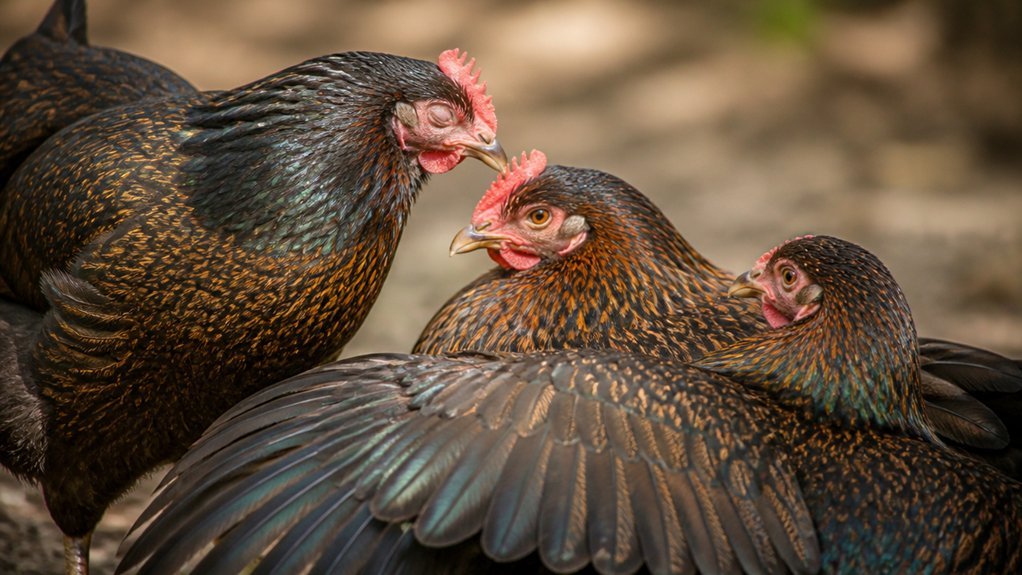
Bonding and trust show up in softer, calmer behaviors than feeding competition. You’ll notice a chicken that stays close without crowding, pecks gently at the ground near you, or relaxes its neck and shoulders when you approach. A new, more secure environment with appropriate enclosure types can also help foster these calm, trusting behaviors.
Trust often looks like steady eye contact, loose feathers, and slow, unhurried movements. If a hen lets you pick her up without a scramble, she likely feels secure. Chickens also show bonding by preening each other, roosting nearby, and following a trusted flockmate or caregiver with calm curiosity.
You can strengthen that trust by moving slowly, speaking softly, and offering predictable routines. Avoid sudden gestures, and let the bird choose closeness. Over time, these quiet signals tell you she sees you as safe.
Recognize Broody Hen Body Language
When a hen goes broody, her body language changes from relaxed to highly focused. You’ll notice her staying on the nest longer, flattening her body over the eggs, and puffing up when you approach.
She may cluck softly, tuck her beak close, and give quick pecks if you move her too near. Her feathers often look fluffed, her wings held slightly away, and her posture low and stubborn. When you lift her, she’ll protest and hurry right back to the nest.
She’ll also leave only briefly to eat, drink, and relieve herself, then return at once. You can read these signs as strong nesting commitment, not casual rest. Watching this tight, protective stance helps you spot broodiness early and manage her space well. Proper sizing and comfortable fit of her coop and nesting area support her natural body language signals during this period.
Tell Healthy Chicken Behavior From Illness
A healthy chicken stays alert, curious, and steady on her feet, so you’ll usually see her scratching, foraging, dust bathing, and moving with purpose. You should notice bright eyes, a smooth comb, clean nostrils, and feathers that lie flat. She’ll eat, drink, and interact normally, then rest without looking weak.
When illness shows up, her body language changes fast: she may hunch, fluff up, isolate, breathe harder, or stand still for too long. You might also see droopy wings, dirty vent feathers, reduced appetite, or limping. Trust patterns, not one odd moment.
If your hen stays quiet, hides, or loses balance, check her closely and act quickly. Early attention helps you protect the rest of your flock. Proper bedding can also influence her comfort and health, making it easier to spot issues early.
Read Body Language in Roosters
When you watch roosters, you can spot a combative posture by a stiff stance, raised hackles, and a direct stare. You’ll also notice feather position changes, from sleek and relaxed to puffed or bristled when they feel threatened.
Pay attention to alert movements too, since quick head turns, sharp steps, and sudden pauses often signal a rooster is on guard.
Combative Posture
If you keep roosters, you’ll quickly learn that a combative posture is hard to miss: they square up, raise their feathers, lower their heads, and fix their eyes on a rival. When you see this, don’t crowd the birds. Step back, give them space, and watch for the trigger, like feed, hens, or a new flockmate. You can often defuse tension by removing the bait and breaking visual contact.
| Signal | What you should do |
|---|---|
| Stiff stance | Keep distance |
| Head lowered | Expect a challenge |
| Direct stare | Watch closely |
| Slow advance | Separate birds |
If the display escalates, use a barrier or gently redirect one rooster before contact starts. Reacting early helps you prevent injuries and keep your flock calmer.
Feather Position
Feather position tells you a lot about a rooster’s mood and intent. When you watch him, notice whether his feathers lie smooth or puff out. You can read this as a quick signal of confidence, tension, or comfort.
- Sleek, tight feathers often mean he feels calm and secure.
- Raised hackles can show irritation or a readiness to challenge.
- Fluffed body feathers may signal stress, cold, or a need to look bigger.
- Relaxed, evenly settled feathers usually mean he’s at ease around you.
You should compare feather position with the situation and his overall posture. A rooster that keeps his plumage controlled usually feels settled, while one that bristles may be guarding space or reacting to a threat.
Alert Movements
Alert movements are another clear clue to a rooster’s mood. When you see him pause, stretch his neck, and stare hard, he’s checking for threats. A rooster that moves in quick, jerky bursts may feel nervous or ready to warn the flock.
If he freezes, then snaps his head toward a sound, pay attention; he’s staying on guard. You can also watch his walking pattern. A confident rooster strides smoothly, while an uneasy one paces, stops, and scans often.
Watch for sudden wing flicks, tail lifts, or sidesteps, too. These small motions tell you he’s alert before he vocalizes. By reading his movement patterns, you can spot tension early and respond calmly before a situation escalates.
Interpret Chicken Body Language at Night
At night, your chickens’ body language changes because they’re sleepy, vulnerable, and usually less active, so you need to read calmer, subtler signals. Watch how they settle on the roost, tuck their heads, and close their eyes.
A relaxed bird stands balanced and still; a tense one stays stretched, huddled, or refuses to settle. Use a dim light only if needed, and keep movements slow so you don’t startle them.
- Check posture before roosting.
- Notice flock spacing and bunching.
- Listen for quiet, steady breathing.
- Look for repeated shifting or restlessness.
These cues tell you whether your flock feels secure, cold, or uneasy. At night, calm body language usually means your chickens trust the space and can rest well.
Common Mistakes in Chicken Body Language
One common mistake is assuming every peck, puffed-up stance, or quiet stretch means the same thing in every situation. You need to read the whole scene, not one gesture alone. A hen might peck because she’s eating, testing a surface, or warning another bird away. If you focus only on her feathers, you can miss the context in her posture, eye contact, and movement.
Another error is reading fear into normal alertness. Chickens often freeze, tilt, or stare when they’re simply listening. You should also avoid comparing breeds too rigidly, since some act naturally bold while others seem shy.
Watch patterns over time, note changes in the flock, and trust consistent behavior more than one dramatic moment.
Handle Chickens Safely With Body Language
Once you can read the flock’s signals in context, you can use that knowledge to handle birds more safely. Approach calmly, and watch posture before you reach in. If a hen crouches, freezes, or sidesteps, slow down and give her space. If feathers puff, wings spread, or beaks point toward you, stop and reset your approach.
- Move slowly to avoid triggering alarm.
- Keep your hands low and predictable.
- Support the body firmly, not tightly.
- Release the bird as soon as she’s settled.
You’ll reduce stress when you match your movements to their comfort level. Speak softly, avoid chasing, and use body language to guide your timing. A relaxed flock is easier to manage, safer to lift, and less likely to peck, flap, or panic.
Frequently Asked Questions
How Can Weather Affect a Chicken’s Body Language?
Weather can change how you read your chicken’s body language: heat makes you see panting and drooping, cold brings puffed feathers and huddling, rain causes discomfort, and wind can keep them alert, tense, or still.
Do Different Chicken Breeds Signal Differently?
Yes, you’ll notice breed differences: some chickens hold tails high, stay bold, or flap more, while others act quieter and tighter. You can learn each breed’s usual signals, then spot stress or confidence faster.
Can Chicks Read Adult Chicken Body Language?
Yes, you can expect chicks to pick up adult chicken signals quickly. They watch posture, movement, and sounds, then learn what’s safe or threatening. You’ll see them shadow confident hens and copy their calm behavior.
How Do Chickens Communicate With Vocal Sounds?
You’ll hear clucks, cackles, chirps, and alarm calls that signal food, comfort, danger, or nesting. You can learn each sound’s meaning by watching when chickens make it and how flockmates react.
Does Body Language Change After a Coop Move?
Yes, you’ll often see changes after a coop move. You can expect birds to stay alert, hunch, peck less, and stick close together until they feel safe, settled, and confident in their new space.
In Summary
Now that you know how to read chicken body language, you can better understand what your flock needs and how it feels. When you watch posture, head movement, wings, and behavior, you’ll spot stress, fear, comfort, or confidence much faster. That helps you handle chickens more safely and respond before small problems grow. Keep practicing, stay calm, and trust what your chickens show you. The more you observe, the better you’ll care for them.



