

You can better understand chicken behavior and socialize your flock by watching body language, like raised feathers, tucked heads, freezing, or sharp calls. Give birds plenty of space, feeders, and waterers to cut down on fighting. Watch the pecking order so you know who leads, yields, or guards resources. Quarantine and slowly introduce new chickens, then use calm, steady routines to build trust and reduce stress. Keep going, and you’ll pick up even more helpful flock cues.
How to Stop Chickens From Fighting
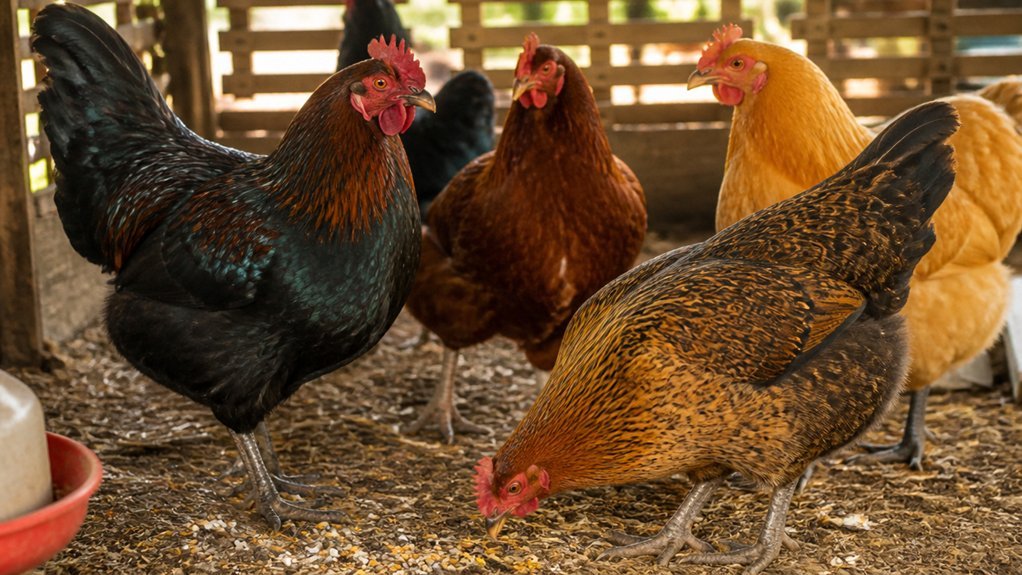
When chickens start fighting, you need to step in quickly to break the cycle before injuries and stress spread through the flock. You can separate the aggressor for a short time in a safe pen, then return her after the group settles.
Make sure your coop and run offer enough space, multiple feeders, and several water stations so birds don’t compete constantly. Add new chickens slowly, and give everyone time to adjust before mixing them fully.
You should also remove obvious triggers, such as scarce feed or a cramped roost. If one bird keeps attacking others, you may need to isolate her longer or rehome her.
Ensuring your feeders are no-waste models with adjustable height and enclosed ports can help reduce competition and pecking at feeders, creating a calmer environment.
Read Chicken Body Language
A chicken’s posture tells you a lot about what’s going on in the flock. You can spot calm birds, alert birds, and stressed birds by watching how they stand, move, and react. Keep your eyes on the whole body, not just the comb.
- Raised feathers can signal tension or excitement.
- A tucked head often means the bird feels uneasy.
- Slow, relaxed walking usually shows comfort.
- Rapid wing flutters can mean annoyance or heat.
You’ll also notice that relaxed chickens blink slowly, preen, and keep a steady stance. Observing poultry behavior can help you understand their mood and needs more accurately.
If a bird freezes, backs away, or lowers itself, give it space. When you read these signals well, you can respond early, reduce stress, and handle your flock with more confidence.
Understand the Pecking Order
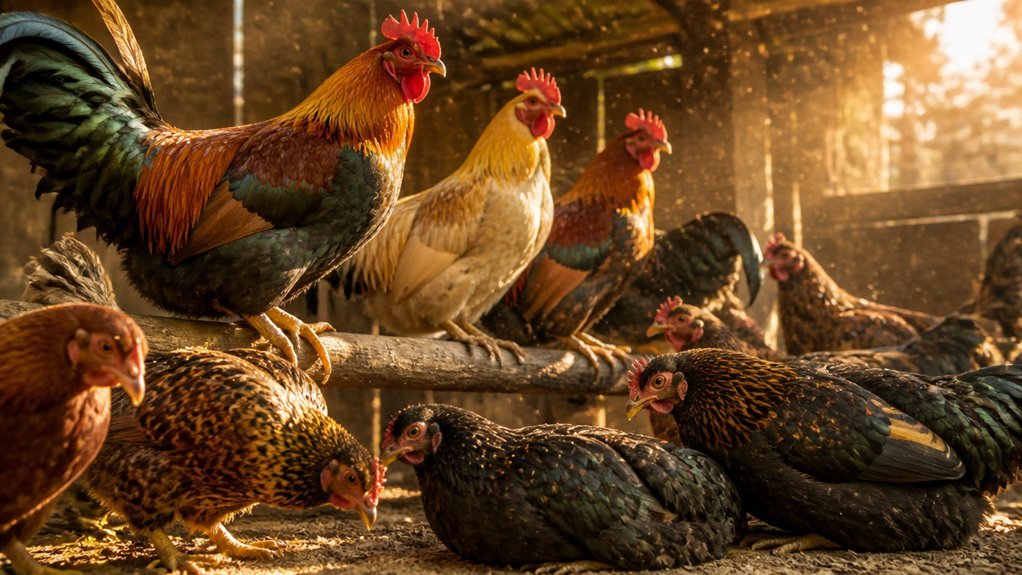
You’ll notice your flock has a clear pecking order, with each chicken knowing its rank. Higher-ranked birds often eat first, claim the best spots, and act more confidently. Additionally, pecking blocks and enrichment items can help reduce flock tension by providing distraction and mental stimulation.
Pecking Order Basics
Although it may look like simple pecking at first, the pecking order is a real social structure that helps chickens decide who eats first, who leads, and who yields. You’ll see it whenever your flock shares space, feed, or nesting areas.
Instead of forcing equality, let chickens sort themselves with minimal interference, because steady routines lower stress.
- You give birds enough room to avoid constant clashes.
- You place feed and water so weaker birds can still reach them.
- You watch calmly and step in only if bullying causes injury.
- You keep new birds separated briefly before joining them.
- Understanding the hierarchical behavior allows for better management of social dynamics within your flock.
When you understand this hierarchy, you can manage your flock more confidently and keep daily life smoother for every bird.
Rank Signs In Flock
Once you know what to look for, flock rank shows up in everyday behavior: dominant birds may claim the best feed spots, higher perches, or preferred nest boxes, while lower-ranking hens wait, sidestep, or move away to avoid conflict. You’ll also notice who pecks first, who yields, and who guards space during treats or dust baths. Use these clues to read the flock without intervention. Recognizing signs of secure fit can help prevent disputes and ensure comfort for all hens.
Spot Stress Signs Early
How can you tell when a chicken is under stress? You’ll notice changes fast if you watch closely. A stressed bird often eats less, hides more, and moves with sharp, uneasy motions. You may also hear louder alarm calls or see feather pecking increase.
- Raised wings or crouched posture
- Pale comb or wattles
- Sudden silence or frantic vocalizing
- Reduced egg laying
Check for these signs daily so you can respond before stress spreads through the flock. You can lower noise, provide shade, keep water fresh, and give each bird enough space to settle. When you spot early warning signs, you protect health, reduce conflict, and help your chickens feel secure. Regular monitoring of pecking injuries and stress signs can also help prevent escalating issues and ensure a healthy, happy flock.
Introduce New Chickens Safely
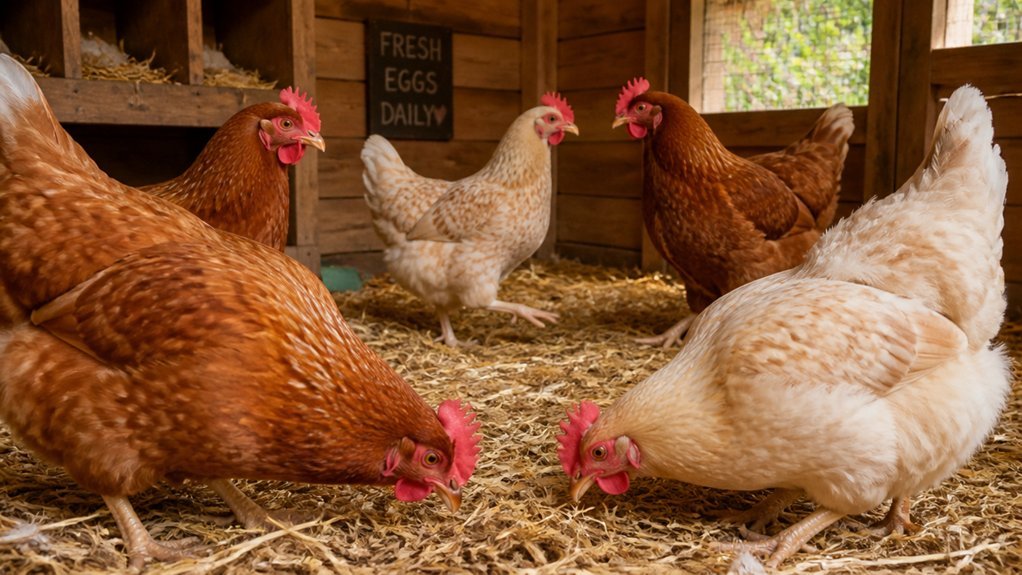
When you bring home new chickens, you should quarantine them first to protect your flock from illness. After that, let them meet gradually so everyone can adjust with less stress. Watch their behavior closely during each step so you can catch problems early. Proper enclosure size is essential to ensure they have enough space to feel secure and comfortable during the introduction process.
Quarantine New Birds
Quarantining new birds protects your flock from hidden illness and gives you time to watch their behavior before mixing them in. Keep them separate for at least 30 days, and use a dedicated coop, feeder, waterer, and tools so you don’t spread germs.
During this period, you can observe:
- appetite and droppings
- breathing and coughing
- feather condition and skin
- alertness and energy
Check each bird daily for mites, limping, or unusual stress. Wash your hands after handling them, and change clothes if you’ve visited other birds. If you notice sickness, isolate the bird and contact a veterinarian. Proper coop setup, including easy-clean trays, can also help monitor droppings and maintain a healthy environment.
Careful quarantine helps you protect your flock, spot problems early, and build a healthier, calmer chicken community.
Gradual Flock Integration
Once your new birds have finished quarantine, introduce them slowly so the flock can adjust without a big fight.
Start with short, supervised visits through a fence or pen, so everyone can see and hear each other safely. Next, let the newcomers join the flock for brief periods during calm times, such as after feeding.
Watch for pecking, chasing, or blocked access to water and feed, and step in if one bird keeps bullying another. Add extra feeders, waterers, and hiding spots so weaker birds can escape pressure.
At night, place them on separate perches at first, then merge them when the flock seems settled. You’ll reduce stress, limit injuries, and help your chickens build a stable pecking order faster.
Pay attention to flock security and ensure there are safe spaces to prevent predators from causing stress or injury.
Build Trust With Daily Routines
Daily routines help your chickens feel safe because birds quickly learn what to expect from you. You build trust when you arrive at the same times, move gently, and offer feed consistently.
Daily routines help chickens feel safe, building trust through steady visits, gentle movements, and consistent care.
Chickens notice your voice, footsteps, and even the order of your actions, so keep them steady.
- Feed at regular times
- Refill water before it runs low
- Approach slowly and speak softly
- Spend a few quiet minutes nearby
When you repeat the same pattern, your flock relaxes and comes closer on its own.
You’ll also spot changes in behavior faster, because familiar routines make surprises stand out.
Keep your interactions calm and predictable, and your chickens will learn that you’re reliable, not a threat.
Proper fitting harnesses also contribute to building trust by ensuring your chickens are comfortable and safe during walks.Keep the Flock Calm
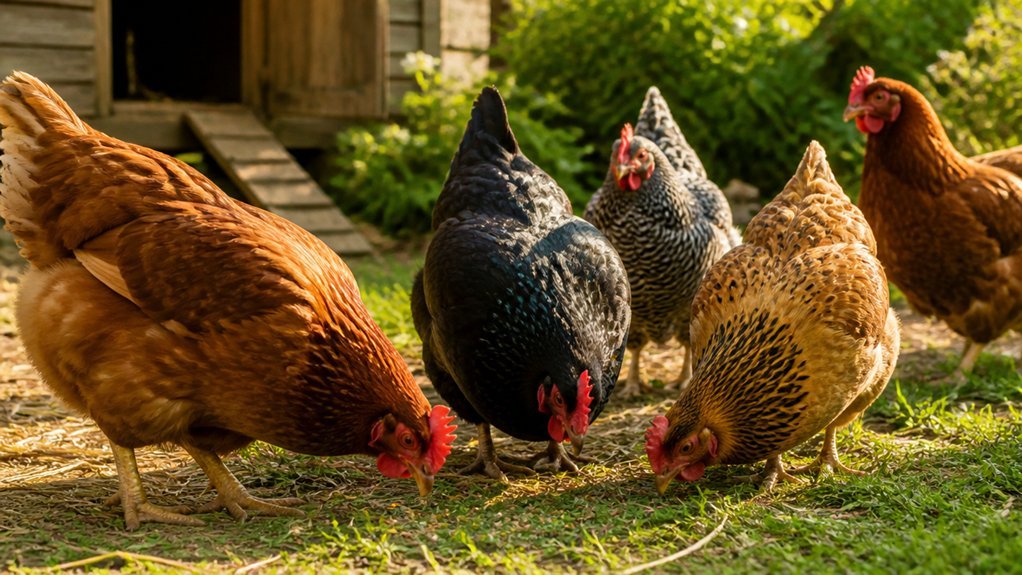
A steady routine helps, but you’ll also need to keep the flock’s surroundings calm so those good habits stick. You can lower stress by moving slowly, speaking softly, and avoiding sudden changes near the coop. Keep dogs, loud music, and bright flashes away when you check feed or collect eggs. When hens feel safe, they peck less, settle faster, and handle handling better.
| Trigger | Calm Response | Result |
|---|---|---|
| Sudden noise | Pause, quiet your voice | Less alarm |
| Crowding | Give space | Fewer pecks |
| Routine care | Move predictably | More trust |
Watch body language, too. Raised feathers, sharp calls, and frozen posture tell you to back off. If you stay patient and consistent, your flock will relax and socialize more naturally.
Frequently Asked Questions
How Do Chickens Recognize Individual People?
Chickens recognize you by your face, voice, movement, and scent. You’ll build familiarity through routine, and they’ll remember who feeds and handles them. Over time, they can distinguish you from strangers surprisingly well.
Can Chickens Learn Their Names?
Yes, chickens can learn their names if you use them consistently with treats and attention. You’ll likely notice they respond to your voice, routine, and tone, even if they don’t understand names like humans do.
Do Chickens Have Different Personalities?
Yes, chickens do have different personalities. You’ll notice some are bold, curious, or bossy, while others stay shy or calm. By watching each bird, you can better understand and handle them.
Why Do Chickens Make Different Calls?
Chickens make different calls because you’re hearing varied meanings: warning alarms, food finds, mating signals, nesting cues, and social chatter. You’ll notice louder, sharper sounds when they’re startled, and softer ones when they’re relaxed.
How Long Do Chickens Remember Routines?
You’ll usually find chickens remember daily routines for weeks or even months, especially feeding and roosting times. Keep it consistent, and they’ll quickly learn your schedule, respond sooner, and stay calmer.
In Summary
By watching your chickens closely, you can stop small problems before they turn into fights. Learn their body language, respect the pecking order, and notice stress early. When you introduce new birds safely and stick to calm daily routines, your flock will feel more secure. The more trust you build, the easier it becomes to socialize them and keep peace in the coop. With patience, you’ll raise a happier, healthier flock.



