
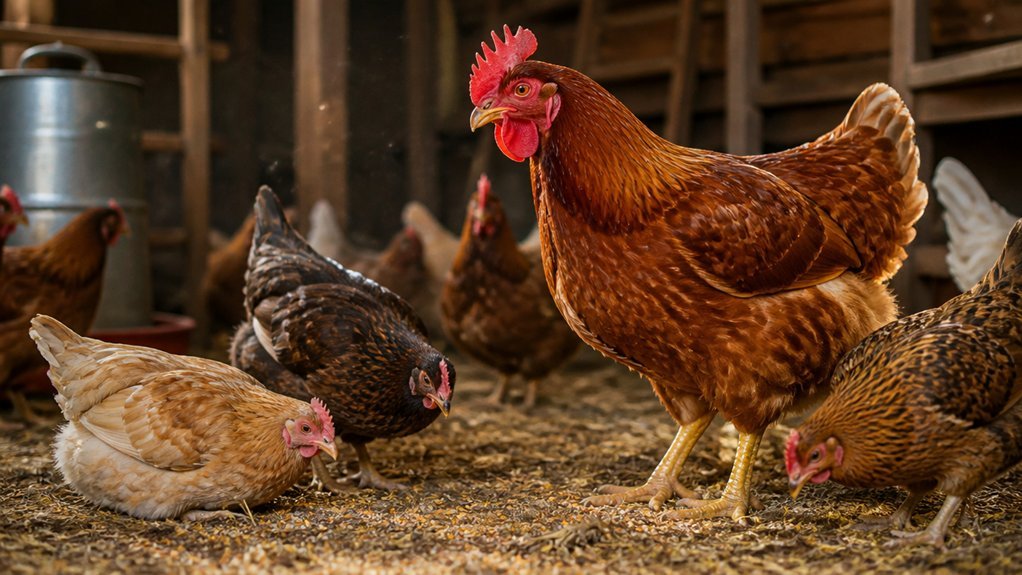
You can understand the chicken pecking order by watching who eats, drinks, and roosts first, and who steps aside when others approach. Chickens sort out rank through small pecks, chest bumps, staring, and confident body language, so the flock usually settles into a clear routine. A stable hierarchy lowers stress and fights, while sudden changes can cause bullying or crowding. If you keep going, you’ll spot the signs, fixes, and ways to handle new birds.
What Is the Chicken Pecking Order?

The chicken pecking order is the social hierarchy chickens use to decide who gets first access to food, water, roosting spots, and other resources. When you keep chickens, you’ll see that each bird has a place in the group, and that place affects how it behaves around the others. A stable pecking order can make flock life smoother, yet sudden changes can cause stress, bullying, or crowding. Recognizing this hierarchy helps you understand natural behaviors like pecking order dynamics and ensure the wellbeing of your flock.
How Chickens Establish Rank
Chickens establish rank through a mix of pecking, posturing, and repeated daily interactions. You’ll notice that each bird tests another’s confidence, then backs off when challenged or pushes ahead when it senses weakness. This isn’t random; it’s how the flock settles roles fast. Incorporating self-latching design benefits such as consistent movement and secure positioning helps reinforce these natural hierarchies by minimizing disruptions. This live negotiation is further supported by the way each interaction creates a clear understanding of individual confidence levels. Every meal, roost, and movement gives chickens another chance to compare strength and avoid constant fights. Once a pattern sticks, the flock runs with less conflict, because each bird already knows where it stands and how far it can go.
Common Signs of Flock Hierarchy

Once rank is set, you can spot the flock’s hierarchy in everyday behavior. You’ll notice dominant hens claim the best feeders, waterers, and dust-bathing spots first. Lower-ranking birds step aside, wait, or circle until a better-positioned chicken moves. You may also see brief pecks, chest bumps, or a quick stare that ends a challenge before it starts. Birds higher in rank often walk with confidence, while others keep a respectful distance. When you add treats, the top hens usually dart in first and may guard the prize. Roosters, if present, can also influence who approaches food or nesting areas. Watching how they respond to flock behavior can help you understand the hierarchy more clearly. Watch these patterns across the day, and you’ll read the pecking order more easily.
Why Flock Hierarchy Matters
When you understand flock hierarchy, you can see how it keeps social order steady. You’ll also notice that a clear pecking order helps reduce conflict and daily squabbles. That balance makes the flock calmer and easier to manage. Recognizing the importance of pecking order, birds establish a natural ranking system that minimizes aggressive behavior.
Social Order Stability
A stable pecking order helps keep a flock calm, because each bird knows its place and spends less energy on constant challenges. You’ll notice that this predictability lets your chickens settle into daily routines, like feeding, roosting, and moving around the coop with fewer disruptions.
When ranks stay consistent, each bird can focus on normal behavior instead of testing others all the time. That stability also helps you manage the flock more easily, since you can spot unusual behavior faster when the group’s social pattern changes. Maintaining the hierarchy involves understanding pecking order and how it influences flock interactions.
Over time, a clear hierarchy creates a dependable structure that supports healthy flock dynamics. You don’t need perfect peace; you need an order that lets the flock function smoothly and stay organized.
Reduced Flock Conflict
Because every chicken understands its place, fewer disputes break out over food, roosting spots, and movement within the flock. You’ll notice calmer behavior when birds don’t need to challenge each other constantly.
A clear pecking order lets each chicken claim resources without endless testing or chasing, so you spend less time breaking up squabbles. Lower conflict also protects weaker birds, since they aren’t pushed aside every time they approach a feeder or nest box.
When tension drops, injuries, stress, and feather damage usually drop too. That means your flock can eat, rest, and move more efficiently.
If you want smoother daily care, watching hierarchy at work helps you spot problems early and keep the group balanced. Proper identification methods, like poultry leg bands, can also help you monitor individual behaviors and health status more effectively.
How to Reduce Pecking Order Fights
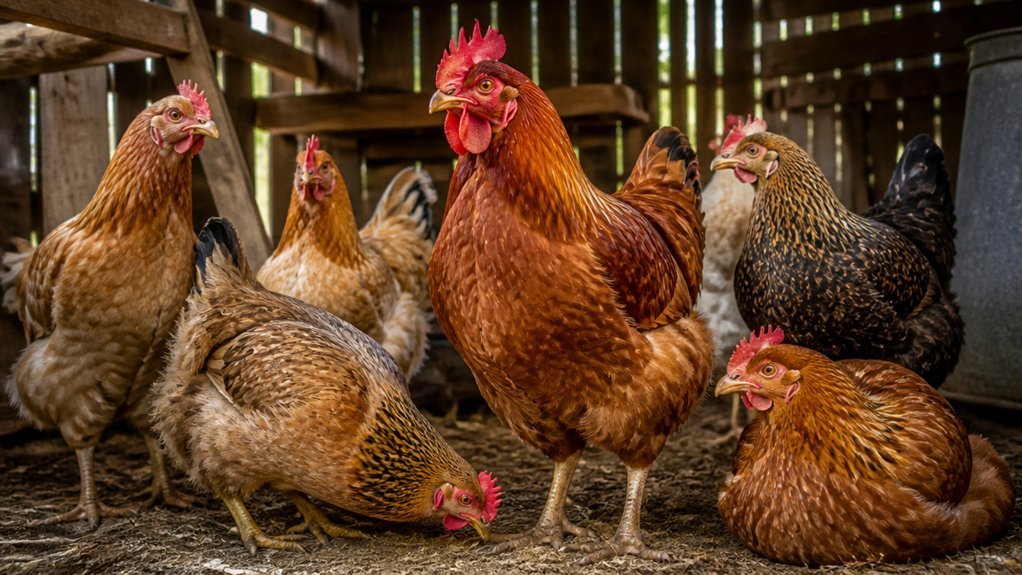
You can cut pecking order fights by giving your flock more space so birds can move away instead of crowding each other. Try distracting them with treats to break tension and shift their focus. If one bird keeps bullying the others, separate it so the flock can settle down. Additionally, incorporating appropriate enrichment toys can promote natural behaviors like foraging and reduce aggressive interactions.
Add More Space
When hens start squabbling over rank, extra room can make a big difference. You’ll calm tension by widening the coop, run, or yard so birds can move without crowding each other.
Give each chicken enough feeder, waterer, and roost access, because tight spaces force repeated face-offs. If you can, create separate zones for resting, scratching, and feeding, so weaker birds don’t get trapped. Better airflow and clear sightlines also help birds relax and settle their place.
Adding walk-in coop features like multiple access points and visual separation can further improve flock harmony.
- Add square footage before trouble grows.
- Raise more than one feeder and waterer.
- Use partitions to break up sightlines.
- Keep roosts spaced so hens can avoid pressure.
Distract With Treats
Treats can redirect that built-up energy before hens turn it on each other. You can scatter scratch grains, chopped greens, or mealworms across a wide area so birds peck at the ground instead of at flockmates.
Offer treats when tensions rise, such as after a change in routine, a feed delay, or an introduction to new birds. Keep portions small so you don’t upset their diet or encourage begging.
You’ll get the best results if you pair treats with calm handling and consistent feeding times. Move slowly, watch for early signs of squabbles, and toss treats before a chase starts.
This simple distraction gives lower-ranking hens a safer focus and can ease pressure without forcing the flock into a fight. High-quality nutrition supports overall health and reduces pecking behavior related to nutritional deficiencies.
Separate Bully Birds
If one hen keeps starting fights, separate her from the flock for a short time so the others can calm down and reset.
Put her in a nearby pen where she can see, but not challenge, the group. You’ll often notice the pecking order settle once the bully loses her audience and target.
Reintroduce her after a day or two, then watch closely for fresh aggression. If she attacks again, extend the break and check for stress, crowding, or limited feed space.
- Use a safe, quiet enclosure
- Keep food and water available
- Rejoin her during calm periods
- Watch for repeated bullying
Maintaining proper enclosure safety helps prevent ongoing aggression and ensures a secure environment during the reintroduction process.
When Pecking Becomes a Problem
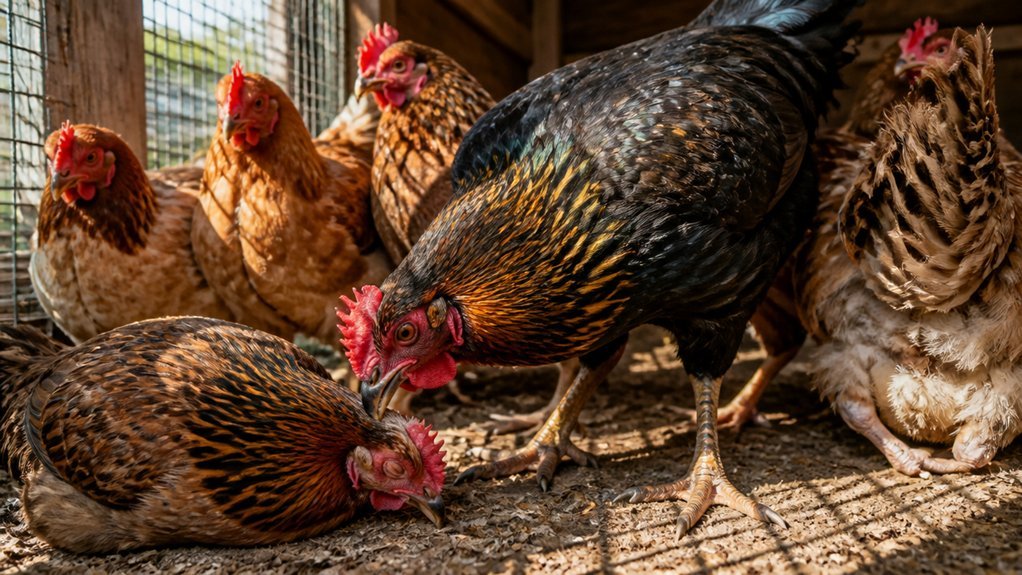
Usually, a little pecking is normal, but it can become a problem when one bird starts targeting the same flock mate repeatedly or the behavior turns aggressive.
You should watch for torn feathers, bleeding, limping, hiding, or a bird that won’t eat or drink. Those signs mean the pecking isn’t just social sorting anymore.
You can reduce stress by adding more space, feed stations, waterers, and resting spots so birds don’t compete as much. You should also check for boredom, heat, parasites, or overcrowding, since these can trigger aggression.
If one chicken keeps attacking another, separate the injured bird so it can recover safely. When you respond quickly, you help prevent injuries, lower stress, and keep your flock healthier and more stable.
How to Introduce New Chickens
When you bring new chickens into a flock, you need to introduce them slowly so the pecking order can adjust with less stress. Keep them in a nearby pen for a week so everyone can see and hear each other without fighting.
Introduce new chickens slowly, letting them see and hear each other before sharing the flock.
After that, let them mix during calm daylight hours while you watch closely. Provide extra feeders, waterers, and hiding spots so weaker birds can avoid pressure. Use these steps to reduce conflict:
- Separate newcomers first
- Swap bedding or objects for scent
- Supervise short free-range meetings
- Feed treats to distract aggressive birds
If pecking turns brutal, separate the birds and try again later. Patience helps you build a safer flock and gives every chicken time to find its place naturally.
Frequently Asked Questions
How Long Does a New Pecking Order Take to Settle?
Usually, you’ll see a new pecking order settle in a few days to two weeks, though changes can take longer if you add multiple birds, space is tight, or conflicts keep restarting.
Do Hens and Roosters Rank Differently in a Flock?
Yes, you’ll usually see separate social roles: hens often rank among themselves, and roosters compete for access and authority. You’ll notice one bird can dominate overall, but flock dynamics shift with age, breed, and temperament.
Can Young Chicks Develop a Pecking Order Too?
Yes, you’ll see young chicks form a pecking order too. You’ll notice them nudge, chase, and peck to claim space, food, and comfort. You’ll help them by giving enough room and resources.
Does Flock Size Affect Pecking Order Behavior?
Yes, flock size can affect pecking order behavior. You’ll usually see more competition in smaller flocks, while larger flocks often spread aggression out. You can expect clearer hierarchies when birds know each other well.
Can Pecking Order Change After Breeding Season?
Yes, it can. You’ll often see hens and roosters reshuffle ranks after breeding season as hormones drop, injuries heal, and flock pressure changes. You should watch for renewed squabbles and adjust housing if needed.
In Summary
Now you know the chicken pecking order is just how your flock sorts out rank. You can spot it by watching who eats first, who moves others aside, and how they behave together. When you understand this natural system, you can keep your chickens calmer and your coop safer. If pecking turns serious, step in early, and introduce new birds carefully so your flock stays balanced and healthy.



