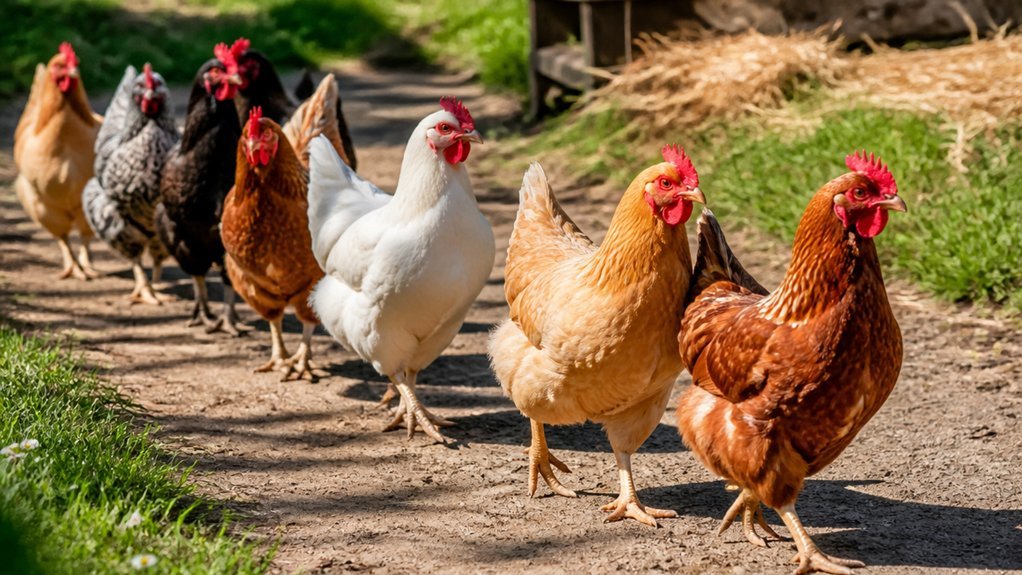
You’ll see chickens follow each other closely because flocking helps them stay safe, find food, and move with less stress. They cluster to watch for hawks, dogs, and other threats, and they often copy the safest bird in the group. Pecking order also shapes who leads and who follows. Young birds learn by imitation, while wind, rain, cold, or fear can tighten the flock. Keep going, and you’ll uncover the full list of reasons.
Why Chickens Follow the Flock
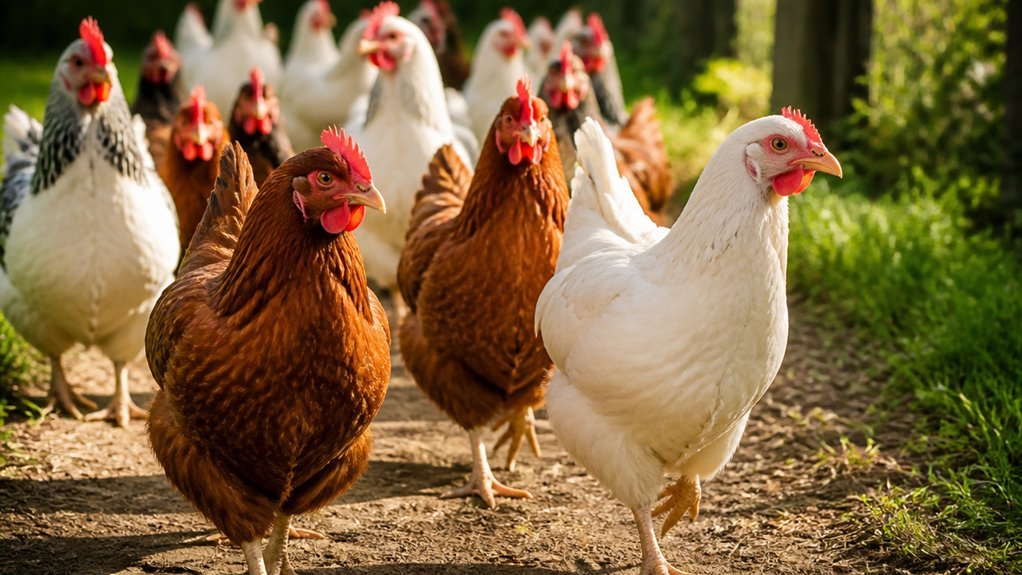
Chickens follow the flock because safety, instinct, and habit all work together. You’ll notice your birds copy one another almost automatically, since each hen watches the group for cues and joins in when movement starts. A well-designed coop with protected wire fencing can help keep the flock safe, reinforcing their natural tendency to stay close together. This behavior helps you manage them, because a single bird rarely acts alone for long. When one chicken heads toward feed, shade, or a new patch of ground, the others often fall in line without hesitation.
Chickens Stay Close for Safety
When danger feels possible, your chickens naturally bunch up and stay near the group for protection. You’ll often see them mirror one another’s steps because clustering helps them feel less exposed. A tight group lets each bird watch for hawks, dogs, or sudden movement while sharing the burden of alertness. If one chicken startles, they quickly regroup, creating a sense of safety through cooperative behavior. Staying close not only reduces their stress but also enhances their ability to detect predators early. This instinctive behavior is crucial for their survival, especially in unfamiliar or threatening environments. Understanding this natural tendency can help you create a safer and more comfortable coop environment, encouraging chickens to stay close and feel secure.
| Sign | Safety clue |
|---|---|
| Head up | Watching together |
| Tight spacing | Less exposure |
| Quick regroup | Shared comfort |
Chickens Follow the Flock for Food

If one hen spots feed, the rest often hurry over because following the flock is the quickest way to find food. You’ll often see chickens trail a bird that’s already scratching through grass, spilled grain, or kitchen scraps. That first bird acts like a signal, and you can watch the others converge fast. Using individual access points, each chicken can access feed without much competition, encouraging natural flock behavior.
Pecking Order Affects Chicken Movement
When you watch a flock, you’ll notice the pecking order shapes who moves first and who follows. Dominant chickens often lead the way, while lower-ranking birds adjust their position to stay clear of conflict. A well-structured hierarchy encourages safe and comfortable perching arrangements, facilitating smoother movement within the coop. This flock positioning helps keep movement orderly and reduces tension.
Pecking Order Hierarchy
A chicken flock runs on a pecking order, and that rank shapes how birds move around one another every day. You’ll notice higher-ranked birds claim prime spots first, while lower-ranked hens wait, sidestep, and follow the group’s flow.
This hierarchy helps you understand why chickens don’t wander randomly; each bird reads the social map and adjusts its path. When one hen steps toward feed, water, or shelter, others often trail behind because they’re recognizing her status and the order within the flock. Proper sizing and fit of harnesses also influence how comfortably chickens can follow or move in coordinated patterns.
You can see the same pattern at roost time, in the run, and near treats. By respecting this structure, the flock avoids constant confusion, and you get clearer, more predictable movement among your birds, day after day.
Dominance Drives Movement
Dominance doesn’t just decide which chicken eats first; it also shapes where the flock moves next. You’ll notice higher-ranking birds step off first, and others quickly trail behind them. This isn’t random; each hen watches for cues from birds she trusts to challenge danger less and claim better paths. When a dominant chicken turns toward shade, feed, or shelter, the rest often swing after her. Additionally, understanding breed behavior helps predict how individual chickens will follow the leader within the flock.
Flock Positioning Behavior
Even in a tight flock, pecking order shapes where each chicken settles and how close she’ll stand to the others. You’ll often see higher-ranking birds claim the safest, most central spots, while lower-ranking hens hang back or edge toward the margins.
That spacing isn’t random; it helps each bird avoid conflict and keep a predictable personal zone. When you watch them move, you can spot subtle shifts as one chicken steps aside, another slips forward, and the group redistributes without a loud fight.
You can use this behavior to read flock dynamics quickly, because position often reveals status. If you introduce feed, shelter, or new hens, expect the order to change and the birds to rearrange themselves around the new pressure.
Proper carrier sizing and understanding flock behavior can help in safe, stress-free transport and integration.
Young Chickens Copy Older Birds
Young chicks often watch older birds and copy what they do, because it helps them learn faster how to find food, avoid danger, and fit into the flock. You’ll see this imitation most when a hen pecks, scratches, or steps aside, and the younger birds quickly mirror her actions. That’s not random; it builds survival skills and social confidence.
Young chicks learn by watching older birds, quickly mirroring their actions to build survival skills and flock confidence.
Additionally, balanced amino acids in the feed support proper muscle and skeletal development, making their observed behaviors more effective and instinctive.
- You learn what foods are safe by watching first.
- You avoid risky spots by following calm, experienced birds.
- You pick up flock manners that reduce pecking and confusion.
When you guide chicks with steady adults, you give them a clear model. They don’t waste energy guessing, and they adapt more quickly. Over time, their copied behavior becomes instinctive flock sense.
Chickens Stay Together in New Places
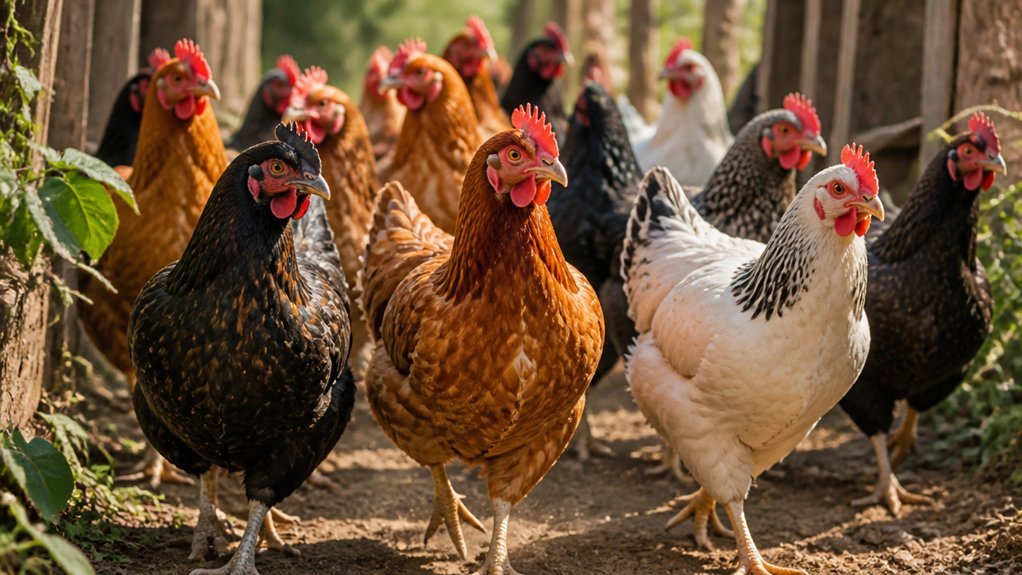
When you bring chickens into a new place, they often stick close because your flock feels safer moving as a group.
You’ll notice they follow one another to avoid danger and figure out where to go.
That togetherness also gives them comfort when the surroundings feel unfamiliar.
Additionally, they may seek the appropriate cover for protection from weather and predators, reinforcing their instinct to stay together.
New Environment Safety
In a new place, chickens often stick close together because the flock gives them a sense of safety. When you move them into unfamiliar ground, they watch one another for cues and stay near trusted companions.
This behavior helps reduce stress and keeps each bird alert to possible danger. You’ll notice they settle faster when they can see the others nearby.
- Familiar flockmates lower fear.
- Close spacing helps each chicken feel protected.
- Shared attention makes threats easier to spot.
- Using appropriate isolation pens can help provide a secure environment during transitions.
If you introduce new surroundings, you can support that instinct by giving them time, quiet, and space to adjust. They don’t need you to force confidence; they need a stable group presence.
That simple bond helps them feel secure while they explore.
Group Navigation Comfort
Once chickens feel safe, they also use the flock as a kind of moving guide in unfamiliar places. You’ll notice them cluster tightly when they enter a new pen, yard, or run because staying close helps them read the same cues and avoid confusion. One bird steps forward, and the others copy her pace, which lowers stress and keeps the group coordinated.
| Flock behavior | What it means |
|---|---|
| Tight spacing | Shared confidence |
| Following a leader | Faster decisions |
| Staying connected | Less hesitation |
When you watch this, you’re seeing practical comfort, not mindless copying. The group gives each chicken a reference point, so she can explore without feeling alone. That’s why they move as one, even when the path isn’t familiar.
Weather Makes Chickens Crowd Together
Bad weather can make chickens huddle and move as a group, especially when wind, rain, or sudden cold hits. You’ll notice they tuck closer together to block drafts and share body heat, which helps them stay comfortable and keep moving.
When the sky turns rough, your flock often picks the safest path and follows the bird that seems most secure.
- Wind pushes them toward shelter.
- Rain makes open ground feel risky.
- Cold weather encourages tight spacing.
You can use this cue to guide them quickly into cover, because they’ll naturally track one another toward a barn, coop, or hedge. Their crowding isn’t random; it’s a simple response to weather that helps them conserve energy and stay calm outdoors.
Stress Causes Chickens to Flock Tighter
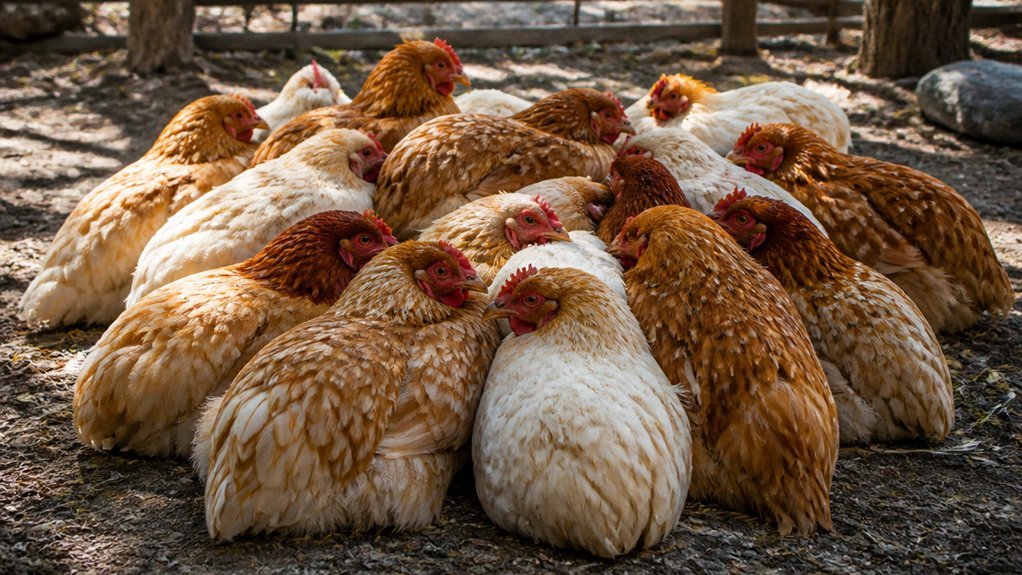
Stress doesn’t just make chickens quiet or skittish; it often makes them bunch up and follow one another even more tightly. When you startle the flock with a loud noise, a predator shadow, or sudden handling, each bird watches the others for cues.
You’ll see them move as a unit, slipping behind one another and staying close to the safest-looking chicken. That tight formation helps them react faster, because no one wants to be the bird left behind.
In a stressed group, you should expect short, nervous bursts of movement, repeated stopping, and quick regrouping. If you reduce the trigger and give them space, they’ll usually spread out again. Until then, stress can make their following behavior look urgent, crowded, and very deliberate.
Social Bonds Keep Chickens Near the Group
When you watch chickens stay close, you’ll notice they build flock safety habits that keep everyone together.
They also bond through proximity, so being near the group feels natural and reassuring. You’ll see them follow social cues from one another, which helps the flock move as a connected unit.
Flock Safety Habits
Chickens often follow one another because staying close to the flock helps them feel safer and more secure. You’ll notice this habit most when they forage, rest, or move between spots. Group behavior lets each bird stay alert while sharing risk with the others.
- You gain quicker warnings when one chicken spots danger.
- You reduce panic because the flock reacts together instead of alone.
- You help hens stay focused, since a visible group gives them clear direction.
These safety habits keep your birds calm and organized. When one chicken moves, the others often copy that choice to avoid isolation. That simple pattern supports steady flock movement and lowers stress without needing constant human guidance.
Bonding Through Proximity
Even without a threat nearby, chickens often stay close because social bonds pull them toward familiar flockmates. You’ll see this when birds choose to roost, forage, and rest near the same companions day after day. Familiarity matters to them, and repeated contact builds comfort.
When you keep a flock together, each bird learns where the others are and feels more settled staying within reach. This closeness can reduce tension, because chickens don’t have to constantly reestablish their place.
They often prefer the company of birds they know well, especially those they’ve shared space with for a long time. So when one chicken moves, others may follow simply to maintain that trusted connection and preserve the group’s daily rhythm.
Following Social Cues
Social cues can keep a chicken moving with the flock, because birds quickly notice what others are doing and adjust their own behavior. You see this when one hen pecks, pauses, or steps away, and the rest copy her almost instantly. Their social bonds help them stay close, share safety, and avoid missing food or shade.
- You gain stronger group movement when each bird watches the others.
- You reduce stress because chickens feel safer near familiar flockmates.
- You improve flock harmony when birds follow clear, repeated signals.
When you understand these cues, you can better read your chickens’ behavior and spot changes fast. If one bird breaks away, the group may be reacting to a threat, a treat, or a routine shift.
When Chicken Clumping Signals a Problem
When a flock crowds together more than usual, it can point to stress, fear, illness, or a sudden change in the coop. You should check for predators, loud noises, drafts, heat, or a cramped space.
If birds huddle in one corner, they may avoid a bully, a wet floor, or poor ventilation. Watch for warning signs like drooping wings, coughing, limping, or reduced eating. Separate any bird that seems weak or injured so you can monitor it closely.
You can also inspect feed, water, and bedding to rule out simple causes. If the clumping doesn’t ease after you fix the environment, contact a poultry vet. Quick action helps you protect the flock and stop a minor issue from becoming a serious one.
Frequently Asked Questions
How Can I Tell if My Chickens Are Following Because of Hunger?
You can tell by checking whether they crowd feeders, peck more urgently, and act restless before meals. If you refill feed, they’ll scatter to eat quickly, showing hunger likely drove the following behavior.
Do Chickens Follow Roosters More Than Hens?
Yes, you’ll often see chickens follow roosters more than hens because roosters lead, guard, and call the flock. You may notice hens still follow other hens for food, safety, or pecking order reasons.
Can Overcrowding Cause Chickens to Stay Too Close?
Yes, overcrowding can make you see chickens stay unnaturally close. They’ll cluster for space, security, and competition, and stress can increase crowding behavior. Give them more room, and they’ll spread out and move more comfortably.
Why Do Chickens Cluster Near the Coop Entrance?
You’ll often see chickens cluster near the coop entrance because they’re waiting for food, shelter, or the leader to move first. You may also have a draft, fear, or limited space pushing them there.
When Should Chicken Crowding Make Me Worry?
You should worry when crowding seems sudden, constant, or comes with panting, pecking, weakness, or fewer feeders. You’ll want to check heat, predators, illness, and overcrowding, then separate birds if needed.
In Summary
So, when you notice chickens following each other closely, you’re usually seeing a mix of safety, hunger, habit, and social instinct. They stick together because it helps them feel secure, find food, and learn from the flock. Sometimes, though, tight clumping can signal stress, weather changes, or a health issue. By watching their behavior closely, you can better understand what your chickens need and keep the flock healthy and calm.