

You can teach chickens to socialize peacefully by introducing new birds slowly in nearby pens first, then moving to short supervised group meetings. Give them plenty of space, hiding spots, perches, and clear escape routes, and place feeders and waterers in several spots to cut competition. Watch for pecking order behavior, reward calm birds, and separate bullies fast if chasing or feather pulling starts. With a few more tips, you’ll make flock harmony much easier.
Introduce Chickens Slowly and Safely
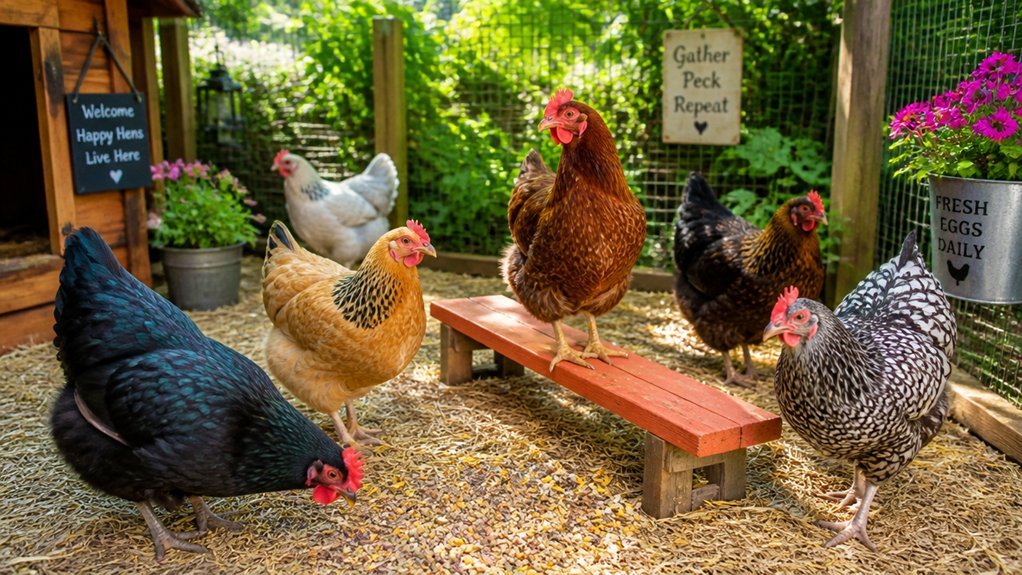
Before you put new chickens together, give them time to adjust so neither group feels threatened. You can start by keeping newcomers in a separate pen where they can see, hear, and smell the flock without direct contact. This lets every bird learn the others’ habits while stress stays low.
Watch for signs of calm interest, like relaxed posture and normal feeding. Then try short supervised meetings during quiet periods, and end them before pecking escalates. If one bird chases or crowds others, separate them and try again later.
Move at the flock’s pace, not yours. When you introduce chickens gradually, you reduce fights, protect weaker birds, and build a smoother pecking order with less disruption overall. Using appropriate enclosure types can also help provide a safe environment for early interactions.
Set Up a Peaceful Coop Layout
You can help your hens get along by giving them enough space to move without crowding each other. Place feed and water in separate spots so birds don’t compete, and add hiding places and perches so they can retreat when they need a break. A calm coop layout makes socializing much easier for everyone. Incorporating adequate ventilation also helps reduce stress and maintain healthy air quality, promoting peaceful interactions among your flock.
Space For Multiple Hens
If you want your hens to get along, give them room to move without crowding each other. You should plan enough indoor and outdoor space so each bird can step away, stretch, and settle down. When hens can’t avoid one another, they’re more likely to peck, chase, and guard corners. Providing ample walk-in height access encourages hens to move comfortably and avoid stress. Add perches, sheltered spots, and open floor areas so they can choose where to stand or rest. Keep pathways clear, and avoid packing too many birds into one tight zone. Watch how they use the coop: if they bunch up, dodge constantly, or linger outside longer than usual, your setup may be too cramped. More usable space helps each hen feel secure, reduces tension, and makes early social interactions smoother for the whole flock.
Separate Feed And Water
Place feed and water in separate spots so hens don’t crowd the same area at once. You’ll cut pushing, pecking, and guarding when each hen can choose a calm route.
Keep bowls low enough for easy access, but not so close that one bird can monopolize both.
- Set feed on one wall.
- Put water on the opposite side.
- Check for clear walking paths.
- Refill before the flock gets restless.
This layout helps you manage movement and lowers tension during busy times. When hens don’t compete at one hotspot, they settle faster and eat more peacefully. Using waste reduction features like adjustable feeding levels and spill-resistant designs can further minimize conflict and mess.
Clean spills quickly, and move dishes if traffic builds. Small changes like this make shared space feel fair and predictable.
Add Hiding And Perches
Add hiding spots and perches so hens can step away from pressure and reset before a scuffle starts. Place low boxes, straw bales, or brushy corners where shy birds can duck out of sight.
Give them several roosts at different heights, but keep each perch easy to reach so weaker hens aren’t shoved aside. When you spread these spots around the coop and run, you break up crowding and cut down on chasing.
You should also add visual barriers like boards or plants to block direct line of sight. That way, a dominant bird can’t stare down every flockmate at once.
Check that perches stay stable, clean, and dry. With escape routes built in, you’ll help your chickens settle conflicts quickly and share space more calmly. Proper sizing and fit of perches and hiding spots ensures they’re comfortable and safe.
Separate Feeders and Waterers
You can cut down squabbles by giving your chickens separate feeders and waterers, so fewer birds crowd the same spot.
Place each station in a different part of the coop or run to spread out traffic and lower tension. This simple setup helps everyone eat and drink without constant competition.
Using adjustable heights for feeders and waterers can further accommodate chick growth and reduce disturbance during feeding times.
Reduce Resource Competition
When chickens have to crowd around the same feeder or waterer, tension can flare quickly, so give them multiple feeding stations and spread them out. You’ll lower squabbles by making food and water easy to reach without a pecking contest.
Try these steps:
- Offer more than one feeder.
- Add extra waterers.
- Refill before they empty.
- Keep rations consistent.
- Using automatic feeders can help ensure a steady food supply and reduce competition.
When each bird can eat and drink without waiting, you reduce pushy behavior and help calmer hens feel safe. Watch for birds guarding bowls, then add another station if needed.
This simple change won’t solve every flock issue, but it does cut stress and gives shy chickens a fair chance to settle in.
Place Stations Strategically
Place feeders and waterers in separate spots so one crowded area doesn’t turn into a hotspot for squabbles. You’ll calm tension by spreading stations across the run, giving timid birds room to approach without being blocked. Put water in a shaded, low-traffic corner and feed in another visible spot, then keep each area easy to reach. Check that routes stay open and don’t force hens to pass through a dominant bird’s favorite hangout. Using waste reduction features can also help minimize competition around food and water stations.
Introduce Chickens in Small Groups
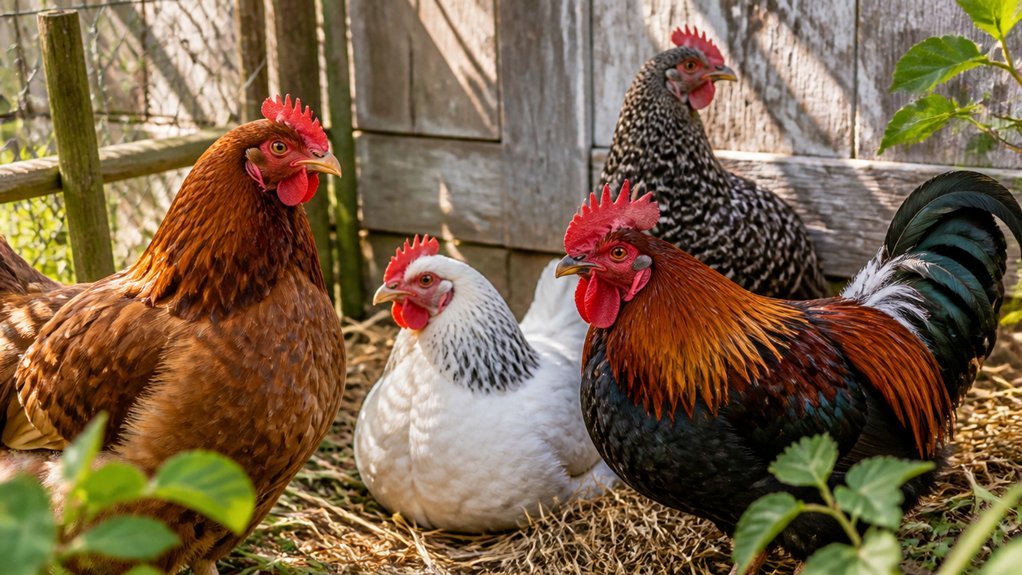
Start by introducing chickens in small, manageable groups so they can adjust without feeling overwhelmed. You’ll help them settle faster when you limit each meeting to a few birds and keep the setup calm.
Watch how they move, then give them breaks if tension rises.
- Use two to four chickens at first.
- Keep introductions short and supervised.
- Offer multiple feed and water points.
- Add new birds only when everyone stays relaxed.
You can repeat these brief sessions over several days, letting each group learn the space and each other at its own pace.
If one bird seems uneasy, step back and reduce the group size next time.
Small steps build trust, lower stress, and make later integrations smoother for your flock.
Ensuring a calm environment during introductions helps prevent aggression and pecking from developing early.
Recognize Pecking Order Behavior
You can spot pecking order behavior by watching for dominance signals like chest puffing, quick pecks, and blocking access to food or space. Keep an eye on hierarchy shifts, since the order can change as birds adjust to each other. If one chicken turns aggressive, separate it right away to protect the flock and calm the group. Monitoring for signs of stress or injury is essential; wound care can help in preventing further pecking injuries and maintaining a peaceful environment.
Identify Dominance Signals
To help chickens socialize smoothly, learn to spot the subtle cues that reveal who’s in charge. You’ll often see one bird claim space, tilt forward, or hold her head high while others yield. Watch for brief chest bumps, wing raises, and assertive steps toward feed or perch spots. These signals show rank without constant fighting.
- A dominant hen eats first.
- She may stand taller and stare.
- She’ll crowd a lower bird aside.
- She often gives quick pecks to direct movement.
When you notice these behaviors, you can keep your flock calm by offering enough room, separate feeders, and clear escape paths. You’re not trying to erase order; you’re helping chickens settle it with less stress and fewer squabbles.
Watch Hierarchy Shifts
Even a stable flock can shift its pecking order after a move, a new bird, or a change in space. You should watch daily interactions for small rank changes, like which hen reaches feed first, who yields at the roost, and who steps aside during dust bathing.
A bird that once led may suddenly defer, and another may test its place with brief pecks, chest bumps, or blocking. Track these patterns over several days so you can tell normal negotiation from real trouble.
Keep notes on where conflicts start, when they happen, and which birds calm the group afterward. When you notice the order settling again, you’ll know the flock is adjusting rather than breaking down.
Separate Aggressive Birds
When pecking order behavior turns from brief posturing into repeated aggression, separate the bird that starts the trouble before it can injure others. You’ll protect flock mates and reset the social balance.
Move the bully to a nearby pen where it can still see the group but can’t strike. Then watch for these signs:
- Chasing that targets one bird.
- Repeated feather pulling or head pecks.
- Blocking feed, water, or roost access.
- Escalation after you add new birds.
Keep the separation short and calm, then reintroduce the bird when tensions drop. Add extra feeders, space, and distractions so you don’t trigger fresh conflict.
If aggression returns, isolate the offender again and check for injury, illness, or overcrowding causing the behavior.
Reward Calm Chickens
Reward calm chickens with immediate, positive reinforcement so they learn that relaxed behavior pays off. When your birds stay quiet, peck gently, or keep a loose posture, reward them right away with a favorite treat, a soft word, or brief attention. You’ll help them connect peaceful behavior with good outcomes.
Keep your timing sharp, because delayed rewards won’t teach the lesson as clearly. Use the same cue and reward pattern every time so your flock can predict what earns praise.
If one chicken starts to crowd, pause the reward until it settles again. This approach nudges your birds toward better habits without force. Over time, you’ll see calmer interactions, more trust, and fewer squabbles in the coop and run.
Reduce Stress During Introductions

Introduce new chickens slowly so the flock doesn’t feel threatened. You can ease tension by keeping newcomers in a separate pen nearby, where everyone can see and hear each other without contact.
Introduce new chickens slowly, using a nearby pen so the flock can see and hear them without contact.
Short, calm meetings help birds adjust to unfamiliar faces and smells.
- Choose quiet times for first contact.
- Add treats in shared sight lines.
- Provide extra space and hiding spots.
- Watch body language and end sessions early.
You should move at the pace your chickens accept, not the pace you want. Keep routines steady, because sudden changes raise anxiety.
If you handle birds, do it gently and briefly. Offer fresh water, shade, and familiar feed so comfort stays high. When introductions feel predictable, your flock learns that new chickens aren’t a threat.
Stop Bullying Before It Spreads
If one chicken starts pecking, chasing, or cornering others, step in fast before the behavior spreads through the flock. You should separate the bully right away and give the targeted birds a calm space to recover.
Watch for repeated squabbles over food, roosts, or nesting spots, because those fights can quickly become a pattern. When you return the bird, supervise closely and interrupt aggression with a firm clap, barrier, or brief removal. Don’t let one dominant hen or rooster control every resource.
You can also rearrange the flock order by reintroducing birds together, so no single bird keeps winning. Stay consistent, because chickens learn fast when you act every time. Quiet, timely correction helps the flock settle into safer habits and keeps conflict from snowballing.
Add Enrichment to Prevent Boredom

Bored chickens are more likely to pick at flockmates, so keep them busy with simple enrichment.
Bored chickens are more likely to pick at flockmates, so keep them busy with simple enrichment.
You can make the coop and run more interesting with changes that reward curiosity and reduce idle pecking. Try rotating activities often so your birds don’t fixate on one another.
- Hang leafy greens or herbs for pecking.
- Scatter scratch grains in bedding to encourage foraging.
- Add logs, platforms, or low perches for climbing.
- Offer dust baths with dry soil or sand.
You should also vary feeders and hide treats in safe spots so your flock explores instead of crowds together.
When chickens stay engaged, they’re calmer, more confident, and easier to manage in a social group.
Separate Aggressive Birds Quickly
Watch for any chicken that starts relentless chasing, feather pulling, or repeated pecking, and separate it right away. Move the bird to a quiet pen or crate where it can’t keep escalating the fight.
Check the flock for injuries, stress, and signs of bullying, then give the victims food, water, and calm space. Don’t wait for the problem to “work itself out”; fast action stops habits from spreading.
When the aggressive bird settles, reintroduce it slowly with close supervision and extra room. You can also reduce triggers by adding feeders, hiding spots, and multiple roosts.
If one bird keeps attacking despite corrections, keep it apart longer or permanently. Your quick response protects the flock and helps everyone learn safer social behavior.
Frequently Asked Questions
How Do I Tell if Two Chickens Are Becoming Best Friends?
You’ll notice them choosing each other’s company, feeding side by side, preening gently, and resting together. They’ll stay calm near one another, share treats, and seem upset when separated.
Can Different Chicken Breeds Socialize Peacefully Together?
Yes, different chicken breeds can socialize peacefully if you introduce them slowly, watch for bullying, and give enough space, food, and roosts. You’ll see calmer flock behavior when you mix compatible personalities.
What Age Is Best for Introducing New Chicks?
You’ll usually introduce new chicks at 4 to 8 weeks old, when they’re sturdy but still young. You should supervise closely, provide enough space, and let them adjust gradually so you avoid bullying and stress.
Do Chickens Need Toys to Stay Emotionally Balanced?
No, you don’t need toys for chickens to stay emotionally balanced, but you should offer enrichments like perches, dust baths, and treats. They’ll peck, explore, and relax better when you keep them busy.
How Long Should Quarantine Last Before Introduction?
Quarantine should last at least 30 days before you introduce chickens, and longer if you notice illness. You’ll need to watch for sneezing, diarrhea, or lethargy, then gradually let them meet through a barrier first.
In Summary
By following these tips, you’ll make it easier for your chickens to get along and settle into a calm, healthy flock. You’ll also help reduce stress, prevent bullying, and create a coop where every bird can eat, drink, and rest safely. Remember to introduce new chickens slowly, watch for warning signs, and step in quickly when needed. With patience and consistency, you’ll build a peaceful flock that thrives together.



