

You winterize your chicken waterers to keep fresh water available when freezing weather turns a simple chore into a daily headache. Cold, wind, and wet bedding can freeze bowls, nipples, and hoses fast, while cracked or dirty waterers can leak and ice over. Insulating, raising, and heating your waterers helps prevent spills, broken parts, and thirsty hens. It also saves time and protects your flock, and there’s more you can do to stay ahead of the cold.
Why Chicken Waterers Freeze in Winter
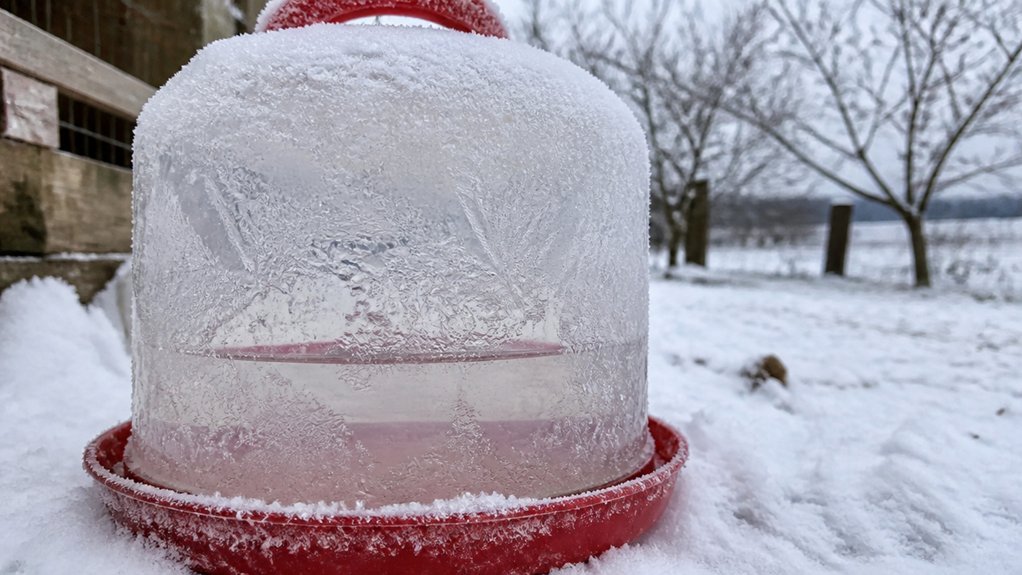
Chicken waterers freeze in winter because cold air pulls heat from the water faster than the sun or the coop can replace it. You also lose warmth through the container itself, especially when plastic or metal sits in a drafty coop.
A well-insulated waterer with an effective thermostat control can help maintain a more consistent water temperature and prevent freezing.
As temperatures drop below freezing, the water at the surface chills first, then ice spreads downward. Wind makes this happen even faster by stripping away the thin layer of warmer air around the waterer.
If you use shallow dishes, they freeze sooner because they hold less water and expose more surface area. Even brief nighttime cold can start a solid crust that grows by morning.
Once ice forms, your hens can’t drink, so you need to understand the cold before you plan your solution.
Winterize Chicken Waterers Before First Frost
Before the first frost hits, you should inspect your chicken waterers for cracks and other wear so you can catch problems early. Test the heater to make sure it works properly before cold weather sets in. Then prepare an insulated spot for the waterer to help keep it from freezing. Consider raised placement options to reduce dirt, droppings, and debris contamination.
Inspect Waterers For Cracks
A quick crack check can save you from a frozen, leaking waterer later. Before cold weather settles in, you should inspect every waterer closely. Look for hairline splits in plastic, chipped edges on metal, and loose seams around valves, lids, and bases. Run your fingers along the surface because small damage isn’t always easy to see.
Checking material durability can help identify weaknesses that may not be immediately visible.
If you spot any weakness, replace the part or retire the unit now instead of waiting for it to fail outside. Water expands when it freezes, so even a tiny crack can spread fast and ruin the waterer. Dry each piece after cleaning so you can spot flaws more easily.
Pay special attention to handles, connectors, and areas that have been dropped, bumped, or scrubbed hard.
Test Heater Functionality
Once temperatures start to dip, test your heater so you know it works before the first hard freeze. Plug it in, let it run, and confirm that it warms the water steadily without flickering, buzzing, or tripping a breaker.
Check the cord, plug, and housing for damage before you trust it near your flock. If the heater has a thermostat, verify that it cycles on and off at the right time. Watch the water for signs of mild warming, not overheating.
Clean off any dust or debris that could affect performance, and replace worn parts now instead of during a cold snap. When you test early, you give yourself time to troubleshoot, buy a replacement, and keep your chickens drinking all winter long. Additionally, ensure your heater is compatible with infrared technology, which can improve heat distribution and energy efficiency in cold conditions.
Prepare Insulated Placement
Set your chicken waterer on an insulated base to slow heat loss and help the water stay liquid longer through cold nights. Choose a dry, raised spot that blocks wind and keeps the base from sitting on frozen ground.
You can use rigid foam, a rubber mat, or a thick wooden platform, then place straw or mulch around the stand to trap warmth. Keep the waterer level so it won’t tip when hens bump it.
If you use a heated model, lift cords and plugs off wet soil and protect them from pecking. Check the placement after storms, since shifting snow can expose the base and undo your insulation. Selecting a base with thermostatic control ensures reliable freeze protection and energy efficiency.
A stable, sheltered setup helps your waterer work better and reduces refills.
Choose the Best Heated Chicken Waterer
How do you choose the right heated chicken waterer? You want one that matches your flock size, climate, and coop setup. A reliable brand is essential to ensure consistent performance and durability through harsh winter conditions. Pick a model with a built-in thermostat so it turns on only when temperatures drop, which saves energy and reduces wear. Look for durable, weather-resistant materials like heavy-duty plastic or galvanized metal, since chickens peck and scratch. Make sure the cord is chew-resistant and long enough for safe placement near an outlet. Choose a design that’s easy for you to clean and refill, because hygiene matters all winter. If you keep multiple birds, a larger reservoir or nipple system can cut down on crowding and spills. Read reviews, compare wattage, and choose a reliable brand you trust.
Insulate Chicken Waterers for Cold Nights

You can wrap your chicken waterers with insulating materials like foam board, towels, or reflective wrap to help hold in warmth. A sturdy cover also helps protect against ground moisture, which can accelerate freezing and damage the waterer. Focus on covering the sides and base without blocking access, so the water stays usable longer. With a little insulation, you’ll slow overnight freezing and keep your flock’s water ready by morning.
Insulating Material Options
A few simple insulating materials can keep chicken waterers from losing heat too quickly on cold nights. You can wrap the base with foam pipe insulation, which cuts drafts and adds a snug barrier. Reflective insulation, like bubble wrap with foil, helps bounce warmth back toward the container. If you prefer a low-cost option, use straw around the outside, but keep it dry and tidy. Old towels or wool can also work when you need a quick layer, though you should replace damp fabric fast. For a sturdier setup, try a thermal mat or insulated sleeve made for outdoor use. Choosing low-dust bedding can further help maintain a warmer, healthier environment inside the coop, as it prevents moisture build-up and odor, which can contribute to heat loss. Choose materials that fit your waterer, stay secure, and won’t soak up moisture, so you can maintain steady warmth with less effort.
Preventing Overnight Freezing
Cold nights can freeze a chicken waterer fast, so start by insulating it before dusk and placing it in a sheltered spot out of wind. Wrap the base with foam, straw, or reflective insulation, then secure it so moisture can’t soak in.
Raise the waterer off bare ground with a wood block or paver; this slows heat loss from below. Check lids, seams, and nipples for gaps that let cold air in.
If you use a heated base, keep cords dry and protected. In unheated setups, refill with slightly warm water at dusk, then dump any ice in the morning. You’ll help your flock drink steadily and avoid cracked containers.
Regular maintenance and inspection of nipple waterers can also prevent leaks and ensure they remain functional during cold weather leak prevention designs.
A few simple steps tonight can prevent a frozen waterer by dawn, every day.
Prevent Chicken Waterers From Freezing
Even a short freeze can turn a chicken waterer into a solid block of ice, so keep water moving and warm enough to stay liquid through the night. You can do that with a heated base, a thermostatic heater, or a safe stock tank heater matched to your setup.
Using a solar-powered water heater can also provide an eco-friendly way to prevent freezing, especially in sunny winter days.
Fill the waterer with fresh water in the evening, then place it where cold wind can’t hit it directly. Check cords, plugs, and extensions for damage before you use them.
End of contentReduce Ice Buildup Around the Waterer
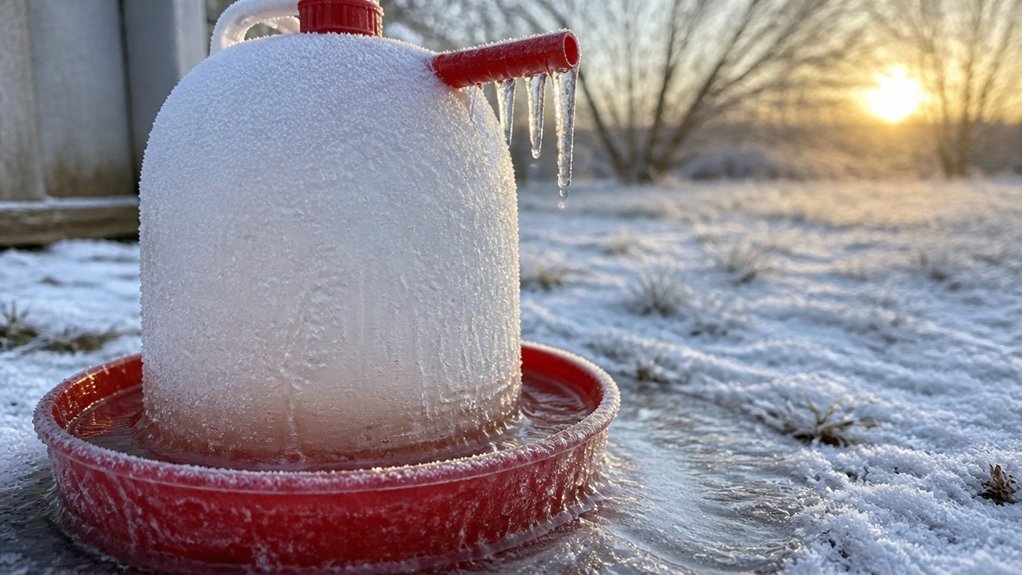
To keep ice from building up around the waterer, clear away slush and wet bedding each day so meltwater doesn’t refreeze into a hard ring. You’ll keep the base dry and make it harder for ice to spread outward. Add a small rubber mat or paver under the unit to lift it off damp ground and block puddles from creeping in.
| Action | Benefit |
|---|---|
| Remove slush | Stops refreezing |
| Replace wet bedding | Keeps ground drier |
| Raise the waterer | Limits contact with ice |
| Use a mat | Diverts runoff |
| Scrape edges | Prevents thick buildup |
A cleaner area also helps you move the waterer without breaking ice. When you cut moisture at the source, you reduce frozen buildup and keep access easier for your flock.
Check Chicken Waterers Twice a Day
Check your chicken waterers twice a day so you catch morning ice before it blocks access.
At midday, make sure the water flows freely and the hens can drink without trouble.
While you’re there, do a quick leak scan so you can fix small problems before they turn into bigger ones.
Morning Ice Check
When temperatures drop, a quick morning ice check can save you from a frozen waterer and thirsty hens. You should step outside early, lift the lid, and look for a skim of ice before your flock starts pacing.
If you catch it fast, you keep your birds calm, hydrated, and ready to lay. Use a gloved hand to break thin ice, then refill with fresh water so your hens don’t face a hard, cold start.
This small habit protects you from sick birds, noisy frustration, and a stressful morning scramble.
- Relieve your hens’ thirst
- Prevent cold-weather panic
- Protect egg production
- Save time later
- Feel confident your flock is cared for
Midday Water Flow
By midday, temperatures can shift enough to slow water flow or freeze a partly used waterer again, so you should check it a second time and make sure your hens still have easy access to fresh water.
Lift the lid, peek at the level, and test the spout or trough with your hand so you know the water moves freely. If you use a heated base or de-icer, confirm it’s working and that cords stay clear of wet bedding and pecking hens. Refill with clean water before the flock crowds around in frustration.
This quick check keeps hydration steady, supports egg production, and prevents stress in cold weather. A small midday pause can save you from larger problems later and keep your birds comfortable all day.
Quick Leak Scan
A quick leak scan morning and evening can save you from wet bedding and an empty waterer. Walk the coop, touch the base, and look for drips, ice rings, or damp spots under each unit.
If you catch a slow leak now, you’ll keep water available and protect your flock’s feet and feathers from chilling slush. Tighten loose fittings, replace cracked nipples, and wipe away buildup before it freezes into a bigger problem.
Your birds depend on you, and this simple habit keeps stress low and routines steady.
- You’ll feel relief when the water stays put.
- Your hens won’t pace a dry, frozen dish.
- Wet litter won’t spread that sour, cold smell.
- You’ll avoid a frantic midnight refill in the dark.
- Your flock will thank you with calm, steady drinking.
Protect Power Cords and Heat Sources
If you use heated waterers, keep cords out of reach of curious pecks and sharp beaks by running them through conduit, cord covers, or securely fastened tubing.
Check every connection before cold weather settles in, and replace cracked plugs, frayed insulation, or loose outlets right away.
You should mount heat sources where bedding, straw, and droppings can’t touch them, and keep them elevated enough to stay dry.
Use only outdoor-rated extension cords and plugs, and avoid daisy-chaining multiple cords. Plug equipment into a grounded, GFCI-protected outlet to reduce shock risk.
After storms or cleaning, inspect the setup again so moisture hasn’t shifted anything.
A tidy, protected electrical setup helps your waterer run safely and keeps your flock’s drinking water available all winter long.
Use Backup Chicken Waterers During Deep Cold

When deep cold sets in, keep a backup waterer ready so your flock always has access to liquid water. You can swap it in fast when your main unit needs rest, and that simple habit keeps stress down for you and your birds.
Store the spare indoors, fill it with fresh water, and set it out before the morning freeze hits. A clean backup gives you confidence on brutal days, especially when the sun barely warms the coop.
- You’ll feel calmer knowing help is close.
- Your hens won’t face thirst during hard freezes.
- You’ll avoid frantic trips in bitter wind.
- You’ll keep routines steady for your flock.
- You’ll protect your peace of mind.
Common Chicken Waterer Problems in Winter
Even with a backup waterer on hand, winter can still throw a few common problems at you. Ice can form overnight, crack plastic parts, and block nipples or valves. Snowmelt may seep in, then freeze again and expand. Cold hands make lids stick, so you waste time prying them open. Dirty water also freezes faster, and chickens may avoid it.
| Problem | What happens |
|---|---|
| Ice buildup | Water stops flowing |
| Cracked container | Leaks start fast |
| Frozen nipples | Birds can’t drink |
| Slippery base | Waterer tips over |
| Dirty water | Freezes sooner |
Check your setup daily, because small issues turn into thirsty birds quickly. Clean spills, inspect seals, and watch for warping after hard freezes.
Keep Your Flock Drinking All Winter

Keep your flock drinking all winter by making water easy to reach, easy to check, and hard to freeze. Set heated bases or insulated containers in sheltered spots, then refill them before dawn and again at dusk. You’ll save energy, reduce stress, and keep hens laying stronger.
Check nipples and cups daily, because a tiny blockage can leave birds parched fast. Raise waterers just enough to keep bedding out, and use fresh water so it doesn’t taste stale.
When snow piles up, clear a path to every drinker so timid hens don’t go thirsty.
- You prevent frantic pecking at ice
- You calm a thirsty, restless flock
- You protect fragile combs from cold stress
- You keep winter routines steady
- You feel confident every morning
Frequently Asked Questions
How Often Should I Clean Chicken Waterers in Winter?
You should clean your chicken waterers at least once a week in winter, and more often if they get dirty, frozen, or slimy. Scrub them, rinse well, and refill with fresh water daily.
Can Chickens Drink Lukewarm Water Safely?
Yes, you can give chickens lukewarm water safely, and they’ll usually drink it readily. You should avoid hot water, keep it clean, and check that it stays above freezing without getting too warm.
What Waterer Works Best for Small Backyard Flocks?
You’ll usually do best with a simple hanging poultry fountain or small nipple waterer for backyard flocks. You can keep it clean, reduce spills, and give your chickens fresh water without wasting space or effort.
How Do I Tell if My Chickens Are Dehydrated?
You’ll notice dehydration if your chickens’ combs look dull, they’re lethargic, their eyes seem sunken, or they’re eating less. Pinch the skin gently; if it doesn’t snap back quickly, they likely need water.
Should I Use Metal or Plastic Waterers in Cold Weather?
Use plastic waterers in cold weather because they won’t chill as fast, and you can handle them more easily. You’ll still need to prevent freezing, but metal can feel colder and may crack less predictably.
In Summary
Winterizing your chicken waterers keeps your flock healthy, hydrated, and comfortable when temperatures drop. If you prepare before the first frost, choose a reliable heated waterer, and insulate everything well, you’ll prevent frozen water from disrupting your birds’ routine. Don’t forget to protect cords and keep a backup waterer ready for deep cold. A little planning now helps you avoid winter problems and keeps your chickens drinking all season long.



