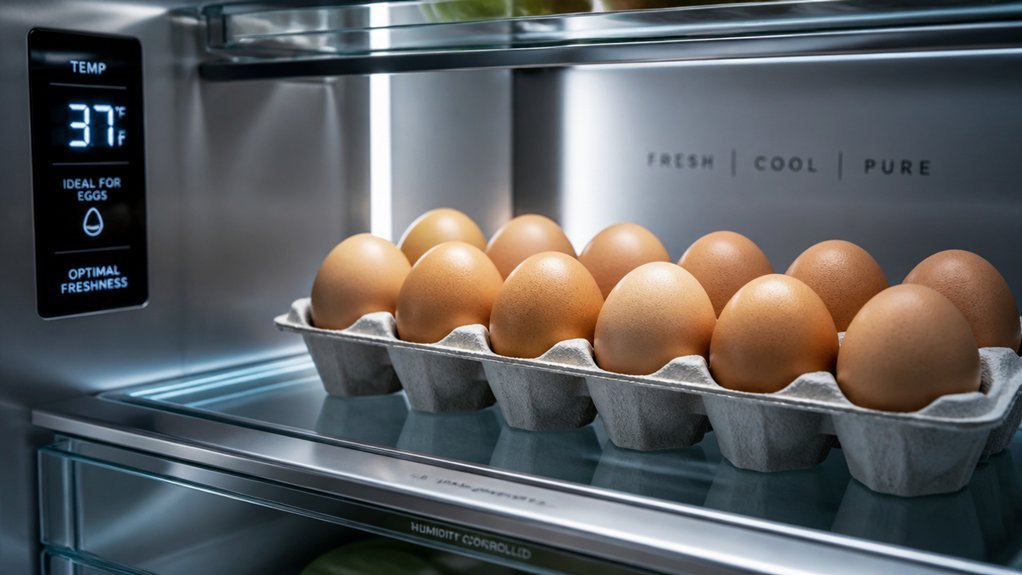
For safe egg storage, you should keep eggs at 40°F or below, because that slows bacterial growth and helps them stay fresh longer. If your fridge runs closer to 45°F or even 50°F, store eggs in their original carton on an interior shelf, not the door. Don’t leave eggs at room temperature for more than 2 hours, and refrigerate washed eggs right away. Keep going, and you’ll see exactly how to store them best.
What’s the Safest Egg Storage Temperature?
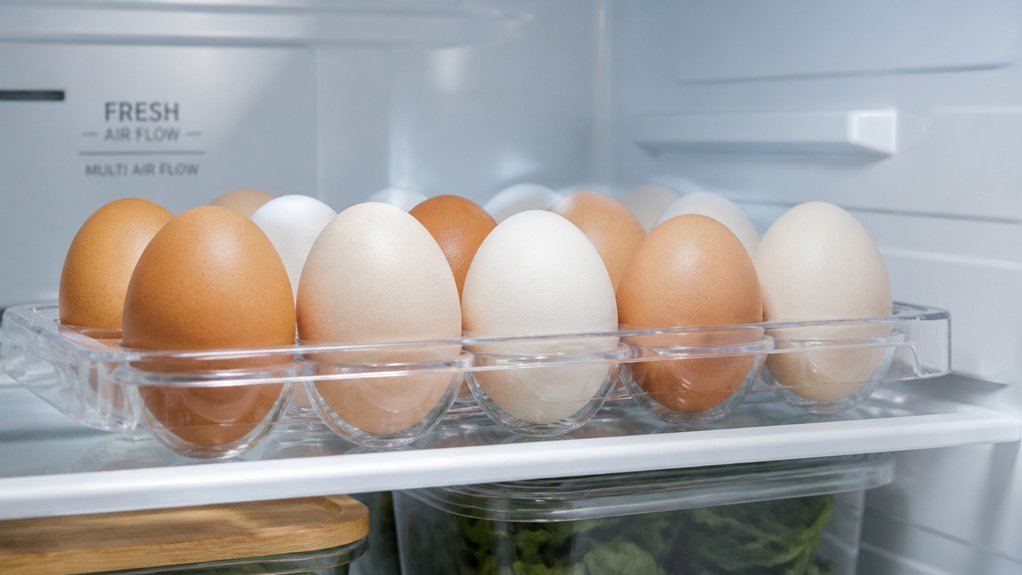
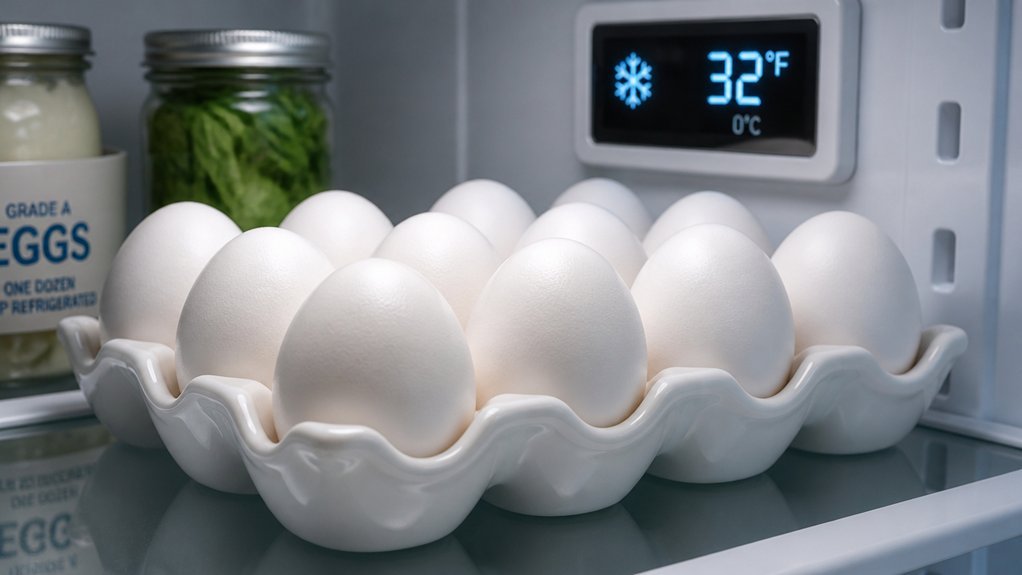
The safest egg storage temperature is 40°F or below, so keep your eggs refrigerated as soon as you bring them home. You should place them on an interior shelf, not in the door, where temperatures change each time you open it. Keep eggs in their original carton to protect them from odors, moisture loss, and breakage. Don’t wash them before storage, because the shell’s natural coating helps block bacteria. If you leave eggs out at room temperature for more than two hours, you increase spoilage risk. Check your refrigerator with a thermometer, since built-in settings can be inaccurate. When you cook or bake with eggs, use them promptly after removing them from cold storage. Eco-friendly egg cartons and other storage options designed for durability and freshness help ensure your eggs stay safe and high-quality during extended storage periods. Consistent cold storage helps you keep eggs safe, fresh, and ready to use.
Why 45°F Keeps Eggs Fresh Longer
At 45°F, you slow bacterial growth, which helps your eggs stay fresher longer. You also cut down on moisture loss, so the eggs keep better quality over time.
That cooler temperature can even protect the shell better, helping your eggs last longer in storage.
Slower Bacterial Growth
When you keep eggs at 45°F, you slow the bacteria that can multiply on the shell and, if eggs crack, inside the egg itself. That cooler environment gives harmful microbes less chance to spread, so you lower your risk every time you cook. You’ll still need clean hands and safe handling, but refrigeration does a lot of the work for you. Maintaining optimal refrigerator temperature is key to extending egg freshness and preventing spoilage.
Reduced Moisture Loss
Cooler storage helps eggs hold onto moisture because 45°F slows the rate at which water escapes through the shell. A consistent temperature also minimizes shell damage or cracks, helping to prolong freshness and prevent spoilage. When you keep eggs at this temperature, you limit evaporation inside the carton and help them stay plump and usable for longer. That matters because moisture loss can make eggs age faster, even if they still look normal outside. By holding steady near 45°F, you reduce the speed of this drying process and preserve better texture for cooking and baking. You’ll notice the eggs feel fresher because they’re less likely to lose internal water during storage. Keep them chilled consistently, and you give each egg a better chance to maintain its quality until you’re ready to use it.
Better Shell Protection
Keeping eggs around 45°F also helps protect the shell and the natural barrier just beneath it, which slows the movement of air and bacteria into the egg. When you hold eggs at this cooler temperature, you reduce condensation that can weaken the shell surface and invite contamination. The shell stays drier, so its tiny pores don’t open the door as easily to unwanted microbes. You also help the protective coating stay intact longer, which gives you an added safety buffer. If you leave eggs in warmer air, the shell can sweat, and that moisture makes it easier for bacteria to cling and spread. Maintaining the proper temperature also supports the integrity of the date stamp and labeling, ensuring your eggs stay fresh and well-organized.
How to Store Eggs at 50°F or Below
If you want eggs to stay fresh longer, store them at 50°F or below as soon as possible after collection or purchase. You should place them in a clean carton and keep them in the coldest stable part of your refrigerator, not the door.
Leave the shells untouched, because handling can invite damage. Keep them away from strong odors and raw foods, and return them to cold storage quickly after use. A steady temperature helps you protect quality and feel confident every time you cook.
- Fresh eggs can feel safer when you act quickly.
- Cool storage helps you avoid waste and disappointment.
- Good habits give you peace of mind at mealtime.
Why Room Temperature Storage Is Risky
When you keep eggs at room temperature, bacteria can grow faster and raise your risk of foodborne illness. A first-in, first-out rotation system also encourages consuming eggs while they are still fresh, reducing waste and potential health hazards. Warm air also speeds up spoilage, so eggs lose quality much sooner. That’s why you should refrigerate them promptly to keep them safer and fresher.
Bacterial Growth Risks
Room temperature gives bacteria the chance to multiply quickly, especially on eggs that haven’t been washed, cracked, or refrigerated properly.
When you leave eggs out, you invite germs like Salmonella to spread across the shell and, if cracks exist, reach the inside. You can’t see this danger, but you can feel its impact later.
- You risk illness from a food you trusted.
- You may contaminate dishes, utensils, and hands.
- You lose confidence every time you crack an egg.
Keep eggs chilled so bacteria stay inactive and your meals stay safer. Cold storage slows microbial growth and helps protect everyone at your table.
If you want fewer worries and better control, make refrigeration your default. Proper ventilation of nests also plays a role in maintaining egg quality and safety.
Rapid Spoilage Factors
Even a short stay at warm temperatures speeds up egg breakdown, making the contents thinner, the yolk weaker, and the overall quality drop faster. You’ll notice room-temperature eggs lose freshness quickly because heat helps moisture escape through the shell and lets enzymes work faster. That means the white spreads more, the yolk flattens, and off-odors appear sooner.
| Factor | Effect |
|---|---|
| Warm air | Speeds aging |
| Moisture loss | Reduces freshness |
| Enzyme activity | Weakens texture |
| Time out | Raises spoilage risk |
If you leave eggs on the counter, you also give bacteria a better chance to multiply. Keep them chilled instead, and you’ll slow these changes, protect texture, and preserve flavor longer.
Best Fridge Spots for Egg Storage
For the best egg storage, place them in the coldest, most stable part of your fridge, usually the main shelves rather than the door. You’ll keep eggs safer when you avoid spots that warm up every time you open the fridge.
Store eggs on the main shelves, where your fridge stays cold and steady, not in the door.
Middle shelves often work well because they stay consistent and keep cartons upright.
- You’ll feel confident knowing your eggs aren’t swinging in temperature.
- You’ll waste fewer eggs when you store them away from the door.
- You’ll enjoy fresher meals with eggs that stay protected.
Keep the carton closed and set it on an inside shelf, not on top of the fridge or in a bin near the light. That simple choice helps you protect quality and reduce spoilage.
Why Humidity Matters for Egg Storage
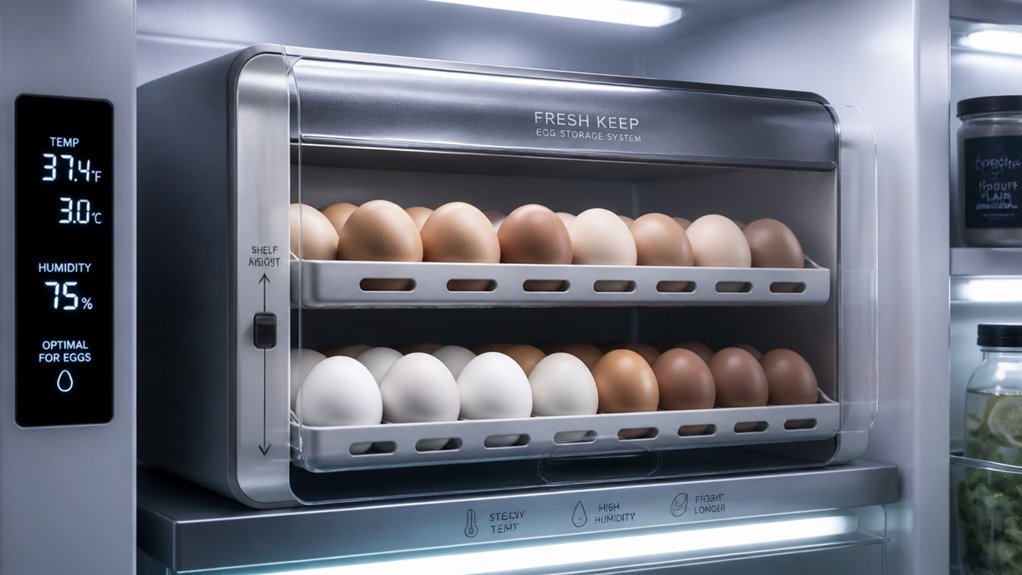
Humidity matters because eggs lose quality faster when the air is too dry or too moist. You want a stable, moderately humid fridge space so moisture stays in the shell and the whites keep their texture. Additionally, using breathable wire or mesh designs can support egg freshness by promoting proper airflow and reducing moisture buildup around the eggs. If the air is overly dry, eggs can lose water through tiny pores, and the air cell grows sooner. If the air is too damp, condensation can form on the shell, and that extra moisture can encourage contamination. Keep eggs in their carton, since it helps shield them from fluctuating humidity and absorbs stray odors. Don’t wash eggs before storage unless you’re ready to use them right away, because washing removes the natural barrier that protects them. Aim for balance, and your eggs’ll stay fresher, cleaner, and better tasting longer.
How Temperature Swings Ruin Eggs Faster
When you move eggs between warm and cold spots, you can shock their shells and weaken their protection.
Those swings also create condensation, which gives bacteria a better chance to grow fast. Keep the temperature steady so your eggs stay safer longer. A consistent temperature helps prevent oxidation, which can spoil or weaken the eggs’ natural shell defense.
Temperature Shock Damage
Sudden temperature swings can damage eggs faster than steady storage at a slightly warmer or cooler setting. When you move eggs from cold to warm and back again, their shells and contents expand and contract unevenly. That stress weakens the shell, shortens freshness, and makes your eggs less dependable for cooking. Maintaining a consistent temperature prevents hot spots or cold spots that can harm the eggs’ quality. You protect them best by keeping them in one consistent, cool place.
- You lose confidence when a carton feels off after every move.
- You waste food when fragile eggs crack sooner than expected.
- You risk disappointment when breakfast plans fall apart.
Keep eggs away from oven heat, sunny counters, and frequent fridge door changes. Stable temperatures help eggs stay intact, calm, and usable longer.
Condensation And Spoilage
Because temperature swings make eggs “sweat,” moisture can form on the shell when cold eggs move into warmer air, and that dampness creates a better path for bacteria to slip through tiny pores. You may not see the damage right away, but repeated condensation weakens the egg’s natural defenses and shortens its safe life.
Using proper candling techniques helps identify eggs with developing embryos and differentiate them from infertile or spoiled ones, ensuring only healthy eggs are stored or incubated.
If you keep eggs in one stable, cool place, you help the shell stay dry and intact. Don’t set them near ovens, sunny windows, or fridge doors where temperatures bounce up and down.
When you bring eggs home, refrigerate them promptly and leave them there until you’re ready to use them. That steady storage helps prevent surface moisture, protects quality, and reduces the chance of spoilage.
Rapid Bacteria Growth
Even brief temperature swings can speed up bacterial growth on eggs, especially when warm conditions let germs multiply faster than a stable chill would allow.
When you move eggs in and out of the fridge, you create moisture and warmth that help bacteria spread across the shell and, eventually, inside tiny cracks.
You can’t see this risk, but you can feel its cost when eggs spoil sooner.
- You lose freshness faster than you expect.
- You raise the chance of illness with every swing.
- You waste money when eggs turn bad early.
Keep eggs cold, steady, and protected from repeated warming.
A consistent refrigerator temperature slows bacteria, preserves quality, and gives you safer eggs for longer.
How to Store Washed Eggs Safely
When you wash eggs, their protective coating is removed, so you’ll need to refrigerate them promptly and keep them at a steady 40°F or below. Place them in a clean carton or covered container on an interior shelf, not in the door, where temperatures swing more often.
Keep the shells dry before storing them, and don’t rinse them again after refrigeration. Use washed eggs within a week for the best quality and safety.
Check each egg for cracks or leaks before you store it, and discard any damaged ones. Wash your hands, countertops, and tools after handling them so you don’t spread bacteria.
What Temperature Is Best for Freezing Eggs?
For freezing eggs, the ideal temperature is 0°F or below, which keeps them frozen solid and slows spoilage. You should keep your freezer steady at this level, because warmer swings can hurt texture and reduce quality.
Keep eggs frozen at 0°F or below to preserve quality, texture, and freshness.
If you plan ahead, you’ll preserve eggs for later baking and cooking with less waste. Use airtight, freezer-safe containers, and leave a little space for expansion.
- You save food that still has value.
- You feel ready when fresh eggs run out.
- You protect flavor, color, and trust in your kitchen.
Always label the date so you can rotate stock with confidence. If you freeze eggs properly, you’ll enjoy a simple backup that supports calm meal planning and fewer last-minute store trips.
How to Tell If Stored Eggs Have Gone Bad
How can you tell if stored eggs have gone bad? You can start with a quick sniff: a rotten, sulfur-like odor means toss the egg right away.
Next, crack it into a clean bowl. If the white looks unusually watery, the yolk breaks easily, or the color seems pink, green, or black, don’t use it.
You should also check the shell for cracks, slime, or powdery spots, which can signal spoilage or mold.
If you’re unsure, do a float test in cold water; fresh eggs sink and stale ones may stand upright or float.
Always discard any egg that smells off, looks strange, or has been stored too long, even if it still appears normal.
Frequently Asked Questions
Can Eggs Be Stored in the Refrigerator Door?
No, you shouldn’t store eggs in the refrigerator door. You’ll expose them to warmer, fluctuating temperatures every time you open it, which can shorten freshness and raise food safety risks. Keep them on a shelf instead.
Should Eggs Stay in Their Original Carton?
Yes, you should keep eggs in their original carton because you’ll protect them from odors, reduce moisture loss, and preserve the expiration date. You’ll also help prevent cracks and contamination, too.
Do Farm-Fresh Eggs Need Refrigeration Immediately?
Not always. If you leave farm-fresh eggs unwashed, you can keep them at room temperature briefly, but you should refrigerate washed eggs right away to reduce bacteria and keep them safe longer.
Can Eggs Absorb Odors From Nearby Foods?
Yes, you can store eggs away from strong-smelling foods, because their shells can absorb odors through tiny pores. Keep them sealed in their carton, and you’ll help them stay fresher and taste better longer.
How Long Do Hard-Boiled Eggs Stay Safe?
You can keep hard-boiled eggs safe for about one week in the refrigerator, if you chill them promptly, store them covered, and discard any with odd smells, slimy shells, or cracks.
In Summary
To keep your eggs safe, store them at 45°F or below whenever you can. You’ll help them stay fresh longer, slow bacterial growth, and avoid the risks that come with room temperature storage. Keep them in a steady fridge spot, away from warm doors and temperature swings. If you wash eggs, dry them well and refrigerate them right away. When in doubt, check for bad smells, cracks, or sliminess before using them.