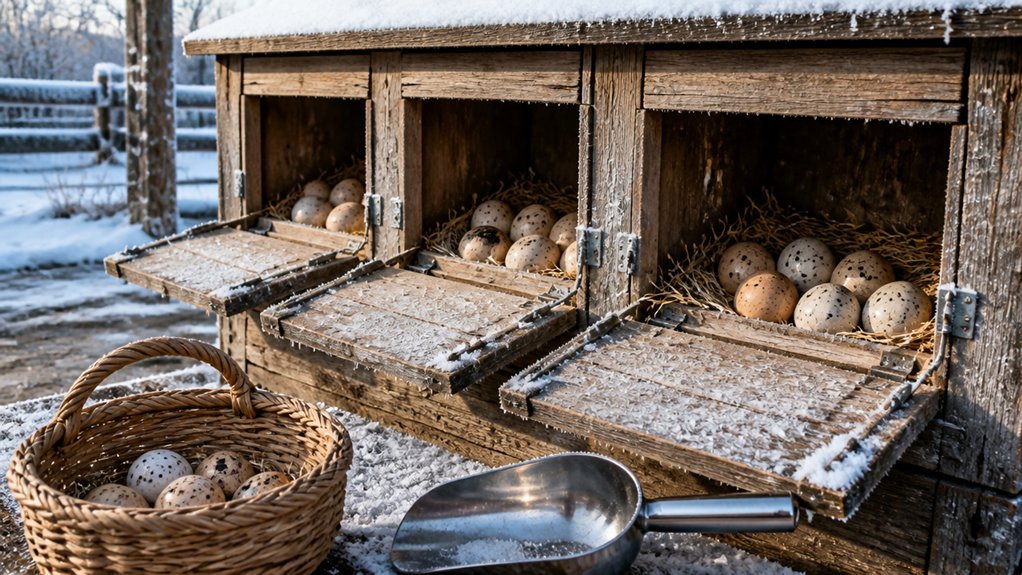
In cold weather, you should collect eggs at least twice a day, especially early and late, so they don’t freeze or crack. Check nest boxes first for wet litter, droppings, or broken eggs, and keep bedding dry and clean. Use a warming basket or egg apron, handle each egg gently, and bring frosted eggs inside right away. Inspect eggs for damage, then store them pointy end down in a clean carton, and there’s more to know.
How to Collect Eggs in Cold Weather
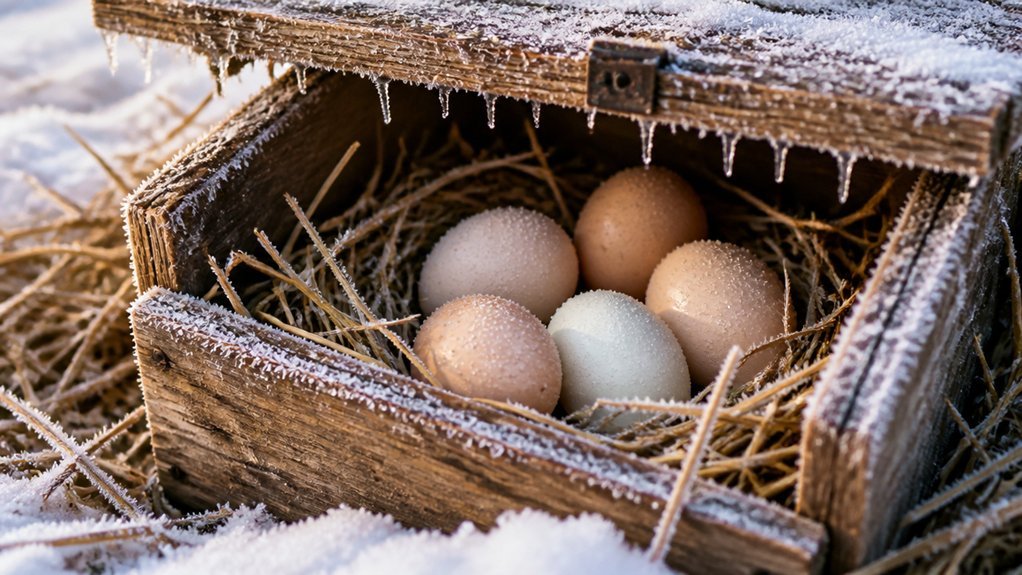
When the weather turns cold, you need to check the coop more often so eggs don’t freeze or crack. Gather eggs at least twice a day, especially during freezing mornings and late afternoons.
Wear insulated gloves so your hands stay warm and you can work quickly. Move calmly to avoid startling hens, then collect each egg before it chills.
Use a basket with soft padding to prevent bumps and breakage while you carry them inside. If you spot an egg with frost on it, bring it indoors right away and let it warm gradually at room temperature.
Don’t wash cold eggs until you’re ready to use them, since moisture can invite trouble. Store your collected eggs in a cool, dry place away from drafts.
Ensuring your basket has good ventilation design can help keep eggs dry and fresh during cold weather.
Inspect Nest Boxes and Litter First
Before you reach for the eggs, take a quick look inside each nest box and check the litter. You can spot cracked shells, damp bedding, or frozen clumps before you disturb the hens.
If the litter feels wet or dirty, remove the worst spots and add fresh, dry material so the box stays inviting and clean. Watch for droppings, broken eggs, or signs that a hen has kicked bedding out of place.
In cold weather, a tidy nest helps eggs stay cleaner and less likely to chill on contact with metal or wet surfaces. A fast inspection also lets you notice hidden eggs tucked under the straw. When you stay alert, you collect better eggs and avoid unnecessary mess with every visit. Proper cleaning and maintenance can extend the lifespan of your nesting boxes and ensure a healthier environment for your hens.
Keep Feed and Nest Boxes Ready
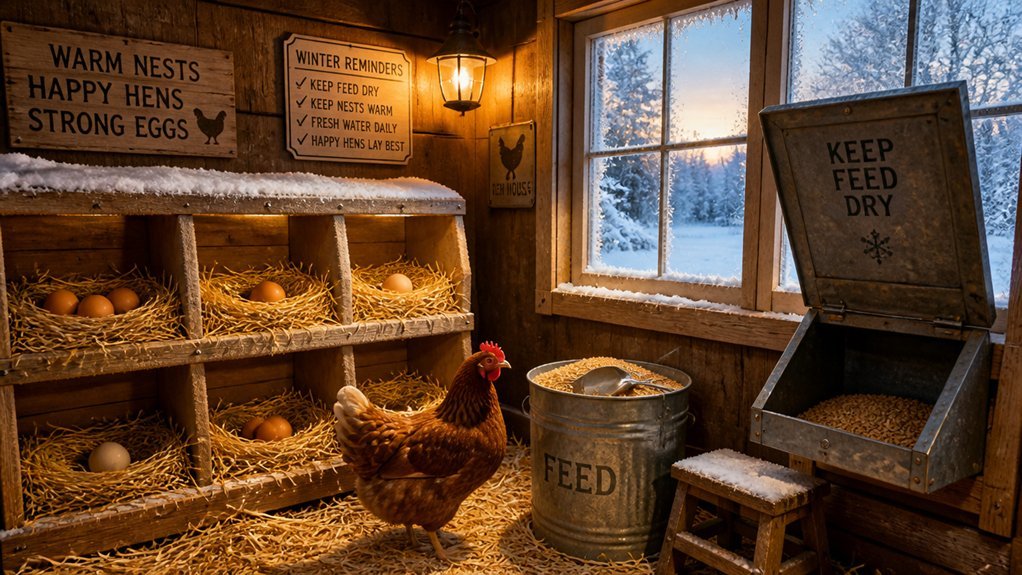
Keep feed and nesting supplies topped off so your hens stay calm and keep laying through cold snaps. You should check bins daily, because empty feeders and sloppy boxes can disrupt routine and reduce egg output. Keep water accessible, since thirsty hens won’t settle well. Add dry bedding often, and replace damp material before it packs down. A tidy, well-stocked coop helps birds use the boxes confidently and keeps eggs cleaner. Regular bedding management with dust control ensures a healthier environment for both birds and handlers.
Gather Eggs Fast to Prevent Freezing
As soon as the eggs appear, gather them promptly so they don’t sit in the cold and start to freeze. Move through the coop quickly, check every nest, and pick up each egg before the chill can reach it.
You’ll protect the shells, keep the insides fresher, and reduce cracking from sudden temperature drops. Using well-designed roll-away nest trays can also speed up collection and minimize stress on the hens.
- Start your collection as early as possible.
- Check nests again if hens lay later.
- Handle eggs gently to avoid hairline cracks.
- Skip extra talking or wandering in the coop.
- Bring eggs inside right after you collect them.
When you stay efficient, you limit exposure to freezing air and make the whole task easier. A fast routine also helps you notice missed eggs before they become too cold.
Use a Warming Basket or Egg Apron
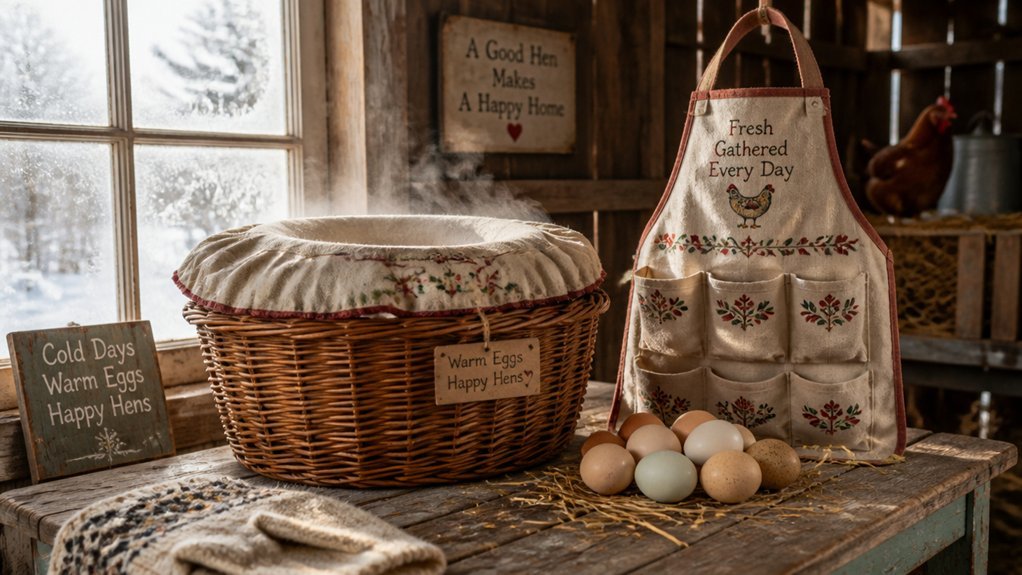
A warming basket or egg apron helps you collect eggs without exposing them to the cold for long. You can line a small basket with straw, wool, or a towel to keep eggs insulated while you move through the coop.
An egg apron also works well because it keeps eggs close to your body, where they stay a little warmer. Choose a container with separate pockets or a snug interior so eggs don’t shift around as you walk.
Keep the basket or apron ready before you enter the coop, so you can place each egg inside right away. This simple setup saves time, reduces chill, and makes winter egg gathering smoother.
Using an apron with deep, pleated pockets or multiple compartments helps stabilize and protect eggs during collection, especially in cold weather.
If you collect often, keep one dedicated tool near the door for quick use every morning.
Handle Cold Eggs Gently
Once you’ve gathered the eggs into a lined basket or apron, handle them gently so the cold doesn’t cause cracks or stress the shells. Keep your grip light, and don’t jostle the eggs as you walk back to the coop or house. Cold shells can be brittle, so support each egg in your palm instead of squeezing it between your fingers. If you need to shift the load, move slowly and keep the basket level. Incorporate food-safe, non-toxic cleaning methods to ensure the eggs remain safe and pristine after collection.
- Lift eggs one at a time
- Avoid stacking them too high
- Cushion them with soft material
- Watch for slick hands or gloves
- Set them down without dropping
Inspect and Store Eggs Properly
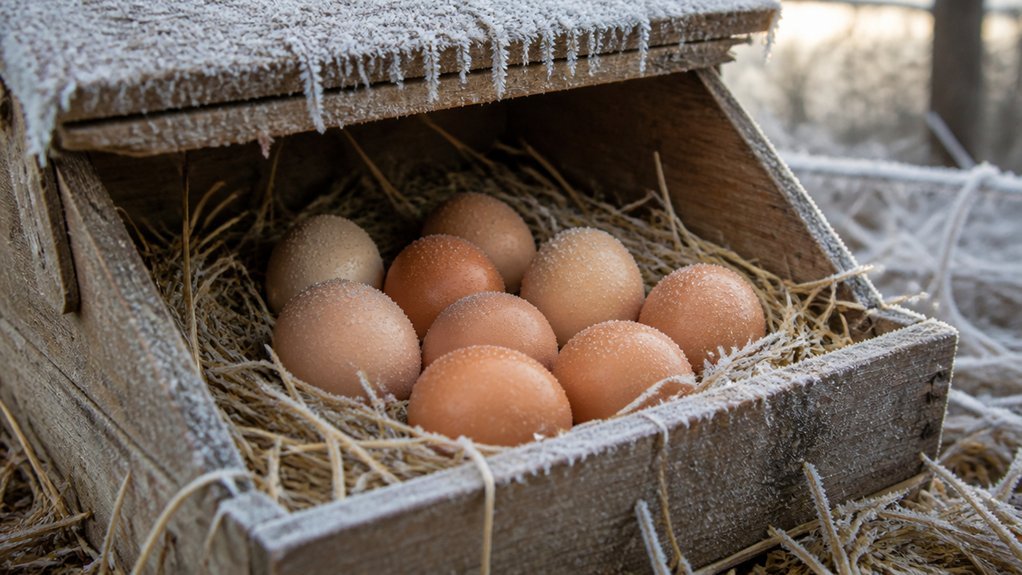
Check each egg for dirt, cracks, or other damage before you store it. A refrigerator egg organizer can help keep eggs organized and protected during storage. If the eggs are clean, you can keep them at room temperature for a short time. If you need longer storage, refrigerate them promptly to help keep them fresh.
Check Egg Cleanliness
If you gather eggs in cold weather, take a quick look at each one before you bring it inside. Check for mud, feathers, and manure, because dirty shells can spread germs and make handling messier.
Brush off loose debris with a dry cloth or soft brush, and skip soaking unless you’ll clean them immediately. Ensure the eggs are surface readiness, which improves imprint quality if you plan to date or label them later.
If an egg is cracked, heavily soiled, or leaking, set it aside and use it first or discard it. Keep your hands clean, too, so you don’t transfer dirt to other eggs.
- Inspect each shell for stains
- Remove loose dirt gently
- Avoid rubbing hard
- Separate damaged eggs
- Handle clean eggs with care
Store At Room Temperature
After you inspect the eggs, store clean ones at room temperature in a clean basket, carton, or tray until you’re ready to refrigerate or use them. Keep the spot dry, shaded, and away from drafts so the shells stay stable and easy to handle. You can line the container with soft straw, paper, or a clean cloth to prevent rolling and cracking. Utilizing egg skelters with rotation systems helps to maintain freshness and reduces waste.
| Item | Picture |
|---|---|
| Basket | A woven nest on the counter |
| Carton | A snug row of shells |
| Tray | A flat resting bed |
| Cloth | Soft padding under eggs |
| Shade | Gentle light, no sun |
Check the eggs each time you collect them, and remove any that look dirty, damp, or cracked. Use them soon, and keep the storage area tidy so your eggs stay neat and ready.
Refrigerate Promptly If Needed
When eggs are clean and you won’t use them right away, refrigerate them promptly to help preserve freshness. Set them in the coldest part of your fridge, not the door, where temperatures swing. Keep the carton closed so you protect the shells from odors and moisture loss.
Before storing, inspect each egg for cracks, dirt, or unusual smells, and discard anything questionable. If you wash eggs, dry them fully first so you don’t leave moisture on the shell. Using recyclable cartons can also support sustainability and help keep eggs protected during storage.
- Place eggs pointy end down.
- Store them in their carton.
- Keep them away from raw meat.
- Use older eggs first.
- Check them again before cooking.
Prompt refrigeration helps you maintain quality, reduce spoilage, and enjoy safer eggs all winter long.
Frequently Asked Questions
How Often Should Chickens Lay Eggs During Winter?
You’ll usually get fewer eggs in winter, often every other day or less, because shorter daylight slows laying. You can help your hens with balanced feed, fresh water, and a consistent routine.
Do Frozen Eggs Remain Safe to Eat After Thawing?
Yes, you can eat frozen eggs after thawing if the shells didn’t crack and you refrigerate them promptly. You shouldn’t leave them at room temperature, and you’ll want to cook them thoroughly before eating.
What Chicken Breeds Tolerate Cold Weather Best?
You’ll do best with cold-hardy breeds like Buff Orpingtons, Australorps, Plymouth Rocks, Wyandottes, Rhode Island Reds, and Brahmas. They’ve got dense feathering, calm temperaments, and usually keep laying even when temperatures drop.
Can Supplemental Lighting Increase Winter Egg Production?
Yes, supplemental lighting can boost your hens’ winter egg production by extending daylight, but you shouldn’t overdo it. You’ll want about 14–16 hours total light, added gradually, to keep birds healthy and laying steadily.
How Do I Stop Hens From Eating Their Own Eggs?
You can stop hens from eating eggs by collecting them quickly, providing enough calcium and protein, keeping nests dark and clean, and removing broken eggs fast. Use fake eggs to discourage pecking and habit-breaking.
In Summary
By following these cold-weather egg-collecting tips, you can protect your eggs and make winter chores easier. Check nest boxes often, keep everything dry and ready, and gather eggs quickly before they freeze. Use a warming basket or egg apron, handle each egg gently, and store them the right way after inspection. With a little care and consistency, you’ll keep your flock comfortable and your eggs in great shape all winter long.