You choose natural methods for backyard egg storage because they help keep your eggs fresh, safe, and flavorful while protecting the bloom, the egg’s natural seal. When you store unwashed eggs in a cool, dry, ventilated spot, they usually last longer at room temperature and resist moisture loss. Gentle handling, pointed-end-down placement, and simple checks for cracks or odors also reduce waste. Keep going, and you’ll see how to store them even better.
Backyard Egg Storage Basics
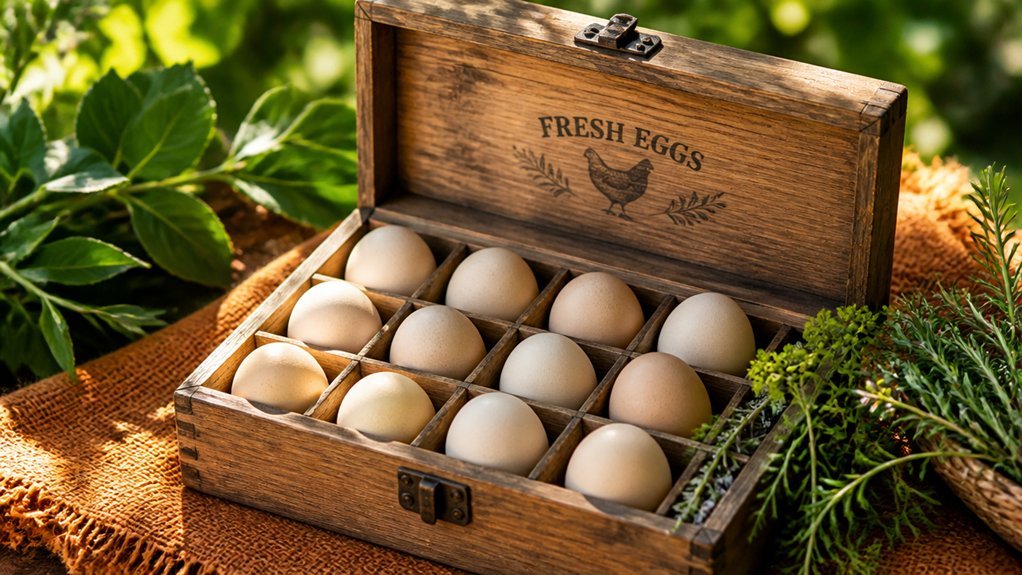
Before you store fresh eggs from your backyard flock, you need to understand the basics: eggs stay safest when you keep them clean, cool, and dry. You should collect them often, check for cracks, and set aside any dirty or damaged ones.
Wipe off light soil with a dry cloth or fine sandpaper, but don’t wash eggs unless you must. If you do rinse them, use warm water and dry them right away. Place clean eggs in a carton with the pointed end down, and keep them in a stable spot away from heat, sunlight, and strong odors.
Rotate your stock so older eggs get used first. Handle each egg gently, because rough treatment can shorten storage life and invite spoilage. Using ventilated cartons helps maintain freshness and reduce humidity build-up around the eggs.
Why Natural Egg Storage Works So Well
Natural egg storage works so well because you keep eggs in a steady temperature, which slows spoilage. You also preserve their natural protective coating, which helps block air and bacteria. As a result, your eggs stay fresh longer without much extra effort. Additionally, using stackable storage options can improve organization and ensure eggs are kept in an optimal environment.
Temperature Stability
Because backyard storage often happens in a cool pantry, cellar, or other sheltered spot, eggs stay at a steadier temperature than they do in a kitchen fridge that’s opened and closed all day. You avoid the constant warming and cooling that can happen when a door swings open for snacks, drinks, and leftovers.
That steady environment helps you keep eggs in better condition without extra effort. You also won’t expose them to the coldest fridge zones or rapid air changes that can add stress over time. Instead, you can rely on a naturally calm space that changes little from hour to hour. Maintaining proper fermentation crock integrity ensures your eggs remain fully submerged and protected during storage.
When you choose a stable location and leave the eggs undisturbed, you support consistent storage conditions and make your backyard system work smoothly.
Protective Natural Coatings
When you leave eggs unwashed, their natural bloom acts like a thin protective seal that helps block bacteria and slow moisture loss. You keep this coating intact by handling eggs gently and storing them clean but dry. A protective date-stamping label can also help monitor freshness without compromising the shell’s natural barrier. This invisible layer helps your eggs resist outside contaminants better than scrubbing ever could. When you wash an egg, you strip away part of that defense and leave the shell more exposed. By respecting the bloom, you preserve a natural barrier that works quietly for you every day. You don’t need additives or special treatments; nature already built protection into the shell. With careful collection and storage, you let that coating do its job, helping your backyard eggs stay safer in a simple, natural way.
Longer Shelf Freshness
Cooler storage and an intact bloom help eggs stay fresh longer by slowing the two main things that age them: moisture loss and air exchange.
When you keep eggs in a cool, stable spot, you slow bacterial growth and reduce the speed at which quality declines. The natural coating on the shell helps seal tiny pores, so you don’t lose as much moisture or let in as much outside odor. That means your eggs keep their texture, flavor, and structure longer than they’d in warmer, drier conditions. Additionally, breathable wire or mesh baskets support air circulation, which is essential for maintaining egg freshness.
You also avoid repeated temperature swings, which can weaken freshness fast. With natural storage, you give each egg a better chance to stay usable, tasty, and safe until you’re ready to cook it.
How Eggshells Protect Backyard Eggs
Ever wonder how a simple eggshell can keep a backyard egg fresh? You can thank its natural design. The shell acts like a tiny shield, helping block dirt, bacteria, and moisture loss.
Its hard outer layer protects the fragile contents from bumps and cracks while still letting tiny pores breathe. That balance matters because you don’t want outside contaminants getting in, but you also don’t want the egg’s quality dropping fast.
A clean shell gives you a better barrier, especially when you handle eggs gently after collection. If you leave the natural coating intact, you help the egg defend itself longer.
Room-Temperature Backyard Egg Storage Basics
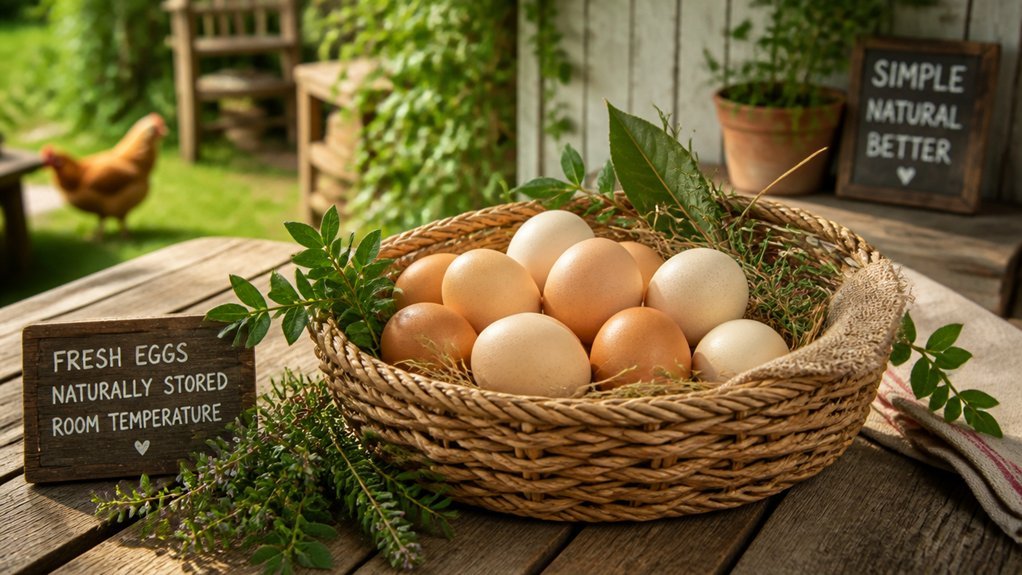
Room-temperature backyard eggs can stay fresh for a while if you handle them the right way. You should collect eggs often, keep them cool and out of direct sun, and store them in a clean carton or basket with the pointed end down. Proper ventilation in your storage area helps maintain consistent temperature and humidity, extending egg freshness. Choose a dry spot with steady airflow, because heat swings can shorten shelf life fast. Check each egg before use and toss any with cracks, leaks, or off smells. Handle them gently so you don’t damage the shell’s natural barrier. If you want the best results, use the oldest eggs first and date your storage container. This simple routine helps you manage freshness naturally and keeps your backyard eggs ready for cooking when you need them.
Unwashed Eggs vs. Washed Eggs
Unwashed eggs usually keep longer at room temperature because the bloom, or natural coating, helps seal the shell and block bacteria. When you leave that coating intact, you give the egg’s natural defenses a better chance to work. Proper handling and selection of egg cleaning methods can also help maintain this protective layer.
Unwashed eggs often last longer at room temperature because their natural bloom helps seal the shell and block bacteria.
Washed eggs lose that protection, so they’re more exposed to moisture loss and contamination. If you wash eggs, you should refrigerate them right away and treat them like chilled eggs from that point forward.
If you collect clean eggs, handle them gently and avoid scrubbing unless you must. You can also inspect each shell for cracks or heavy dirt before storing it.
Choosing unwashed eggs for backyard storage keeps your process simpler and helps you preserve freshness without extra steps or added risk.
Best Natural Coatings for Eggshells
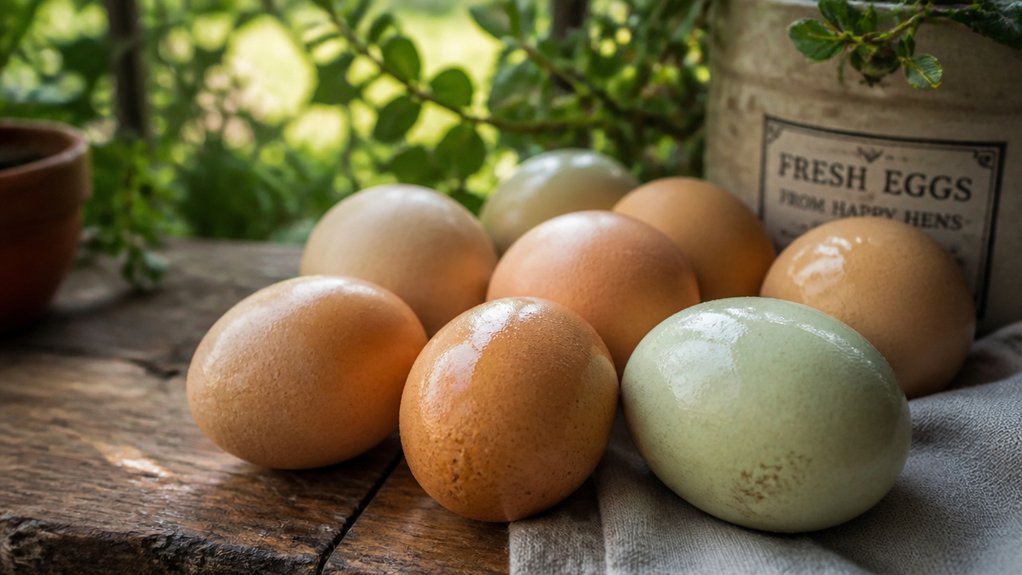
If you want extra protection for eggs stored outside the fridge, a natural coating can help support the shell’s own defenses. You can choose clean, food-safe options that form a light barrier without hiding flaws.
A natural coating can also help extend the shelf life of eggs by reducing moisture loss and preventing cracks, especially when using egg storage solutions that optimize airflow and stability.
| Coating | Benefit |
|---|---|
| Mineral oil | Seals pores gently |
| Coconut oil | Adds a thin, natural layer |
| Beeswax | Creates a firmer shield |
| Lanolin | Resists moisture well |
| Olive oil | Simple, easy to apply |
You should rub on only a small amount, then wipe away excess so the shell stays breathable. Pick coatings that suit your routine and keep the eggshell intact. A smooth, even finish works better than a thick layer, and you’ll reduce moisture loss while keeping the egg surface easy to inspect.
Proven Ways to Extend Egg Freshness
To keep backyard eggs fresh for longer, handle them gently, store them in a cool, steady place, and turn them occasionally if they’re not refrigerated.
Handle backyard eggs gently, store them cool and steady, and turn them occasionally if unrefrigerated.
You should collect eggs daily, since removing them quickly lowers the chance of cracks and contamination. Use clean hands or gloves, and wipe off light dirt with a dry cloth instead of washing unless you plan to use them right away.
Place eggs pointy end down in a carton or tray so the yolk stays centered. Keep them away from sunlight and strong odors, which can affect quality.
If you can, mark the collection date so you use older eggs first. Check stored eggs often and discard any with cracks, odd smells, or slimy shells.
Additionally, egg candling techniques can help monitor egg freshness and embryo development, ensuring only healthy eggs are stored or incubated.
How Humidity and Airflow Affect Storage

Humidity and airflow play a big role in how long backyard eggs stay in good condition. When you keep the air too damp, moisture can collect on shells and encourage spoilage.
If the air feels too dry, shells can lose moisture faster than you want. You should aim for a balanced environment that lets air move gently around each egg without exposing them to strong drafts.
Good airflow helps reduce trapped moisture and keeps odors from building up. You can use breathable containers or baskets that let air circulate naturally.
Don’t pack eggs tightly, because crowding blocks airflow and raises humidity around the shells. By managing both moisture and circulation, you help your eggs stay fresher and more stable during storage.
Ensuring proper container materials can also help regulate humidity levels and prevent condensation from forming on the eggs.
Storing Eggs in Cool, Dark Places
A cool, dark spot helps backyard eggs stay fresh longer by slowing the natural breakdown that happens after collection. You should place them in a pantry corner, cellar shelf, or shaded cabinet away from windows and appliances.
A cool, dark spot helps backyard eggs stay fresh longer and slows natural breakdown after collection.
Keep the area steady, because temperature swings can stress the shell and reduce quality. You don’t need bright light, and you shouldn’t store eggs near heat sources, strong odors, or direct sun.
Use a clean container that protects them from dust and bumps, and set the pointed end down if you can.
A calm, dark environment also helps you organize your eggs by date without crowding them. When you choose this simple setup, you support freshness naturally and make daily use easier.
How to Tell If Eggs Are Still Safe?
How can you tell if backyard eggs are still safe? Start by inspecting each shell, then use a quick freshness check. You want clean shells, no cracks, and no odd odors after cracking.
| Check | What you notice |
|---|---|
| Shell | Smooth, intact, dry |
| Weight | Feels normal in hand |
| Yolk | Stays rounded and firm |
| White | Looks clear, not cloudy |
| Smell | No sulfur or rot |
If you notice anything off, trust your senses and skip that egg. Fresh eggs usually feel solid and look calm in the hand, like a small stone from the yard. When you crack one, a bright yolk and thick white suggest good quality. If it smells sharp, discard it right away. Your nose and eyes work well together here.
Backyard Egg Storage Mistakes to Avoid
Even when eggs look and smell fine, storage mistakes can shorten their life fast. You can ruin freshness by leaving eggs in dirty nest boxes, where manure and damp bedding invite bacteria.
Don’t wash eggs unless you must; washing strips the natural coating that helps block contamination. If you do clean one, dry it right away and handle it gently.
Avoid stacking eggs in warm, sunny spots or near strong odors, because shells can absorb smells and heat speeds spoilage. Keep eggs pointed end down so the yolk stays centered.
Don’t crack eggs into a container and pour them back; that spreads germs. Use clean hands, clean baskets, and clean storage spaces every time.
Rotate older eggs first, and check shells for cracks before storing them.
When to Refrigerate Backyard Eggs
If your eggs stay unwashed and the coop is cool, dry, and clean, you can usually store them at room temperature for a short time.
You should refrigerate backyard eggs when they’ve been washed, because washing removes the protective bloom and lets bacteria enter more easily. You should also chill them if your kitchen is hot, humid, or inconsistent in temperature. If you won’t use the eggs within a couple of weeks, refrigeration helps keep them fresh and safe.
Place them in the coldest part of your fridge, not the door, so temperatures stay steady. Keep them in a carton to limit moisture loss and odor absorption.
When you’re unsure about cleanliness, freshness, or handling, refrigerate them right away to reduce risk and preserve quality longer.
Frequently Asked Questions
Can Backyard Eggs Be Stored With Other Farm Products?
Yes, you can store backyard eggs with some farm products, but you should keep them separate from strong-smelling items, damp produce, and chemicals. You’ll protect flavor, freshness, and safety by using clean, dry containers.
Does Breed Affect Egg Shelf Life Naturally?
Yes, breed can affect your eggs’ natural shelf life. You’ll often see thicker shells and stronger bloom from some breeds, which help eggs stay fresh longer, while others’ eggs age faster.
How Often Should Eggs Be Rotated During Storage?
You should rotate eggs every few days during storage, turning them gently so each side rests evenly. That helps keep yolks centered and freshness more consistent, especially if you’re storing them unwashed.
Can Eggshell Color Change Storage Performance?
Eggshell color usually doesn’t change storage performance much; you’ll get similar keeping quality from brown, white, or blue shells if they’re clean, uncracked, and cool. Focus on freshness, humidity, and temperature instead.
Are Cracked Eggs Ever Safe to Store Naturally?
Cracked eggs aren’t safe to store naturally for long; you should refrigerate and cook them soon. If the crack’s minor and the shell’s intact, you can use it quickly, but don’t risk unrefrigerated storage.
In Summary
Natural egg storage works well because you protect the shell’s natural bloom, which helps keep out bacteria and moisture. When you store unwashed eggs in a cool, dark spot, you can often keep them fresh without the fridge for a while. Just avoid washing too soon and always check for spoilage before use. If the weather turns warm or the eggs seem questionable, refrigerate them right away for safety.