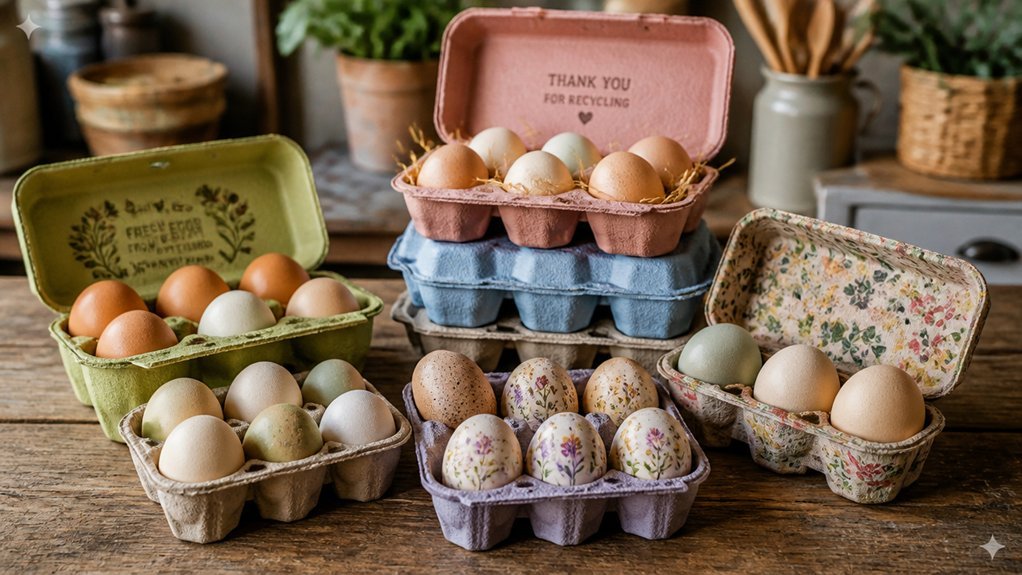
Use sturdy homemade cartons with snug, padded cups so eggs don’t roll or crack. Keep eggs dry, gently brush off dirt, and avoid washing before storage to protect the bloom. Let fresh eggs rest at room temperature, then place them pointed end down in a clean carton. Store the carton in the coldest part of your fridge, label dates, rotate older eggs first, and check for cracks or odors before use. There’s more to improve your egg storage setup.
Choose the Right Homemade Egg Carton
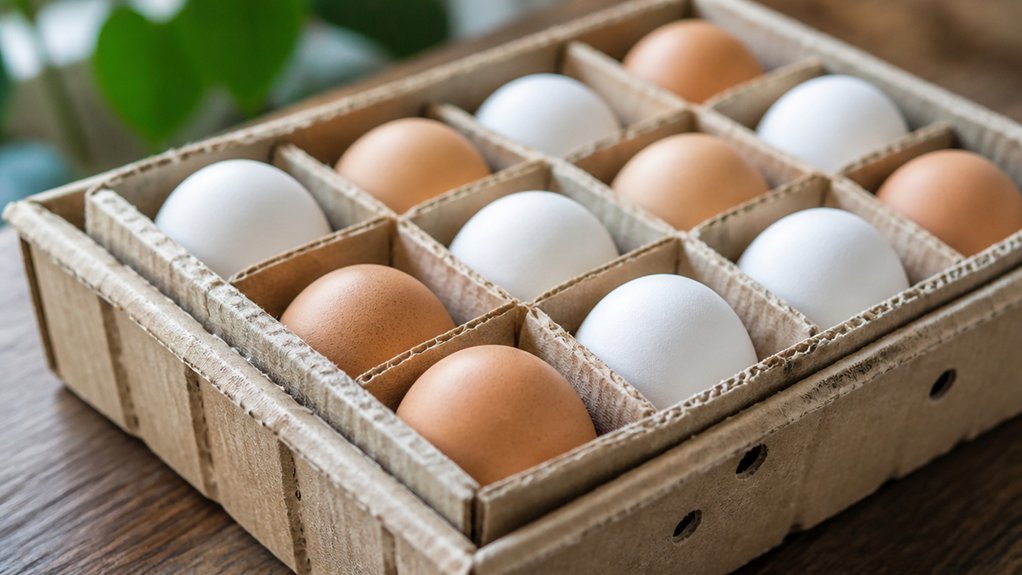
If you’re making your own egg carton, start with a sturdy container that protects each egg from rolling, bumping, or cracking. You can repurpose molded pulp trays, rigid cardboard boxes, or food-safe plastic clamshells, as long as each cavity holds an egg snugly.
Start with a sturdy carton that keeps each egg snug, protected, and secure from rolling or cracking.
Check that the lid closes securely and won’t press on the shells. Choose a carton with enough depth to keep eggs stable during handling and storage.
If the container shifts easily, add a liner or divider to improve support. Label the carton with the date so you can track freshness later.
Keep the design simple and practical, because a good homemade carton should make storage easier, safer, and more organized without crowding or stressing the eggs.
Additionally, selecting a recyclable and biodegradable material can help reduce environmental impact and support sustainability.
Clean Eggs Before Storage
Before you store eggs, gently dry brush off any loose dirt or debris. A breathable wire design helps keep eggs dry and prevents moisture buildup. If you spot visible grime, wipe it away carefully without using water. Keeping the shells clean helps you store them safely and neatly.
Gentle Dry Cleaning
Even fresh eggs can carry bits of dirt, bedding, or debris, so a quick gentle dry cleaning helps keep your stored eggs cleaner and safer. You don’t need water; moisture can invite trouble and shorten storage life. Instead, use a soft, dry cloth, a paper towel, or your clean hands to lightly brush the shell. A cleaning method emphasizes the importance of preserving the egg’s natural protective layer. 1. Protect the bloom, which helps guard the egg naturally. 2. Keep the shell dry so your cartons stay tidy and dependable. 3. Build confidence every time you open the carton and see clean eggs. Work calmly and handle each egg with care. If an egg still looks unclean after a gentle pass, set it aside for immediate use. This simple habit preserves quality, reduces worry, and makes homemade carton storage feel more reliable.
Remove Visible Debris
Brush away any visible dirt, bits of bedding, or feathers with a soft, dry cloth or paper towel before you store the eggs. You’ll keep the shells cleaner and help your homemade cartons stay neat. Don’t rub hard; you can scratch the bloom and invite bacteria. If debris clings to a spot, lift it gently instead of soaking the egg. Using gentle cleaning tools helps maintain the egg bloom, which is vital for protecting eggs from bacterial contamination.
Check each egg quickly, then set it aside once it looks clean. You don’t need perfection, just remove what you can see. That simple step protects quality, keeps cartons tidier, and makes storage safer.
Let Freshly Collected Eggs Rest First
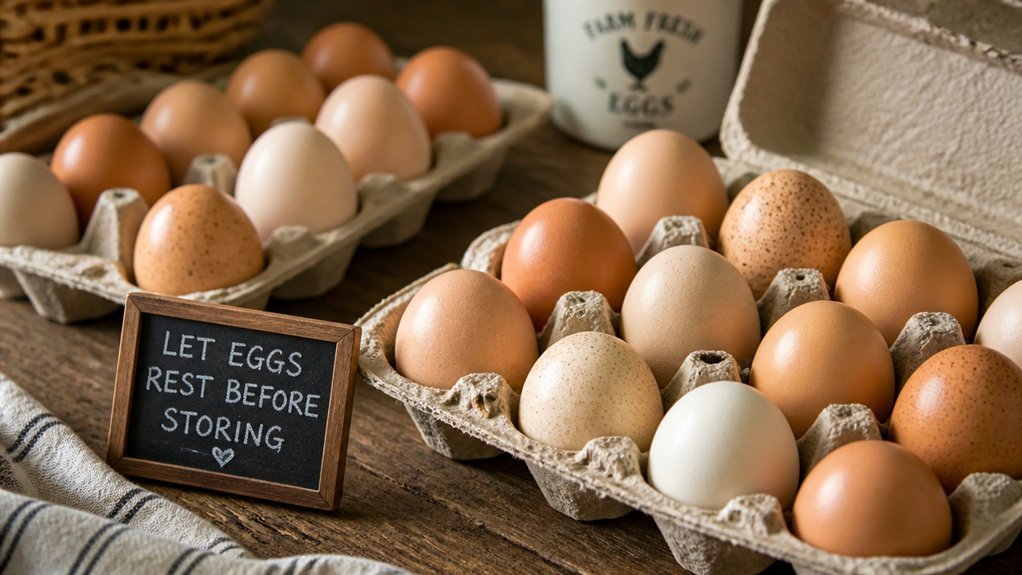
After you collect fresh eggs, let them rest at room temperature before you refrigerate them. This pause helps preserve the eggs’ natural bloom, which adds a protective barrier. Some egg storage products are designed with stackable lids to keep eggs safer and fresher longer once refrigerated. Once they’ve settled, you can store them more safely for longer.
Rest Before Refrigerating
Before you refrigerate freshly collected eggs, let them rest at room temperature for a short time so the shells can settle and any natural bloom can dry fully. This simple pause helps you avoid cracking cold eggs too quickly and keeps storage smoother in your homemade carton. Additionally, allowing eggs to acclimate reduces the risk of temperature shock, which can crack eggs or affect their freshness. Set the eggs on a clean counter, away from heat and sunlight, and wait until they feel no longer warm from the nest.
- You protect each egg from sudden temperature shock.
- You give yourself cleaner handling and easier carton placement.
- You feel more confident that your eggs are ready for safe storage.
Once they’ve rested, move them gently into the refrigerator and keep them steady. That calm changeover supports quality and gives you peace of mind every time you reach for breakfast.
Preserve Natural Bloom
When you let freshly collected eggs rest at room temperature, you help preserve their natural bloom, the thin protective coating that guards against moisture and bacteria. You shouldn’t wash eggs right away, because cleaning removes that barrier and leaves the shell more vulnerable.
Instead, set the eggs in a clean carton with the pointed end down and give them time to settle before chilling them. This short wait also helps the shells stay stable, so you reduce cracking when you move them.
If you gather eggs daily, store each batch separately until you’re ready to refrigerate or use them. By protecting the bloom first, you keep eggs fresher longer and maintain better quality in your homemade cartons.
Keep Cartons in the Fridge
Keep egg cartons in the fridge to protect them from temperature swings and help them stay fresh longer. You’ll shield each egg from warm kitchen air, odors, and accidental moisture that can speed spoilage. Using a stable cold environment also prevents moisture ingress, which is crucial to maintaining egg quality. Put the carton on a middle shelf, where the temperature stays steadier than on the door. Close the fridge quickly after you grab what you need, so the eggs don’t face repeated warming and cooling. 1. You keep flavor cleaner and safer. 2. You reduce waste and disappointment. 3. You feel confident every time you cook. If you use homemade cartons, make sure they’re clean, dry, and sturdy before chilling. A stable cold environment gives your eggs the best chance to stay wholesome, tasty, and ready when you need them.
Store Eggs Pointed End Down
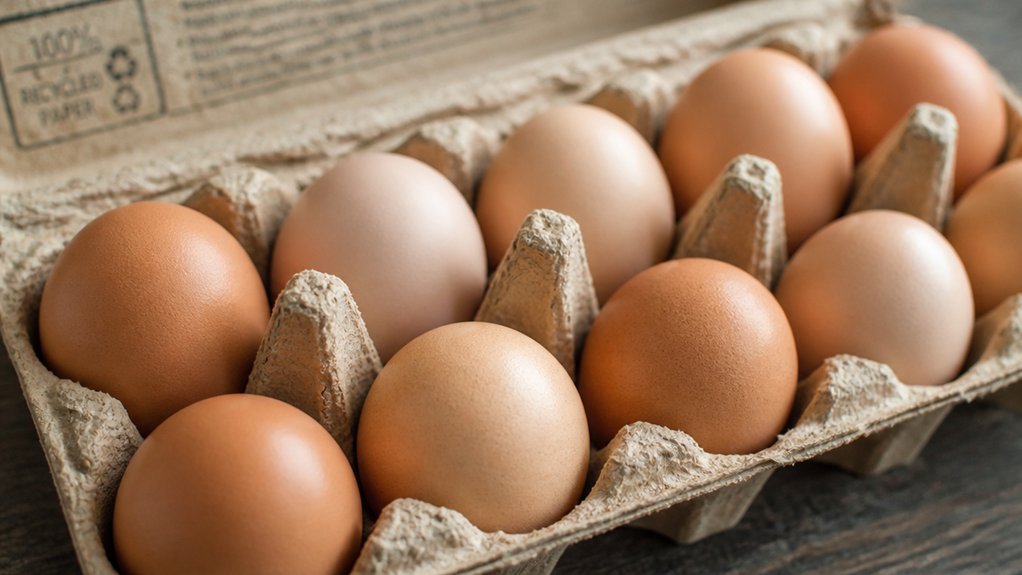
You should store eggs pointed end down so the air cell stays at the top. This position helps keep the yolk centered and supports better freshness. Using the light brightness levels during candling can also help assess egg quality and ensure eggs are fresh before storage. When you place them this way, you give each egg the best chance to last longer.
Pointed End Down
Store eggs pointed end down to help keep the air cell at the wider end stable and reduce the chance of the yolk shifting toward the shell.
When you place them this way in a homemade carton, you’re giving each egg a steadier resting position and a safer, calmer storage setup. That small angle can make your carton feel more intentional and protect your effort in the kitchen.
- You reduce unnecessary movement.
- You help eggs stay neatly aligned.
- You keep storage simple and reassuring.
If you’ve ever opened a carton and worried about fragile eggs, this method can ease that stress. Set them with the narrow end down, close the lid gently, and store them in a cool spot. Proper ventilation and cleaning of your storage area can further improve egg quality and longevity.
It’s an easy habit that supports better handling and more confidence every time you cook.
Air Cell Position
With the pointed end facing down, the air cell stays at the wider top of the egg, where it belongs, which helps preserve the egg’s natural balance during storage. That tiny pocket of air helps cushion the yolk and keeps the contents centered, so you’re less likely to disturb the egg’s structure. Proper storage also involves using a lead-free crock that maintains steady temperature and humidity levels, further extending freshness. When you place eggs this way in your homemade carton, you reduce pressure on the air cell and limit moisture loss through the shell. You’ll also help slow quality changes that can affect freshness over time. Keep each egg steady, avoid shaking the carton, and store it in a cool, consistent place. This simple position supports better preservation, and it’s one of the easiest habits you can use every time you pack and store eggs.
Add Padding to Prevent Cracks
Even sturdy egg cartons can’t always protect against jostling, so adding padding helps keep eggs from cracking in storage. Line each cup with soft material like clean paper towels, shredded paper, or thin cloth so every egg rests snugly.
You’ll reduce bumps, absorb shocks, and keep shells safer when you move the carton.
- Fold padding into each pocket to stop shifting.
- Tuck extra material around gaps so eggs don’t clack together.
- Press gently to test that each egg stays cushioned.
Use only dry, odor-free padding, and replace anything damp or crushed right away.
When you cushion the carton well, you protect your eggs, cut waste, and feel more confident every time you open the lid.
Label Cartons With Dates
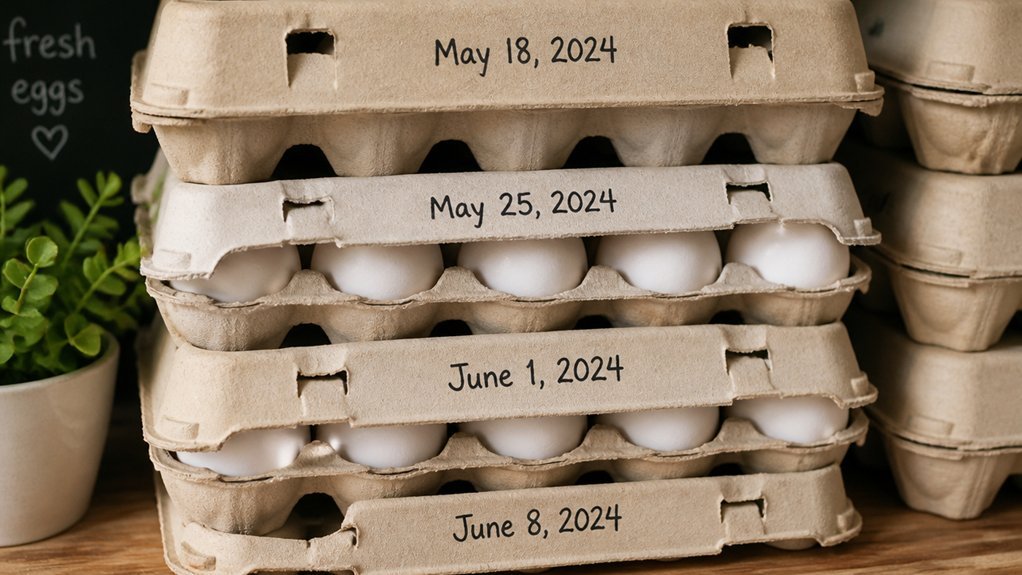
Grab a marker and label each carton with the date you collected or packed the eggs. Clear dates help you track freshness without opening every box. Write the date on the lid and one side so you can spot it quickly in the fridge or cooler.
If you pack eggs at different times, add a simple batch number or note to separate them. Use a waterproof marker or adhesive label that won’t smear from condensation.
Keep the writing large and easy to read, especially if you store several cartons together. You can also include the packing location if that helps you stay organized.
Good labels make your homemade cartons easier to manage, and they save you from guessing later when you need eggs for cooking, baking, or sharing.
Use Older Eggs First
To keep eggs fresh longer, use the oldest ones first and save the newest for later. You’ll waste less, feel more organized, and avoid opening a carton full of forgotten eggs.
When you reach for breakfast or baking, check your dates and choose the eggs that have been waiting the longest. That simple habit keeps your supply moving and gives each carton a fair chance before it ages out.
- You cut spoilage risk.
- You protect flavor and quality.
- You feel confident using what you already have.
Make it easy by placing older eggs where you can grab them first and newer eggs behind them. This small routine turns egg storage into a calm, dependable system you can trust.
Store Cartons in the Coldest Fridge Spot
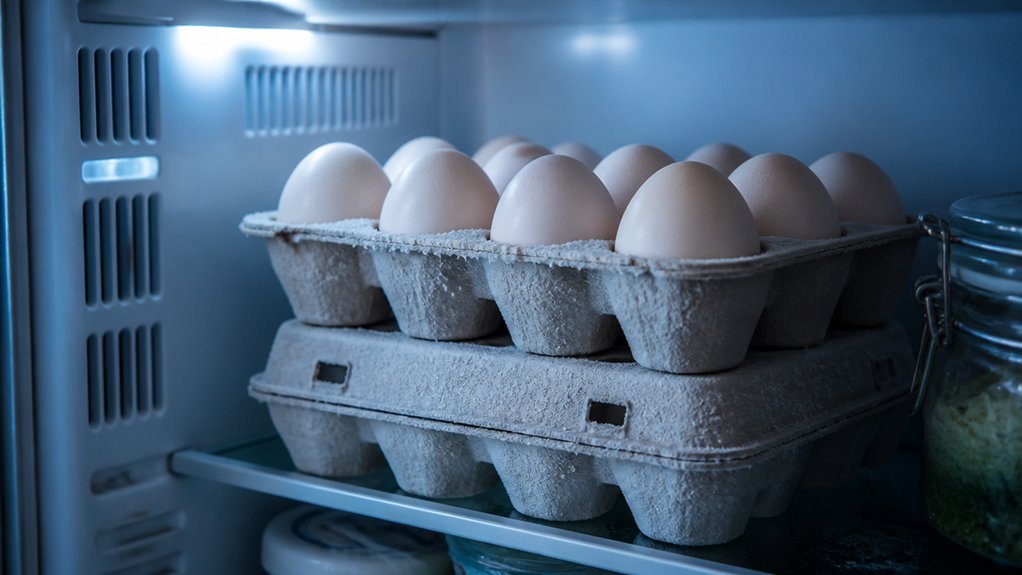
Keep egg cartons in the coldest part of your fridge, usually on a middle or lower shelf, not in the door where temperatures rise every time it opens. You’ll protect quality best when you place the carton where the temperature stays steady day and night. Cold, consistent storage helps your homemade carton do its job and keeps eggs from warming up between uses. Avoid crowding them beside the back wall if frost collects there.
| Fridge spot | Why it works |
|---|---|
| Middle shelf | Stable temperature |
| Lower shelf | Less door exposure |
| Back interior | Coldest air |
| Door | Avoid it |
If you need space, shift condiments elsewhere. Store cartons flat, and don’t leave them on counters after shopping.
Check Stored Eggs Before Use
Before you crack eggs into a pan or batter, take a quick look at them. You can catch problems early and avoid wasting food or risking your meal. Check each shell for cracks, leaks, or sticky residue, and trust your nose if anything smells off. If an egg feels unusually light or sloshes when you gently move it, set it aside.
- See a crack? Toss it.
- Smell something sour? Don’t use it.
- Notice slime or discoloration? Discard it.
A brief check protects your breakfast and your peace of mind. When you stay alert, you keep your homemade carton routine safe, simple, and dependable.
Frequently Asked Questions
How Many Eggs Fit Best in a Homemade Carton?
You’ll usually fit 6 to 12 eggs best in a homemade carton, depending on your carton size and egg count. Start with a dozen if you want balance, easy handling, and less breakage.
Can Homemade Cartons Be Reused Safely?
Yes, you can reuse homemade cartons safely if you clean, dry, and inspect them first. Don’t reuse any carton with cracks, stains, mold, or odor, and keep eggs refrigerated to reduce contamination risk.
Should Eggs Be Washed After Refrigeration?
No, you shouldn’t wash eggs after refrigeration; you’d remove the protective bloom and invite bacteria. If they’re dirty, wipe them gently with a dry cloth before chilling, and always keep them cold.
What Carton Materials Work Best for Humidity Control?
Pulp, molded paperboard, and uncoated cardboard work best because you can absorb moisture and still let air move. You’ll want to avoid plastic, which traps humidity and can encourage condensation around your eggs.
How Long Can Eggs Stay at Room Temperature?
You can keep eggs at room temperature for about 2 hours, or 1 hour if it’s hot. After that, you should refrigerate them to reduce spoilage and keep them safer.
In Summary
By choosing the right homemade carton and keeping your eggs clean, rested, and stored properly, you’ll help them stay fresher longer. Put your cartons in the coldest part of the fridge, point the narrow end down, and label everything clearly so you can use older eggs first. When you check them before use, you’ll catch any problems early. With these simple habits, you’ll store eggs safely and waste less.