You can give your backyard chickens healthy seasonal treats like leafy greens, berries, cucumber, pumpkin, squash, and seedless apple pieces. In spring, try dandelion leaves, clover, and pea shoots; in summer, offer chilled melon and watery snacks; in fall, use pumpkin and apple peels; and in winter, add oats, cracked corn, or sunflower seeds. Keep treats clean, chopped, and under 10% of their diet, and you’ll find plenty more ways to keep them thriving.
Healthy Seasonal Treats Chickens Can Eat
When you want to give your flock something special, seasonal treats can add variety without throwing off their diet.
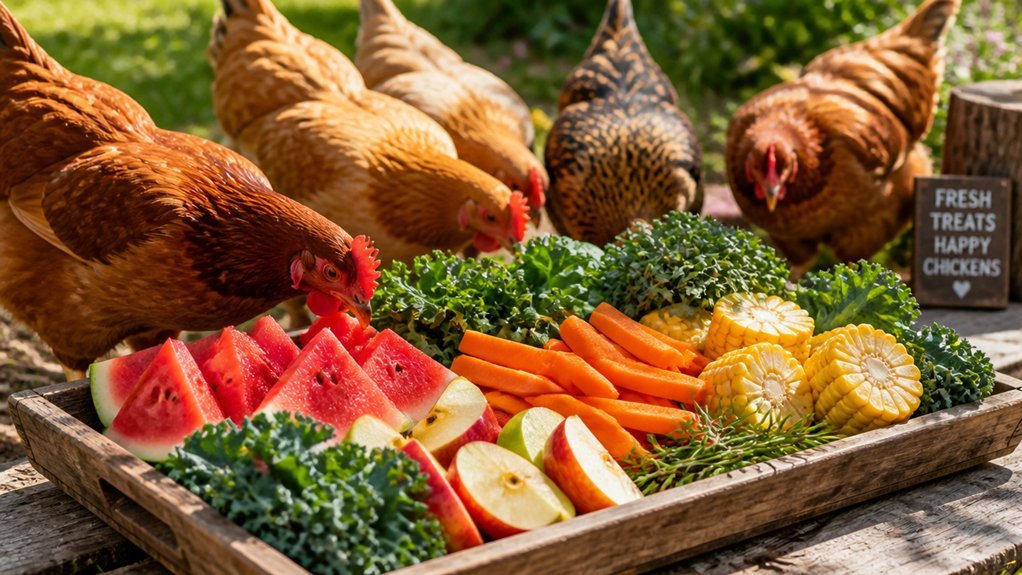
You can offer small amounts of leftover garden greens, sweet corn, oats, and cooked pumpkin in cooler months. In warm weather, your chickens may enjoy watermelon rinds, cucumber slices, and berries as invigorating snacks. You can also use kitchen scraps like apple pieces without seeds, cooked rice, or plain pasta in moderation.
Offer garden greens, sweet corn, oats, pumpkin, watermelon rinds, cucumber, and berries in moderation.
Fresh herbs such as basil, mint, parsley, and dill can brighten their coop routine and support enrichment. Always chop treats into manageable pieces and limit extras to keep feed balanced.
Rotate options through the seasons, and you’ll keep your birds interested, active, and well nourished without overdoing it. Proper nutrition supports healthy growth and immune function, making seasonal treats a beneficial addition when offered thoughtfully.
Safe Fruits, Veggies, and Herbs for Chickens
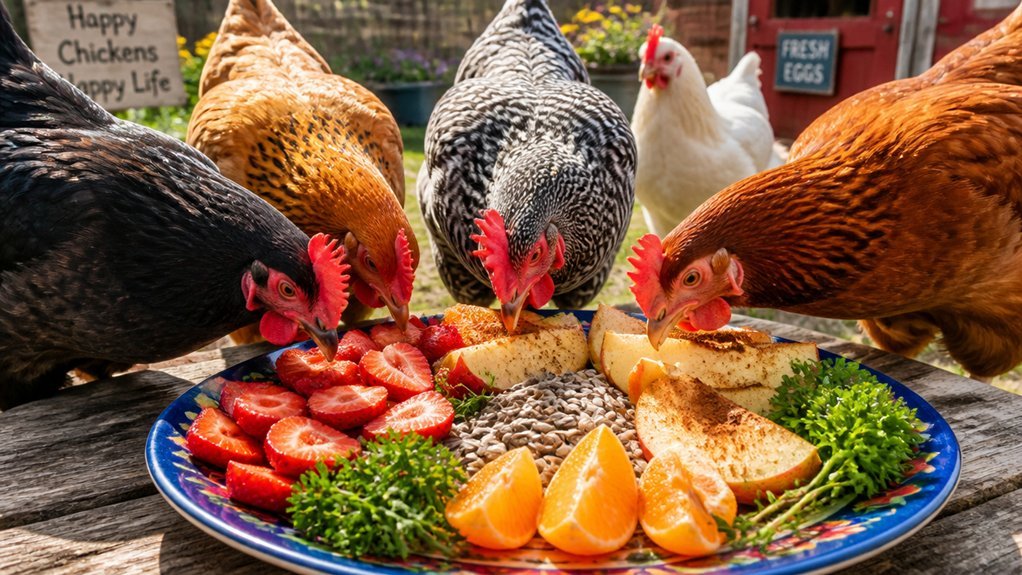
Which fruits, veggies, and herbs are safest for your chickens? You can offer berries, apples without seeds, melons, pears, and chopped grapes as sweet seasonal options.
For veggies, your flock can enjoy leafy greens, cucumber, zucchini, peas, corn, carrots, and cooked squash. These choices add variety and support a balanced diet.
Herbs like basil, parsley, mint, dill, oregano, and cilantro can also give your chickens a fresh treat and may help keep things interesting in the coop.
Always wash produce to remove dirt and pesticides before you share it. If you grow your own, you’ll know exactly what your birds are eating.
Stick with fresh, ripe, and plain foods so your chickens get safe, wholesome treats they’ll love. Incorporating probiotic-rich foods like fermented vegetables or yogurt in small amounts can also support their digestive health probiotic foods.
Portion Sizes and Feeding Tips for Chickens
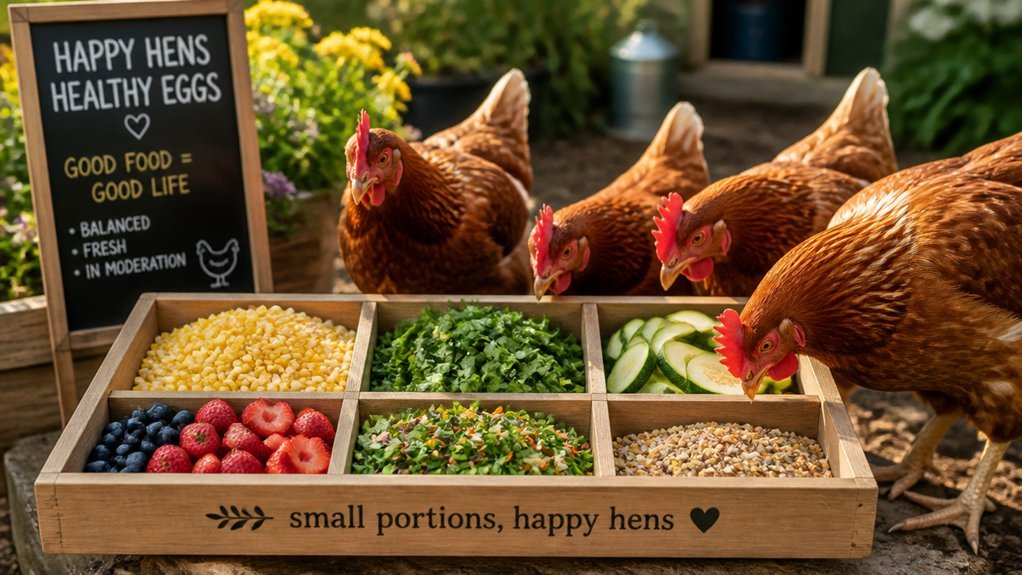
You should keep treats to safe daily portions so your chickens stay healthy and still eat their main feed. A good rule is to make treats only a small part of the treat-to-feed ratio, with most of their diet coming from balanced feed.
Offer treats once or twice a day at most, and adjust the amount so they finish it quickly without skipping their regular meals. Including calcium sources in treats or feed can help support strong eggshell formation, especially in different seasons or during stress periods.
Safe Daily Portions
Even healthy seasonal treats should stay small, because chickens do best when treats make up only a tiny part of their daily diet.
You can offer a few berries, chopped greens, or bits of melon once a day, but keep servings modest enough that your flock still eats its usual feed first. Break larger treats into bite-sized pieces so every bird can peck easily and no one hogs the food. Remove uneaten scraps before they spoil, especially in warm weather.
If you’re introducing a new treat, start with a tiny amount and watch for loose droppings or a dropped appetite. Fresh, simple portions help you add variety without upsetting digestion. Treats should support your flock’s routine, not replace the balanced nutrition they rely on every day. Nutritional content is key to ensuring the treats complement their overall diet effectively.
Treat-to-Feed Ratio
A good rule of thumb is to keep treats to about 10% of your chickens’ daily intake, with the remaining 90% coming from complete feed. That balance helps you offer variety without crowding out the nutrients they need most.
Use treats as a small supplement, not a meal replacement, and keep portions sized for your flock’s age and appetite.
- Offer bite-sized pieces.
- Measure treats before serving.
- Choose nutrient-rich options.
- Remove leftovers promptly.
You can scatter treats to encourage natural foraging, but don’t overload the run. If you give larger treats like melon or leafy greens, cut them into manageable bits so every bird gets a fair share.
Keep the main ration consistent, and your chickens will stay healthy, satisfied, and enthusiastic for seasonal snacks.
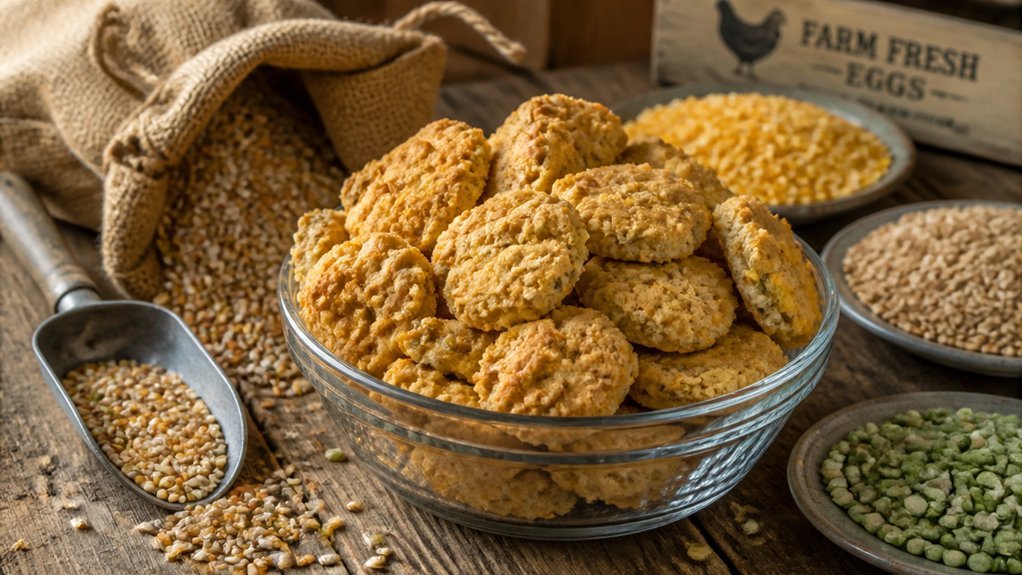
Additionally, incorporating organic grains can enhance the natural diet and support overall flock health.
Feeding Frequency Tips
When it comes to seasonal treats, consistency matters just as much as portion size. You should offer treats once a day, after your flock has eaten its regular feed, so snacks don’t replace balanced nutrition.
Keep portions small: a handful of chopped produce for a few birds is usually enough. If you give treats too often, your chickens may become picky and stop finishing their feed.
In hot weather, you can split treats into smaller servings to reduce waste and spoilage. In colder months, use treats strategically to add variety, but don’t overdo high-calorie options. Always remove leftovers before they sour, and adjust frequency based on flock size, age, and activity level.
Watching their droppings and digestive health, and appetite helps you fine-tune timing.
Spring Treats for Backyard Chickens
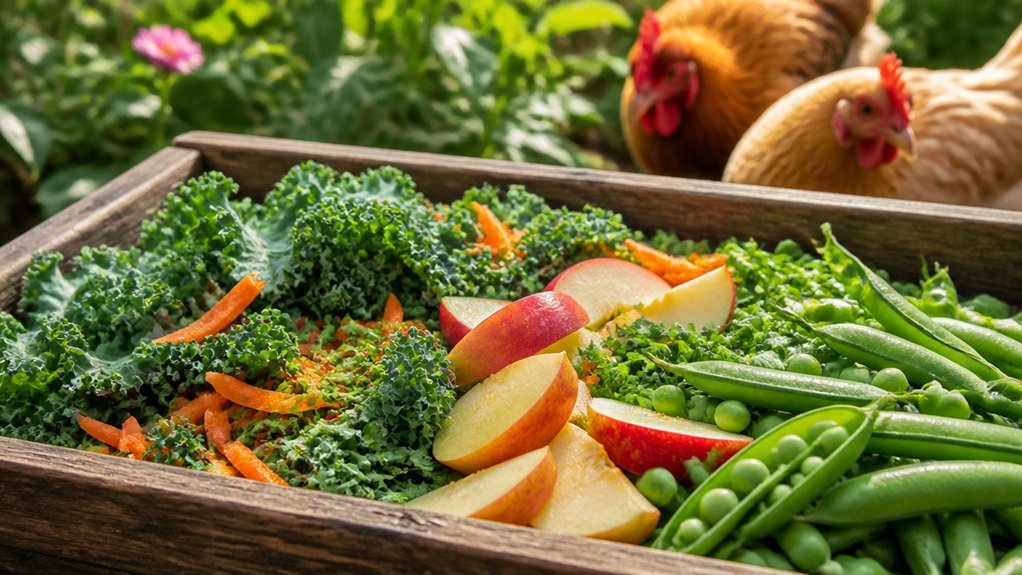
As spring brings fresh growth to your yard, you can offer your backyard chickens treats that match the season and support their health. Choose fresh greens, tender weeds, and chopped herbs from the garden.
You can also share small amounts of:
- Dandelion leaves
- Clover
- Pea shoots
- Finely chopped spinach
These treats add variety and give your flock extra vitamins. Wash produce well and offer only what they can finish quickly. Keep portions small so treats don’t replace balanced feed.
You can scatter greens in the run to encourage natural foraging and reduce boredom. Spring treats should feel light, fresh, and simple, helping your chickens enjoy the season while staying healthy and active. Incorporating these seasonal treats supports their natural foraging instincts and provides additional nutrients from fresh, organic ingredients.
Summer Treats to Keep Chickens Cool
Hot weather can leave your flock sluggish, so summer treats should focus on hydration and cooling. You can offer chilled produce and watery snacks to help your chickens stay comfortable while they scratch and peck. Keep portions small, and always serve treats after they’ve had their regular feed. Monitoring the electrolyte balance in your flock is essential to prevent dehydration and maintain overall health during heat stress.
Fall Treats Using Harvest Extras
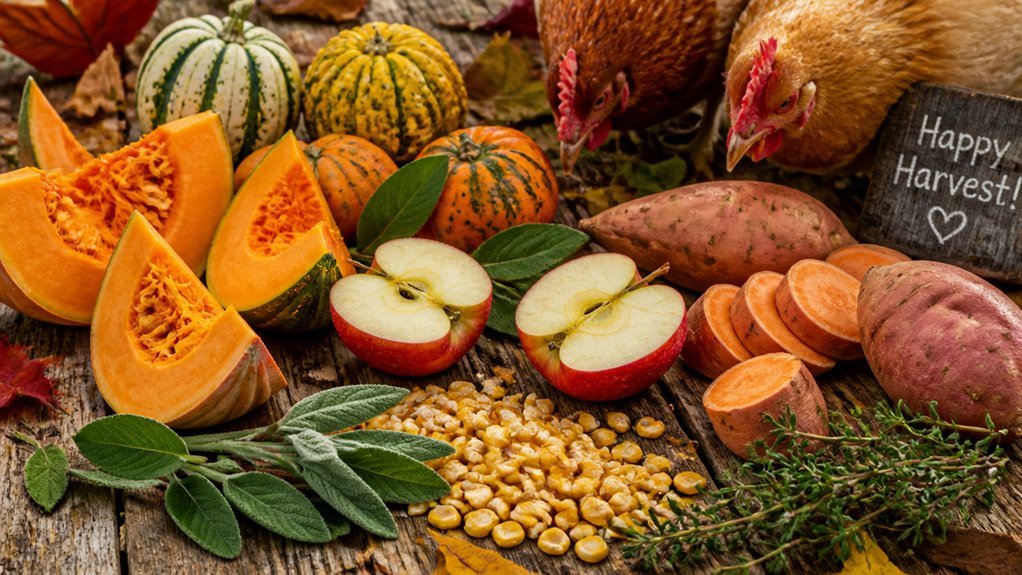
As you bring in fall harvests, you can share small bits of pumpkin and squash with your chickens for a healthy seasonal treat.
You can also offer apple cores and peels, as long as you remove any seeds first. These extras add variety and help you use up kitchen scraps wisely.
Including natural treats like these supports balanced nutrition, helping your flock stay healthy and productive during the fall season.
Pumpkin And Squash Bits
When autumn brings extra pumpkins and squash from the garden or market, you can turn the leftovers into a simple, healthy treat for your chickens. Offer small raw bits or lightly cooked pieces, and they’ll peck at the soft flesh, seeds, and skin with enthusiasm. Keep portions modest so treats stay balanced with their regular feed. Aiming for digestive health can be supported by adding moisture-rich treats like pumpkin and squash, which aid nutrient absorption. 1. Remove any moldy spots before serving. 2. Cut the pieces into bite-sized chunks. 3. Place them in a clean dish or scatter them on the ground. 4. Pick up leftovers before they spoil. Pumpkin and squash add moisture, fiber, and variety, which can help keep your flock interested in their treats. You can also roast plain pieces without salt, oil, or seasoning for a warm seasonal snack.
Apple Cores And Peels
Apples are another easy fall treat you can share with your chickens when harvest season leaves you with extra fruit. Offer clean peels and cored pieces in small amounts, and your flock will enjoy the sweet crunch. You can toss them whole into the run or chop them into bite-sized bits for easier pecking.
Always remove seeds and the core, since apple seeds contain compounds you don’t want your chickens eating. Use apples as an occasional supplement, not a main feed, because too much fruit can add sugar without enough nutrition.
If you’ve got windfall apples from the yard, trim off any bruised or moldy spots first. Fresh, plain apple scraps help you reduce waste while giving your birds a safe seasonal snack they’ll likely finish quickly.
Winter Treats That Support Energy
In winter, your chickens need treats that do more than fill them up—they need foods that help them stay warm and energized. Choose dense, nourishing snacks that support steady body heat and keep pecking behavior strong.
- Black oil sunflower seeds give healthy fats and quick energy.
- Cracked corn works well in small amounts because it helps fuel nighttime warmth.
- Oatmeal offers cozy, digestible carbs; serve it warm, not hot.
- Mealworms add protein that helps birds maintain condition during cold spells.
You can also mix a little poultry-safe fat into scratch grains for extra calories. Keep treats limited, though, so your flock still eats balanced feed.
Fresh water matters too, because hydration supports digestion and overall winter health.
Frequently Asked Questions
How Can I Introduce New Treats Without Upsetting My Chickens’ Digestion?
You can introduce new treats slowly, offering tiny amounts first and watching for loose droppings or reduced appetite. If they tolerate it, increase portions gradually. Don’t mix several new foods at once.
Can Seasonal Treats Affect Egg Flavor or Shell Quality?
Yes, you can notice slight flavor changes if you feed strong-tasting treats, and shell quality may dip if you overdo them or skip calcium. You’ll keep eggs steady by balancing treats with their regular ration.
How Should I Store Homemade Chicken Treats Safely?
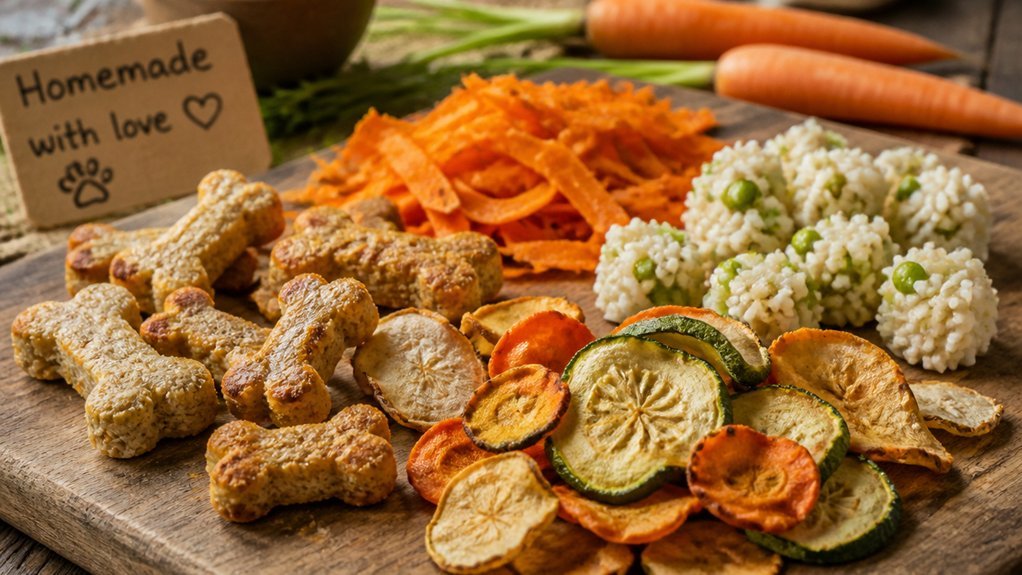
You should cool treats completely, store them in airtight containers, and refrigerate or freeze perishable batches. Label dates, discard moldy pieces, and serve only fresh portions so you’ll keep your chickens safe.
Are There Treat Differences for Chicks Versus Adult Hens?
Yes—chicks need tiny, soft, higher-protein treats, while adult hens can handle larger, wider varieties. You’ll want to avoid hard, sugary, or salty foods for chicks and always offer treats sparingly.
Can Chickens Eat Leftover Cooked Grains or Pasta?
Yes, you can give chickens leftover cooked grains or plain pasta in moderation. You’ll want to avoid salty, saucy, or seasoned leftovers, since those can upset digestion and reduce the treats’ nutritional value.
In Summary
You can keep your flock happy and healthy by offering seasonal treats that fit the time of year. Choose safe fruits, veggies, and herbs in small portions, and use each season’s leftovers wisely. In spring, summer, fall, and winter, these simple snacks can add variety, support energy, and encourage natural foraging. If you keep treats balanced and fresh, you’ll give your chickens a fun, nutritious boost all year long.