
You can store eggs without refrigeration by choosing the freshest, uncracked ones and handling them gently. Keep them unwashed until just before use so the natural bloom stays intact. Store them pointy-end down in a cool, dry, shaded spot with steady airflow. Turn them every day or two to keep the yolk centered, and inspect for cracks, leaks, or off smells. If you want longer storage, there’s a safe method worth knowing more about.
How to Store Eggs Without Refrigeration
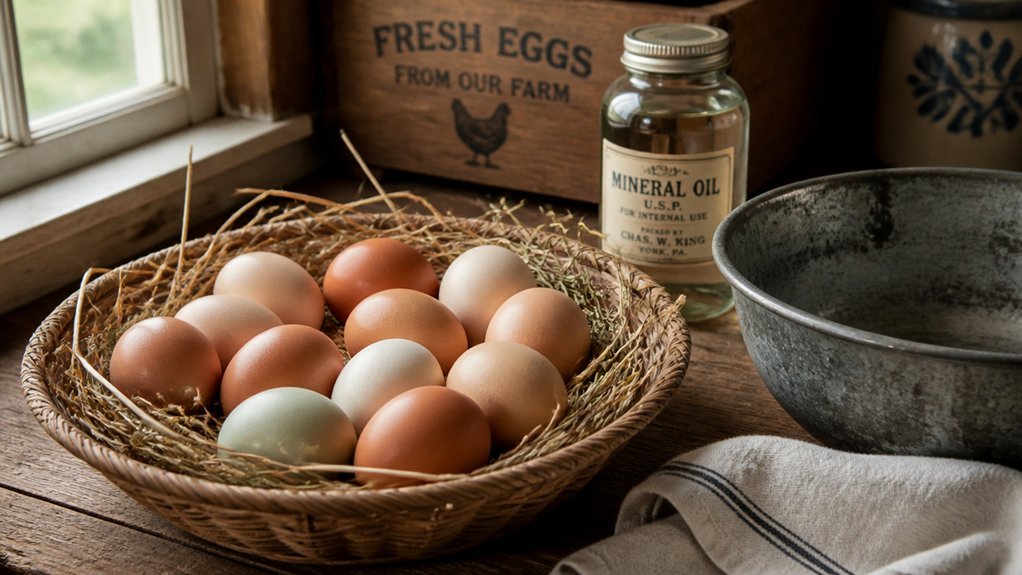
If you want to store eggs without refrigeration, start by choosing the freshest eggs you can find and handling them gently. Keep the shells clean and uncracked, because damaged eggs spoil faster.
Choose the freshest eggs and handle them gently; clean, uncracked shells last longer.
Place each egg pointed end down in a cool, dark, dry spot with steady airflow. Use a basket, carton, or tray that lets air move around them, and keep them away from sunlight, heat, and strong odors.
Don’t wash eggs until you’re ready to use them, since moisture can shorten storage time. Turn them occasionally to help maintain quality.
Check them often for cracks, leaks, or off smells, and remove any questionable eggs right away. With careful handling, you can store eggs safely for a longer time without a refrigerator.
Ensuring proper egg surface readiness can also help maximize shelf life and prevent spoilage.
Choose the Freshest Eggs First
Start with the freshest eggs you can find, since age affects how well they hold up without refrigeration. You should check dates, but don’t rely on them alone. Pick eggs with clean, intact shells and a firm, heavy feel.
Fresher eggs have stronger internal structure, so they stay usable longer in cool storage. If you can, use eggs from hens you know or from a source that collects them daily. Set these eggs aside for room-temperature storage and use the older ones first in recipes that need quicker turnaround.
Rotate your supply regularly so nothing sits too long. When you sort eggs by freshness now, you reduce waste later and give yourself a safer, more reliable stash for cooking, baking, and preserving meals. Additionally, choosing eggs with proper handling ensures optimal quality for water-glassing and long-term storage.
Keep Eggs Unwashed Until Use

Keep your eggs unwashed until you’re ready to use them, because the natural bloom on the shell helps protect them from bacteria and moisture.
That protective layer acts as a barrier during storage, so you don’t want to remove it too soon. Wash eggs just before use to keep that natural defense working for you.
Protective Bloom Layer
The natural bloom on freshly laid eggs helps seal the shell and guard against bacteria, so you should leave eggs unwashed until you’re ready to use them. This thin coating works like a shield, and you can preserve it by handling eggs gently and keeping them dry. When you skip unnecessary cleaning, you help the shell stay more resistant to contamination and moisture loss. Additionally, using an egg skelter that supports first-in, first-out rotation can further help maintain freshness by encouraging timely consumption.
You’ll also want to inspect eggs for dirt, cracks, or damage before storing them. If an egg looks compromised, use it soon. By respecting the bloom layer, you give each egg a better chance to stay fresh without refrigeration.
Wash Just Before Use
Although it may be tempting to wash eggs right away, you should wait until just before use. When you handle them, keep them dry and clean with a gentle brush or cloth if needed.
Washing early can leave you with more fragile shells during storage, so you’re better off delaying that step. Before cooking or cracking, rinse each egg under cool running water and use it promptly.
- Store eggs unwashed in a cool, stable place
- Check shells for dirt before putting them away
- Wash only the eggs you’re about to use
- Dry them briefly after rinsing, then cook
- Proper storage prevents contamination by minimizing handling and keeping shells intact
This simple habit helps you manage eggs more safely and keeps your storage routine straightforward. It also reduces unnecessary handling, which can lead to cracks.
Natural Barrier Benefits
When you leave eggs unwashed, you preserve the shell’s natural protective coating, which helps block moisture and bacteria from getting through tiny pores. This thin layer, called the bloom, gives you extra defense during room-temperature storage.
A properly maintained reusable carton can also provide additional protection for your eggs, helping to prevent cracks and impacts during handling.
If you wash eggs too soon, you strip away that barrier and make the shell more vulnerable. Instead, keep dirty eggs dry and store them in a cool, stable spot with the pointed end down. Handle them gently so you don’t crack the shell or disturb the coating.
Then wash each egg right before you cook or eat it. By keeping the natural barrier intact, you help your eggs stay fresher longer and reduce the chance of contamination without adding any extra steps.
Store Eggs at a Cool, Stable Room Temperature
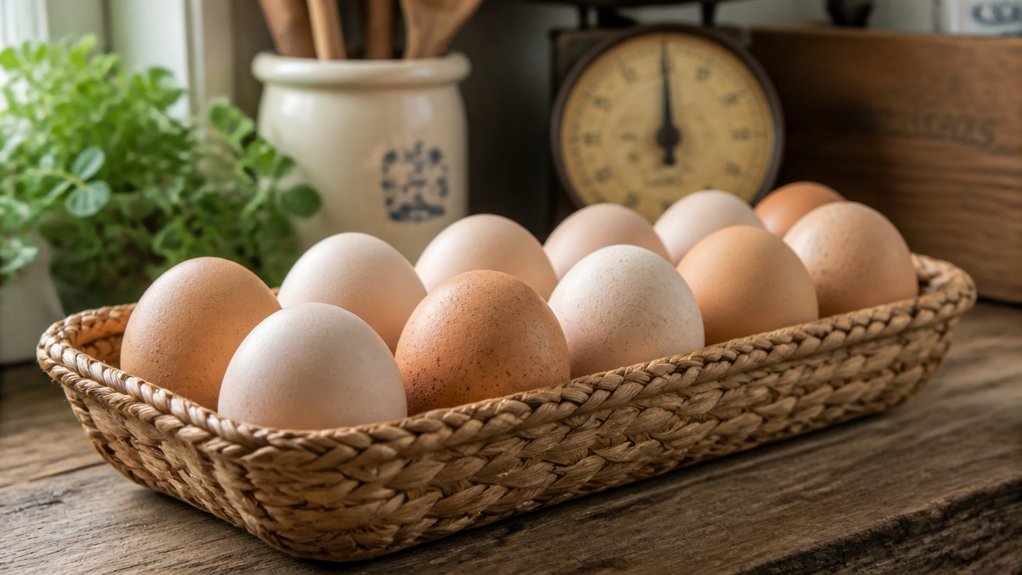
Keep eggs in a cool, stable room-temperature spot to slow spoilage and protect quality. You want a place that stays steady through day and night, away from heaters, sunny windows, ovens, and drafty doors. Sudden swings can stress the shells and shorten freshness. Using an egg organizer with an automatic rolling feature can help gently keep eggs in optimal condition by reducing cracking and handling stress.
A pantry shelf, shaded cupboard, or basement corner often works well if the air feels mild and dry. Check the area regularly so it doesn’t warm up during cooking or change with the season.
- Pick a shaded location
- Avoid heat sources
- Keep the air dry
- Monitor temperature often
Use the same spot every time, and handle the eggs gently when you move them. Consistency helps you store them safely and confidently.
Place Eggs Pointy-End Down
Once you’ve found a cool, steady spot, set each egg pointy-end down. This position helps the yolk stay centered and keeps the air cell at the wider end, which can support better quality over time. You’ll also reduce movement inside the shell, so the egg stays a bit more stable during storage. Additionally, placing eggs pointy-end down can help maintain their freshness longer by promoting proper organization. Egg safety is preserved when eggs are stored in this consistent orientation, reducing the risk of contamination or damage. Use a carton, tray, or shallow basket that holds each egg upright without wobbling. Keep the pointed end facing down every time you move or check them. If you stack eggs, don’t let pressure tip them sideways. A consistent orientation makes it easier for you to organize older eggs and use them first.
Small habits like this can help you store eggs more carefully when you’re relying on room-temperature conditions.
Use Mineral Oil to Seal Eggshells
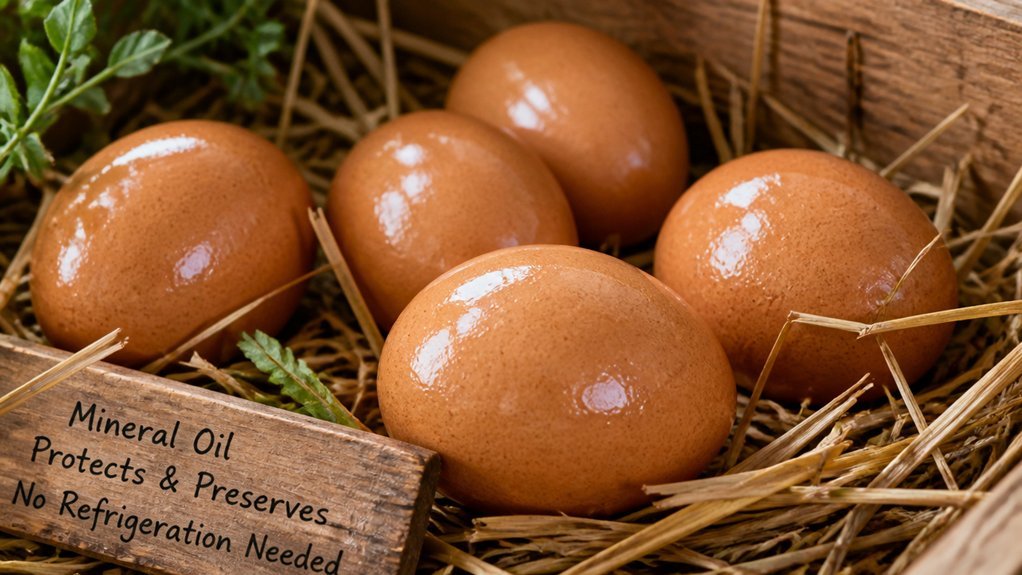
You can help eggs last longer by applying a thin coat of mineral oil to each shell. This simple layer seals tiny pores and slows moisture loss. Applying mineral oil is an easy way to create a breathable design that maintains egg freshness naturally without refrigeration.
Applying A Thin Coat
A thin coat of mineral oil can help protect eggshells by sealing tiny pores that let in air and moisture. You only need a small amount, so pour a little into a clean bowl and dip your fingers or a soft cloth into it. Gently rub the oil over each egg until the shell looks lightly glossy, not wet.
Then let the eggs sit on a clean rack or towel so the coating settles evenly.
- Use food-grade mineral oil.
- Cover the whole shell, including the ends.
- Handle eggs gently to avoid cracks.
- Store them in a cool, shaded place.
- Ensure proper material durability to maintain shell integrity and prevent cracking during storage.
This simple step can reduce exposure and keep your eggs in better condition while they sit outside refrigeration.
Extending Freshness Naturally
To extend freshness naturally, a light mineral oil coating can help eggs stay in good condition by sealing the shell’s tiny pores and slowing moisture loss.
You should use food-grade mineral oil and apply just a thin layer with clean hands or a soft cloth. Cover each egg evenly, then let it dry before storing it in a cool, stable place.
This barrier helps block air and bacteria while keeping the shell from drying out too fast.
You’ll still need to handle eggs gently and check them often for cracks or odors. If an egg looks damaged, don’t keep it.
Using mineral oil can also help maintain the egg’s natural shell permeability, allowing for better moisture regulation during storage.
When you store treated eggs properly, you can stretch their usable life and keep them fresher without relying on refrigeration.
Turn Eggs Regularly to Keep Yolks Centered
Regularly turning stored eggs helps keep the yolks centered and the quality more even over time. You should gently rotate each egg a quarter turn every day or two, then return it to the same cool, shaded spot.
This simple habit slows the yolk from settling against one side of the shell and helps preserve a better texture for later use.
- Mark the carton so you know which side faced up.
- Turn eggs with clean hands to avoid contamination.
- Keep your movement gentle to prevent cracking.
- Check eggs at the same time each day.
Try Water Glassing for Long-Term Storage
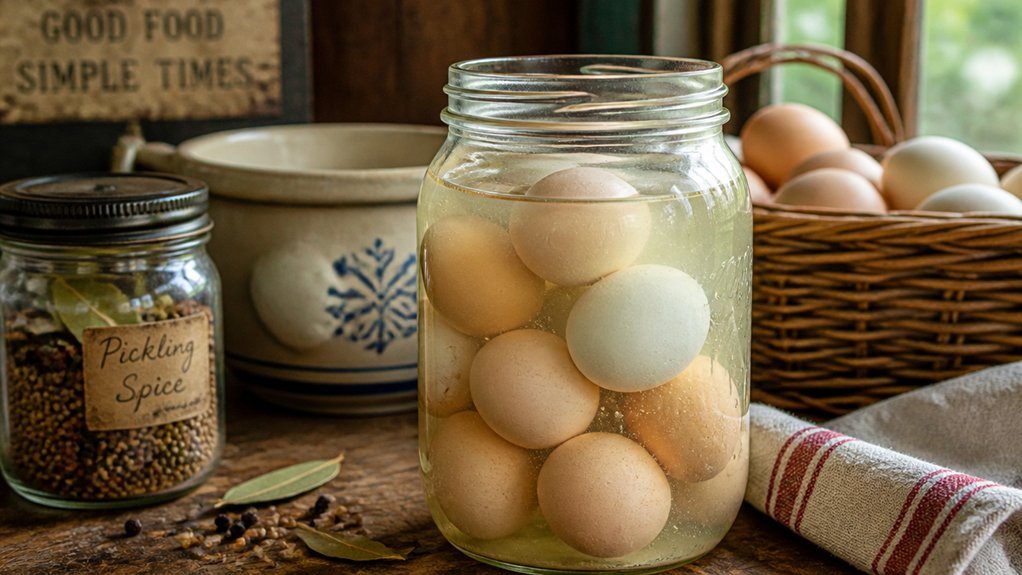
If you want eggs to last even longer, water glassing is a time-tested storage method worth trying. You submerge clean, unwashed eggs in a food-safe jar of hydrated lime and water, then store it in a cool, dark place. The solution seals the shells and helps preserve them for months.
| Step | Action |
|---|---|
| 1 | Mix hydrated lime with boiled, cooled water |
| 2 | Place unwashed eggs gently inside |
| 3 | Cover eggs fully with liquid |
| 4 | Seal and store the container |
Use only sound eggs with intact shells, and keep the container still. You’ll get the best results when you choose fresh eggs from healthy hens and handle them carefully from start to finish.
Check Eggs for Freshness Before Eating
Before you crack or cook stored eggs, check them for any signs of spoilage. Start with a quick visual inspection: look for cracks, leaks, or mold on the shell.
Then give each egg a gentle sniff; a strong sulfur or rotten odor means you shouldn’t eat it. You can also test texture by handling the shell; slimy or sticky spots suggest trouble.
If the egg seems normal, crack it into a separate bowl first, so you can inspect the yolk and white before adding it to your meal.
- Inspect the shell closely
- Smell the egg before use
- Crack it into a bowl
- Check the yolk and white
Know When Stored Eggs Are Unsafe
Sometimes the safest choice is to throw an egg out, even if it’s been stored carefully. You should trust your senses and your timeline.
If an egg smells rotten, leaks, feels slimy, or shows cracks, don’t eat it. You also need to discard any egg that’s been left in heat for too long, because bacteria can grow fast.
When you crack it, watch for unusual colors, foaming, or a sulfur smell; those are warning signs. If the yolk breaks too easily, the white looks watery and odd, or the shell feels sticky, throw it away.
Don’t taste an egg to “check” it. When you’re unsure, choose safety over waste, because one bad egg can make you seriously sick.
Frequently Asked Questions
Can Eggs Be Stored in Sand Without Refrigeration?
Yes, you can store eggs in sand without refrigeration if they’re clean, unwashed, and cool. You’ll need dry sand, steady temperatures, and regular checks, because heat, moisture, and cracks can spoil them quickly.
How Long Do Farm-Fresh Eggs Last on the Counter?
You can keep farm-fresh eggs on the counter for about two weeks, sometimes longer if they’re clean and unwashed. You’ll get the best quality if you store them cool and use them promptly.
Does Washing Eggs Before Storing Reduce Their Shelf Life?
Yes, washing eggs can shorten their shelf life because you remove the natural protective coating, so you should keep them dry and unwashed before storing. If they’re dirty, brush them gently instead.
Can Cracked Eggs Be Preserved Safely Without a Fridge?
No, you can’t safely preserve cracked eggs without refrigeration. You should discard them or cook them immediately. Cracks let bacteria in fast, so unrefrigerated storage raises the risk of illness quickly.
What Containers Work Best for Storing Eggs at Room Temperature?
You’ll do best with clean, breathable egg cartons, clay pots, or wire baskets in a cool, dry spot. Avoid sealed plastic containers; they trap moisture and heat, which can shorten your eggs’ safe storage time.
In Summary
If you want to store eggs without refrigeration, start with the freshest eggs and keep them unwashed until you’re ready to use them. Set them in a cool, stable spot with the pointy end down, and turn them regularly to help keep the yolks centered. For longer storage, you can try water glassing. Always check each egg for freshness before cooking, and toss any that look or smell unsafe.