If you’re trying to stop hens from eating eggs, the right roll-out nesting box can make a real difference. You’ll want a design that keeps eggs out of reach, stays easy to clean, and gives your flock enough room to settle in comfortably. Some options focus on durability, while others improve collection and hygiene in different ways. The best choice isn’t always obvious, and a few details can change everything.
| Chicken Nesting Box with 10 Compartments Green |  | Best Overall | Compartments: 10 compartments | Egg System: Roll-away tray | Material: Galvanized steel/plastic | CHECK ON AMAZON | Read Our Analysis |
| Hipicute Chicken Nesting Box with Lid 8 Compartments |  | Best Capacity | Compartments: 8 compartments | Egg System: Roll-away tray | Material: Galvanized steel/plastic | CHECK ON AMAZON | Read Our Analysis |
| Rainbow Well 4-Compartment Chicken Nesting Box with Roll-Away Egg Design | 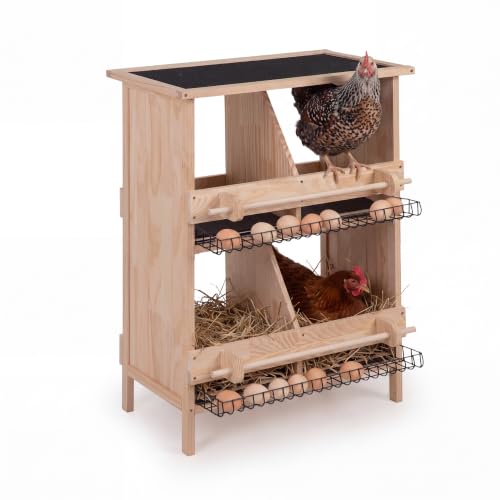 | Best Wood Design | Compartments: 4 compartments | Egg System: Roll-away wire | Material: Pine wood/iron wire | CHECK ON AMAZON | Read Our Analysis |
| VEVOR Chicken Nesting Boxes 3 Compartments |  | Best for Easy Cleaning | Compartments: 3 compartments | Egg System: Roll-away front tray | Material: Galvanized steel/plastic | CHECK ON AMAZON | Read Our Analysis |
| My Favorite Chicken Chick Box Rollaway Nesting Box |  | Best Wall-Mount | Compartments: 1 nesting box | Egg System: Rollaway tray | Material: Outdoor plastic | CHECK ON AMAZON | Read Our Analysis |
| Chicken Nesting Box with Roll-Away Egg Collection |  | Best Heavy Duty | Compartments: 3 compartments | Egg System: Roll-away tray | Material: Galvanized steel | CHECK ON AMAZON | Read Our Analysis |
More Details on Our Top Picks
Chicken Nesting Box with 10 Compartments Green
The Chicken Nesting Box with 10 Compartments, Green stands out as the overall top pick for busy flocks. You give your hens a calm, sheltered place to lay, and each roomy compartment helps cut stress and support better egg production. The gentle roll-out design sends eggs into a tray, so you can collect them fast without reaching inside. Built with galvanized steel, it lasts through tough use, while vent holes keep things cool. Removable plastic trays and drain holes make cleaning quick, and simple hardware helps you mount it securely at the right height.
- Compartments:10 compartments
- Egg System:Roll-away tray
- Material:Galvanized steel/plastic
- Ventilation:Vent holes
- Cleaning:Removable trays
- Installation:Hanging mount
- Additional Feature:10-compartment capacity
- Additional Feature:Green color finish
- Additional Feature:Key-shaped hanging holes
Hipicute Chicken Nesting Box with Lid 8 Compartments
If you need higher capacity, Hipicute’s 8-compartment roll-out box gives multiple hens secure, private space. You’ll help reduce stress, and that can support steadier egg laying. The gentle incline lets eggs roll into the tray, so you can collect them fast without reaching inside or cracking shells. Galvanized steel sides and roof add durability, while ventilation holes keep the interior cooler and drier. Removable rust-proof trays make cleanup easy, and the small drainage holes prevent water buildup. With included hardware and keyhole mounts, you can install it 18–20 inches high with little hassle.
- Compartments:8 compartments
- Egg System:Roll-away tray
- Material:Galvanized steel/plastic
- Ventilation:Vent holes
- Cleaning:Removable trays
- Installation:Hanging mount
- Additional Feature:8-compartment capacity
- Additional Feature:Lid included
- Additional Feature:Key-shaped hanging holes
Rainbow Well 4-Compartment Chicken Nesting Box with Roll-Away Egg Design
Rainbow Well’s four-compartment roll-away box suits you best when you want a compact wood design for efficient egg collection. You get four nesting spaces in a two-tier layout, and each compartment gives your hens about 11.2 x 11.6 x 13.8 inches of room. The rear slope lets eggs roll into the wire tray, so they stay visible and safer from pecking. A cushioned pad softens the drop, while the pine frame and asphalt roof handle daily use. Front perches help hens step in easily, and the small footprint fits coops, barns, or covered runs.
- Compartments:4 compartments
- Egg System:Roll-away wire
- Material:Pine wood/iron wire
- Ventilation:Open wire area
- Cleaning:Wipe-clean surfaces
- Installation:Compact placement
- Additional Feature:Two-tier layout
- Additional Feature:Pine wood frame
- Additional Feature:Asphalt roof cover
VEVOR Chicken Nesting Boxes 3 Compartments
Need an easy-clean rollout box that still feels sturdy? You’ll like the VEVOR Chicken Nesting Boxes, 3 Compartments. Its galvanized steel frame and high-strength plastic resist rust and wear, while the ventilated build keeps nests dry and cool. Each 10.4-inch compartment fits many breeds and can hold up to five hens’ eggs. The inclined design lets eggs roll forward gently, helping prevent cracks and egg eating. You’ll also get a detachable tray, drainage holes, and smooth panels for faster cleaning, plus simple screw-and-nut assembly.
- Compartments:3 compartments
- Egg System:Roll-away front tray
- Material:Galvanized steel/plastic
- Ventilation:Vent holes
- Cleaning:Detachable tray
- Installation:Screw assembly
- Additional Feature:Holds up to 5 eggs
- Additional Feature:Resting platform included
- Additional Feature:Smooth side panels
My Favorite Chicken Chick Box Rollaway Nesting Box
My Favorite Chicken Chick Box Rollaway Nesting Box suits coop owners who want a clean, wall-mounted egg-saving setup. You’ll like the integrated roll-away tray, which gently moves fresh eggs away from hens so they stay clean, protected, and harder to peck. The cozy, ventilated interior helps hens settle in and lay consistently. An adjustable perch can guide birds in or close off the nest for better flock control. Sturdy outdoor plastic resists moisture and odors, and you can unmount it fast for washing. The waterproof mount saves floor space and keeps bedding contained.
- Compartments:1 nesting box
- Egg System:Rollaway tray
- Material:Outdoor plastic
- Ventilation:Ventilated design
- Cleaning:Easy wash
- Installation:Wall mount
- Additional Feature:Adjustable perch guide
- Additional Feature:Wall-mount installation
- Additional Feature:Waterproof plastic build
Chicken Nesting Box with Roll-Away Egg Collection
If you need a rugged coop upgrade, this heavy-duty roll-away nesting box fits the bill. You get galvanized steel construction that resists rust and corrosion far better than plastic, plus ventilation holes that help keep hens cool and dry. The tilted floor sends eggs into a secure tray, so you’ll cut breakage and stop pecking fast. Three roomy compartments give each hen private laying space and support steady production. You can mount it on a wall, place it on elevated feet, or set it on the ground. Cleanup’s simple with a quick spray rinse.
- Compartments:3 compartments
- Egg System:Roll-away tray
- Material:Galvanized steel
- Ventilation:Vent holes
- Cleaning:Spray rinse
- Installation:Wall/feet/ground mount
- Additional Feature:Three spacious compartments
- Additional Feature:Elevated feet option
- Additional Feature:Wall-hanger keyholes
Factors to Consider When Choosing Roll-Out Nesting Boxes That Stop Egg Eating
When you choose roll-out nesting boxes, focus on the egg roll design first, since it should move eggs out of reach fast and smoothly. You’ll also want the right nest size, durable materials, good ventilation, and an easy-to-clean layout so the boxes stay safe and sanitary. These details can make the difference between eggs getting eaten and eggs staying protected.
Egg Roll Design
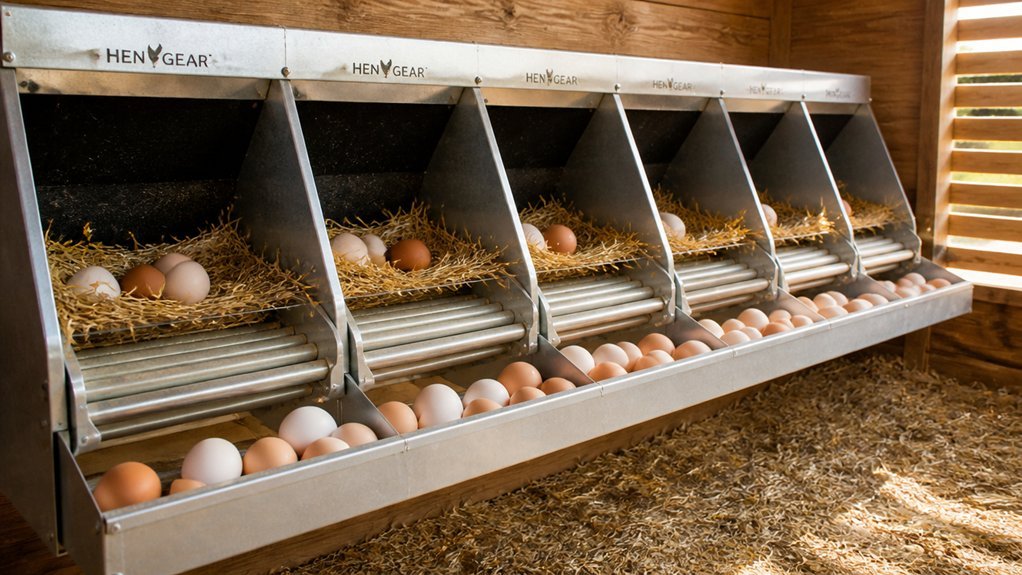
A good egg roll design is the heart of any roll-out nesting box that’s meant to stop egg eating. You want a gentle incline or tilted floor that lets fresh eggs roll away right after laying. That quick movement keeps eggs out of the hen’s reach, which cuts pecking and helps prevent egg eating. Choose a box with a smooth surface and the right slope angle so eggs move easily without stress or damage. A collection tray outside the nesting area makes gathering simple and keeps eggs separated from the flock. Add cushioning or padding in the roll-away path to reduce cracking as eggs travel. When the design moves eggs away fast, you lower the chance that hens will learn bad habits.
Nest Size
Nest size matters because hens need enough room to enter comfortably, turn around, and settle without feeling crowded. You’ll usually get the best results with compartments about 10 to 12 inches wide and deep, which fit most breeds without squeezing them. If the box feels tight, hens may avoid it and lay eggs on the floor or outside the nest, where pecking and egg-eating become more likely. Choose a design with enough depth so hens can nestle in fully; that helps hide the eggs and lowers the chance they’ll see or reach them after laying. Well-spaced nests also keep eggs separate, so one hen can’t easily bump, peck, or break another hen’s egg. A properly sized box supports calmer laying and cleaner roll-out performance.
Material Durability
Durable materials make a big difference in how well roll-out nesting boxes stop egg eating over time. When you choose galvanized steel or high-strength plastic, you get better resistance to rust, corrosion, and daily wear, even in harsh weather. That strength matters because warped or cracked boxes can leave sharp edges or gaps that let hens get hurt or reach eggs. You should also look for rugged, easy-to-clean surfaces, since they help you remove mess quickly and keep bacteria and odors down. Boxes built from sturdy materials hold up to repeated cleaning, handling, and use without breaking down. Over time, that durability helps keep the nest secure, sanitary, and less tempting for hens to peck at eggs.
Ventilation Features
Strong materials only do part of the job; you also need roll-out nesting boxes that breathe well. You should look for ventilation holes or slats that keep air moving so the compartments stay cool and dry. This steady airflow cuts humidity, helps hens stay comfortable while laying, and makes it harder for moisture to attract pests or encourage egg eating. Good ventilation also limits mold and bacterial growth on eggshells and nesting surfaces, which can reduce pecking triggers. It further helps prevent ammonia from building up from droppings, so your flock stays calmer and less stressed. Place vents near the roof or walls to promote passive circulation without letting drafts hit the eggs or hens.
Cleaning Ease
Cleaning ease matters just as much as durability when you’re choosing roll-out nesting boxes to stop egg eating. You’ll save time if you pick boxes with removable trays made from rust-proof materials, since you can pull them out, rinse them, and slide them back in fast. Smooth surfaces, like galvanized steel or tough plastic, also help because debris won’t cling, so you can spray them down with less scrubbing. Look for bottom drainage holes that stop water from pooling and keep the box dry. That dry setup helps hygiene and lowers contamination risk. Easy access to the egg collection tray matters too, because you won’t need to reach inside nesting compartments, so cleaning stays quicker and hens stay less stressed.
Installation Method
How you install roll-out nesting boxes can make a big difference in whether hens keep using them and whether egg eating stops. You should choose secure mounting options like keyhole hangers or wall mounts so the boxes stay steady and don’t shift when hens enter or exit. Place them at about 18 to 20 inches off the ground so hens can get in comfortably and keep using them daily. If your coop layout varies, pick boxes you can mount on a wall, set on an elevated stand, or place directly on the ground. Good installation also helps you create a sheltered, clean, ventilated nest area. When hens feel calm and supported, they’re less likely to peck eggs and more likely to lay where you want them to.
Collection Tray Access
A well-designed collection tray does more than hold eggs—it helps keep hens from reaching them. You should look for a gentle incline that lets eggs roll away fast, so hens can’t peck or rework them. Choose a tray you can reach easily from the front or outside the box, because that lets you collect eggs quickly without disturbing the flock. Smooth, rust-proof materials make cleaning simpler and help prevent cracks, dirt, and contamination. A secure tray matters too; it keeps eggs stable during the roll, which lowers breakage and cuts chances for hens to eat them. Removable trays are even better, since you can wash them thoroughly, control odors, and keep the nesting area sanitary and less tempting.
Frequently Asked Questions
How Do Roll-Out Nesting Boxes Prevent Hens From Breaking Eggs?
You let eggs roll away on a sloped tray, so hens can’t stand on them or peck them. You’ll keep eggs safer, cleaner, and less likely to crack inside the nest.
Can Roll-Away Boxes Help Stop Hens From Eating Their Eggs?
Yes, they can. You’ll remove eggs quickly, and the sloped tray rolls them away from hens. That cuts pecking and helps stop egg eating, especially if you also provide enough calcium, protein, and clean nesting material.
What Bedding Works Best in Roll-Out Nesting Boxes?
You’ll do best with thin, clean straw or wood shavings that cushion eggs without bunching. Avoid deep bedding, which can block rollout. Keep it light, dry, and replace it often for cleaner eggs.
How Often Should Roll-Out Nesting Boxes Be Cleaned?
You should clean roll-out nesting boxes weekly, and spot-clean them daily if they’re dirty. You’ll keep eggs cleaner, reduce odors, and prevent buildup. Deep-clean monthly, or sooner when you notice damp bedding or droppings.
Do Roll-Out Nesting Boxes Work for Bantam Chickens?
Yes, you can use roll-out nesting boxes for bantam chickens, but you’ll need smaller openings and a lower perch. You should watch their comfort, since some bantams may avoid oversized boxes altogether.