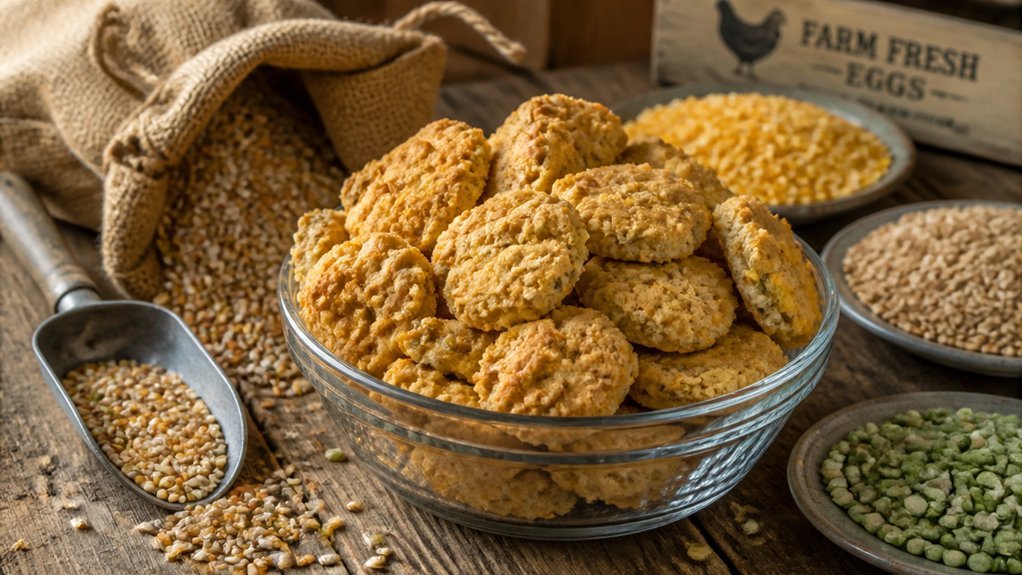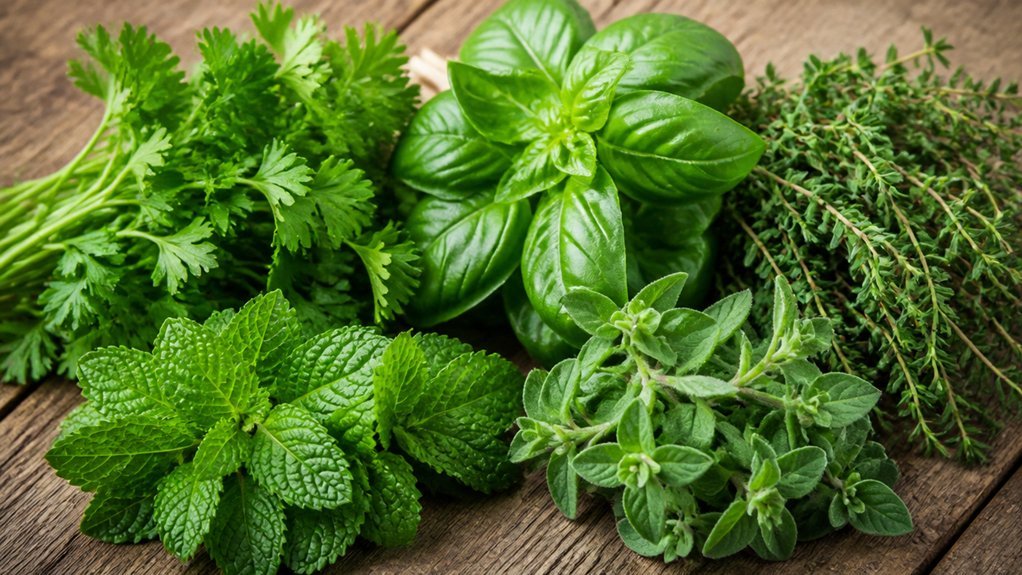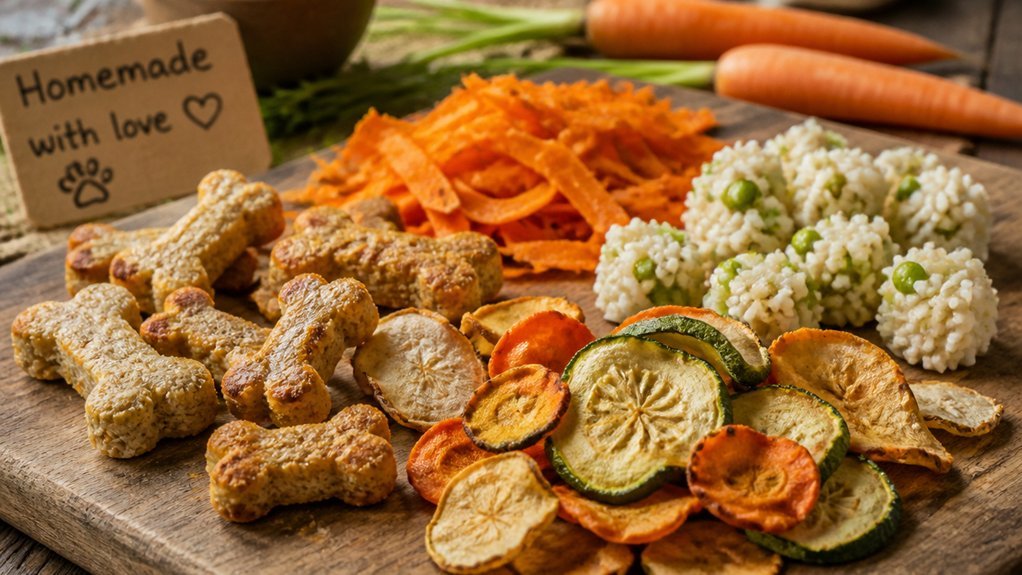
You can make easy homemade chicken treats from safe kitchen scraps like leafy greens, cucumber peels, carrot tops, berries, apple bits without seeds, cooked rice, oats, pumpkin, squash, or plain pasta. Keep treats unseasoned, fresh, and cut small, then serve them in moderation with grit. Skip moldy food, onions, garlic, avocado, chocolate, and salty leftovers. Use leftovers wisely, and you’ll save money while giving your flock tasty variety and a healthier treat routine.
What Kitchen Scraps Can Chickens Eat?
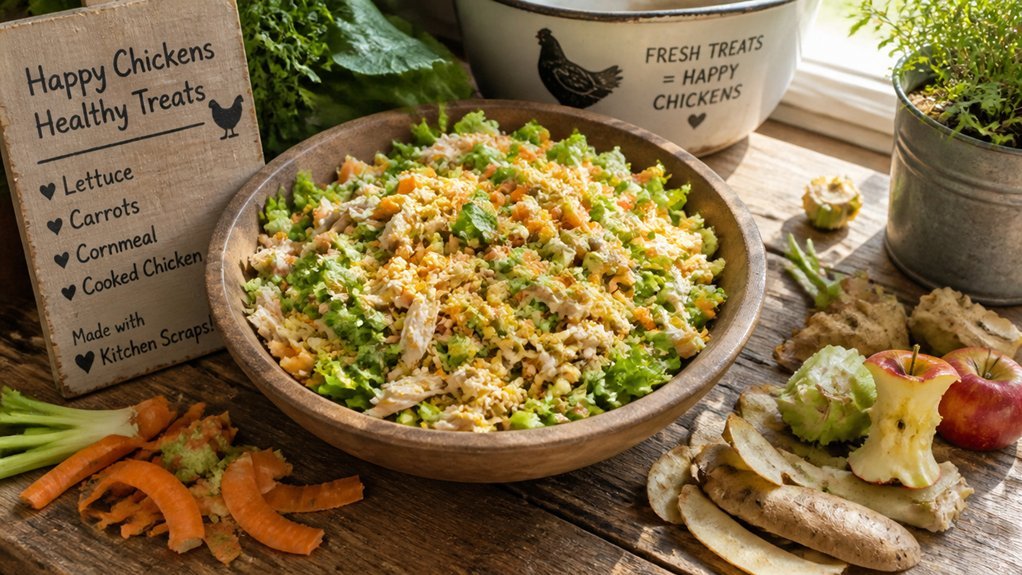
Wondering what kitchen scraps chickens can eat? You can offer many healthy leftovers that boost variety and reduce waste. Try leafy greens, cucumber peels, carrot tops, cooked rice, plain oatmeal, and small bits of fruit like berries or apples.
Your flock also enjoys cooked pasta, squash, pumpkin, and melon rind in moderation. Chop scraps into bite-size pieces so your birds peck safely and share fairly. You should serve only fresh, clean leftovers, and remove uneaten food before it spoils.
Mix scraps with their regular feed, so they still get balanced nutrition. When you rotate simple kitchen treats, you keep chickens active, curious, and well fed while making good use of extras from your kitchen. Incorporating natural foraging behavior into their diet helps keep your flock engaged and healthy.
Kitchen Scraps to Keep Out of the Coop
Not every kitchen scrap belongs in the coop, and some foods can seriously harm your chickens. You should skip anything moldy, spoiled, or slimy, because bad food can upset their digestion fast.
Keep onions, garlic, and large amounts of citrus out of their reach, since these can irritate your flock and reduce appetite. You also need to avoid avocado pits and skins, chocolate, caffeine, alcohol, raw dried beans, and salty or sugary leftovers. Don’t feed cooked foods soaked in oil, heavy seasoning, or sauce, either.
If you wouldn’t eat it safely yourself, don’t offer it to your birds. When in doubt, throw it out, and protect your chickens from avoidable health problems. Safe scraps are helpful, but proper wound care keeps your flock healthy.
The Best Kitchen Scraps for Chicken Treats
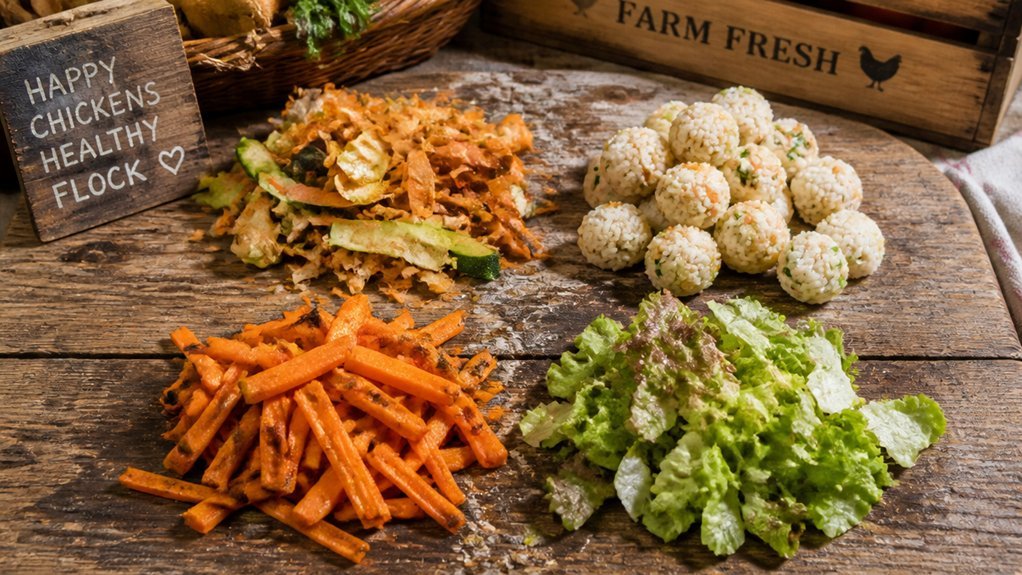
You can turn a few safe kitchen scraps into tasty chicken treats, like plain cooked grains, leafy greens, and small bits of fruit.
Stick to fresh, simple foods that won’t upset your flock’s digestion, and skip anything salty, moldy, or heavily seasoned.
As you choose scraps, keep a clear list of what’s safe and what you should avoid so your chickens stay healthy.
Incorporating protein-rich treats like dried larvae can also support egg production and overall flock vitality.
Safe Scraps to Offer
When you make homemade chicken treats, the safest kitchen scraps are simple, fresh, and free of salt, sugar, and seasoning. You can offer small pieces of leafy greens like lettuce or spinach, along with chopped carrots, cucumber, and zucchini for a cool, crunchy snack. Soft fruits such as berries, apples without seeds, and melon can add variety and hydration. Cooked plain grains like rice or oats also work well in tiny amounts. If you have leftover cooked sweet potato or plain pumpkin, your flock may enjoy that too. Be sure to choose insoluble grit when offering treats to help with proper digestion and prevent impactions. Cut scraps into bite-sized pieces so each chicken can peck safely and easily. Serve treats only as a supplement to their regular feed, and remove anything uneaten so it stays clean and fresh.
Scraps to Avoid
Some kitchen scraps can do more harm than good, so it’s best to avoid anything salty, sugary, moldy, or heavily seasoned. You should skip onions, garlic, chocolate, avocado pits, and raw potato peels, since these can upset your chickens’ digestion or cause poisoning. Don’t offer spoiled fruit, greasy leftovers, or bread with added sugar and salt.
You also need to avoid citrus in large amounts, because it can irritate their crop and reduce how much they eat. If a scrap smells off, looks slimy, or has been sitting out too long, throw it away. When you stay cautious, you keep your flock healthy and make treat time safe, simple, and stress-free. Additionally, choosing quality ingredients helps ensure your treats support your chickens’ health and nutrition.
Safe Prep for Chicken Treats
When you make chicken treats, choose safe ingredients that are fresh, plain, and free from seasoning, onion, garlic, or added salt.
You’ll also want to wash your hands, tools, and surfaces before and after prep to keep everything clean. Careful prep helps you make treats that are both tasty and safe. Incorporating probiotic benefits can also support your chickens’ gut health and immunity.
Safe Ingredient Choices
What should you reach for first? Choose simple, plain scraps that won’t upset your chicken’s digestion.
You can turn safe kitchen leftovers into treats with a little care and common sense.
- Fresh vegetables: carrot tops, cucumber peel, and leafy greens work well in small amounts.
- Plain fruits: apple slices, berries, and melon are fine when you remove seeds and pits.
- Cooked grains: oats, rice, and plain pasta can add variety without extra seasoning.
- Lean cooked proteins: small bits of unseasoned chicken or egg offer quick protein.
- Incorporating electrolytes into treats can help support hydration, especially during hot weather or heat stress.
Skip anything salty, sugary, spicy, or heavily processed. Avoid onions, garlic, chocolate, avocado, and moldy scraps.
When you pick ingredients that stay close to their natural form, you give your flock a safer, healthier snack they’ll enjoy.
Clean Prep Practices
Before you mix or serve anything, wash your hands, clean your tools, and rinse produce well so you don’t spread germs to your flock. A thorough cleaning helps prevent residue buildup that can harbor bacteria or fungi. Use a dedicated cutting board for chicken treats, and keep it separate from raw meat, detergents, and human food. Dry fruits and vegetables with a clean towel, then chop them into small, easy-to-eat pieces. If you use cooked scraps, chill them quickly and toss anything that smells off or feels slimy. Sanitize bowls, spoons, and counters after each batch, especially if you handle eggshells or moist leftovers. Serve treats in a clean dish, and remove uneaten bits before they spoil. Good prep habits help you cut contamination risks and keep your chickens healthier.
Easy Fruit Treats for Backyard Chickens
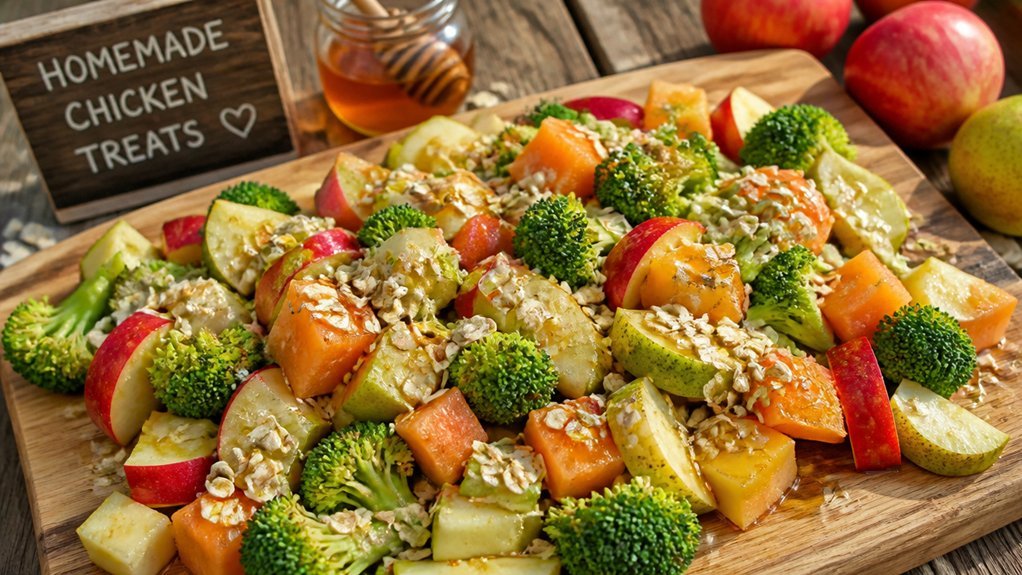
Fruit treats can be a simple, healthy way to give your backyard chickens a little variety, especially when you use fresh options like berries, melon, apples, or grapes in moderation.
You can chop fruit into bite-size pieces so your flock pecks safely and wastes less. Keep treats to a small portion of their diet, and remove leftovers before they spoil.
- Offer blueberries for a quick, mess-free snack.
- Serve seedless melon cubes on warm days.
- Slice apples thinly and skip the core.
- Share halved grapes only after cutting them smaller.
When you rotate fruit choices, you keep treat time fun without overloading your birds with sugar. Always watch how your chickens react, and stick with simple, fresh fruit they already enjoy.
Additionally, selecting organic fruits supports overall flock health and aligns with organic poultry principles for a healthy backyard flock.
Veggie-Based Chicken Treats Your Flock Will Love
Veggie treats are another easy way to add variety to your chickens’ diet without relying on sugary snacks. You can chop leftover greens, carrot tops, cucumber ends, and cooked squash into bite-sized pieces, then scatter them in a clean dish or toss them into the run for quick pecking fun. Aiming for pecking enrichment helps satisfy natural instincts and keeps hens entertained during quiet winter days.
Grain and Seed Treats From Pantry Leftovers
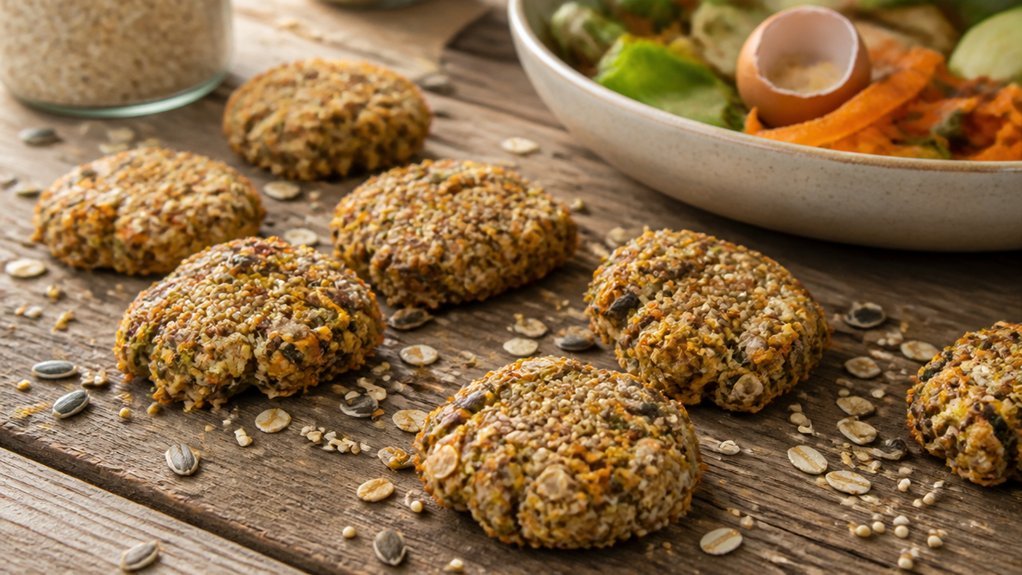
Grain and seed treats are a simple way to use up pantry leftovers while giving your chickens a little variety. You can mix small amounts of oats, sunflower seeds, millet, cracked corn, or plain cooked rice into a bowl.
Keep portions modest, so you don’t crowd out their balanced feed.
- Offer oats for a soft, easy-to-peck snack.
- Sprinkle sunflower seeds for extra interest and energy.
- Use millet to encourage scratching and foraging.
- Add leftover rice or cooked grains in a light scatter.
You should avoid salted, seasoned, or sugary leftovers, since they don’t belong in a chicken treat. Serve these grains dry or lightly moistened, and only give what they can finish quickly.
That keeps your flock busy, satisfied, and waste low.
Frozen Chicken Treats for Hot Weather
When the weather turns hot, frozen treats can help your chickens cool off and stay entertained. You can mix chopped fruits, leafy greens, and a little water in an ice cube tray or small mold. Freeze the mixture until solid, then pop out a few pieces and offer them in the run.
Your hens will peck, chase, and nibble as the ice melts, which gives them a rejuvenating activity on sweltering days. You can also freeze diluted plain yogurt with tiny bits of produce for an extra-cool snack.
Keep portions small so the treats don’t replace their regular feed. Always use clean, safe ingredients, and remove any leftovers before they spoil. Frozen treats work best as an occasional summer boost, not a daily meal.
Baked Chicken Treats Using Kitchen Scraps
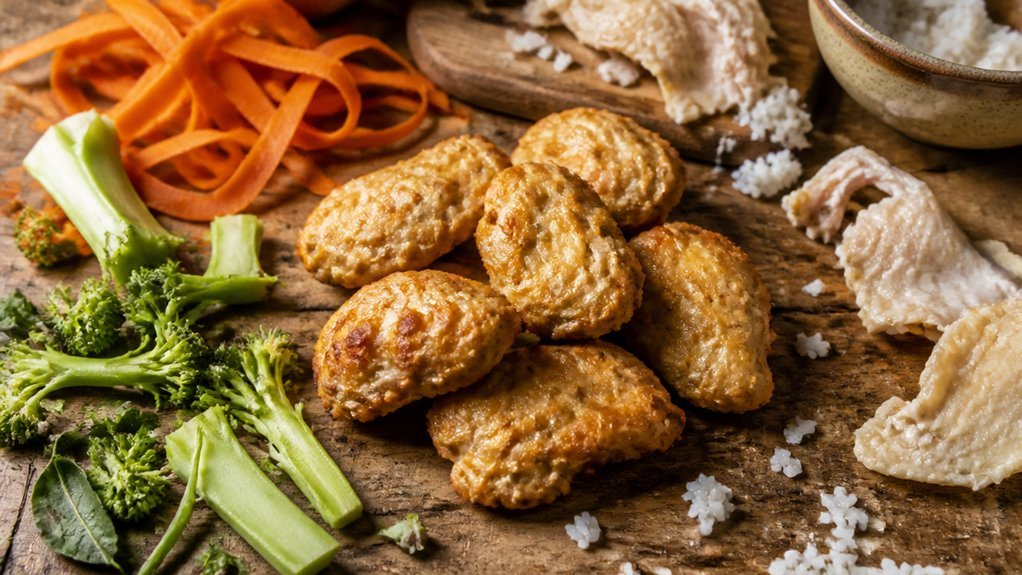
If you’ve got a few safe kitchen scraps on hand, baked chicken treats are an easy way to turn leftovers into a warm, wholesome snack.
You can mix chopped cooked chicken with finely diced carrots, peas, or pumpkin, then bind everything with a little oat flour and egg. Shape small portions into bite-size pieces and bake them until firm and lightly golden.
Let them cool before you serve them.
- Use only plain, unseasoned scraps.
- Chop ingredients small so they bake evenly.
- Line your tray with parchment for easy cleanup.
- Store extras in the fridge for quick rewards.
These treats smell inviting, hold together well, and give your chickens a tasty homemade option without any fuss.
How Much to Feed Chicken Treats
Treats should make up only a small part of your chickens’ diet, so keep portions modest and use them as a reward rather than a meal. A good rule is to keep treats under 10% of what they eat each day.
You can offer a few bites per bird, depending on their size and the type of treat. If you’re feeding scratch, fruit pieces, or cooked veggie scraps, start small and watch how quickly they finish it. If they ignore food, cut back next time.
If they rush treats and leave their layer feed untouched, reduce the amount right away. Give treats after they’ve eaten their balanced feed, so you don’t replace the nutrition they need.
Consistent limits help your flock stay healthy, active, and productive without overeating.
Store Homemade Chicken Treats Safely
Once you’ve got your portions right, store any extra homemade chicken treats so they stay fresh and safe to feed. Cool them completely before you pack them away, because trapped heat can cause spoilage and condensation.
Use clean, airtight containers or freezer bags, and label each batch with the date so you can track freshness. Keep treats in the refrigerator for short-term use, or freeze them if you won’t use them soon.
- Chill treats quickly on a clean tray.
- Seal them in small, single-use portions.
- Keep them away from raw meat and strong odors.
- Discard anything that smells off, looks slimy, or sits too long.
When you handle storage carefully, you protect your flock and waste less.
Save Money With Everyday Kitchen Scraps
You can stretch your chicken treat budget by repurposing everyday kitchen scraps that are safe and nutritious for hens. Save carrot peels, cucumber ends, apple cores without seeds, leafy herb stems, and cooked plain rice or oats. These leftovers give your flock variety without extra grocery runs, and you’ll cut waste at the same time.
Chop scraps into small pieces so your chickens can peck them easily and you can portion them fairly. Offer only fresh, clean scraps, and skip anything moldy, salty, sugary, or heavily seasoned.
If you plan your meals with your flock in mind, you’ll notice how much feed money stays in your pocket. Simple leftovers can become a reliable, low-cost treat source that keeps your hens interested and helps you use more of what you already buy.
Set a Simple Treat Routine for Your Flock
A simple treat routine keeps your flock happy without throwing off their diet. You don’t need to spoil them every day; just set a pattern they can count on.
Offer scraps at the same time each afternoon so your chickens learn when to expect them and stay calmer.
- Pick two or three treat days each week.
- Serve small amounts so treats never replace feed.
- Rotate scraps to keep things interesting and balanced.
- Remove leftovers quickly to prevent pests and spoilage.
When you keep the schedule steady, you’ll reduce begging, waste, and digestive upset.
A routine also helps you notice which treats your birds love most.
Stick with it, and your flock will enjoy the variety without losing their healthy habits.
Frequently Asked Questions
Can Kitchen Scraps Change the Taste of Eggs?
Yes, kitchen scraps can change your eggs’ flavor if you feed hens strongly flavored foods like garlic, onions, or fish. You’ll notice subtle differences, though most scraps won’t dramatically affect taste.
Should Chicken Treats Be Offered Before or After Laying?
You should offer treats after laying, so you don’t distract hens before they nest. You’ll support steady laying, then reward them once they’ve finished. Keep treats small, and always balance them with their regular feed.
How Do I Introduce New Treats to Picky Chickens?
You’ll introduce new treats slowly, offering tiny amounts alongside familiar feed. Mix them in, watch interest, and remove uneaten pieces. Keep trying at the same time daily, because picky chickens often need repeated exposure.
Can Chicks Eat the Same Scraps as Adult Hens?
No, you shouldn’t feed chicks the same scraps as adult hens. You’ll need smaller, softer, chick-safe bites and avoid salty, sugary, or tough foods so they can digest safely and grow well.
Do Kitchen Scraps Attract Mice or Rats to the Coop?
Yes, they can, especially if you leave scraps out overnight. You should feed only what they’ll finish quickly, clean up leftovers, and store feed securely to keep mice and rats away from your coop.
In Summary
With a few simple kitchen scraps, you can make safe, healthy chicken treats without spending extra money. Stick to approved fruits and veggies, avoid harmful foods, and keep portions small so your flock stays balanced and happy. Wash, chop, and store treats properly to make prep easy and safe. When you set a simple treat routine, you’ll give your chickens variety, enrichment, and a little extra joy every day.