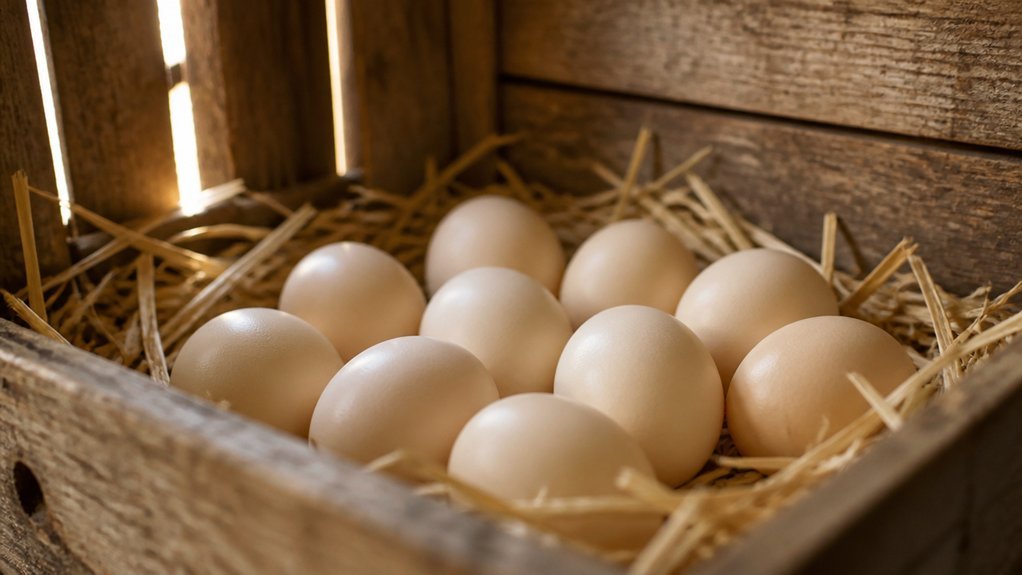
To prevent eggshell breakage when collecting eggs, you should gather them often, at least twice a day, and even more in hot weather. Use both hands for a steady, gentle grip, and set each egg softly into a padded basket or carton without stacking. Keep nest boxes clean, soft, and uncluttered, and handle thin-shelled eggs extra carefully. Cool eggs promptly in a dry place, and you’ll spot a few extra tricks below.
Handle Eggs Gently to Prevent Breakage
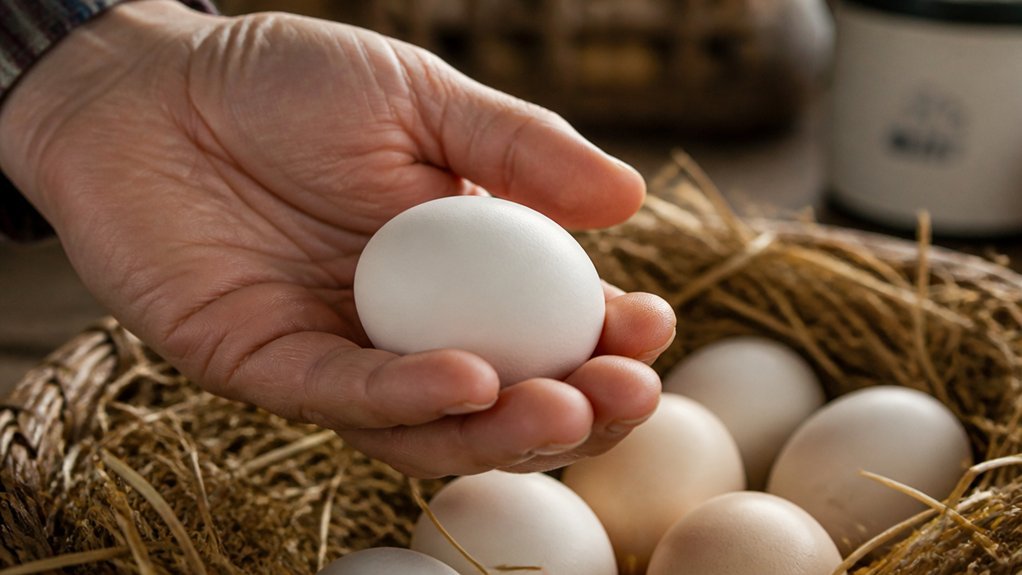
When you handle eggs gently, you lower the chance that their shells will crack. Use both hands when you lift each egg, and keep your grip steady without squeezing. Set eggs into your basket or carton instead of dropping them, even from a short distance.
If an egg feels warm or dirty, resist the urge to rub it hard; that pressure can weaken the shell. Move slowly around the nesting area so you don’t bump eggs against wire, wood, or other eggs. Wear gloves if they help you stay careful and focused.
Watch your fingers and avoid stacking eggs too high while you work. Gentle handling protects the shell’s thin surface and keeps more eggs whole from nest to storage every day. Be mindful of crush-resistant fiber, which can help prevent damage during transport or handling.
Collect Eggs More Often
Collect eggs more often so they spend less time in the nest, where they can get stepped on, pecked, or cracked. Aim to gather them at least twice a day, and more often during hot weather or peak laying times.
When you check the coop regularly, you reduce crowding, keep eggs cleaner, and lower the chance that hens will settle on them. You’ll also notice fresh eggs sooner, which helps you spot problems like thin shells or missed hidden nests.
Make egg collecting part of your routine, such as morning and late afternoon chores, so it becomes easy to remember. If your flock lays heavily, add another check when you can.
The sooner you remove eggs, the less likely they’re to suffer damage.
Choose the Right Egg Basket
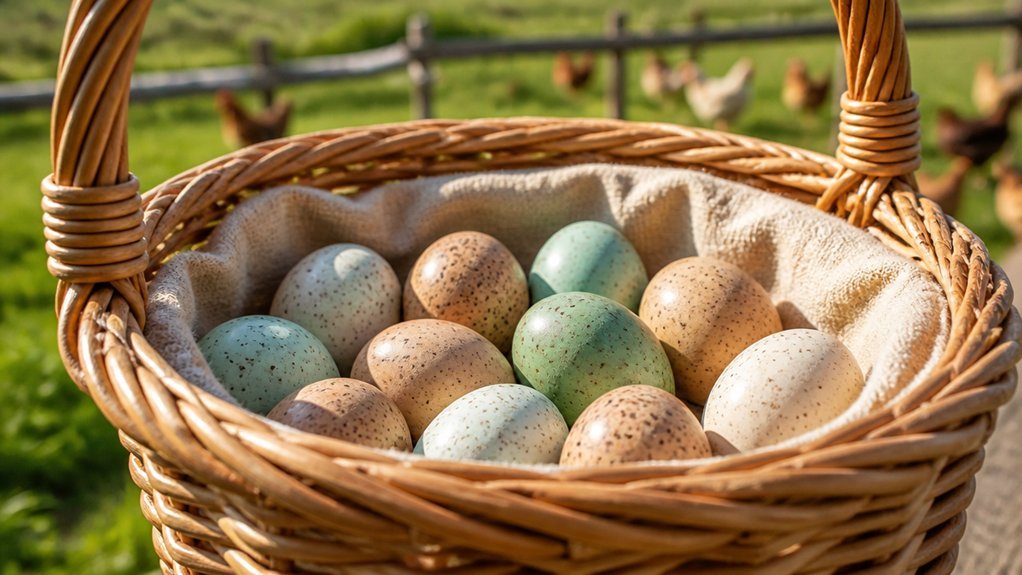
You’ll protect eggs better when you choose a basket made from a sturdy, gentle material that won’t scrape or crack shells.
Look for one with a smooth weave or soft lining to reduce impact as you carry it. A little cushioning goes a long way toward keeping your eggs intact. Additionally, selecting a basket with a handle design that provides comfortable and secure grip can help prevent accidents during transport.
Basket Material Matters
The basket you choose can make a real difference in keeping eggs intact. Pick a basket made from smooth, sturdy material so it won’t snag shells or flex too much as you walk.
Woven reed, plastic, or coated wire with a gentle finish can work well if the edges stay rounded and the structure holds its shape. Avoid baskets with splinters, rough seams, or loose strands that can rub against eggs.
You’ll also want a basket that feels comfortable in your hand, since a steady grip helps you carry eggs without jostling them. If the basket is too flimsy, it may shift and put pressure on the eggs. A solid, well-made basket gives you better control every time you collect your flock’s fresh eggs. Incorporating reinforced stitching and stable compartments can further enhance egg security during transport.
Cushioning Egg Protection
Adding a soft layer inside your egg basket can greatly reduce breakage during collection. Line the bottom with clean straw, folded cloth, or foam so eggs land on something that absorbs bumps. Using stackable and protected organizers with lids can also help prevent eggs from shifting and cracking during transportation. Choose a basket with enough depth to keep eggs from shifting, but not so deep that you stack them. If you use a wire basket, add a fitted liner to stop sharp edges from cracking shells. Keep the basket lightly filled, because crowded eggs press against each other and crack more easily. Carry the basket level and avoid sudden swings while you walk. After each trip, check the lining for dirt or moisture and replace it as needed. A well-cushioned basket helps you bring home more intact eggs and fewer losses.
Protect Eggs in the Nest Box
You can protect eggs in the nest box by lining it with soft nesting materials that cushion each egg and reduce cracks.
Make sure the nest box is the right size so eggs stay secure without being crowded or bumped.
With a snug, padded setup, you’ll lower the chance of breakage right away.
Choosing nesting boxes with cushioned nesting areas or soft fillings can further help prevent eggs from cracking during collection.
Soft Nesting Materials
Soft nesting materials cushion eggs and help keep them from cracking when hens shift, settle, or stand up in the nest box. Use clean straw, wood shavings, or nest pads to create a soft layer that absorbs small bumps and reduces pressure on shells.
You should replace wet, matted, or dirty material right away, because it can hide broken eggs and invite damage. Keep the bedding fluffy and even so eggs rest securely instead of rolling or clacking together. Check nests often and add fresh material when it thins out. Using dust-free bedding helps prevent respiratory irritation and keeps the nesting area cleaner.
If you collect eggs daily, you’ll also notice cracks sooner and can adjust the bedding before more eggs get damaged. Soft, dry, and well-maintained nesting material gives your eggs better protection every day.
Proper Nest Box Size
A properly sized nest box gives eggs room to rest safely without crowding or sliding against the sides. You should give each hen enough space to settle comfortably, because cramped boxes make eggs pile up and crack.
Aim for a box that lets the hen turn around easily but still feels snug enough to keep eggs centered. If the box is too large, eggs can roll, knock together, and break. If it’s too small, the hen may stand on them or push them out.
Install one nest box for every three to four hens, and place them in a quiet, dark spot. Keep the floor level and the entrance low so eggs stay put. Check boxes often and adjust size or layout if you notice breakage.
Watch for Thin or Weak Shells
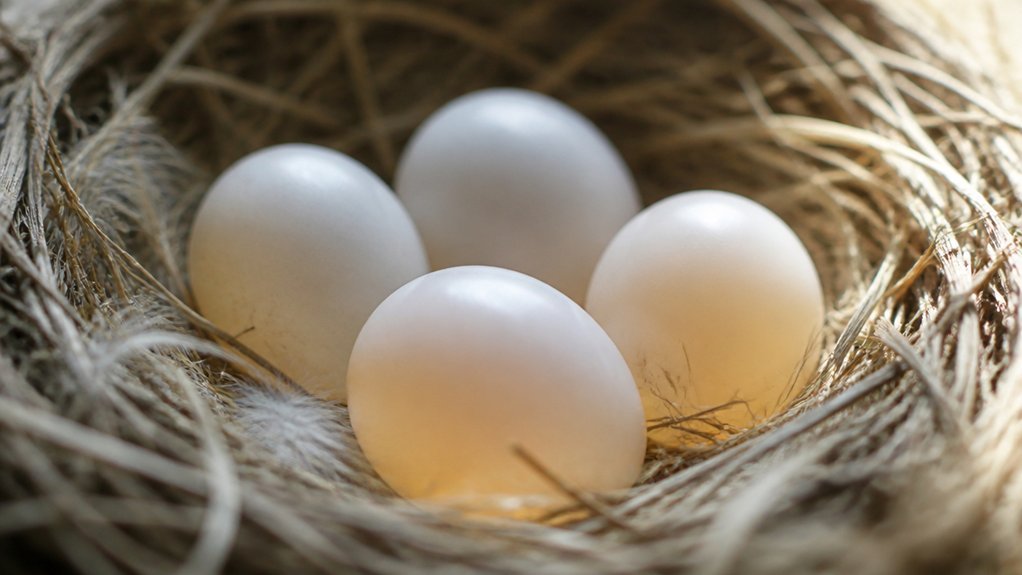
Thin shells often signal that something in your flock’s diet, health, or environment needs attention. When you collect eggs, handle them gently, because fragile shells crack with far less pressure than normal.
Check each egg as you gather it and set aside any that feel unusually light, dented, or rough. You can reduce weak shells by offering a balanced layer feed and ensuring your hens get enough calcium and protein. Fresh water matters too, since dehydration can affect shell quality.
Incorporating calcium sources like oyster shell into your hens’ diet can significantly improve shell strength and durability. If you notice many thin-shelled eggs, review your flock’s health and talk to a poultry expert or veterinarian. Catching the problem early helps you protect eggs before they break and keeps your collection more consistent day after day.
Keep Nesting Areas Clear
Keep nesting boxes clean and uncluttered so eggs have a safe place to rest. You should remove extra bedding, dropped feed, feathers, and other debris each day so hens can settle without pressing eggs against hard edges.
If you leave tools, broken shells, or dusty clumps inside, you raise the chance that a hen will step on an egg or kick it into a wall. Make sure each box stays roomy enough for one hen to enter, turn, and leave comfortably.
Replace wet or compacted litter quickly, because slippery spots can shift eggs and crack them. You can also check for overcrowding and add more boxes if hens compete for space. A tidy nesting area helps eggs stay centered, cushioned, and protected until you collect them. Proper nest sizing and adequate ventilation also contribute to preventing egg breakage.
Cool and Store Eggs Gently
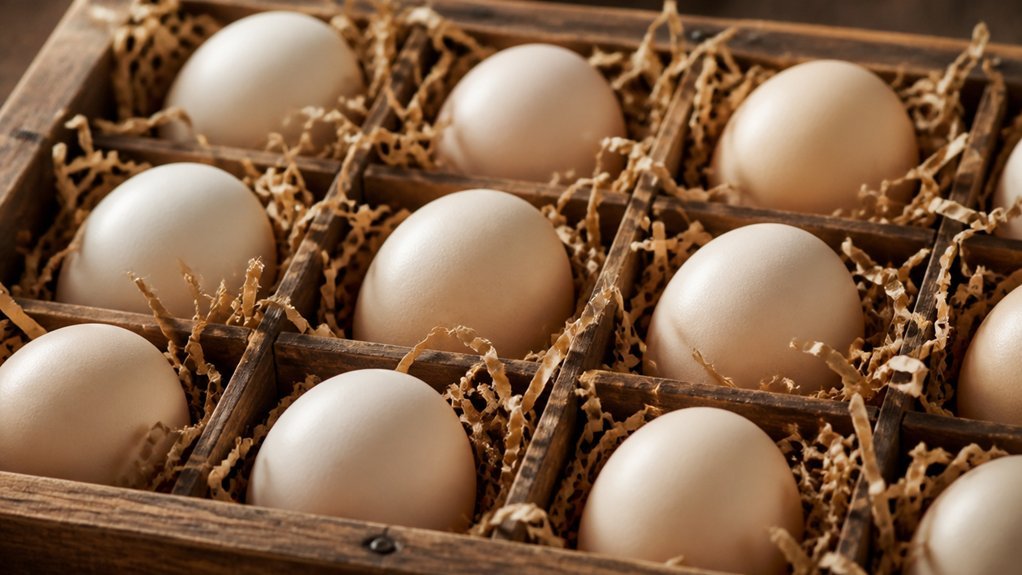
Once you collect eggs, cool them promptly in a clean, dry area so their contents stay stable and the shells don’t weaken from sudden temperature changes. Set them in a single layer, pointed end down, and keep them out of direct sunlight, heat, and moisture. A stamp size fit that suits your eggs can help prevent unnecessary pressure on the shells during handling. Don’t stack eggs or crowd them in baskets, because pressure can crack shells before you notice. If you need to move them, use a padded container and handle each egg with both hands. Store cooled eggs in a refrigerator or other consistently cool space, and avoid shifting them often. When you arrange them neatly and protect them from bumps, you reduce stress on the shell and help each egg stay intact until you’re ready to use it.
Identify Breeds and Behaviors That Break Eggs
Some hens are naturally more prone to broken eggs than others, so pay attention to breed traits and flock behavior. Heavy-bodied breeds may step on eggs more often, and nervous layers can peck or crowd nests. Watch for hens that jostle, scratch deeply, or eat eggs after a crack appears. You can reduce losses by separating troublemakers and checking nest design.
| Breed/Type | Common Risk | Your Response |
|---|---|---|
| Heavy breeds | Trample eggs | Add deeper bedding |
| Nervous hens | Scatter eggs | Calm the flock |
| Egg eaters | Peck shells | Remove cracked eggs |
| Crowded birds | Crush nests | Expand nesting space |
Track which hens lay where, then adjust housing and collection times. When you spot repeated damage, act fast before the habit spreads through the flock.
Frequently Asked Questions
How Do I Tell if an Egg Has Hidden Hairline Cracks?
You can spot hidden hairline cracks by gently turning the egg under bright light, feeling for rough lines, and tapping lightly; if it leaks, sweats, or makes a hollow click, you’ve found damage.
Should I Wash Eggs Before Storing Them?
You shouldn’t wash eggs before storing them, because washing can remove their natural protective coating. Instead, brush off dirt gently, refrigerate them promptly, and wash them right before use if needed.
What’s the Best Time of Day to Collect Eggs?
You’ll usually get the best results by collecting eggs in the late morning and again in the late afternoon, when hens have laid most eggs and nests stay cleaner, calmer, and less crowded.
Can Cold Weather Make Eggs More Fragile?
Yes, cold weather can make eggs more fragile. You’ll want to collect them often, handle them gently, and avoid sudden temperature changes, since chilled shells can crack more easily during gathering and cleaning.
How Long Can Eggs Stay in the Nest Box?
You can leave eggs in the nest box for several hours, but you’ll want to collect them daily, ideally within 1–2 hours after laying, so they stay cleaner, safer, and less likely to crack.
In Summary
By handling eggs gently, collecting them often, and using a sturdy basket, you’ll cut down on breakage fast. Keep nest boxes clean and comfortable, clear away hazards, and store eggs with care once you’ve gathered them. If you notice thin shells, adjust your flock’s diet and watch for hens that crack eggs. With a few simple habits, you can protect your eggs, reduce waste, and bring home more intact eggs every day.