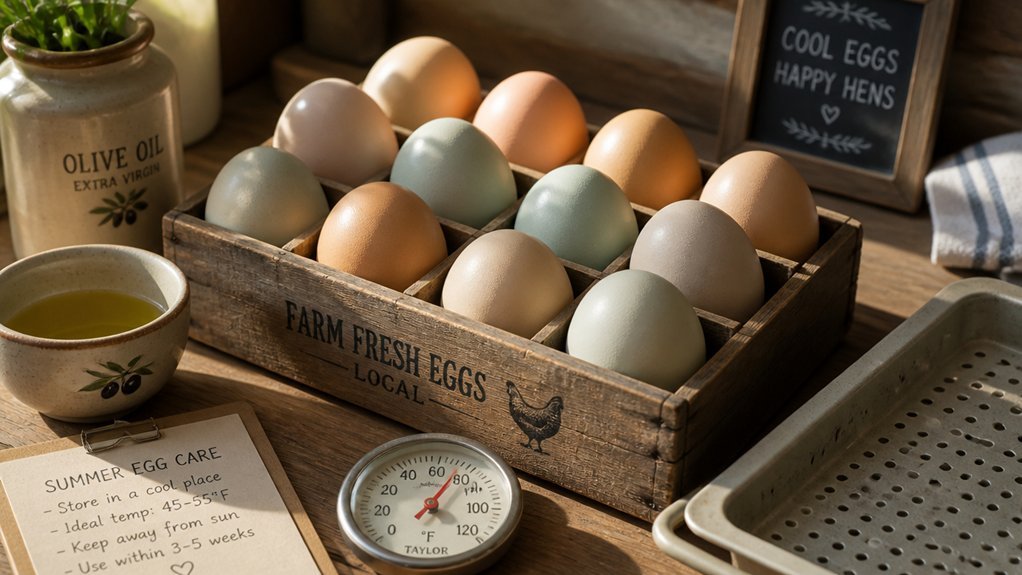
Keep eggs cool as soon as you collect them by moving them out of the sun and into a shaded, dry spot. Clean only the dirty areas with a soft cloth or brush, and keep the bloom intact. Store eggs pointed-end down in a carton or basket with airflow. Pick the coolest dark place you’ve got, away from heat and odors. Before cooking, check freshness in water, and you’ll know when an egg’s still good.
Keep Eggs Cool After Collection
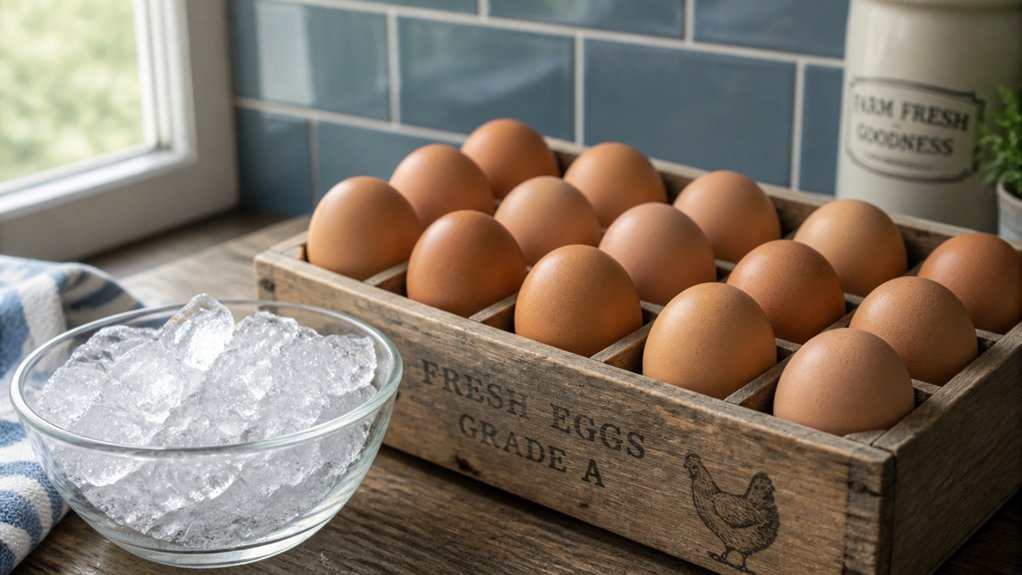
As soon as you collect eggs, move them to a cool spot right away so they stay fresh longer. You should head indoors quickly and place them in shade, away from direct sun, warm counters, and parked vehicles. A well-designed egg organizer can help keep eggs protected and organized during hot weather. If you can, bring a small basket or container that lets air circulate around each egg. Don’t leave them sitting in a hot coop or on the porch while you finish chores. In summer, heat can speed spoilage fast, so timing matters. Aim to get eggs to the coolest available place in your home as soon as possible. If your kitchen feels warm, choose a basement, cellar, or other shaded area. Keep the spot steady and dry, and you’ll help preserve quality until you’re ready to use them.
Clean Eggs Gently Without Removing the Bloom
If you see a little dirt or straw on freshly collected eggs, clean them gently so you don’t remove the bloom, the natural coating that helps keep out moisture and bacteria. Use a dry cloth, soft brush, or slightly damp paper towel, and rub only the spot that needs attention. Don’t soak eggs or scrub hard, because rough cleaning can strip away their protection and leave them more vulnerable in summer heat.
| Gentle choice | Why it matters |
|---|---|
| Soft wipe | Keeps the shell intact |
| Light touch | Protects the bloom |
| Quick clean | Lowers stress and waste |
| Dry finish | Helps eggs stay fresher |
You’ll feel better knowing each egg still has its natural shield. Handle them with care, and you’ll preserve quality without overdoing it.
Store Eggs Pointed-End Down
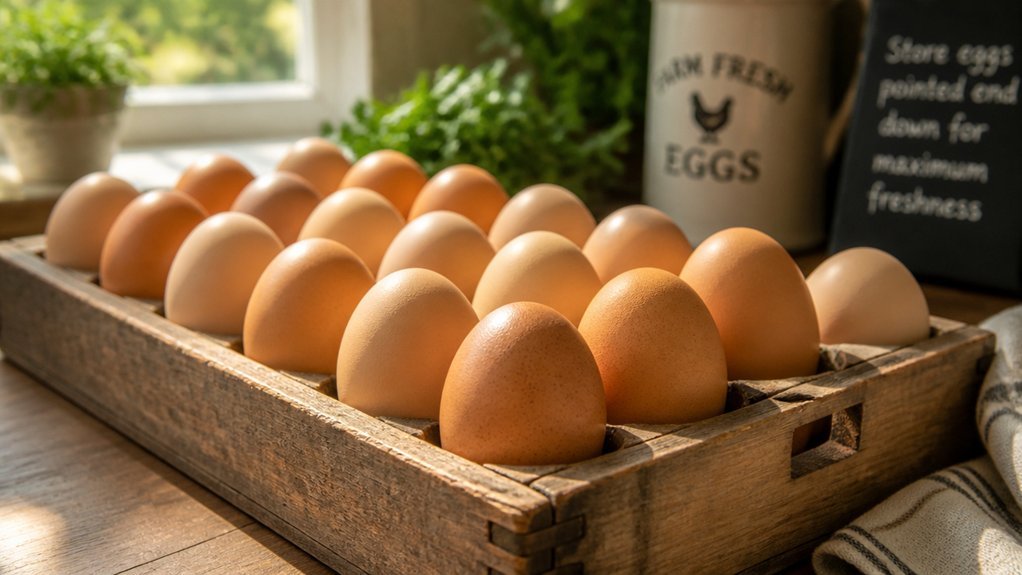
Store eggs pointed-end down so the air cell stays at the top and the yolk remains centered, which helps preserve freshness in summer heat. When you set them this way, you slow internal movement and reduce stress on the delicate membranes. Using a proper carton or container that holds each egg upright can prevent tipping and damage. That means your eggs keep a better texture and a fresher taste for longer. Use a carton or a container that holds each egg upright so they don’t tip over. If you collect eggs from your own hens, place them in the same orientation as soon as you bring them inside. You’ll also make handling easier because the pointed end gives a stable base. Keep this habit every time you store eggs, and you’ll help protect quality through hot weather.
Choose a Cool, Dark Summer Storage Spot
A cool, dark spot helps eggs stay fresh longer when summer temperatures climb. You should keep them away from windows, ovens, dishwashers, and sunny counters, because heat speeds up spoilage. Using a countertop egg skelter can also help keep eggs organized in a stable, cool spot. Pick the coldest stable place you have, like the back of the refrigerator, where temperatures stay steady all day. If you store eggs outside the fridge for a short time, choose a shaded pantry or cellar that stays consistently cool and dry. Don’t let them sit near foods that give off strong odors, since shells can absorb smells. You can also use the original carton to block light and protect the shells from bumps.
Test Egg Freshness Before Cooking
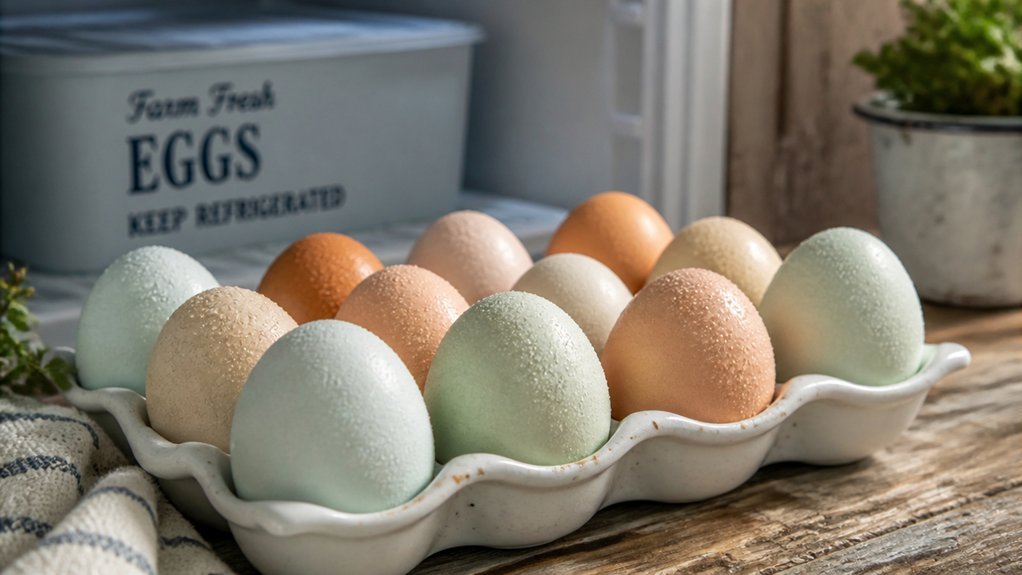
Before you crack an egg, do a quick freshness check to make sure it’s still good to use. First, place it in a bowl of water. If it sinks and lies flat, you’re safe to cook it. If it stands upright, use it soon. If it floats, toss it. You can also crack it into a separate dish and look for a firm yolk and clear white. A strong sulfur smell means you should discard it. Checking the date wheel clarity can also help ensure the egg’s freshness and prevent confusion with expired eggs.
Frequently Asked Questions
Can Eggs Be Washed With Cold Water Before Storing?
No, you shouldn’t wash eggs with cold water before storing them; you can remove their protective coating and invite bacteria. If they’re dirty, dry-brush them instead, then refrigerate them promptly.
How Long Do Fresh Eggs Last Without Refrigeration in Summer?
Fresh eggs usually last about 1 to 2 weeks without refrigeration in summer if you keep them cool, dry, and unwashed. You’ll reduce spoilage by storing them away from sun and heat.
Should Cracked Eggs Ever Be Stored With Uncracked Ones?
No, you shouldn’t store cracked eggs with uncracked ones; you’ll risk contamination and faster spoilage. Keep cracked eggs separate, refrigerate them promptly, and discard any that smell off, leak, or look slimy.
Is It Safe to Freeze Whole Eggs for Later Use?
Yes, you can freeze whole eggs, but you’ll need to beat them first; you can’t freeze them in the shell. You’ll preserve them safely for later use, and you’ll avoid texture changes.
What Signs Show Eggs Have Gone Bad Before Cracking?
You can spot bad eggs by a foul smell, slimy shell, cracks, or powdery residue; if you shake one and hear sloshing, it’s likely spoiled. Crack it into a bowl first to check, too.
In Summary
By following these simple summer storage tips, you can keep your eggs fresher for longer and lower the risk of spoilage. Keep them cool, handle them gently, and store them pointed-end down in a dark spot that stays steady. Before you cook, always do a quick freshness test. With a little care, you’ll protect both flavor and safety all season long, and you’ll be ready to use your eggs with confidence whenever you need them.