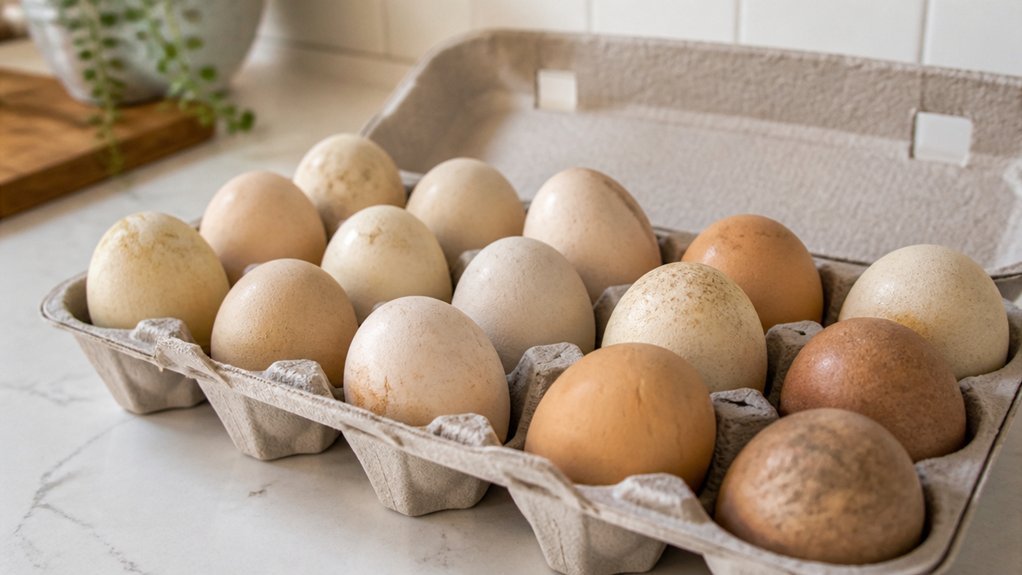
You can detect spoiled eggs in storage by checking the shells, smell, and texture before you crack them. Look for cracks, sticky or slimy spots, chalky buildup, wet patches, or odd discoloration, and toss any damaged egg right away. A fresh egg should feel dry and look smooth. If you smell sulfur, rotten cabbage, or a swampy odor, discard it. You can also use the float test to judge freshness, and there’s more to know about spotting bad eggs safely.
How to Tell If Eggs Have Gone Bad
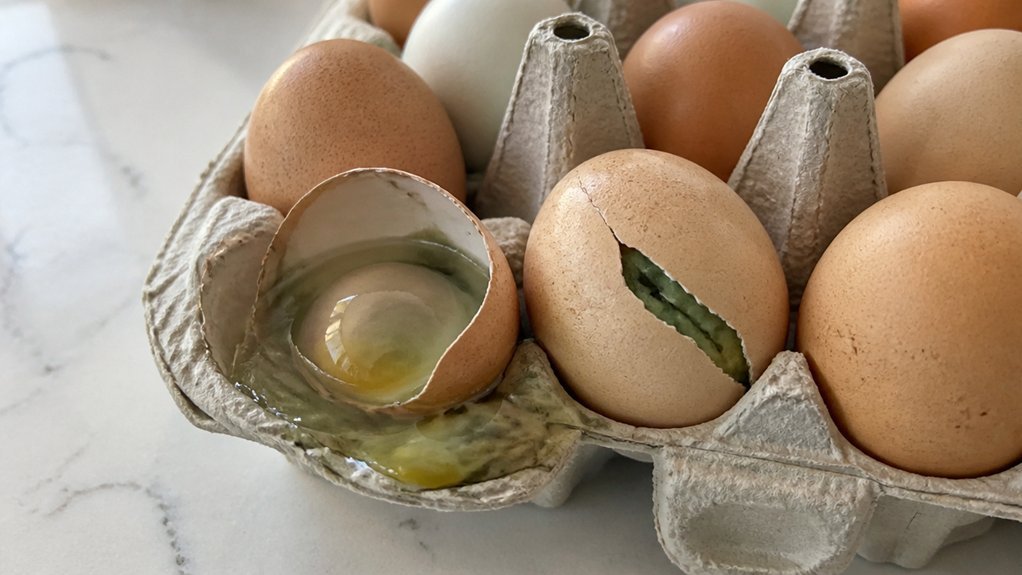
To tell if eggs have gone bad, start with a simple crack test: break each egg into a clean bowl and look for anything unusual. If the white looks watery, the yolk spreads flat, or you notice pink, green, or iridescent color, don’t use it.
Fresh eggs usually hold together and smell mild. A spoiled egg often gives off a sulfur-like odor right away, so trust your nose before anything else. You can also check texture; slimy or foamy contents signal trouble.
If an egg looks, smells, or feels off, discard it without tasting it. When you’re unsure, it’s safer to throw it out than risk getting sick. A bad egg won’t improve with cooking, and you shouldn’t try to salvage it. Egg carton materials and storage conditions can also influence freshness and shelf life, so be mindful of how eggs are stored in containers and environments.
Check the Sell-By Date
A sell-by date can give you a helpful starting point, but it doesn’t tell the whole story. You should check the date on the carton first and use it to estimate how long the eggs have been stored.
If the date is near or past, move the carton to the front of your fridge and use those eggs soon. If you bought them after the date, trust your purchase date and how you stored them. Keep eggs cold in the main refrigerator, not the door, so they stay fresh longer.
A date can’t guarantee quality, but it helps you plan meals and reduce waste. When the carton is old, test the eggs before cooking, especially if you’ve forgotten how long they’ve sat in storage.
Proper storage conditions are essential to maintain egg freshness and safety over time.Watch for Cracks, Slime, and Smells
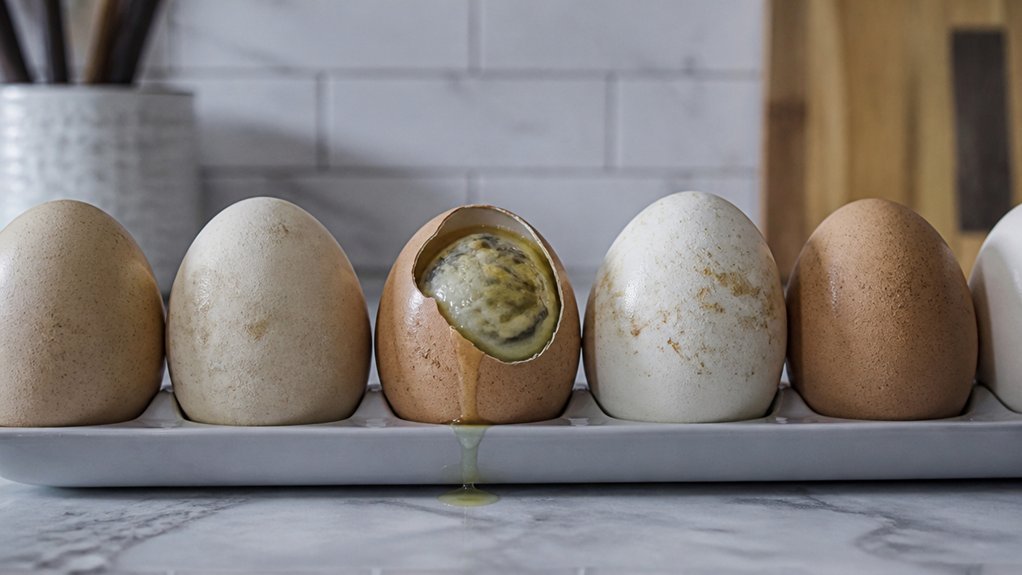
Once you’ve checked the date, look closely at the eggs themselves. You should discard any egg with a cracked shell, because damage lets bacteria enter and spoil the contents faster.
Run your eyes over each shell for slimy residue, which can signal bacterial growth or leakage. If an egg feels sticky, wet, or coated in film, don’t use it. Trust your nose too: a spoiled egg often gives off a sulfur-like, rotten odor, even before you crack it open. If you notice a foul smell when you open the carton, throw the egg away immediately.
Handle eggs gently in storage, and keep them clean and dry so you can spot problems early. Proper egg cleaning techniques can help prevent contamination and preserve freshness. When in doubt, toss it out and protect your kitchen.
Test Egg Freshness in Water
You can test egg freshness by placing it in a bowl of water and watching what it does.
If it sinks and lies flat, it’s fresh; if it stands upright, it’s older; and if it floats, you should toss it. These simple float-test results give you a quick freshness reading before you crack the egg.
Water Float Test
Drop an egg into a bowl of cold water to get a quick read on its freshness. You’ll use this simple water float test to judge whether the egg still belongs in your fridge.
Fresh eggs usually feel heavy and stay low in the bowl, while older ones change their position as air builds inside the shell. Egg preservation techniques can help you store eggs longer and maintain their quality.
- Fill a clean bowl with cold water.
- Lower the egg in gently.
- Watch how it behaves for a few seconds.
- Remove it and crack it only if you’re satisfied.
Use this test before cooking or baking, especially when you’re unsure how long the egg has sat in storage.
It takes seconds, costs nothing, and helps you avoid wasted ingredients.
Sink Or Stand
Another quick sign to check is whether the egg sinks or stands upright in water. Fill a bowl with cold water, then gently lower in the egg. You want to watch how it settles, because the position tells you a lot about its condition. Use this guide:
| Position | What you do | What it suggests |
|---|---|---|
| Sinks flat | Remove and inspect | Likely fine |
| Stands upright | Recheck soon | Older egg |
| Floats | Discard it | Don’t use |
Keep the egg from cracking by placing it in slowly, not dropping it. After testing, dry the shell if you plan to store it again. If you notice a strong odor when you crack it later, toss it. Additionally, understanding egg freshness can help prevent consuming spoiled eggs.
Freshness Readings Explained
When you test egg freshness in water, the way it behaves gives you a simple clue about its age. Fresh eggs usually sink and lie flat because they still hold little air.
Older eggs start tilting upward as moisture leaves and the air pocket grows. If an egg floats, you shouldn’t eat it, since spoilage is likely.
Use a bowl of cool water, lower the egg gently, and watch the result right away.
- Flat on the bottom: very fresh.
- Upright on the bottom: still usable, but older.
- Floating near the top: discard it.
- Cracked, slimy, or smelly: throw it out too.
What a Fresh Egg Shell Looks Like
When you inspect a fresh egg, its shell usually looks clean, unbroken, and free of cracks. You’ll often notice a smooth, matte surface with a natural shell color and texture. If the shell looks damaged, dirty, or overly glossy, it may be worth a closer check. Additionally, a first-in, first-out rotation system can help ensure eggs stay fresh longer and reduce the chance of spoilage.
Shell Color And Texture
A fresh egg shell usually looks clean, matte, and uniform in color, with no slimy residue or chalky buildup. You’ll notice a smooth, slightly porous surface that feels dry to the touch, not sticky or greasy.
The shade may vary from white to brown, but it should stay even across the shell. Light speckling is normal, yet you shouldn’t see dull patches that seem damp or powdery. Check the surface under good light so you can spot anything unusual fast.
- Look for an even, natural color.
- Expect a dry, matte texture.
- Notice light speckles, not sticky film.
- Trust your eyes when the shell seems off.
Clean, Unbroken Shell
Beyond color and texture, a fresh egg shell should also look clean and stay intact. You should see no cracks, chips, or punctures anywhere on the shell. A broken shell lets air and bacteria enter, which can speed spoilage and make the egg unsafe. Additionally, inspect the surface for any signs of rust resistance, such as coating imperfections or staining, which may indicate compromised durability. Check the surface for dried yolk, sticky residue, or visible dirt that hasn’t been wiped away during handling. Fresh eggs usually arrive without obvious damage, so any shell defect deserves attention before you store or use them. If you notice a hairline crack, set the egg aside and use it promptly or discard it. You can also gently inspect each egg under good light to spot hidden breaks that might leak or worsen in the fridge.
Smooth, Matte Surface
Another clue to freshness is the shell’s feel and finish: it should look smooth and slightly matte, not glossy, sticky, or rough. When you hold an egg, expect a clean surface that feels dry and even. A new shell typically has a soft, natural luster, while spoilage or excess moisture can leave it dull in a bad way, tacky, or oddly textured. You can use this quick check:
- Look for a uniform finish.
- Feel for dryness, not slime.
- Notice any grit, bumps, or film.
- Compare suspicious eggs with fresher ones.
- Keep in mind that shell surface quality can indicate potential spoilage or health risks.
If the shell seems off, don’t ignore it. Combine this clue with smell, cracks, and the float test before you decide to cook it or toss it.
Check the Egg White and Yolk
Crack the egg into a clean bowl and look closely at the white and yolk. Fresh egg white stays mostly clear and slightly thick, while the yolk sits high and rounded.
If the white spreads thinly or looks unusually watery, pay attention. A firm yolk that holds its shape signals better quality than one that flattens quickly or tears as you handle it.
You should also notice whether the white and yolk separate cleanly or blend together too easily. Use a spoon if needed, but don’t stir them.
Trust your eyes and stop using the egg if anything seems off. This quick check helps you judge freshness before you cook, so you can avoid wasting time and ingredients on an egg that’s past its best. Regularly checking eggs’ storage conditions can also extend their freshness and prevent spoilage before cracking.
What Spoiled Eggs Look Like in the Fridge
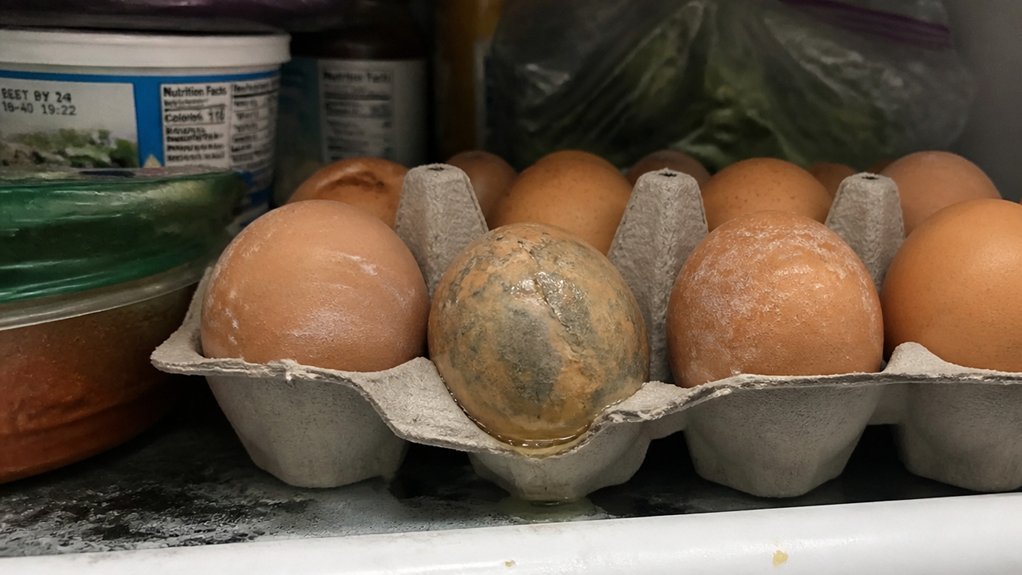
When you check eggs in the fridge, look for cracked shells or any slimy residue on the outside. You might also notice a sour smell or odd discoloration that means they’ve gone bad. If you spot either sign, it’s best to throw the eggs out right away. Additionally, storing eggs in appropriate fermentation crocks helps prevent spoilage by ensuring they remain fully submerged in brine, reducing oxygen exposure.
Shell Cracks And Slime
A damaged shell can be the first visible sign that an egg has gone bad, especially if you spot fine cracks, sticky residue, or a slimy film in the carton.
You should inspect each egg before you use it, because broken shells let bacteria move in fast. If the shell feels tacky, damp, or coated, set it aside right away.
Don’t wash off slime and assume it’s safe; that only hides the problem.
- Check for hairline cracks.
- Feel for sticky or wet spots.
- Look for a slimy coating on the shell.
- Discard any egg with damage or residue.
Store eggs in their carton, keep them cold, and handle them gently to reduce shell damage.
Unusual Odors And Discoloration
Even in the fridge, spoiled eggs can give themselves away with a sharp sulfur-like smell or an off, sour odor that stands out as soon as you crack them open. If you notice that smell, don’t ignore it, because freshness drops quickly once bacteria get inside.
You should also look for odd discoloration. A healthy yolk stays bright yellow and the white looks clear, but a bad egg may show gray, pink, green, or cloudy patches. Sometimes the shell itself looks dull or stained.
If an egg seems discolored, smells wrong, or both, toss it right away. Don’t taste it to check. Trust your nose and eyes, and keep your fridge eggs cold so spoilage slows down.
Can You Use Eggs Past the Date?
Yes, you can often use eggs past the date on the carton, as long as they’ve been stored properly and still pass basic freshness checks. The date is usually a guide, not a hard stop, so you should judge each egg by smell, shell condition, and float test results.
If an egg cracks cleanly and smells neutral, you can usually cook it safely. Use older eggs in dishes where you fully cook them, like scrambled eggs or baked recipes, rather than in raw preparations.
- Check the shell for cracks.
- Smell the egg after cracking it.
- Watch for unusual texture or color.
- Cook questionable eggs thoroughly.
Why Backyard Eggs Spoil Faster
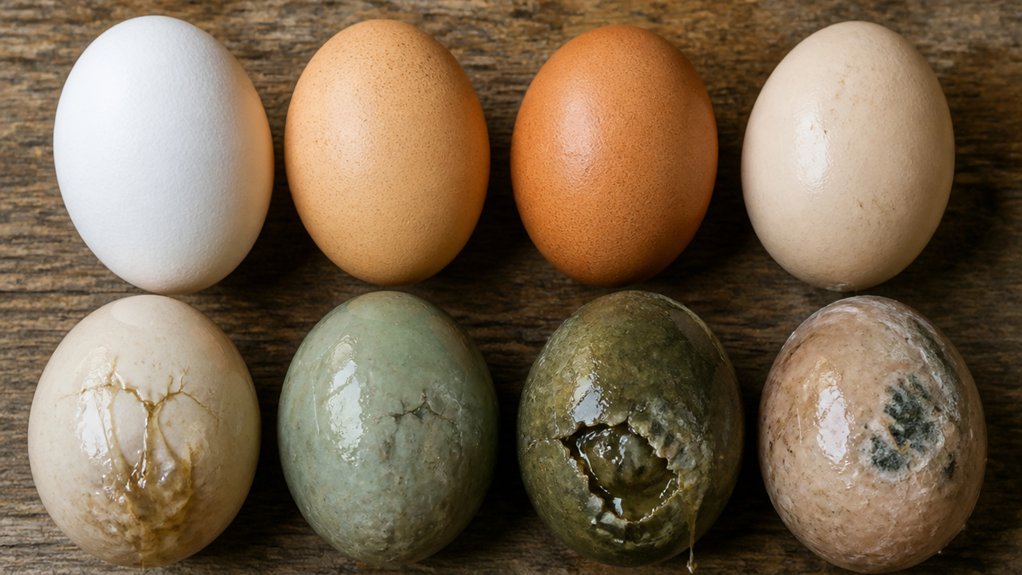
Backyard eggs can spoil faster because they often keep less of their natural protective cuticle, which helps block bacteria.
You also deal with variable coop conditions like heat, moisture, and dirt that can speed up spoilage.
If you handle eggs often, that extra stress can crack or weaken shells and shorten their freshness.
Natural Protective Cuticle
A fresh egg leaves the hen coated with a thin, natural protective cuticle that helps seal the shell and block bacteria from getting inside. When you handle backyard eggs, you can wear away that coating faster, so the shell loses part of its built-in defense. That means spoilage can start sooner if you store them carelessly.
You’ll get better results when you keep the cuticle intact and treat each egg gently.
- Don’t wash eggs unless you must.
- Dry dirt away with a clean cloth.
- Store eggs cool and pointed end down.
- Use older eggs first, and check for cracks.
If the cuticle is damaged, odors and texture changes may appear sooner. You can slow that process by minimizing handling and refrigerating eggs promptly.
Variable Coop Conditions
Even when you collect eggs daily, coop conditions can make them spoil faster than store-bought eggs. You expose eggs to heat, damp bedding, dust, and fluctuating temperatures, and each change weakens freshness.
A warm coop speeds bacterial growth, while humidity can encourage moisture loss and shell contamination. If hens lay in dirty nest boxes, manure and debris can cling to the shell and slip through tiny pores.
Cold nights followed by hot days also create condensation, and that moisture helps microbes spread. You can slow spoilage by keeping nesting areas clean, dry, and shaded, and by collecting eggs soon after laying.
Stable conditions matter because backyard eggs don’t get the same controlled storage that commercial eggs do, so their shelf life often drops faster.
Frequent Handling Stress
Handling eggs more often can speed up spoilage, too. Each time you gather, sort, wash, or move backyard eggs, you create tiny shocks that can weaken the protective bloom and let moisture and bacteria slip through the shell.
If you crack one slightly, spoilage can start fast, even in cool storage. You also warm eggs with your hands, then cool them again, and that temperature swing can add stress.
- Pick up eggs gently, not one-handed.
- Clean them only when needed.
- Store them promptly in a stable, cool place.
- Check for cracks before you refrigerate.
When you handle eggs less, you help them stay fresher longer and reduce the chance that hidden damage will turn a good egg bad.
Store Eggs at the Right Temperature
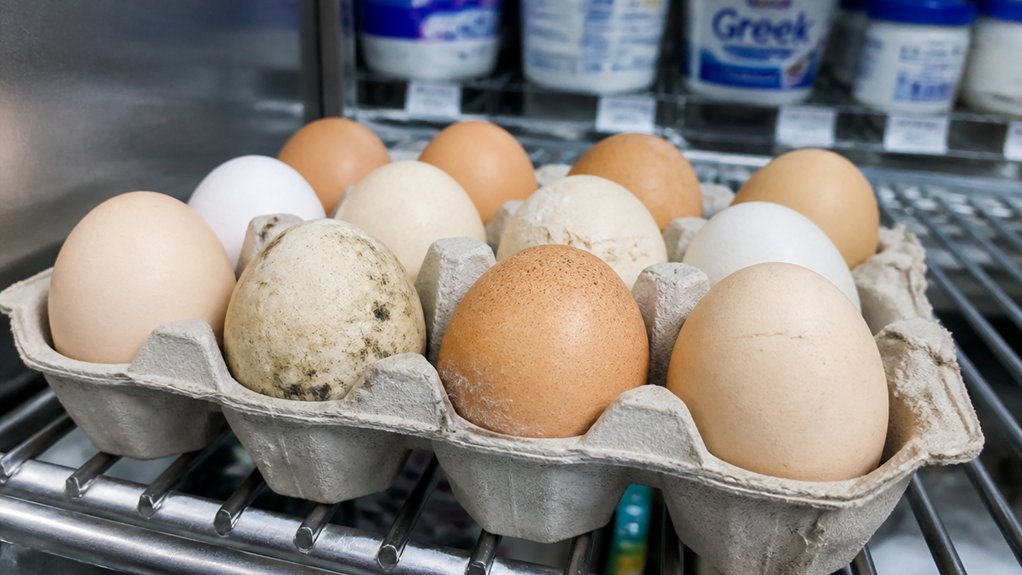
To help eggs stay fresh longer, keep them in the refrigerator at a steady 40°F (4°C) or below. You should place them on an inside shelf, not in the door, because the temperature there swings every time you open it. That steady cold slows spoilage and helps you spot problems later, since eggs that warm up and cool down repeatedly age faster.
Leave eggs in their carton so they absorb fewer odors and stay protected from light. Don’t let them sit out on the counter for long after shopping or cooking. If your fridge runs warm, check it with a thermometer and adjust it promptly.
When you store eggs consistently cold, you preserve quality, reduce waste, and make spoilage easier to detect before you use them.
Keep Nest Boxes Clean
Clean nest boxes help keep eggs from getting dirty, cracked, or contaminated before you collect them. You should refresh bedding often, remove droppings, and wipe out loose dust so hens have a tidy place to lay.
When boxes stay clean, shells stay cleaner too, which makes inspection easier later.
- Replace damp bedding right away.
- Scrape out manure and feathers daily.
- Sanitize boxes on a regular schedule.
- Check for broken boards or sharp edges.
Keep nesting material dry and fluffy, and don’t overcrowd the boxes. If hens prefer one box, add more space so they’re not stacking up.
Clean boxes also discourage pests and reduce mess on the shells. A little upkeep now saves you time and helps you collect fresher-looking eggs.
What Rotten Eggs Smell Like
Even with clean nest boxes, you still need to know the quickest way to spot a bad egg: your nose.
When an egg turns rotten, you’ll usually notice a sharp, sulfur-like odor that can seem like rotten cabbage, garbage, or a swampy drain. The smell may hit you as soon as you crack the shell, but sometimes it leaks through a tiny crack before you open it.
Trust that first whiff; your senses often catch trouble faster than your eyes do. If you notice this foul odor, handle the egg carefully and keep it away from fresh eggs so the smell doesn’t spread.
A truly spoiled egg won’t smell faint or “off” in a harmless way—it’ll smell unmistakably bad, and you won’t want to keep it around.
Toss Eggs Right Away When You See These Signs
If an egg shows cracks, leaks, or a slimy shell, toss it right away. Don’t try to rinse, sniff, or “save” it, because damage often means bacteria can enter fast.
You should also discard eggs with these warning signs:
- A shell that feels sticky, chalky, or wet
- A broken yolk or white visible through the crack
- An odd color, mold, or powdery residue
- Any egg that gives off a strong rotten smell
When you spot one of these clues, separate the egg from the others and throw it out. Handle it gently, then wash your hands well.
Trust what you see and smell; quick action helps you avoid a bad meal and keeps your stored eggs safer.
Prevent Spoilage in Long-Term Storage
To prevent spoilage in long-term storage, keep eggs cold at a steady 40°F or below and leave them in their original carton on an interior shelf of the refrigerator, not in the door. The carton shields eggs from light and strong odors, while the steady shelf temperature helps slow bacterial growth.
Don’t wash eggs before storing them; that can remove the protective coating and let moisture in. Check the sell-by or pack date, and use older eggs first so nothing lingers too long.
If you crack eggs ahead of time, store them in a clean, covered container and use them within two days. For best quality, avoid temperature swings, and return eggs to the fridge promptly after each use.
Frequently Asked Questions
Can You Freeze Eggs to Extend Storage Life?
Yes, you can freeze eggs to extend storage life. You should crack them first, whisk lightly, and freeze in airtight containers. Don’t freeze shells; they’ll crack. Use thawed eggs within a few days.
How Long Do Hard-Boiled Eggs Stay Safe in Storage?
You can keep hard-boiled eggs refrigerated for about 7 days. You’ll stay safest if you peel them just before eating, chill them promptly, and discard any that smell off or feel slimy.
Do Washed Eggs Spoil Faster Than Unwashed Eggs?
Yes, you’ll usually find washed eggs spoil faster because washing removes the natural protective coating. You should refrigerate them promptly and use them sooner than unwashed eggs, which stay protected a bit longer.
Should Eggs Be Refrigerated After Washing Them?
Yes—refrigerate eggs right after washing them. You remove the natural protective coating, so chilling helps slow bacteria growth and keeps them fresher. Dry them first, then store them in the coldest part of your fridge.
Can Spoiled Eggs Make Nearby Eggs Unsafe?
Yes, they can if you leave them touching or cracked. You should separate questionable eggs, discard any broken ones, and refrigerate the rest promptly to reduce contamination risk and keep your carton safer.
In Summary
By checking dates, inspecting shells, and using the water test, you can quickly spot spoiled eggs before they become a problem. Fresh eggs look clean, smell neutral, and sink in water, while bad eggs often crack, leak, or stink. Keep nest boxes clean and toss any questionable eggs right away. With a little attention and proper storage, you’ll reduce waste and keep your eggs safe, fresh, and ready to use when you need them.