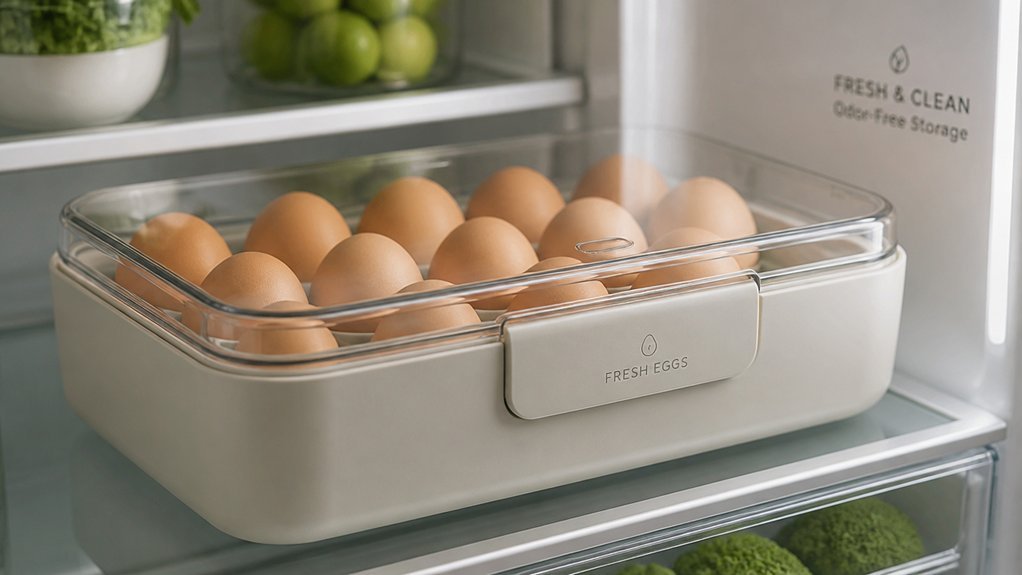
Keep eggs in their original carton so they’re shielded from fridge smells and easier to track by date. Store them on an interior shelf, not the door, where temperatures stay steady. Keep eggs several inches away from onions, garlic, fish, and pungent cheeses, and use airtight containers for strong-smelling foods. Don’t wash eggs before storage. Wipe dirt off gently, close the carton after use, and check shells and freshness often. There’s more to smart storage ahead.
Keep Eggs Away From Strong Odors
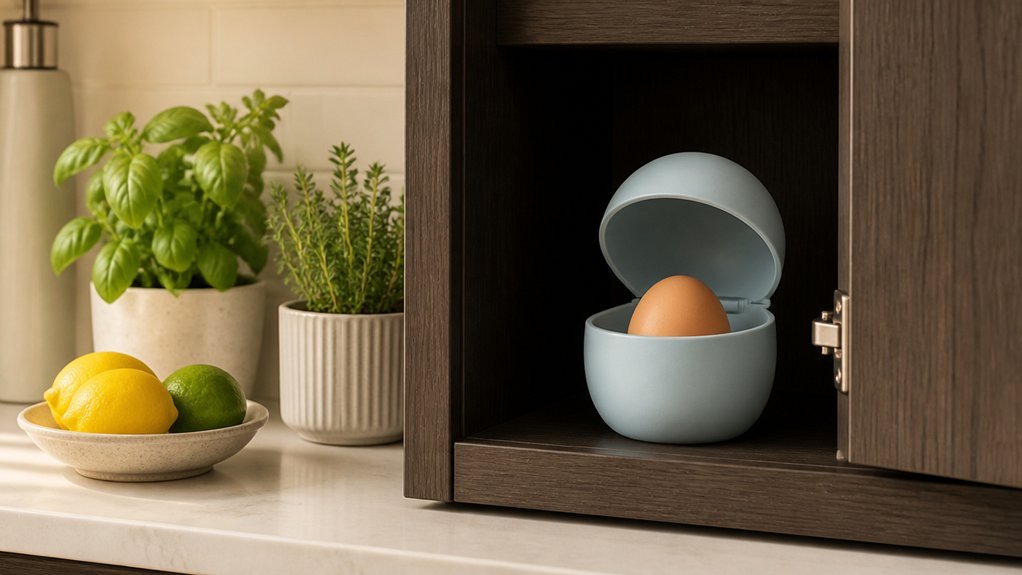
Eggs absorb odors easily, so you should keep them away from strong-smelling foods like onions, garlic, and fish. Place them on a shelf or in a bin that stays separate from pungent leftovers, cut produce, and spices. A ventilated egg carton can help reduce trapped moisture and odors, maintaining freshness. You can use a dedicated refrigerator section to reduce exposure to strong aromas and help preserve their clean taste. Close containers tightly and wipe spills quickly, since escaping smells can reach nearby eggs. If you buy eggs in bulk, check nearby items before you store them, and move anything especially fragrant elsewhere. Keep the fridge organized so odors don’t build up and linger.
Store Eggs in Their Original Carton
Keep your eggs in their original carton to help block odors from seeping in. The carton also gives them better protection in the fridge. Plus, you’ll keep the date label handy so you can track freshness easily. Using a stackable storage option can optimize space and keep eggs organized.
Protects Against Odor Absorption
Storing your eggs in their original carton helps shield them from strong odors in the fridge. You give each egg a simple barrier that slows scent transfer from foods like onions, garlic, or leftover takeout.
The carton also keeps eggs grouped together, so they’re less exposed to nearby smells drifting through open shelves. When you leave eggs loose, their porous shells can pick up unwanted odors more easily.
Keeping them wrapped in the carton helps you maintain their fresh, clean taste and smell until you’re ready to cook. For best results, place the carton on a stable refrigerator shelf and keep it closed after each use.
Another benefit of using the original carton is that it provides ventilation, which supports egg freshness and reduces spoilage. This small habit takes little effort, but it can make a noticeable difference in flavor.
Keeps Eggs Better Shielded
Your egg carton does more than block odors—it gives the eggs a sturdy shield from bumps, temperature swings, and other kitchen hazards.
When you keep eggs in the carton, you help protect their shells from cracking during fridge movement and daily grabbing. The carton also limits exposure to dryer air, so the eggs stay more stable in storage. You don’t need extra containers or loose placement that can let eggs roll around or absorb shock. Using a dedicated egg storage rack can further extend freshness by promoting proper rotation and reducing handling.
- Keep the carton closed when you’re not using eggs.
- Set it on a flat shelf, not the door.
- Return eggs to the carton right after handling them.
This simple habit keeps your eggs better shielded and helps them stay in better shape until you’re ready to cook.
Preserves Carton Date Labels
The original carton helps you track freshness at a glance because it keeps the pack date, sell-by date, or expiration date visible. You can check it quickly before you cook, so you don’t have to guess how long the eggs have sat in your fridge. Keeping eggs in their carton also helps you use the oldest ones first, which cuts waste and keeps your meals safer. The box gives you a simple reminder each time you open the fridge, and it protects the eggs from absorbing odors at the same time. If you transfer eggs to another container, you may lose those important labels and confuse the timeline. Leave them in the original carton, place it on a shelf, and let the printed dates guide your planning. Proper storage containers with airtight seals can also help prevent eggs from picking up nearby smells and maintain freshness longer.
Choose the Best Egg Storage Spot
You should keep eggs in a cool, stable spot that won’t swing in temperature. Place them away from strong-smelling foods so they don’t absorb odors. The fridge interior shelf usually works best because it stays more consistent than the door. Additionally, storing eggs in their original carton can help protect them from absorbing external odors and keep them fresh longer.
Cool, Stable Location
A cool, stable spot helps eggs stay fresher and keeps nearby odors from seeping in. You should place them where the temperature stays steady, because repeated warming and cooling can weaken freshness. Using a gentle cleaning method to ensure the eggshells remain intact also contributes to long-lasting freshness.
Pick a shelf in your refrigerator, not the door, so every opening doesn’t jostle them or expose them to fluctuating air. Keep the carton closed until you’re ready to use the eggs, and return it quickly after checking what you need.
- Choose a cold interior shelf.
- Avoid spots that warm up often.
- Keep eggs in their carton.
This simple setup helps protect quality and limits odor transfer. When you store eggs in a consistent environment, you’re giving them the best chance to stay clean-tasting and usable longer.
Away From Strong Foods
Even in a cool, steady fridge, eggs can still pick up odors from nearby foods, so placement matters. You should keep them away from onions, garlic, cut melons, leftover fish, and pungent cheeses. These items release strong aromas that can seep through cartons and cling to shells. Choose a spot with mild neighbors and minimal traffic. Using an egg date stamp kit can help ensure you keep track of freshness and freshness, especially if eggs are stored in areas prone to odor transfer.
| Food to Avoid | Odor Strength | Better Distance |
|---|---|---|
| Onions | High | Several inches |
| Garlic | High | Several inches |
| Fish | High | Separate zone |
| Cheese | Medium | Nearby, not touching |
| Melons | Medium | Different area |
When you unload groceries, group eggs with neutral foods instead. If a carton smells off, move it fast. Small spacing choices help your eggs stay fresh-tasting and clean-smelling longer.
Use Fridge Interior Shelf
The fridge’s interior shelf is usually the best place to store eggs because it stays more temperature-stable than the door. You’ll protect them from warm air each time you open the fridge, and that helps preserve freshness and reduce odor absorption. Deep, pleated pockets in egg aprons, like those described in pocket depth, help secure eggs and prevent cracking during gathering, similar to how a stable fridge environment protects eggs. Keep the carton on a middle or back shelf, where temperatures stay steady and food smells are easier to avoid. 1. Place eggs on an interior shelf, not the door. 2. Keep them in their carton to block odors. 3. Store them away from leftovers, onions, and strong cheeses. You don’t need fancy containers; consistency matters most. Check that your fridge runs cold enough, and return the carton quickly after use. A stable spot helps your eggs last longer and taste cleaner.
Separate Eggs From Onions and Garlic
Store eggs away from onions and garlic, since their strong sulfur odors can seep through carton and shell pores and affect the eggs’ flavor. You should keep them in a separate bin, drawer, or shelf section so pungent produce doesn’t share space with your eggs.
If you buy loose eggs, leave them in their original carton and place the carton well away from cut onions, garlic bulbs, and prepared dishes that release strong aromas. You can also wrap onions and garlic tightly or store them in vented containers to limit odor spread.
When you handle both ingredients, wash your hands before touching eggs. That simple separation helps preserve a clean, fresh taste and keeps your eggs ready for baking, scrambling, or boiling without unwanted garlic or onion notes.
Additionally, using airtight containers for storing onions and garlic can further prevent odor transfer, maintaining the integrity of your eggs and other nearby foods.
Keep Fridge Conditions Stable
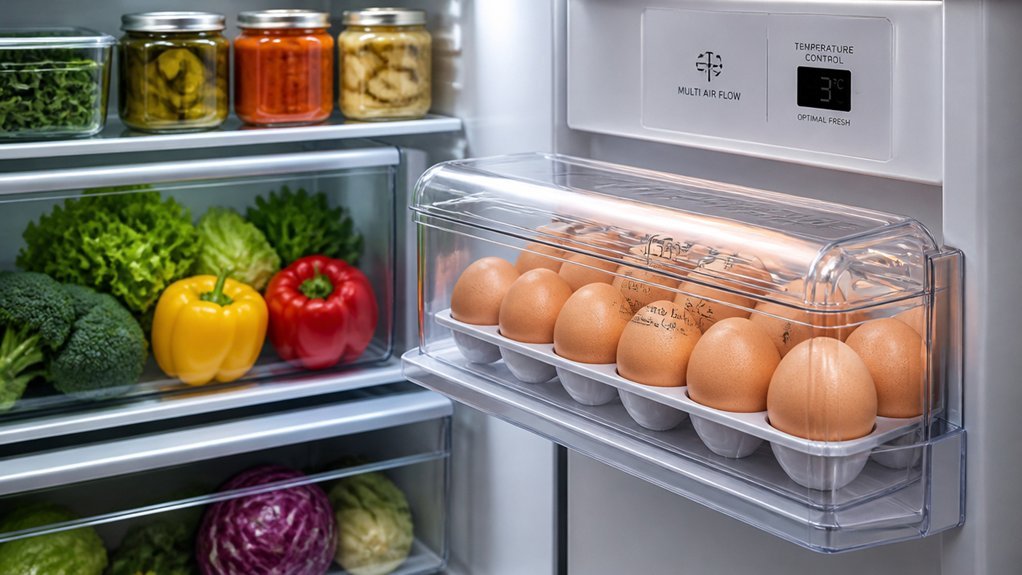
Keep your fridge at a steady temperature, because frequent swings can speed up moisture loss and let odors move around more easily. You can protect eggs by limiting door openings and avoiding overpacked shelves that block cold air.
Place eggs on an inside shelf, not in the door, so they stay cooler and steadier. A stable environment helps the shells and carton resist absorbing nearby smells.
- Check your fridge setting often.
- Keep eggs in their original carton.
- Return eggs to the shelf quickly after use.
If you notice warm spots, rearrange items so air can circulate. Small habits like these help your eggs stay fresher and less exposed to unwanted odors.
Handle Dirty Egg Shells Carefully
If eggs come home with dirt or debris on the shells, handle them gently and avoid washing them unless you’re ready to use them right away. Washing can remove the shell’s natural protection and let odors cling more easily, so it’s better to leave light messes alone.
Instead, wipe off loose bits with a dry paper towel and keep each egg in its carton. Store the carton on a shelf, not in the door, where temperature swings can weaken the shell’s barrier.
If a shell is cracked or badly soiled, use that egg soon and keep it separate from cleaner ones. You’ll help prevent unwanted smells from reaching the eggs and keep their quality steadier while they sit in your fridge.
Check Egg Freshness Regularly
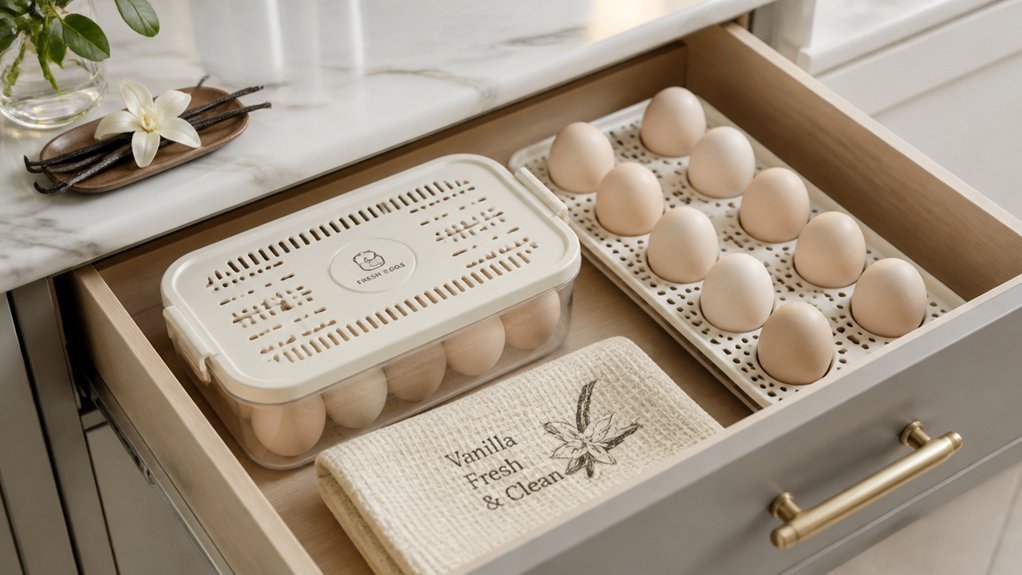
Once the eggs are tucked away, check their freshness regularly so you can use the oldest ones first and catch any that’ve turned questionable. Rotate cartons each time you shop, and mark the date on the lid if the store’s label isn’t clear.
Keep eggs in the coldest part of your fridge, not the door, so temperatures stay steady and odors don’t linger.
- Inspect shells for cracks, slime, or strange spots before you crack them.
- Do a quick float test in cold water if you’re unsure about age.
- Toss any egg that smells sulfurous, overly strong, or just off.
When you check often, you waste less food, avoid unpleasant surprises, and protect the clean, neutral flavor you want in cooking and baking.
Frequently Asked Questions
Can Eggs Absorb Odors From Plastic Containers?
Yes, eggs can absorb odors from plastic containers if you leave them there too long, especially in unsealed plastic. You should keep them in their carton or a tight, odor-free container instead.
Should Eggs Be Frozen to Prevent Odor Absorption?
No, you shouldn’t freeze eggs just to block odors. You’ll store them better in their shells, sealed away from strong smells, because freezing can change texture and won’t stop odor absorption completely.
Do Cooked Eggs Need Different Storage Than Raw Eggs?
Yes—store cooked eggs differently. You’ll refrigerate them within two hours, keep them covered, and use them within a week. Raw eggs stay in their carton, cold, and away from strong-smelling foods.
How Long Can Eggs Stay in the Fridge Safely?
You can keep raw eggs refrigerated for about 3 to 5 weeks, and hard-boiled eggs for up to 1 week. Check they’re cold, uncracked, and smell normal before you use them.
Can Egg Whites Pick up Smells Faster Than Yolks?
Yes, you’ll usually notice egg whites absorb odors faster than yolks because they’re more watery and exposed. Keep them sealed, and you’ll help prevent off-smells from creeping in during storage.
In Summary
By following these tips, you can keep your eggs fresh and tasting clean for longer. Store them in their original carton, keep them away from strong-smelling foods, and place them in a stable spot in your fridge. Handle dirty shells carefully and check freshness often so you catch any problems early. With a little attention, you’ll protect your eggs from unwanted odors and always have them ready for cooking, baking, or breakfast.