The best way to introduce chickens is to quarantine new birds for 30 to 45 days, then house them beside your flock with a sturdy wire barrier so they can see and hear each other safely. Give both groups food, water, shade, and plenty of space. When they seem calm, let them meet at dusk under supervision. Expect some pecking, but stop anything that causes blood or blocks access. With a few more steps, you’ll make the process much smoother.
Set Up the Introduction Pen
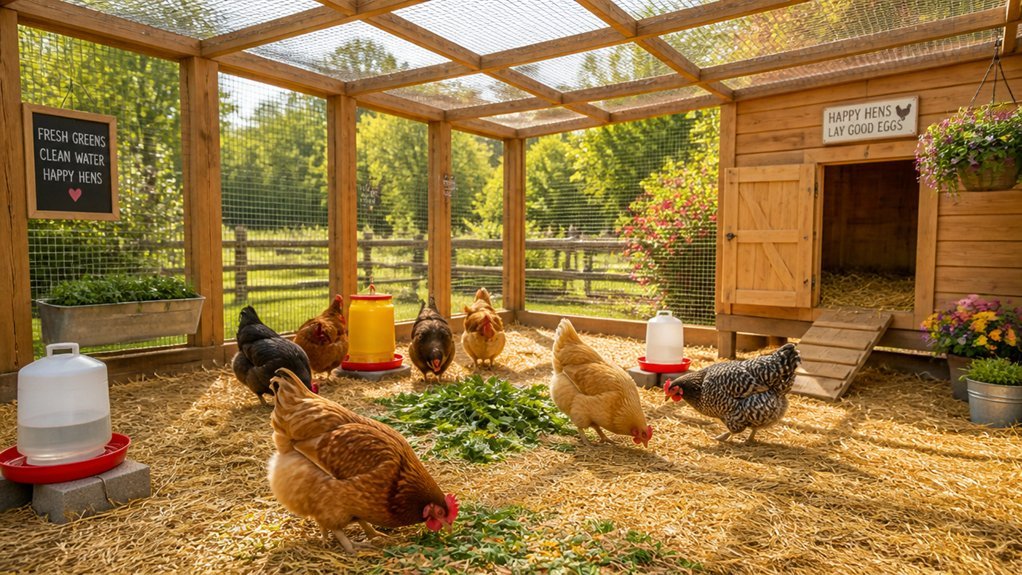
Before you let your chickens meet, set up a separate introduction pen that lets them see and hear each other without full contact. Choose a spot beside the main flock’s run so everyone can watch each other safely. Use sturdy wire, secure latches, and enough space for feeders, water, and a low roost.
Keep the pen dry, shaded, and easy for you to reach. Make sure the fencing stops pecking and chasing while still allowing sight, sound, and smell. Place the newcomers where they can settle in and learn the flock’s routine.
Check for sharp edges, gaps, or weak spots daily. A calm, well-built pen helps you control the first meeting and reduces stress for every bird. Incorporating reinforced wire mesh for predator resistance ensures the safety of your hens during this important introduction period.
Quarantine New Chickens First
Before you add new chickens to your flock, keep them in quarantine for at least 30 days so you can spot any problems early. House them in a separate, secure space with their own feeders, waterers, and bedding. Check them daily for signs of illness, parasites, or unusual behavior before you let them mix with the rest of your birds. Incorporate proper ventilation to ensure fresh air flow and reduce respiratory risks during quarantine.
Quarantine Duration Guidelines
How long should you quarantine new chickens? Plan on at least 30 days, and 45 days is even safer if you can manage it.
During that time, you watch for coughing, sneezing, diarrhea, swollen eyes, lice, mites, poor appetite, or unusual behavior. If a bird shows symptoms, keep it isolated longer and contact a veterinarian before you mix it with your flock. Don’t shorten quarantine because the birds “look fine”; many illnesses take time to appear.
Use the full period to observe daily, check droppings, and note energy levels. If you recently bought birds from multiple sources, quarantine each group separately.
Waiting may feel tedious, but it protects your flock from costly disease and gives you confidence before introduction day. Incorporating disease prevention strategies during quarantine further helps keep your flock healthy.
Separate Housing Setup
Set up a separate, secure space for new chickens so they can live apart from your flock during quarantine. Use a sturdy pen, coop, or crate with solid walls and a roof to keep everyone contained. Place it far enough away that birds can’t peck through or share bedding, feeders, or waterers.
Give the newcomers dry litter, shade, airflow, and enough room to move without crowding.
- Choose a spot with easy access but limited contact.
- Keep tools for this area separate from the main coop.
- Add simple barriers to reduce stress and visual tension.
You’ll make the adjustment cleaner and safer when you control space, limit contact, and avoid shortcuts. A well-planned setup helps you manage introductions without creating unnecessary chaos, especially when considering predator protection measures for new arrivals.
Health Monitoring Checks
While your new chickens stay in quarantine, check them daily for signs of trouble like sneezing, wheezing, discharge, diarrhea, mites, or unusual lethargy. Watch how they eat, drink, roost, and move, because small changes often show illness early. Weigh them if you can, and note any sudden loss. Using proper housing materials can also help prevent issues by providing a safe, virus-resistant environment.
Inspect their combs, eyes, vent, feet, and feathers for swelling, crusting, lice, or broken skin. Keep fresh water and feed available, and clean the quarantine area often so you can spot changes fast. If one bird looks off, separate it further and contact a poultry-savvy vet. Don’t rush introductions until every chicken has stayed bright, active, and symptom-free for the full quarantine period. This careful monitoring protects your flock and gives each bird the best chance to settle safely.
Use the See-But-Don’t-Touch Method
After quarantine, you can let your new chickens see the flock through a fence or pen without letting them touch. This visual acclimation period helps everyone get used to each other’s presence with less stress. Using a secure locking mechanism on carriers or enclosures during initial introductions can further ensure safety and containment. Once they seem calm, you can use barrier-based first meetings to keep interactions safer and smoother.
Visual Acclimation Period
Before you let chickens meet face-to-face, give them a visual acclimation period so they can see each other without making contact. You’ll help both groups lower their guard while they watch, listen, and learn flock rhythms from a safe distance.
Keep this stage calm and short at first, then extend it as they settle. Watch for relaxed posture, normal eating, and less pacing.
- Place newcomers where everyone can observe safely.
- Feed and water both groups nearby so they associate calm routines.
- Check daily for signs of stress, curiosity, or steady indifference.
- Using visual barriers can help prevent initial conflicts and ease the introduction process.
This quiet preview reduces shock and gives you better timing for the next step. When birds act steady, you’re ready to move forward without rushing or forcing anything.
Barrier-Based First Meetings
Once both flocks are calm at a distance, let them meet through a barrier such as wire, fencing, or a pen divider. You can place the newcomer group beside the resident birds for short, supervised sessions. This lets them see, hear, and smell each other without pecking or chasing.
Watch for relaxed posture, curious glances, and normal feeding. If you notice lunging, feather puffing, or repeated aggression, end the session and try again later. Keep food and water available on both sides so each flock stays occupied. Start with brief meetings and extend them gradually over several days.
When both groups stay calm at the barrier, you’re ready for closer contact. This step lowers stress and helps prevent a rough first introduction. Paying attention to the nesting environment and ensuring it is well-maintained can also help reduce territorial behaviors during introductions.
Introduce Chickens at Dusk

Introduce your new chickens at dusk, when the flock is naturally winding down and the light starts to fade. You can lower stress by moving them into the coop after the others have settled. Quiet surroundings help everyone focus on roosting instead of reacting to sudden movement.
Keep your approach calm and consistent, and avoid bright lights or loud handling.
- Place newcomers near the roosting area so they can settle in quickly.
- Give each bird enough space to perch without crowding.
- Check water, ventilation, and bedding before you close up for the night.
- Using an automatic chicken coop door weatherproofing can help ensure safe, stress-free entry for your flock.
At dawn, observe from a distance and let the birds adjust on their own. This timing gives you a peaceful start and helps the flock accept the new arrivals with less disruption.
Watch for Pecking Order Fights in Chickens
Even with a calm dusk introduction, you may still see a few pecks, chases, or squabbles as the flock sorts out its pecking order. Watch closely, but don’t panic at every flap or squawk.
A calm introduction may still bring a few pecks or chases as the flock settles its pecking order.
Chickens often test one another with brief taps and short pursuits while they establish rank. You should step in if you see blood, repeated cornering, or one bird blocked from food, water, or shelter.
Give the flock enough space, multiple feeders, and several water stations so weaker birds can avoid pressure. Keep roosts and hiding spots available, and remove any bird that’s getting seriously injured.
Mild fussing usually settles fast, but steady aggression means you need to intervene. Your goal is peaceful adjustment, not instant friendship. Ensuring the perches are sturdy and appropriately placed can also help reduce conflicts during the settling period, as stability and safety features promote a more secure environment for all birds.
Know When Chickens Are Ready to Join

How do you know when the new chickens are ready to join the flock? You’ll see steady signs: they eat, drink, and roost calmly, and they no longer panic when they hear older birds nearby.
Watch their health, too. Bright eyes, clean vents, smooth feathers, and normal droppings tell you they’re coping well. If they’ve spent time in a side pen, they should also respect fences and avoid frantic pacing.
Before you mix them in, compare size and age so you don’t create a safety gap.
- Let them share space through wire first.
- Introduce them during daylight, when you can monitor behavior.
- Provide extra feeders, waterers, and hiding spots.
When they act relaxed and recover quickly from brief squabbles, you can merge them with confidence.
Frequently Asked Questions
How Long Should the Introduction Pen Stay Set Up?
Keep the introduction pen set up for about one to two weeks, until you see calm behavior and no pecking. You’ll want enough space for gradual meetings, so everyone adjusts safely and confidently.
What Treats Help Chickens Bond Faster During Introductions?
You can offer mealworms, scratch grains, chopped greens, or sunflower seeds. You’ll build trust faster by hand-feeding treats in a calm space, keeping sessions short, and making sure every bird gets some without chasing.
Can Chicks and Adult Hens Be Introduced Together Safely?
Yes, you can introduce chicks and adult hens together, but you’ll need strict supervision, a gradual barrier, and separate safe space. You shouldn’t mix them unsupervised until the hens stop pecking and the chicks’re nearly grown.
Should Roosters Be Introduced Differently Than Hens?
Yes, you should introduce roosters more carefully than hens because they may challenge each other sooner. You’ll want separate space, supervised mingling, and gradual contact so you can stop bullying before it escalates.
What Signs Show Chickens Are Stressed, Not Just Pecking?
You’ll see stress if they freeze, hide, pant, flare feathers, squawk repeatedly, stop eating, or lose weight. Normal pecking looks brief; stressed birds keep dodging, trembling, or avoiding the flock constantly.
In Summary
Introducing chickens works best when you give them time, space, and careful supervision. Start by quarantining new birds, then use a separate pen so everyone can see each other safely. Let them meet at dusk, when things are calmer, and watch closely for pecking order squabbles. Once the flock acts relaxed and no one’s being bullied, you can let the newcomers join the group with confidence and less stress for everyone.