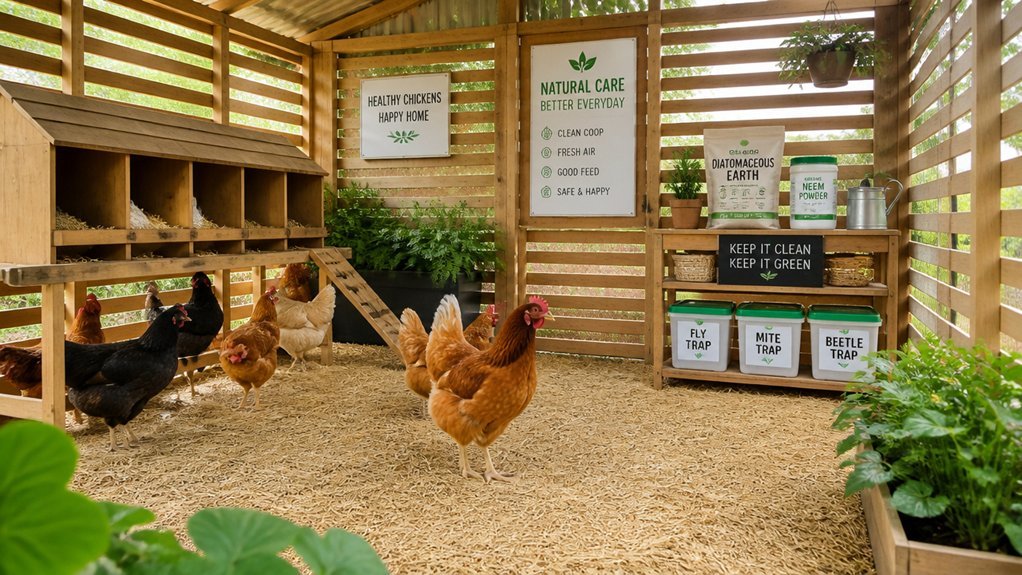
Year-round chicken pest control works best when you keep the coop clean, dry, and sealed. You should spot-clean daily, replace dirty bedding often, scrub roosts and nesting boxes regularly, and store feed in airtight metal bins. Seal cracks, trim weeds, and remove clutter to cut hiding spots for mites, flies, and rodents. In summer, watch for dampness and in winter, keep bedding dry and ventilated. A few more seasonal tips can make all the difference.
What Pest Control Do Chickens Need Year-Round?
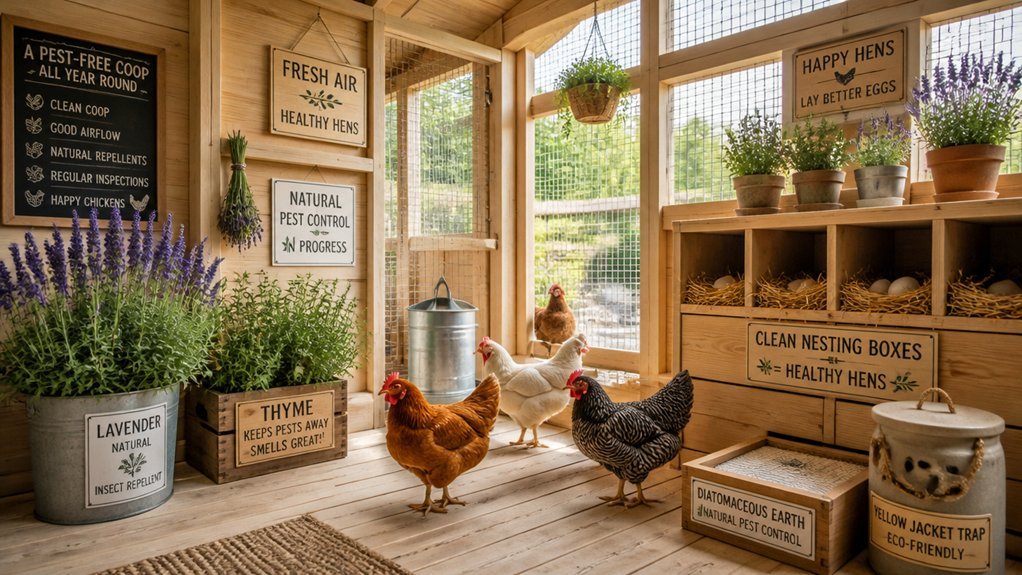
Year-round pest control for chickens means staying ahead of lice, mites, flies, rodents, and internal parasites before they turn into a bigger problem. You should inspect your flock often, clean the coop regularly, and replace soiled bedding before pests settle in. Using natural pest control methods such as food-grade diatomaceous earth can help maintain a pest-free environment without harmful chemicals. Keep feed in sealed containers, fix gaps that invite mice, and remove spilled grain quickly. Dust baths help chickens control external pests naturally, so give them a dry spot with wood ash or sand. You also need to watch droppings and behavior for signs of worms or irritation. When you notice trouble, act fast with poultry-safe treatments and sanitation. Consistent attention protects your birds’ health, reduces stress, and keeps egg production steady all year without letting pests gain a foothold.
Spring Chicken Pest Control Essentials
As temperatures rise, spring is the time to reset your chicken pest control routine before lice, mites, flies, and rodents get a foothold. You should start by cleaning the coop top to bottom, removing old bedding, dust, and hidden droppings where pests breed.
Scrub roosts, nesting boxes, and corners, then let everything dry fully before adding fresh bedding. Check your flock for dirty vents, flaky skin, or feather loss, and treat infestations early with poultry-safe products.
Seal cracks, repair wire, and store feed in tight containers to block invaders. Empty waterers often and keep the run tidy so pests have fewer hiding places. A spring inspection now can save you from bigger problems later and help your birds stay comfortable, healthy, and productive. Regular pest management with ready-to-use Dust formulations can also enhance ongoing protection throughout the season.
Summer Chicken Pest Control Tips
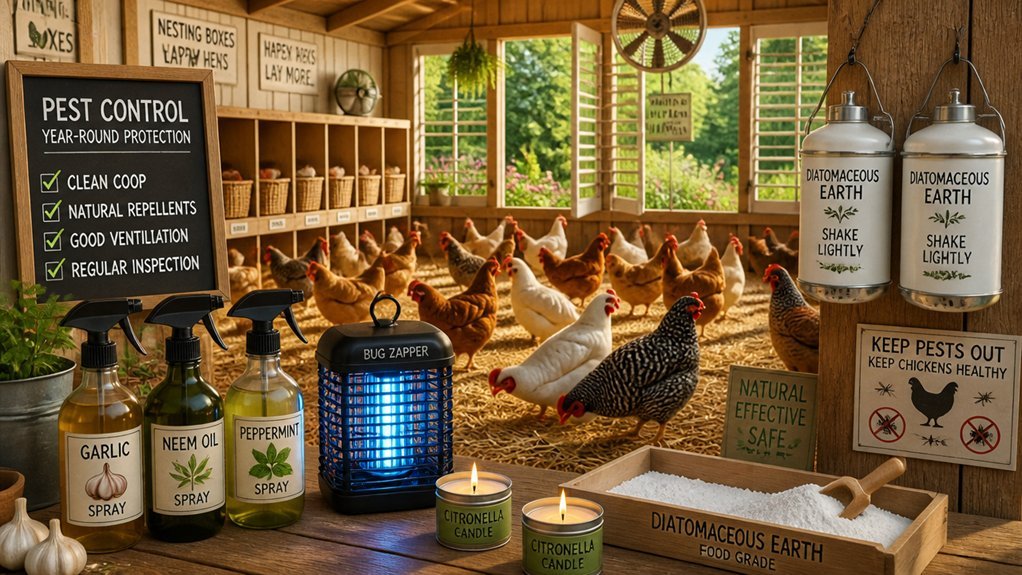
Summer heat can bring a surge of pests, so you need to stay ahead with frequent checks and quick cleanup. Walk your coop daily and remove spilled feed, wet bedding, and standing water. Shade feeders and waterers so flies and ants don’t swarm them.
You should also use safe, chicken-friendly barriers to limit mosquitoes and mites without overapplying chemicals.
- Rinse water containers every day to stop larvae from developing.
- Dust roosts and nesting areas with approved poultry-safe treatments when you spot mites.
- Trim grass and brush around the run to reduce hiding spots for pests.
- Incorporate probiotics and prebiotics into your flock’s diet to support gut health, which can enhance their natural resistance to pests and disease.
Keep ventilation strong, because stale air attracts flies and stress. If you act fast, you’ll protect your flock’s comfort, health, and egg production all summer long.
Fall Cleanup That Cuts Pest Pressure
When cooler weather arrives, don’t let leftover feed, damp bedding, and clutter give pests a place to settle in for the season. You should rake out old litter, scrape droppings from roosts, and remove broken boards, empty sacks, and forgotten tools that shelter mice and insects. Store feed in sealed metal bins, and sweep up every spill around the coop and run. Regular cleaning not only reduces pest harborage but also helps maintain proper disinfectant efficacy. Trim weeds, tall grass, and brush near doors and fences so pests lose hiding spots. Check for gaps around vents, pop doors, and corners, then seal them before rodents move in. Wash waterers, scrub feeders, and let everything dry fully. A clean, dry coop gives you fewer places for pests to breed, feed, and hide.
Winter Pest Control Around the Coop

In winter, you should refresh bedding often so it stays dry and doesn’t give pests a cozy place to hide.
You can also control moisture by fixing leaks, improving airflow, and keeping the coop floor as dry as possible.
To stop rodents, seal gaps, store feed in tight containers, and remove any spilled grain right away.
Additionally, consider using tamper-resistant bait stations to prevent accidental poisoning of hens and to keep bait secure from curious birds.
Winter Bedding Changes
As winter settles in, you should swap out damp, compacted bedding for fresh, dry material to keep pests from nesting and to reduce moisture that attracts mites and rodents. Use pine shavings, chopped straw, or hemp, and layer it deeply so chickens can scratch comfortably without exposing dirty patches.
Each week, check corners, roosts, and nesting boxes, then top up any thin spots before pests settle in.
- Remove wet clumps promptly.
- Stir bedding to break up hiding spots.
- Replace soiled nesting material often.
You’ll also want to keep bedding loose enough for easy cleaning, yet packed enough to insulate birds from cold floors. That balance discourages bugs, limits hiding places, and helps you stay ahead of winter infestations.
Additionally, maintaining material purity and low dust content in bedding can further reduce the risk of respiratory issues and pest attraction during the cold months.
Moisture Control
Even with fresh winter bedding in place, excess moisture can still invite pests into the coop. You need to keep the air dry by improving ventilation without creating drafts at roost level.
Scoop out wet bedding quickly, especially under waterers, and replace it before dampness spreads. Raise containers slightly so spills don’t soak the floor, and check for leaks after freezing nights. If snow blows in, clear it from entrances and patch gaps that let meltwater drip inside.
Dry floors discourage flies, mites, and other unwanted hitchhikers that thrive in damp conditions. You should also stir bedding regularly so it doesn’t mat down and trap moisture.
When you keep the coop dry, your flock stays healthier and pests have fewer places to settle. Utilizing dust control bedding can further reduce airborne particles and minimize pest attraction.
Rodent Prevention
Winter feed piles and spilled grain can draw rodents to the coop fast, so you’ll want to remove every easy food source. Store feed in sealed metal bins, sweep after each feeding, and never leave scratch grain overnight.
- Block entry points: Patch gaps, cover vents with hardware cloth, and seal cracks around doors.
- Keep the area tidy: Stack lumber off the ground, trim weeds, and clear brush where rats can hide.
- Use smart monitoring: Set snap traps outside the coop, check them daily, and reset them as needed.
You should also collect eggs often and fix any leaks that create nesting spots. When you cut food, shelter, and water, you make your coop far less attractive to mice and rats all winter.
Safe Sprays, Dusts, and Powders for Chickens

When you treat your flock for pests, choose safe sprays made for chickens and follow the label exactly.
You can also use dusts to target external pests like mites and lice, but apply them carefully so you don’t irritate your birds. For powders, use light, even coverage and keep them away from your chickens’ eyes, beaks, and breathing areas.
Considering wound care sprays can also support overall health and recovery, especially if injuries occur during pecking or other activities.
Safe Spray Options
Safe spray options can help you tackle lice, mites, and other pests without putting your flock at risk. You can use diluted apple cider vinegar, herbal sprays, or poultry-safe essential oil blends on coop surfaces, nesting areas, and roosts.
Always test a small area first and avoid spraying directly on your chickens unless the label says it’s safe.
- Clean the coop before you spray so pests don’t hide in droppings and debris.
- Follow dilution instructions exactly to protect your birds and keep sprays effective.
- Reapply after rain, washing, or heavy cleaning to maintain control.
- Using weather-resistant coop covers can help reduce pest entry and provide long-term protection for your flock.
Keep your flock dry, ventilated, and watched for irritation. If pests keep returning, you’ll need a stronger plan, but safe sprays can still lower pressure and support year-round coop hygiene.
Dusts For External Pests
Dusts can give you another practical way to fight external pests, especially when lice or mites are hiding in feathers, cracks, and bedding. You can choose poultry-safe dusts or powders that target crawling insects without soaking your birds.
Many keepers use food-grade diatomaceous earth, sulfur-based products, or other labeled poultry treatments to help reduce pest numbers. These dry options work best when you pair them with clean coops and fresh bedding, because pests thrive in dirty, damp spaces.
Using natural mineral-based dusts like volcanic ash, zeolite, or DE can enhance your pest control strategy by providing safe, effective pest dislodgement without harmful chemicals. Always read the label carefully and avoid products that aren’t approved for chickens. If your flock shows heavy infestation, you should ask a veterinarian for guidance. Used correctly, dusts can support your year-round pest control plan and help your birds stay more comfortable and productive.
Powder Application Tips
Once you’ve chosen a poultry-safe spray, dust, or powder, how you apply it matters just as much as the product itself. Hold your chicken gently, and keep the nozzle or shaker a few inches away so you don’t overwhelm the skin or eyes. Focus on the vent, under the wings, and along the neck, where pests hide most often.
- Apply in a calm, well-ventilated area.
- Avoid the face, nostrils, and open wounds.
- Reapply only as the label directs.
If you’re using powder in the coop, target cracks, roost joints, and nesting edges, not feed or water. Wear gloves, wash your hands, and monitor your flock after treatment. If birds seem irritated, stop and switch products.
Natural Pest Control Methods That Work

What natural pest control methods actually work for chickens? You can cut pest pressure by using a few simple, safe tactics. Add diatomaceous earth sparingly in dry areas where mites hide, and refresh it after rain.
Use simple, safe tactics like diatomaceous earth in dry hiding spots, refreshing it after rain.
Plant pest-repelling herbs like mint, lavender, and rosemary around the run to discourage insects. Let your birds range when you can; sunlight and movement help break pest cycles.
Offer dust-bathing spots with dry soil, wood ash, or sand so chickens can groom themselves and knock off parasites. You should also use beneficial nematodes in damp soil to target larvae.
Keep feed sealed and spills cleaned up fast, because pests love easy meals. These natural methods work best when you use them consistently throughout the year.
Best Coop Cleanup Routine for Pests
A steady coop cleanup routine is one of the best ways to keep pests from gaining a foothold. You don’t need a huge project; you need consistency. Remove droppings, spilled feed, and damp bedding before they attract unwanted visitors.
Scrub roosts, nest boxes, and feeders on a schedule, and let everything dry completely before you refill it.
- Daily: Spot-clean wet spots and collect leftover feed.
- Weekly: Replace soiled bedding and sweep corners, cracks, and under roosts.
- Monthly: Empty the coop, wash surfaces, and check for gaps where pests can hide.
Keep feed in sealed containers and store bedding off the floor. When you stay ahead of mess, you make the coop less inviting and help your flock stay comfortable all year.
How to Stop Mites, Lice, and Flies
Mites, lice, and flies spread fast in a dirty coop, so your best defense is to stay ahead of them before they take hold. Check your birds weekly, part feathers, and look for scaly skin, tiny moving specks, or eggs around the vent.
Dust roosts, nest boxes, and cracks with a poultry-safe insect control product, and repeat as directed. Replace bedding often, since damp litter helps pests multiply. Install fine mesh screens and keep manure removed so flies have fewer places to breed. Offer dust baths with dry sand and wood ash if your birds tolerate them.
When you spot heavy infestation, isolate the affected hen and treat her promptly. Consistent inspection, sanitation, and targeted treatment keep parasites from becoming a year-round problem.
How to Keep Rodents Out Year-Round
To keep rodents out year-round, you’ll need to seal your feed in sturdy containers, block any gaps in the coop, and remove places where they can hide at night.
Check for small openings often, because mice and rats can squeeze through surprisingly tiny spaces. When you make your coop and storage less inviting, you’ll cut off food, shelter, and easy access all at once.
Seal Feed Storage
Keep feed in sturdy, sealed containers so rodents can’t smell, chew, or contaminate it. Choose metal cans with tight lids or heavy-duty bins, and store them off the ground. You’ll reduce easy access and make cleanup simpler.
Check each container weekly for gaps, cracks, or spilled grain, then wipe away dust and crumbs right away. If you leave open bags nearby, mice will find them fast.
- Use airtight lids.
- Label dates and rotate feed.
- Scoop only what your flock needs.
Keep your feed room dry, because moisture attracts pests and spoils grain. When you seal storage well, you protect your chickens’ health, save money, and cut down on nightly rodent visits.
Block Coop Entry
Start by shutting every easy doorway rodents can use to reach your coop. Check gaps around doors, vents, corners, and where wires or pipes enter, then seal them with hardware cloth, metal flashing, or concrete patch. Replace loose boards and broken latches, and make sure doors close tightly every time.
Use fine mesh on openings, because chicken wire won’t stop rats. Keep hinges aligned so nothing can pry open overnight. Add door sweeps or threshold strips if rodents slip under edges. Inspect after storms, chewing, or repairs, since small openings become highways fast.
When you block access points consistently, you cut off scouting, nesting, and repeat visits. A secure coop makes every other pest control step work better and keeps your flock safer all year.
Remove Night Shelter
Next, take away the hiding spots that let rodents feel safe near your coop. You’ll cut down on nighttime visits when you remove stacked boards, feed bags, brush piles, and unused crates. Rodents love dark cover, so keep the area open and easy to inspect.
- Trim grass and weeds around the coop.
- Store feed in sealed metal bins.
- Clear clutter that gives mice a place to nest.
You should also elevate supplies off the ground and fix leaky water lines that create damp shelter.
At dusk, do a quick walkaround and spot fresh droppings, burrows, or gnaw marks. When you remove shelter, you make predators visible and discourage rodents from settling in. A clean perimeter works all year and supports healthier chickens.
Yard Changes That Reduce Mite and Rodent Pressure
Even before you treat the coop, yard changes can make a big difference in both mite and rodent pressure. You can cut hiding places and food spills, and you’ll make the whole run less inviting. Trim weeds, mow tall grass, and rake out damp litter near fences. Move feed into sealed bins and sweep up scratch grain after feeding. Keep compost farther from the coop, and stack lumber on pallets so pests can’t shelter underneath.
| Yard change | Why it helps |
|---|---|
| Short grass | Fewer hiding spots |
| Dry ground | Less mite-friendly dampness |
| Sealed feed | Fewer rodents |
| Raised storage | Less nesting cover |
You’ll also want sunlight and airflow. Open, tidy spaces dry faster after rain, and that makes your chicken area far less appealing to pests.
Signs Your Chicken Pest Control Is Failing
If pests are still present after your cleanup and treatments, your control plan isn’t working well enough. You’ll notice the first clues in your flock:
If pests remain after cleanup and treatment, your control plan needs adjustment before your flock suffers more.
- Chickens keep scratching, pecking, or shaking their heads.
- You see mites, lice, droppings, or gnaw marks in the coop.
- Eggs, feed, or bedding disappear faster than they should.
Watch for pale combs, restless nights, and reduced egg production too. If your birds avoid roosts, act weak, or lose feathers around vents and under wings, pests may be winning.
Check cracks, nesting boxes, and feeders often. When traps stay empty but signs keep growing, your timing, sanitation, or product choice needs work. Fix the weak spot fast, because pests multiply quickly and stress your chickens every day.
Frequently Asked Questions
How Often Should I Inspect New Chickens for Pests?
Inspect new chickens daily for the first two weeks, then weekly for a month. You’ll catch mites, lice, and ticks early, and you can isolate and treat birds before pests spread to your flock.
Can Free-Range Chickens Still Get Pests in Winter?
Yes, your free-range chickens can still pick up mites, lice, and worms in winter. You should check feathers, skin, and droppings often, and keep bedding dry, coops clean, and dust baths available.
Do Dust Baths Help Prevent All Chicken Parasites?
No, you can’t rely on dust baths to stop every parasite. You’ll reduce mites and lice, but worms and some stubborn pests need other controls, like clean bedding, inspections, and targeted treatments.
Should I Treat the Coop Before Bringing Home Chicks?
Yes, you should treat the coop first. You’ll protect chicks from mites, lice, and flies, and you’ll start them in a cleaner space. Use a poultry-safe product, let it dry completely, then add fresh bedding.
How Do I Protect Eggs From Pests Around the Coop?
You protect eggs by keeping the coop clean, sealing cracks, storing feed tightly, and removing attractants quickly. You can also use secure nesting boxes, frequent checks, and hardware cloth to block rodents and insects.
In Summary
Year-round chicken pest control works best when you stay consistent and pay attention to small changes. You’ll protect your flock by cleaning the coop often, reducing moisture, storing feed securely, and checking birds for mites, lice, and other pests. In spring and summer, focus on flies and parasites. In fall and winter, cut hiding spots and block rodents. When you keep up with these habits, you’ll give your chickens a healthier, safer home.