
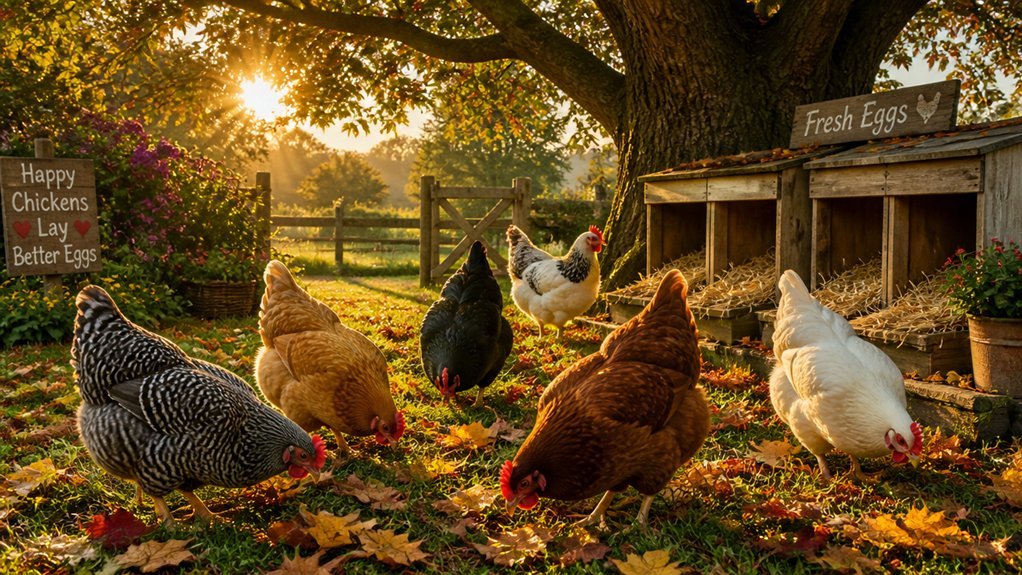
You can manage seasonal chicken behavior by adjusting their coop, feed, water, and routine. In cold months, add bedding, boost calories, keep water from freezing, and prevent drafts while maintaining ventilation. In summer, provide shade, cool areas, and plenty of fresh water to reduce heat stress. Keep the coop dry, clean, and uncrowded, and add enrichment to curb boredom and pecking. Watch for stress signs early, and you’ll spot a few more useful seasonal fixes below.
How Seasons Change Chicken Behavior

As seasons shift, you’ll often notice your chickens acting differently in response to temperature, daylight, and weather. In summer, you may see them pant, spread their wings, and seek shade as they try to stay cool.
When days shorten, they usually roost earlier and eat more to keep energy up. Cold snaps can slow movement, so you should check that water doesn’t freeze and bedding stays dry.
Wet, windy conditions often make them huddle and reduce foraging. You can support steady behavior by adjusting ventilation, providing clean water, and offering shelter from harsh sun, rain, and snow.
Understanding electrolyte balance can help you better support your flock’s hydration and health during these seasonal changes.
Watch your flock closely, because seasonal changes can affect stress, appetite, and egg laying. Small adjustments help your birds stay comfortable and predictable year-round.
Spring Chicken Behavior and Nesting Problems
In spring, you’ll often see more egg laying, which can crowd your nest boxes fast. You may also notice a broody hen guarding a box and pushing other hens away. To keep things calm, you’ll need to watch for nest box competition and make sure every hen has a place to lay. Using easy-to-clean nesting boxes can help reduce stress and prevent damage to eggs during busy seasons.
Nest Box Competition
When spring ramps up laying, your hens may start crowding the nest boxes, and that competition can quickly turn into squabbles, broken eggs, or hens laying in odd spots. Give them enough boxes, ideally one for every three to four hens, so no bird has to wait long.
Keep the boxes clean, dim, and lined with fresh bedding to make them more inviting than the coop floor. If your flock piles into one favorite box, add more nesting spots at different heights or in quieter corners. Collect eggs often so the boxes stay available and temptation stays low.
You can also block off unused spaces where hens might squeeze in and stash eggs. Small changes like these reduce stress and keep your spring egg gathering smooth.
Additionally, choosing nest boxes with roll-away trays helps prevent egg pecking and reduces egg breakage during busy nesting times.
Broody Hen Behavior
A broody hen will decide her eggs are worth guarding, and once that instinct kicks in, she may sit tight in the nest box, puff up at other hens, and peck anyone who gets too close. You’ll notice she leaves less, eats faster, and growls when you check the coop. Handle her calmly and keep visits brief so you don’t raise her stress.
- Move her only if you need the nest box back.
- Block dark, hidden corners that invite nesting.
- Give her extra water and nearby feed.
- Use a separate crate if she won’t calm down.
- Ensure she has adequate ventilation, as good airflow can help reduce stress and prevent respiratory issues during broody behavior.
Brooding can spread fast in spring, so watch for herding, stubborn nesting, and feather flare-ups before the behavior settles into a routine.
Spring Egg Laying
As spring daylight increases, your hens may start laying more often, switching from winter slowdown to a steady nesting routine. You should check nests daily, because extra eggs, damp bedding, and crowded boxes can trigger pecking, egg eating, or squabbles. Using appropriate disinfectants and cleaners can help maintain a healthy environment and prevent the spread of common coop diseases. Keep nesting areas clean, dry, and dim, and offer one box for every three to four hens so no one feels pushed out. If you see hens hunting hidden spots, add straw, block tempting corners, and collect eggs early. Give them balanced feed, fresh water, and calcium so shells stay strong. Spring warmth also brings pests, so inspect for mites and flies. By staying ahead of these nesting problems, you’ll keep laying steady and reduce stress in your flock.
Seasonal Feeding Changes for Chickens
You should adjust your chickens’ feed as the seasons change, since their energy needs shift with weather and daylight. In colder months, they may need more calories, while hot weather calls for lighter support and plenty of fresh water. When they molt, you can also boost their diet with extra protein and key nutrients to help new feathers grow. Incorporating balanced mineral levels into their diet ensures optimal shell strength and overall health during these seasonal changes.
Adjust Feed By Season
Seasonal changes can shift how much energy your chickens need, so it helps to adjust their feed as temperatures and daylight change.
In winter, you can offer a slightly richer ration to help them stay active and comfortable. In summer, lighter feeding and fresh water can keep them from slowing down. Watch how quickly they finish meals, because appetite often changes with the weather. You should also feed at consistent times so your flock stays calm and predictable.
- Increase calories when cold weather raises energy demands.
- Keep feed dry and fresh in damp seasons.
- Offer smaller portions during heat to reduce waste.
- Monitor body condition and adjust amounts as needed.
- Choosing organic feed options can support overall flock health and productivity throughout the seasons.
Support Molting Nutrients
When your chickens start molting, their bodies need extra protein and minerals to grow new feathers, so shift to a balanced ration with higher protein, and add small amounts of nutritious treats like black oil sunflower seeds, mealworms, or cooked eggs.
A pecking enrichment strategy, such as offering suitable minerals or plant-fiber blocks, can also help keep their beaks healthy and reduce stress during this demanding period. Keep calcium available too, since hens may still lay during a molt and need strong shells. You can also offer leafy greens and fresh water every day to help digestion and hydration. Avoid too many scratch grains or treats that fill them up without enough nutrients.
During this period, your flock may act sluggish or irritable, so steady nutrition helps reduce stress and supports faster recovery. Watch feathers regrow, then return gradually to your usual seasonal feed.
Summer Heat Stress in Chickens

As summer temperatures climb, chickens can quickly become stressed, and heat stress can reduce egg production, appetite, and overall health. You’ll notice panting, wing spreading, and less movement when birds struggle with hot weather.
Summer heat can stress chickens fast, reducing appetite, egg production, and overall health.
Watch them closely during midday, since behavior changes fast and can signal trouble before problems get severe. Heat can also make flock members irritable, so pecking and crowding may increase.
- Check birds for open-mouth breathing.
- Expect lighter feed intake.
- Notice eggs may become smaller.
- Give extra attention to weak birds.
- Ensure proper heat output control with adjustable lamps to prevent overheating and keep the heat levels within safe ranges.
If you act early, you can limit discomfort and keep your flock calmer through the hottest days. Reduced stress helps birds maintain normal routines, and that steadier behavior supports better flock productivity.
Protect Chickens With Water, Shade, and Ventilation
You can protect your chickens by making sure they always have clean, cool water within easy reach. Place shade where they naturally gather, and adjust it as the sun moves through the day.
A good coop ventilation system helps reduce humidity and odors, keeping your chickens comfortable and healthy.
Water Access Basics
Fresh water should always be within easy reach, because chickens can overheat and dehydrate fast, especially in hot weather.
You need clean waterers that stay upright and refill them before they run low. Check water twice a day, since birds drink more when temperatures rise.
If you see panting, lethargy, or crowding around the dish, add more access points right away.
- Use containers that chickens can’t tip over.
- Scrub waterers often to limit slime and debris.
- Keep water cool, but not icy cold.
- Place extra waterers where every bird can reach them.
You’ll help your flock stay calm, active, and healthier when water never becomes scarce. Consistent access also supports steady eating and reduces stress.
Shade Placement Tips
When the sun gets intense, place shade where chickens naturally gather, especially near feeders, waterers, and favorite dust-bathing spots. You can use tarps, shade cloth, or branches, but keep the cover high enough that air still moves around them.
Move portable shade as the sun shifts so no hotspot stays exposed too long. If you free-range, offer several shaded patches instead of one small retreat, so timid birds don’t get pushed aside.
Check that the ground under shade stays dry and clean, because damp mud invites mess and stress. Position shade close enough to water that birds won’t have to trek far, and make sure every bird can reach relief without crowding.
Good shade placement helps them stay calm, active, and comfortable all day.
Coop Airflow Matters
Good airflow keeps chickens cooler by letting heat and moisture escape from the coop, especially during hot, still weather. You can boost comfort by opening vents, raising windows, and clearing blocked openings so fresh air moves through without creating harsh drafts.
- Place coop vents high to let warm air rise out.
- Keep bedding dry, since damp litter traps heat and odor.
- Use shade cloth or trees to reduce direct sun on walls.
- Set waterers where air moves, so chickens stay hydrated.
Check the coop at midday, when heat builds fastest. If birds pant, spread out, or hold wings away from their bodies, increase ventilation right away.
Good airflow also helps reduce ammonia and stress, so your flock eats, rests, and behaves more calmly during summer.
Fall Molting and Pecking Order Changes
As fall arrives, many chickens start molting, shedding old feathers and growing new ones, which can make them quieter, crankier, or more sensitive to handling.
You’ll often see pecking order shifts too, because stressed or bare birds may lose confidence, while stronger flockmates test boundaries. Watch for feather picking, guarding of feed, or sudden squabbles around roosts and nest boxes.
You can help by keeping routines steady, offering a protein-rich diet, and giving birds enough space to avoid constant challenges. Handle molting hens gently, since new pin feathers can feel tender.
If one bird gets bullied, separate her briefly or add distractions like scratch or greens. Calm observation helps you spot changes early and keep your flock’s social balance from spiraling.
Winter Chicken Behavior in Crowded Coops
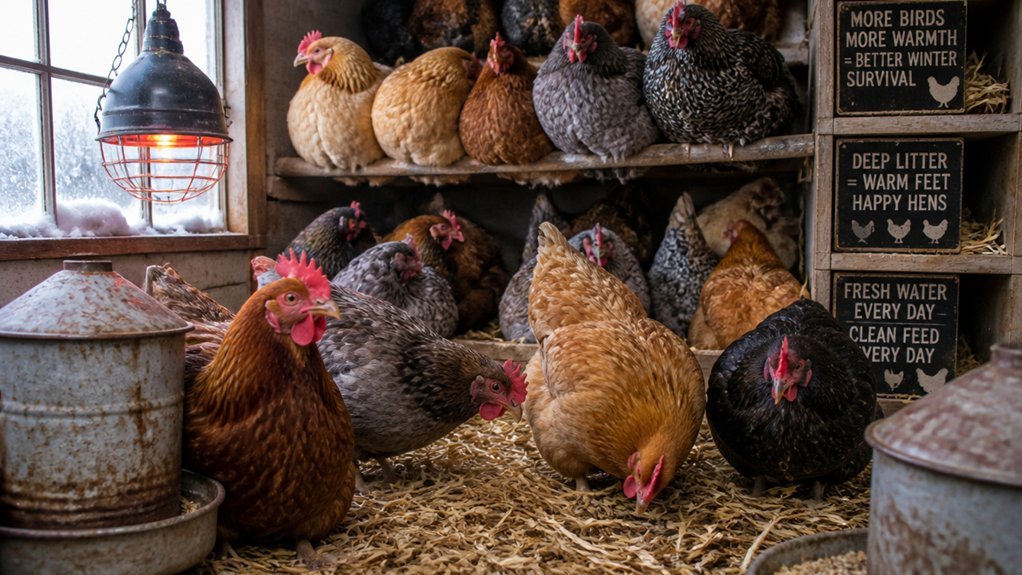
Even a usually calm flock can get testy in winter if the coop feels cramped, drafty, or dull. You may notice more jostling, feather pulling, and squabbles at the feeder when birds can’t spread out and keep warm comfortably.
Give them room to perch, move, and escape bullies before tension builds.
- Add extra roost space so birds can settle without crowding.
- Offer multiple feeders and waterers to cut competition.
- Use bright, safe lighting to reduce boredom.
- Check for sharp pecking targets and remove them.
You should also watch smaller birds closely, since they get pushed aside first.
When you keep routines steady and the flock has enough space, winter behavior stays calmer and easier to manage.
Keep the Coop Dry in Wet Weather
Wet weather can turn a coop damp fast, and once bedding stays wet, odors rise and birds are more likely to get chilled or pick at each other.
| Problem | Your move |
|---|---|
| Leaky roof | Patch holes quickly |
| Muddy entry | Add gravel or boards |
| Wet bedding | Replace it often |
| Poor airflow | Open vents safely |
You should also check doors, windows, and run covers after every storm. Keep waterers from splashing onto litter, and raise them if needed. Fresh, dry bedding helps your chickens stay comfortable and calm, while clean footing lowers stress and keeps droppings from building up. When you act fast, you’ll prevent damp conditions from snowballing into behavior problems.
Reduce Boredom When Chickens Stay Indoors
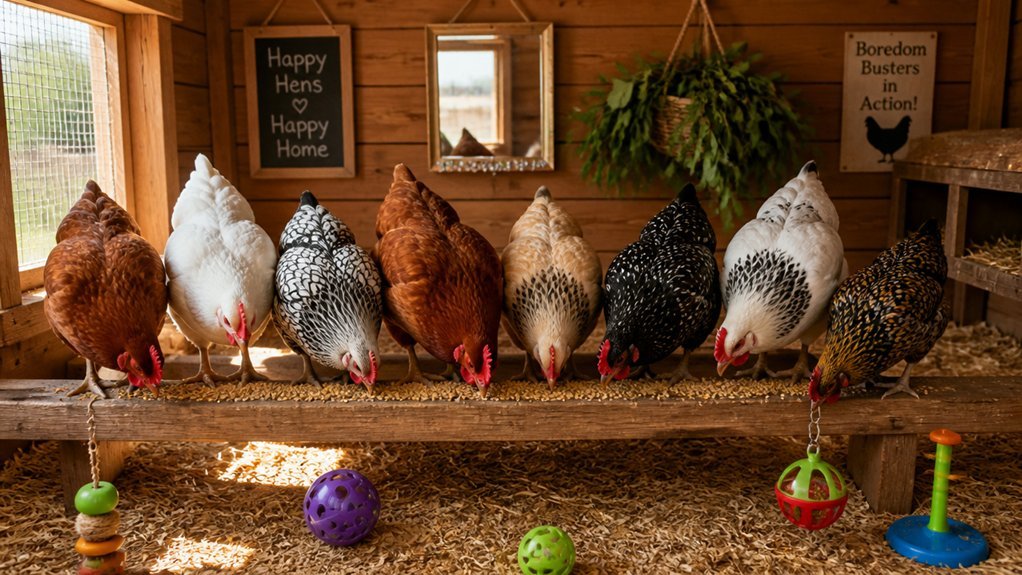
When chickens stay indoors, you need to give them something to do or they may start pecking, pacing, and squabbling. Rotate simple activities so your flock stays busy and curious. Hang leafy greens, scatter scratch grains in shallow bedding, and offer a small perch or ramp for climbing.
Keep indoor chickens entertained with simple rotations like greens, scratch grains, and small perches to reduce boredom and pecking.
You can also hide treats in cardboard boxes or egg cartons to make foraging feel natural.
- Suspend cabbage or kale for pecking fun
- Spread a little grain to encourage searching
- Add safe toys they can nudge and explore
- Rearrange items often so the space feels fresh
Keep the setup clean, safe, and easy to change. When you refresh their indoor area, you help birds burn energy, stay engaged, and settle more calmly each day.
Spot Chicken Stress Signs Early
How do you know if your chickens are stressed before bigger problems start? You watch their habits closely. Stressed birds often pace, feather pick, or crowd away from the flock. You may notice less eating, fewer eggs, loud squawking, or sudden silence.
Their combs can look dull, and they might hold themselves tight or tuck their heads. Check droppings too, because stress can upset digestion.
When you see these signs, act fast. Give them fresh water, steady feed, shade, and a quiet coop. Remove sudden changes, loud noises, and overcrowding. Keep handling calm and brief so your flock feels safe.
Early action helps you protect health, restore normal behavior, and stop a small problem from turning into a serious one.
Adjust Seasonal Care for Different Breeds

As the seasons change, you need to adjust care based on each breed’s needs. Cold-hardy birds like Orpingtons may need less insulation, while lighter breeds such as Leghorns benefit from extra protection from drafts.
In summer, you should help heat-sensitive breeds stay cool with shade and fresh water. Watch feathered feet and comb size, since they can change how birds handle wet or freezing conditions.
- Offer deeper bedding for breeds that chill easily.
- Trim moisture buildup for heavy, fluffy birds.
- Provide more ventilation for heat-prone breeds.
- Check water access often for active layers.
When you match seasonal care to breed traits, you’ll reduce stress and keep your flock calmer, healthier, and more productive all year.
Frequently Asked Questions
How Often Should I Trim My Chickens’ Beaks?
You should trim your chickens’ beaks only when a vet recommends it, not routinely. If pecking causes injury or overgrowth, you’ll need help. You can usually prevent problems with space, enrichment, and balanced feed.
Can Chickens Recognize Individual Family Members?
Yes, chickens can recognize individual family members by face, voice, and routine. You’ll often notice them responding differently to each person, especially if you feed them, handle them gently, and spend time nearby.
Why Do Chickens Sometimes Eat Their Own Eggs?
Chickens sometimes eat their own eggs when they’re bored, stressed, calcium-deficient, or discover broken eggs. You can reduce it by collecting eggs often, providing enough nesting boxes, and feeding a balanced diet.
Do Chickens Need Toys to Stay Mentally Active?
Not always, but you should give them enrichment. You can use hanging treats, dust baths, perches, and pecking objects to prevent boredom, reduce stress, and keep your chickens active, curious, and healthier.
How Can I Tell if a Chicken Is Laying Internally?
You’ll notice a swollen, soft abdomen, weight loss, lethargy, reduced laying, pale combs, and breathing trouble. You might feel fluid moving inside. A vet can confirm internal laying with an exam or imaging.
In Summary
As the seasons change, you can keep your flock calm, healthy, and productive by adjusting care to match the weather. Watch for nesting changes in spring, offer the right feed through the year, and protect chickens from summer heat, wet conditions, and boredom indoors. Keep water, shade, and ventilation ready, and learn the signs of stress early. With a few seasonal tweaks, you can help every breed thrive all year long.



