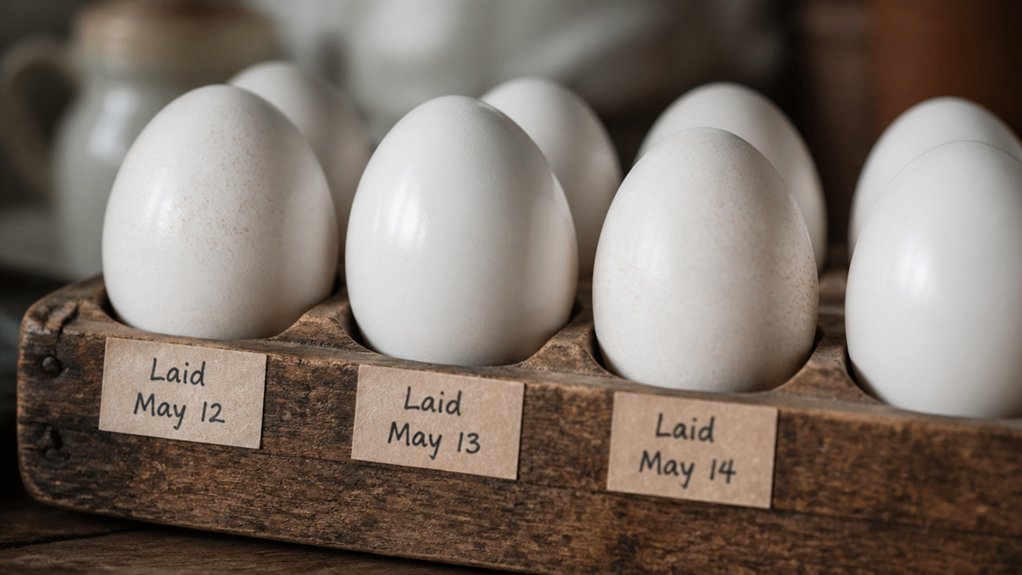
Label each batch of eggs with the collection date using a pencil or food-safe marker, and keep the date clear on the shell or carton. Store them in first-in, first-out order, with the oldest eggs in front and new ones behind. Keep cartons in a consistent spot and separate different dates when possible. Check labels often, and discard any unreadable ones. If you keep going, you’ll pick up a few easy tricks that make rotation even simpler.
Label Eggs for Freshness
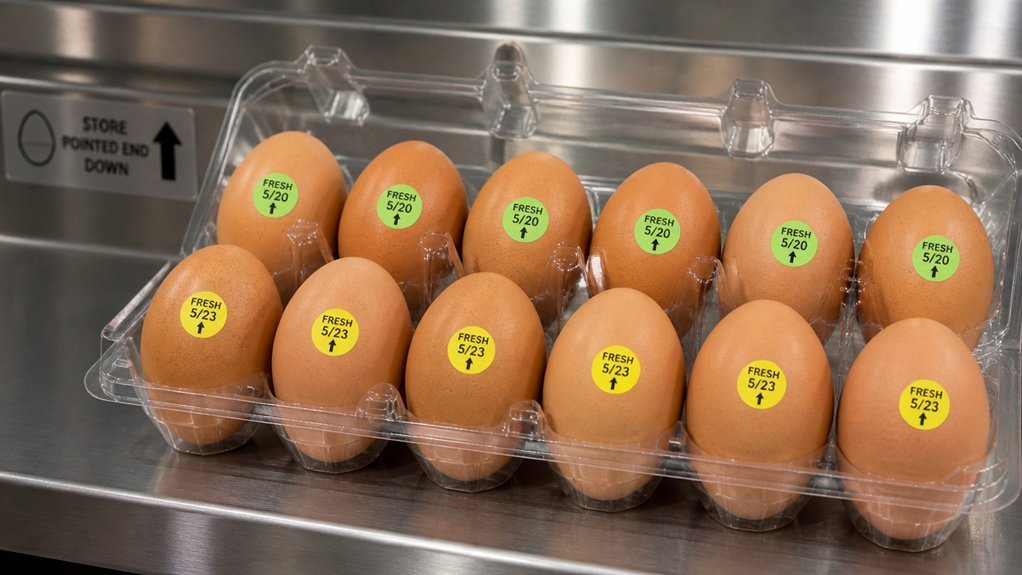
To keep track of freshness, mark each egg with the date you collect it using a pencil or food-safe marker. You can write directly on the shell, or place the date on a carton if you move eggs after collecting them. Use a small, clear date so you can read it quickly at a glance. Date wheel clarity is essential to ensure the markings are accurate and easy to read. If you gather eggs from different days, label them individually or group them by collection date in separate containers. This helps you know which eggs are newer and which ones you should use sooner. Keep your writing legible and consistent every time. If the shell is damp, let it dry first so the mark holds better. Simple labels give you a reliable record without extra effort or confusion.
Pick an Egg Rotation System
Once you’ve dated your eggs, choose a rotation system that helps you use the oldest ones first. You can keep it simple with a front-to-back rule, or you can group eggs by tray and move each new batch behind the last. Either way, you’re building a habit that cuts waste and keeps your meals safer. Incorporating stackable designs can further streamline your rotation process by making it easier to organize and access eggs efficiently.
Mark Eggs by Collection Date
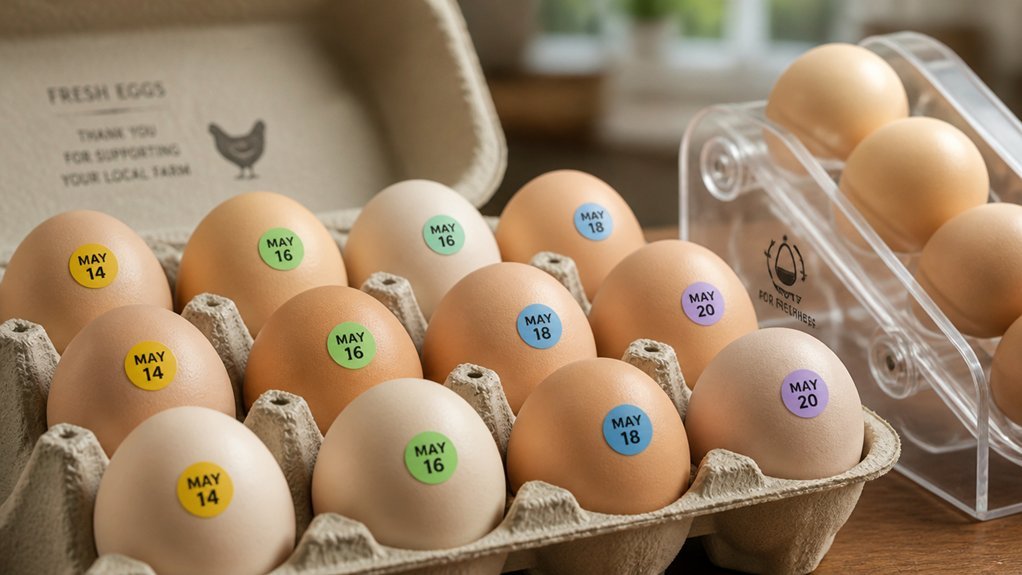
You can mark each egg with the collection date so you know exactly when it was laid. Using breathable cartons helps maintain egg freshness and supports proper air circulation. Clear date labels help you keep older eggs moving out first, following a first in, first out system. That simple habit makes rotation easier and cuts down on waste.
Collection Date Labels
A simple collection date label takes the guesswork out of egg rotation. You can write the date directly on each carton with a pencil, marker, or adhesive label, and you’ll know exactly when you gathered those eggs. That date helps you spot older cartons fast, so you can use them before fresher ones. Incorporate first-in, first-out systems with your labeling to ensure eggs are used in the order they were collected. Keep the format consistent, such as month and day, so every carton reads the same way at a glance. If you collect eggs more than once a day, note the earliest pickup time or combine all eggs from that day under one date. Clear collection date labels also make it easier to track storage time, check freshness, and avoid confusion when several cartons sit together in the fridge.
First In, First Out
Marking eggs by collection date makes first in, first out rotation easy to follow. You pull the oldest eggs first, so nothing sits too long and quality stays high. Write the date on each egg or carton, then place newer eggs behind older ones in your fridge or storage tray. When you collect more eggs, shift the older batch forward and the fresh batch back. That simple habit helps you avoid waste and keeps inventory clear. Using stackable egg organizers designed to hold labeled eggs can further streamline this process.
Use FIFO for Egg Rotation
You can keep your eggs in FIFO storage order by placing the newest ones behind the older ones. This way, you always reach for the oldest eggs first and use them before they spoil. This simple rotation habit helps you reduce waste and keep your supply fresh. Proper nesting box materials and ventilation features support maintaining egg quality during storage.
FIFO Storage Order
To keep eggs fresh and safe to use, store them in FIFO order—first in, first out—so the oldest eggs get used before newer ones. You can do this by placing new cartons behind the existing ones and pulling from the front when you need eggs. Using pleated pockets in collecting aprons as a similar concept helps prevent eggs from rolling or cracking during handling, emphasizing the importance of secure storage. That simple habit helps you track what you already have and reduces the chance of forgotten cartons sitting too long. Keep labels visible, and make sure every carton shows the date you stored or bought it. When you rearrange shelves, keep the oldest carton easiest to reach. If you move eggs in and out often, check your storage spot regularly so the order stays intact. Consistent FIFO storage gives you a clear, reliable system for keeping eggs organized and ready to use.
Oldest Eggs First
Use the oldest eggs first so none sit forgotten past their best date. When you bring new eggs home, place them behind the older carton, and reach for the front one first. That simple FIFO habit keeps your supply moving and cuts waste. Check dates as you load the fridge, and label each carton with the purchase day if the store stamp isn’t clear. Proper egg candling techniques can also help verify the freshness and viability of eggs before use.
Store Labeled Eggs by Date
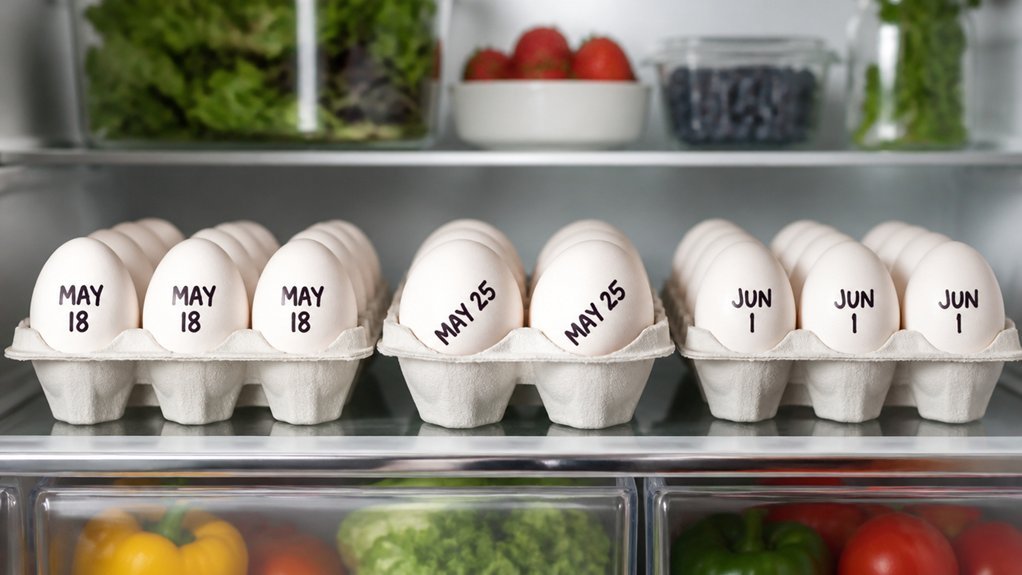
After labeling, place the eggs in the refrigerator in date order so the oldest ones stay in front and get used first. You’ll make rotation easy if you keep each carton facing the same direction and return it to the same shelf every time.
Put newer eggs behind older ones, and don’t mix cartons from different purchase dates unless you can still see the labels clearly. If you transfer eggs to a container, copy the date onto it right away.
You should also keep the storage spot consistent, so you can find the oldest eggs without guessing. This simple habit cuts waste, helps you use eggs while they’re still in their best condition, and keeps your kitchen organized with very little effort.
Ensuring the eggs are stored in a properly sealed container helps maintain freshness and prevents contamination over time.
Check Egg Freshness Before Use
Even with careful labeling and rotation, you should still check each egg before you use it. Give it a quick inspection and use your senses before cracking. You’ll catch problems faster and waste less food.
Even with careful rotation, give each egg a quick check before cracking.
- Look for cracks, slime, or powdery residue.
- Hold the egg up to bright light if needed.
- Sniff for any sour or sulfur-like odor.
- Crack it into a separate bowl first.
- Watch for odd color, watery whites, or loose texture.
- Using a proper egg turner can help maintain even heat distribution and prevent yolk settling during incubation.
If anything seems off, don’t risk it. Trust your judgment, because a fresh egg should look clean, smell neutral, and behave normally when opened.
This simple habit helps you protect your recipes and your kitchen.
Rotate Eggs in Cold Storage
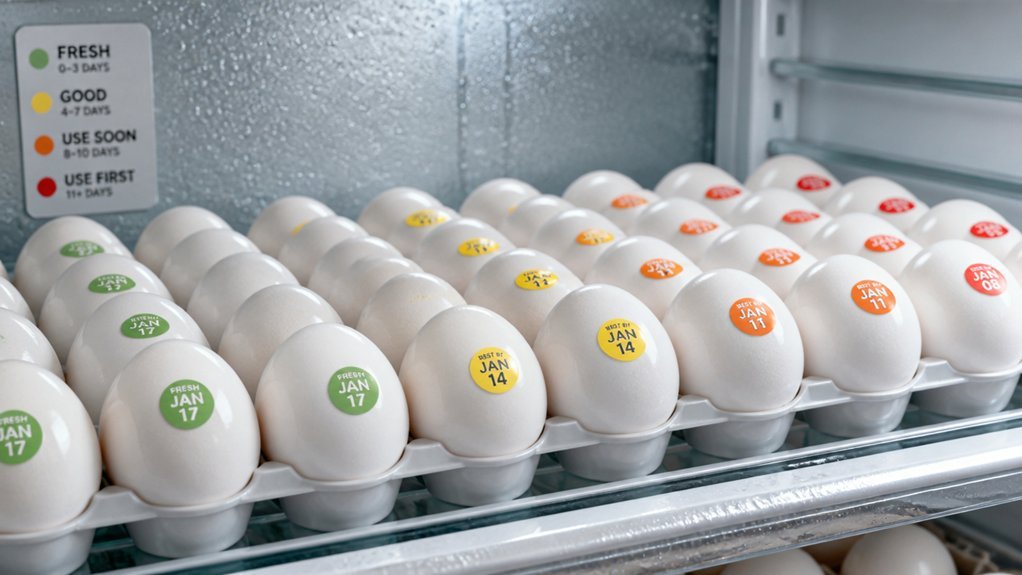
In cold storage, keep eggs moving on a first-in, first-out schedule so older cartons get used before newer ones. Place new eggs behind the older ones, and pull from the front each time you cook or bake. You’ll waste less and keep your stock organized.
Check the dates when you restock, then shift older cartons forward so they’re easy to grab. If you store eggs in multiple trays or shelves, keep the oldest group at eye level or in the most accessible spot.
When you bring home a fresh batch, don’t let it sit in front of what you already have. A simple rotation routine helps you track use, reduce spoilage, and keep your kitchen running smoothly without extra effort.
Avoid Egg Labeling Mistakes
Good rotation only works when your labels are clear. You should mark each carton with the date you got it, the buy-by date, or both, so you don’t guess later.
Clear labels make rotation simple: mark each carton with the date received, the buy-by date, or both.
If you reuse markers, wipe old ink first; smudged numbers can send older eggs to the front by mistake. Keep labels on the top and side, where you can read them fast.
- Use waterproof marker, not pencil.
- Write the month and day plainly.
- Check labels before stacking cartons.
- Toss eggs with missing or unreadable dates.
- Separate cracked eggs so they don’t confuse your count.
You’ll save time, reduce waste, and keep your fridge system consistent when every label means one clear thing.
Frequently Asked Questions
How Can I Label Eggs Without Damaging the Shells?
Use a soft pencil, food-safe marker, or sticker on the carton, not the shell. If you must mark shells, write lightly with a pencil and avoid soaking or scrubbing them afterward.
What Markers Are Safe for Writing on Eggshells?
You can use food-safe, non-toxic markers, like fine-tip permanent markers labeled for kitchen use, or pencil. You’ll avoid shell damage and still mark dates clearly; don’t use toxic inks or paint pens.
Can Washed Eggs Still Be Labeled Clearly?
Yes, you can label washed eggs clearly if you use a food-safe marker after they’ve dried. You’ll need to write lightly on the shell, since washing can slightly roughen it and make marks fade.
Should Cracked Eggs Be Labeled Separately?
Yes, you should label cracked eggs separately so you can use them first. Mark them clearly, store them apart, and avoid confusion. That way, you’ll track freshness better and reduce waste safely.
Do Different Egg Colors Need Different Labeling Methods?
No, you don’t need different labeling methods for different egg colors. You should label them the same way, but note the breed or color if you want easier tracking and faster sorting.
In Summary
To keep your eggs fresh, label each one by collection date and store it so the oldest eggs stay in front. Pick a simple rotation system, then use FIFO every time you add new eggs. Check freshness before you cook, and keep your cold storage organized so labels stay easy to read. If you avoid common labeling mistakes, you’ll waste less food and always know which eggs to use first.