
You prevent odor in chicken compost piles by keeping the mix balanced, airy, and only damp, not soggy. Add plenty of carbon-rich browns like straw, dry leaves, shredded paper, or cardboard to offset the nitrogen in manure and trap smells. Use dry bedding, break up clumps, and turn the pile often so oxygen can flow. If it starts to stink, add more dry material and stop adding fresh waste until it heats back up, and there’s more to know.
Why Chicken Compost Smells Bad

Chicken compost smells bad when it has too much nitrogen, too little oxygen, or too much moisture, because those conditions let odor-causing bacteria break it down anaerobically.
Too much nitrogen, moisture, or too little oxygen can make chicken compost smell bad through anaerobic breakdown.
When you pile droppings too densely, air can’t move through the heap, and the microbes shift to smelly decay. You may notice ammonia when nitrogen escapes, or a rotten-egg smell when sulfur compounds build up.
Heavy rain, wet bedding, or compacted layers make the pile soggy and slow the heat that normally helps compost stay healthier. If you leave the pile unmanaged, odors strengthen fast and can attract flies.
Watch for wet, sticky clumps and weak airflow. Those signs tell you the pile needs better structure, drier conditions, and more oxygen right away.
Balance Browns With Chicken Manure
To keep your chicken compost from smelling, you need to balance the carbon-to-nitrogen ratio by mixing manure with plenty of browns. Add dry materials like straw, leaves, or shredded paper to absorb moisture and offset the nitrogen-rich waste. When you keep that mix in check, you’ll help the pile break down faster and smell much better. Incorporating materials with good ventilation features, such as mesh or baffles, further improves airflow and reduces odors.
Carbon-To-Nitrogen Balance
Why does a chicken compost pile smell so quickly? You’re seeing too much nitrogen from manure and not enough carbon to steady the mix.
Chicken manure is rich and hot, so if you let it dominate, microbes work fast and release ammonia and sour odors. You prevent that by aiming for a balanced carbon-to-nitrogen ratio, around 25:1 to 30:1, where browns offset the manure’s strength.
Think of bedding, leaves, straw, or shredded paper as the carbon side that helps absorb excess nitrogen. When the balance stays close, decomposition runs cleaner, heat stays more even, and smells drop.
If the pile turns slimy or sharp, you’ve likely tipped toward nitrogen and need more carbon-rich material mixed through the compost.
Adding durable materials such as stainless steel compost pails with charcoal filters can help contain odors during the composting process.
Add Dry Browns
Add dry browns like straw, shredded leaves, sawdust, or torn cardboard whenever your chicken compost starts to smell strong. You’ll soak up excess moisture, dilute nitrogen, and give microbes the carbon they need to work cleanly.
A well-balanced airflow through the pile is also crucial to prevent odors from building up.
Sprinkle browns over fresh manure, then mix the pile so nothing stays wet and sour. If you only add manure, the pile can turn slimy and release ammonia fast.
- Cover each manure layer with a generous brown layer.
- Turn the pile after adding browns to spread air and carbon.
- Check the texture; it should feel damp, not soggy, and smell earthy.
Keep this balance steady, and you’ll cut odor while speeding decomposition.
Add Bedding That Cuts Odors
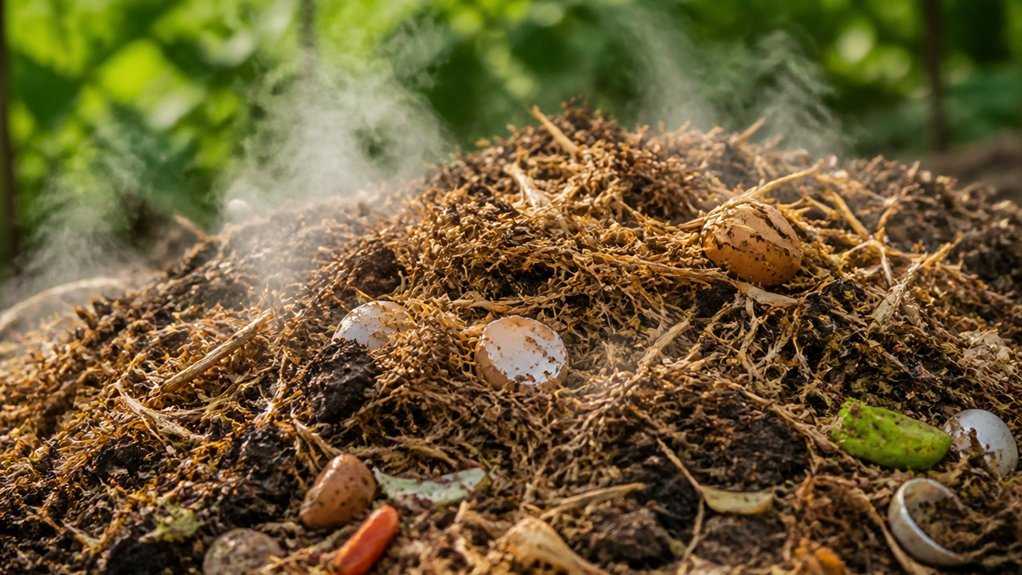
When you mix in the right bedding, you can cut chicken compost odors before they start. Use absorbent materials like straw, dry leaves, wood shavings, or shredded cardboard to soak up moisture and trap smell.
You’ll want bedding that balances the wet manure and keeps the pile from turning slick or sour. Spread a generous layer after each addition of chicken waste so odors don’t build up in one spot.
Avoid bedding that stays soggy, since damp material can lock in ammonia and make the pile stink. Fresh, coarse bedding also gives microbes more surface area to work on, which helps the compost break down cleanly.
Keep the mix light and dry enough that your pile smells earthy, not sharp. Incorporating dust control, such as triple-screened pine shavings, helps minimize airborne particles and maintain a healthier, more pleasant compost environment.
Keep Chicken Compost Aerated
You’ll need to turn your chicken compost pile regularly so air keeps moving through it and odors stay low. Add bulking materials like straw or wood chips to open up the mix and boost airflow. Keep air gaps in the pile so it doesn’t pack down and go sour. Using low-dust hemp bedding in your compost can also help reduce airborne particles and improve overall compost quality.
Turn Pile Regularly
Turn the pile regularly to keep oxygen flowing through it and stop the chicken manure from compacting into a smelly, anaerobic mess. You should turn it every few days, or whenever the center starts to heat up and lose airflow. Use a pitchfork or compost fork to lift, fold, and mix the material from outside to inside. This keeps microbes working efficiently and helps odors fade fast. Incorporate odor neutralizing agents as needed to further reduce unpleasant smells.
- Turn deeply, not just the surface.
- Break up wet clumps as you work.
- Check for fresh heat and even moisture.
If you notice sour or rotten smells, turn the pile again right away. Frequent turning prevents stagnant pockets, supports faster breakdown, and keeps your chicken compost healthier and easier to manage.
Add Bulking Materials
Adding bulking materials helps keep your chicken compost pile loose, airy, and less likely to stink. You can mix in dry leaves, shredded cardboard, straw, sawdust, or wood chips to absorb excess moisture and balance the heavy nitrogen from chicken waste.
These coarse ingredients create structure, so the pile doesn’t pack down into a soggy, smelly mass. Add them whenever the mix looks wet, slimy, or dense, and blend them throughout the pile instead of leaving them on top.
You’ll improve airflow, support faster breakdown, and reduce anaerobic odors. Choose clean, untreated materials, and keep the mix varied so the pile stays active. Incorporating durable materials such as galvanized steel or weather-resistant plastics can also help maintain the structure and longevity of your compost setup, preventing it from deteriorating quickly. If you use enough browns, you’ll help your compost stay fresh, crumbly, and much easier to manage overall.
Maintain Air Gaps
Keep air gaps in your chicken compost pile so oxygen can move through it and keep odors down. When you pack material too tightly, the pile turns anaerobic and starts smelling sour.
You can prevent that by layering coarse straw, wood shavings, and dry leaves with manure-rich scraps. Turn the pile often so you reopen spaces and blend wet pockets into drier zones. Using a food-grade diatomaceous earth can help absorb moisture and improve airflow within the compost.
- Lift and fluff compacted sections with a fork.
- Add more bulky, springy material if the pile feels dense.
- Check moisture; the mix should feel like a wrung-out sponge.
If rain flattens the pile, rebuild it instead of letting it sit matted. Good airflow keeps microbes working fast, heat rising, and odors fading.
Control Moisture in the Pile
Moisture control matters because a chicken compost pile that stays too wet turns slimy, compacted, and臭? okay no — it starts to stink fast.
You should aim for a damp, wrung-out-sponge feel, not a soggy mess. If rain soaks the pile, cover it with a tarp or move it under shelter. When you add wet bedding, kitchen scraps, or manure-heavy material, mix in drier contents and turn the pile so excess water can escape.
If you squeeze a handful and water drips out, it’s too wet. If it crumbles apart, add a little water. Check moisture often, especially after storms or heavy additions, so you keep airflow moving and odors from building up.
Add Carbon Materials to Absorb Smells
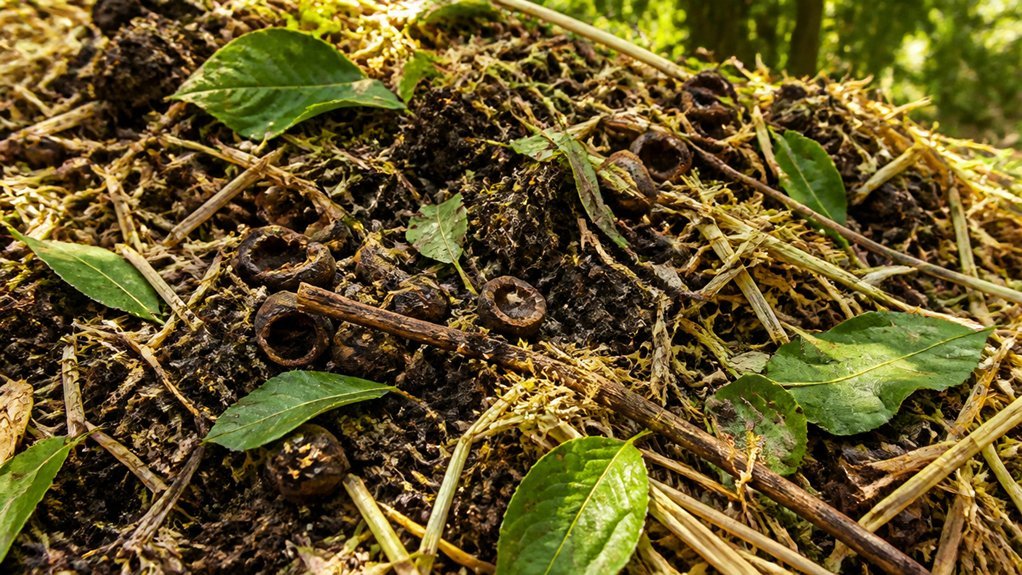
Carbon-rich materials help soak up excess nitrogen and soften strong odors in a chicken compost pile. You can balance the mix by layering dry, earthy ingredients with manure and bedding.
These carbon sources give microbes a better environment and keep smellier nitrogen from overpowering the pile.
- Add straw to create airy pockets and reduce dense, smelly clumps.
- Mix in dry leaves to absorb moisture and steady the compost blend.
- Sprinkle shredded cardboard or paper to capture odors and improve balance.
You’ll get better results when you cover fresh chicken waste right away.
Aim for a brown-heavy mix whenever the pile starts smelling sharp.
If the odor fades and the pile looks drier, you’re on the right track.
How Often to Turn Chicken Compost
Turn your chicken compost pile regularly to keep air moving through it and prevent odors from building up. Aim to turn it once or twice a week, depending on moisture, pile size, and how quickly materials break down.
If you notice the center staying damp and compacted, turn it more often so oxygen reaches the chicken litter and bedding. Use a pitchfork or compost aerator to mix the outer edges into the middle, where heat builds fastest. This helps balance moisture and speeds decomposition.
In cooler weather, you can turn less often, but don’t let the pile sit untouched for long stretches. Consistent turning keeps the process active, reduces stink, and helps you maintain a cleaner, more manageable compost pile overall. Paying attention to the bedding materials used can also play a key role in odor control and composting efficiency.
How to Fix Rotten Chicken Compost Smells
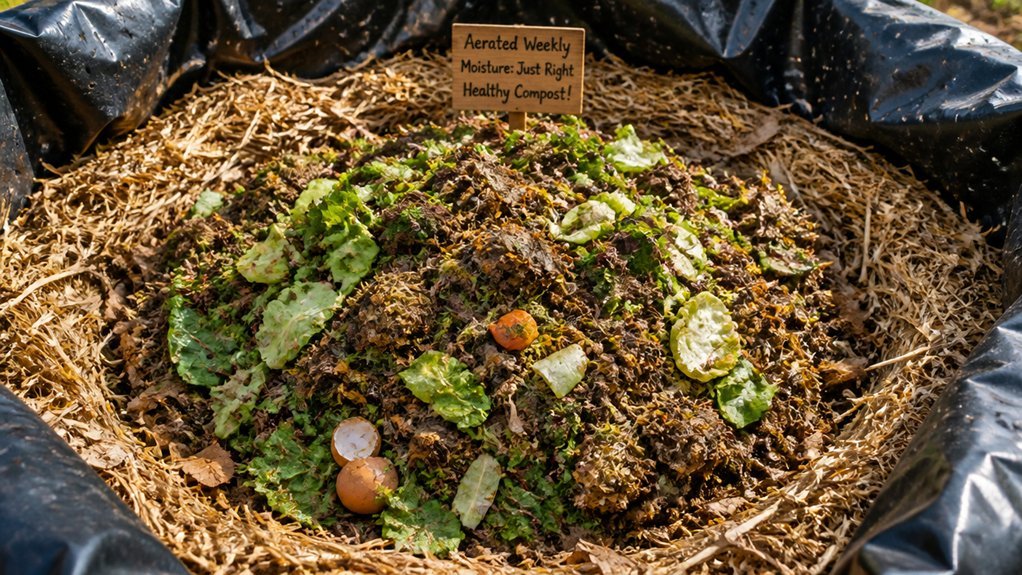
If your chicken compost starts smelling rotten, act fast to restore airflow and rebalance the mix. The smell usually means too much moisture, too many greens, or not enough oxygen. Fix it by opening the pile, adding dry carbon, and turning everything well.
A breathable cover or proper ventilation can help maintain the right environment and prevent future odors.
- Add dry browns like straw, shredded leaves, or sawdust to soak up wet spots.
- Break up clumps and mix in fresh air with a pitchfork or shovel.
- Check moisture; your pile should feel like a wrung-out sponge, not sludge.
If the odor lingers, stop adding fresh chicken waste until the pile heats up again. Keep the base loose, cover it lightly, and turn it weekly. With the right balance, you’ll quickly bring back a clean, earthy smell.
Frequently Asked Questions
What Bin Size Works Best for Chicken Compost?
A bin about 3-by-3-by-3 feet works best for chicken compost, because you can manage heat, moisture, and turning easily. You’ll keep it active, reduce odors, and get finished compost faster than with a smaller pile.
Can Chicken Compost Attract Flies and Pests?
Yes, chicken compost can attract flies and pests if you leave exposed scraps, excess moisture, or odors. You’ll reduce them by covering fresh material with carbon, turning the pile, and keeping it balanced and dry.
Is Chicken Compost Safe for Vegetable Gardens?
Yes, you can use chicken compost in vegetable gardens if you compost it fully first. You’ll kill pathogens, reduce odor, and avoid burning plants. Apply finished compost, not fresh manure, to keep your vegetables safe.
How Long Until Chicken Compost Is Ready?
You’ll usually wait about 6 to 12 months for chicken compost to finish, depending on pile size, moisture, and turning. It’s ready when it looks dark, crumbly, and earthy, with no strong ammonia smell.
Can I Compost Chicken Manure in Winter?
Yes, you can compost chicken manure in winter if you insulate the pile, keep it balanced with carbon, and turn it occasionally. You’ll slow decomposition, but you’ll still reduce odors and build rich compost.
In Summary
To keep your chicken compost pile from smelling bad, you need to balance nitrogen-rich manure with plenty of dry browns, like straw, leaves, or shredded paper. You should also use odor-cutting bedding, keep the pile airy, and avoid excess moisture. Adding more carbon materials helps absorb smells, and turning the pile regularly keeps it working right. If it starts to stink, fix it fast by adding browns and improving airflow.