
Chickens help you control garden pests by scratching soil, exposing eggs, and eating insects before they damage your plants. They hunt beetles, grubs, cutworms, slugs, snails, aphids, and larvae in mulch, compost, and damp spots. At the same time, they spread manure that feeds your soil and speeds compost breakdown. If you manage their access with fencing, they can protect crops without wrecking beds, and the best results come from knowing how to guide them well.
How Chickens Control Garden Pests

Chickens help control garden pests by scratching through soil, eating insects, and picking off larvae before they can damage your plants. You can let them work in targeted areas, where their pecking disrupts pest habitats and exposes eggs to predators and weather.
Their constant movement also breaks up hiding spots for slugs, beetles, and other garden troublemakers. As they roam, they keep pest populations from building up, which reduces the pressure on your crops. Using safe, chicken-proof netting can help contain them while allowing them to continue their pest control work without risking damage to your vegetables.
You’ll get added soil aeration from their scratching, too, which can make your garden bed less welcoming to some pests. When you use chickens carefully, you turn them into a natural, active defense that helps protect your plants without relying on chemicals or traps.
What Chickens Eat in the Garden
In your garden, chickens happily eat pests like beetles, slugs, caterpillars, and grubs. They’ll scratch around for bugs, but they usually leave tougher plants and mature greens alone.
Knowing what they eat helps you use them for pest control without risking your beds. Food-grade diatomaceous earth can also complement their natural pest control by targeting pests they might miss.
Garden Pests They Eat
When you let chickens roam a garden, they quickly target a wide range of pests that damage plants and soil. You’ll see them scratching up beetles, grubs, cutworms, and earwigs hiding near roots and mulch.
They also snap up aphids, caterpillars, slugs, and snails before those pests spread across leaves and stems. If you have ants, grasshoppers, or fly larvae in compost or damp corners, chickens will hunt those too.
Their constant pecking helps reduce pest pressure without chemicals, and their digging exposes insects you’d never spot by eye. You benefit from this natural cleanup because fewer pests survive long enough to multiply.
Chickens won’t erase every insect, but they can cut numbers fast and keep your garden healthier overall. Dried mealworms can also be used as a nutritious supplement that encourages chickens to stay active and effective in pest control.
Plants They Leave Alone
Although chickens love to forage, they usually leave many garden plants alone, especially tougher herbs, woody stems, and mature leaves that don’t interest them much.
You can count on them to ignore rosemary, lavender, thyme, and mint when these plants are established and healthy. They also tend to skip prickly greens, bitter leaves, and plants with strong scents or thick textures.
That means you can use these crops as natural borders while your flock patrols for pests nearby.
- Woody herbs often stay untouched
- Mature kale and collards usually resist pecking
- Strong-smelling plants can deter nibbling
- Tough stems and stems with prickles get ignored
Still, watch young seedlings, since chickens may sample tender growth before they learn what’s not worth eating. Additionally, incorporating probiotics for chickens can help improve their digestive health, making them more resilient to dietary changes and less likely to peck at unfamiliar plants.
Which Garden Pests Chickens Eat
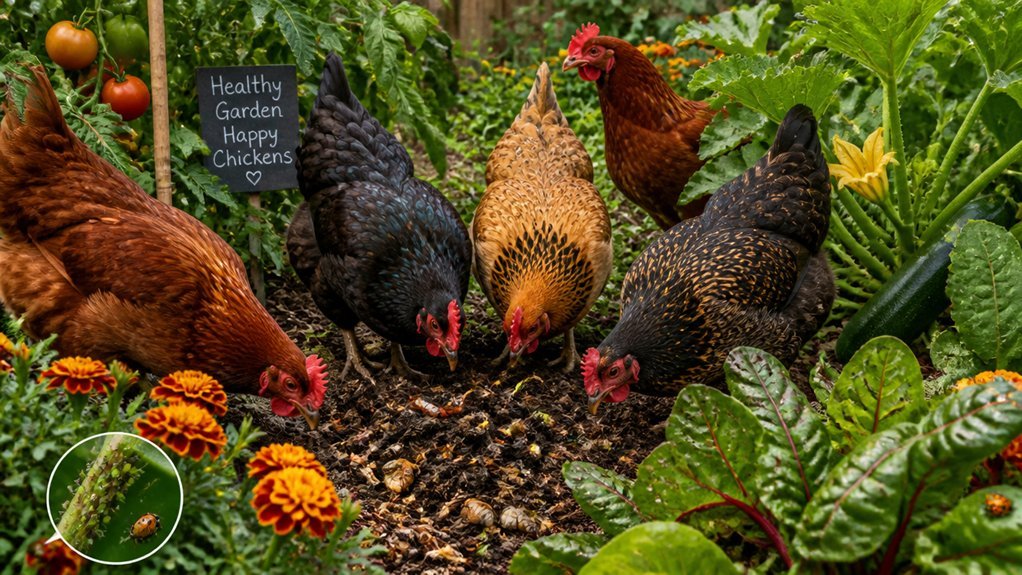
Chickens enthusiastically eat a wide range of common garden pests, making them useful allies in your yard. You can count on them to scratch up beetles, grasshoppers, crickets, caterpillars, and armyworms hiding in leaves or soil.
They’ll also snap up slugs, snails, earwigs, cutworms, and sowbugs before these pests damage tender plants. If you let them patrol under shrubs or along row edges, they’ll often find ants, fly larvae, and other soft-bodied insects too.
Their constant pecking helps you reduce pest pressure without chemicals. You’ll notice they search for moving insects first, then probe mulch and debris for anything edible. Incorporating nutrient-rich treats like Black Soldier Fly Larvae can further support their health and enhance their pest-control abilities.
With supervision, chickens can clean up troublesome insects quickly while giving you a more balanced, hands-on way to protect your garden.
How Chickens Fertilize Garden Soil
As they peck, scratch, and leave droppings behind, chickens naturally add valuable nutrients to your garden soil. Their manure supplies nitrogen, phosphorus, and potassium, which help feed plants and support steady growth.
As you let them work, they also stir the top layer, mixing organic matter into the ground and improving texture. Their activity can help break down compost and plant debris faster, too.
- You enrich soil without hauling in extra fertilizer.
- You recycle nutrients straight from the coop to the garden.
- You boost microbial activity in the soil.
- You support healthier, more productive beds over time.
When you manage their presence wisely, you turn daily chicken activity into a simple, natural soil-building system for your garden. Durable beds designed to withstand scratching and pecking can provide a safe and long-lasting environment for chickens and plants alike.
How to Use Chickens Without Damage
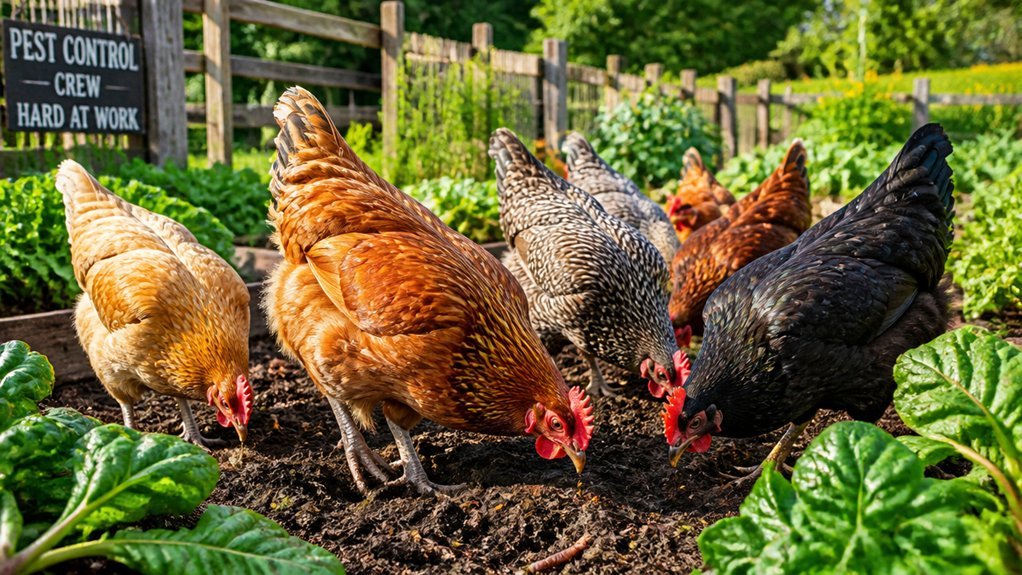
You can keep chickens working for pest control without wrecking your yard by giving them fenced forage areas. Rotate their access so they clear pests in one spot without overworking the soil or plants. Protect garden beds with barriers, and they’ll help you manage pests without causing damage. Using fencing covers or barriers adds an extra layer of protection and ensures chickens stay within designated areas.
Fenced Forage Areas
When you fence off a small forage area, chickens can hunt insects and weed seeds without tearing up your whole yard or garden. You give them a focused space, so they scratch, peck, and clean up pests where you want help most.
- Use sturdy wire or portable panels to keep birds inside.
- Place the area near problem spots like compost edges or weedy corners.
- Offer shade, water, and a bit of cover so they stay comfortable.
- Move feeders and treats away from beds you want to protect.
- Incorporating electric fencing can enhance predator deterrence and keep the chickens safe while they work.
This setup lets you tap their pest-control habits while limiting digging and damage. You also make cleanup easier because droppings stay contained.
With a well-placed fence, you guide your flock’s work and keep your landscape looking neat.
Rotate Chicken Access
Rotating chicken access keeps your flock useful without letting them wear out one spot. You can move them between sections on a schedule, so they keep hunting insects while the ground recovers. Give them a few days in one area, then shift them before they scratch up roots or strip the soil bare. Using modular fence panels helps facilitate quick and easy adjustments to their range. Watch for signs of overuse, like exposed dirt, shallow holes, and thinning grass. Short visits help you control pests without creating mud or compacted ground. You’ll also spread manure more evenly, which supports healthier regrowth. Use portable fencing, temporary gates, or simple lane changes to guide movement. When you stay ahead of damage, chickens stay productive, and your property stays balanced.
Protect Garden Beds
Protecting garden beds lets chickens work for you without wrecking tender plants. You can block access with sturdy fencing, low hoops, or removable mesh, so birds hunt pests along the edges instead of scratching through seedlings.
Keep them out until crops are tall and roots are strong, then let them patrol for beetles, slugs, and larvae.
- Use hardware cloth around raised beds to stop digging.
- Cover young plants with row covers or cloches.
- Open beds only after harvest or after hardening off transplants.
- Give chickens a nearby run with mulch, scraps, and shade.
- Utilizing mesh size 1/2 inch fencing ensures predators and pests are kept out while still allowing airflow and visibility.
You’ll keep soil intact, reduce cleanup, and still gain natural pest control. By guiding where they forage, you turn chickens into helpers, not hazards, and protect every harvest.
Best Chicken Breeds for Pest Control

If you want chickens to do real work in your yard, breed choice matters a lot. You’ll get the best pest hunters from active, curious breeds that scratch hard and move constantly. Here are good options:
| Breed | Strength | Best Use |
|---|---|---|
| Leghorn | Fast forager | Grubs and insects |
| Australorp | Calm, thorough | Mixed yard pest control |
| Plymouth Rock | Hardy, alert | General bug patrol |
| Sussex | Strong scratcher | Garden edges |
| Orpington | Gentle but steady | Light cleanup |
You should pick birds that fit your space and climate, then rotate them carefully so they don’t damage plants. Active breeds’ll keep hunting beetles, larvae, and ticks while you manage their access. If you want steady pest control, choose birds that stay busy all day.
Frequently Asked Questions
Can Chickens Control Pests in Raised Beds?
Yes, you can use chickens in raised beds, but you’ll need to supervise them. They’ll eat insects, grubs, and weeds, yet they may scratch up soil and seedlings, so protect young plants first.
How Many Chickens Do I Need for Pest Control?
You’ll usually need 2–4 chickens for a small yard, or 6–10 for a larger area. You can adjust based on pest pressure, available space, and whether they’re free-ranging daily or part-time.
Do Chickens Help With Mosquitoes in Yards?
Yes, chickens can help reduce mosquitoes in your yard by eating larvae and irritating adults, but they won’t eliminate them. You’ll get better results if you remove standing water and keep vegetation trimmed.
Are Chickens Safe Around Vegetable Seedlings?
Not always; you’ll need to protect seedlings. Chickens scratch, peck, and can uproot tender plants, so use fencing, cages, or raised beds. Once seedlings harden off, they’ll handle chickens better nearby.
Can Chickens Reduce Pest Problems Year-Round?
Yes, you can keep chickens working year-round, but they’re most effective in active seasons. You’ll need to manage winter confinement, rotate them carefully, and supplement their diet so they still help control pests consistently.
In Summary
Chickens can be a big help in your garden because they eat many pests, scratch up soil, and add natural fertilizer as they go. When you use them carefully, you can cut down on insects and weeds without relying as much on chemicals. Just make sure you protect tender plants and guide their time in the garden. With the right setup, your chickens can support a healthier, more productive space.