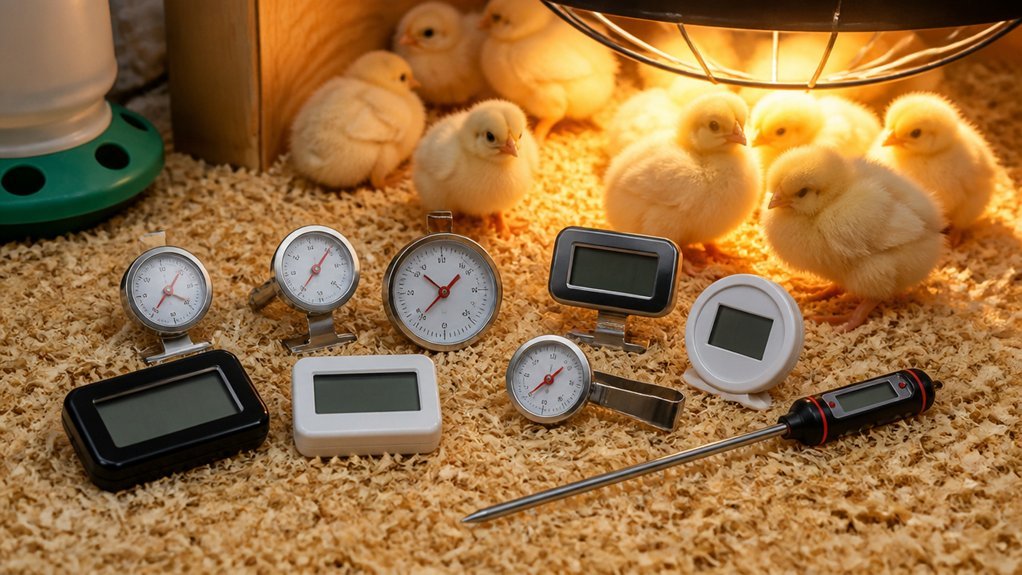
If you’re raising chicks in 2026, you need a brooder thermometer that gives you a clear, reliable read without extra fuss. The best options do more than show temperature; they help you track conditions that can make or break a healthy start. Some models offer remote probes, humidity data, and easy mounting, but not all of them are worth your money. The difference between solid and disappointing picks may surprise you.
| Pinnon Hatch Farms Brooder Thermometer (50°F to 120°F) |  | Best Brooder Fit | Temperature Display: Analog dial | Humidity Reading: No | Probe Type: No probe | CHECK ON AMAZON | Read Our Analysis |
| Farm Innovators 3600 Incubation Thermometer |  | Best Egg-Top Readout | Temperature Display: Celsius/Fahrenheit | Humidity Reading: No | Probe Type: No probe | CHECK ON AMAZON | Read Our Analysis |
| Extech 445715 Big Digit Remote-Probe Hygro-Thermometer |  | Best Remote Probe | Temperature Display: Dual digital display | Humidity Reading: Yes | Probe Type: Remote probe | CHECK ON AMAZON | Read Our Analysis |
| Digital Reptile Thermometer Hygrometer with 2 External Remote Probes |  | Best Dual-Probe | Temperature Display: Digital display | Humidity Reading: Yes | Probe Type: Dual remote probes | CHECK ON AMAZON | Read Our Analysis |
| Weewooday 4 Pcs Digital Reptile Thermometer Hygrometer Gauge with Probes |  | Best Multi-Pack | Temperature Display: Digital display | Humidity Reading: Yes | Probe Type: Dual probes | CHECK ON AMAZON | Read Our Analysis |
| Zoo Med Labs Digital Thermometer Humidity Gauge Single (TH-31) | 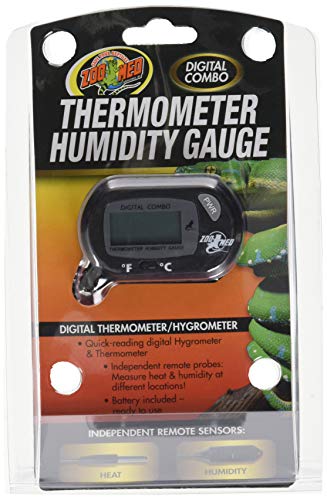 | Best Budget Gauge | Temperature Display: Digital readout | Humidity Reading: Yes | Probe Type: Waterproof probe | CHECK ON AMAZON | Read Our Analysis |
| KETOTEK Digital Thermometer with Sensor Probe & LCD |  | Best Wired Sensor | Temperature Display: LCD display | Humidity Reading: No | Probe Type: Sensor probe | CHECK ON AMAZON | Read Our Analysis |
| TempPro TP49 2 Pack Digital Hygrometer Indoor Thermometer |  | Best Indoor Monitor | Temperature Display: LCD display | Humidity Reading: Yes | Probe Type: No probe | CHECK ON AMAZON | Read Our Analysis |
More Details on Our Top Picks
Pinnon Hatch Farms Brooder Thermometer (50°F to 120°F)
If you use GQF box brooders, this is your best brooder fit. You’ll get the Pinnon Hatch Farms GQF 0490 brooder thermometer, made by GQF and designed for universal compatibility with every GQF box brooder. It fits through a 1-1/8 inch hole, so you can install it fast without fuss. The analog dial tracks 50°F to 120°F, giving you dependable temperature checks for chicks. You can count on its durable construction in busy brooder setups. Just note that returns may carry a 20% restocking fee, so buy carefully.
- Temperature Display:Analog dial
- Humidity Reading:No
- Probe Type:No probe
- Power Source:N/A
- Mounting Method:Hole mount
- Temperature Unit:Fahrenheit
- Additional Feature:1-1/8 inch hole fit
- Additional Feature:Universal GQF compatibility
- Additional Feature:Durable brooder construction
Farm Innovators 3600 Incubation Thermometer
Farm Innovators 3600 gives you a clear egg-top readout for incubators and egg turners. You can use it with most incubators and egg turners, and it sits directly on your eggs for accurate readings. Just make sure you use the mylar backing, since that helps it work properly. The display shows both Celsius and Fahrenheit, so you don’t have to convert temperatures yourself. Farm Innovators makes this white model, number 3600, as part of its pet products line. If you want a simple, reliable incubation thermometer, this one keeps setup straightforward and helps you monitor hatching conditions closely.
- Temperature Display:Celsius/Fahrenheit
- Humidity Reading:No
- Probe Type:No probe
- Power Source:N/A
- Mounting Method:Direct placement
- Temperature Unit:Celsius/Fahrenheit
- Additional Feature:Mylar backing required
- Additional Feature:Direct-on-egg placement
- Additional Feature:Incubator and turner compatible
Extech 445715 Big Digit Remote-Probe Hygro-Thermometer
For keepers who need a best remote probe setup, the Extech 445715 makes brooder checks easy. You get a large dual display that shows humidity and temperature at the same time, so you can spot problems fast. Its 18-inch probe lets you place the sensor where chicks actually live while you read the unit from outside the brooder. The max/min memory helps you track swings overnight, and the stand, wall clips, and mounting bracket give you flexible setup options. With quick response, accurate readings, and calibration access, it’s a practical monitoring tool.
- Temperature Display:Dual digital display
- Humidity Reading:Yes
- Probe Type:Remote probe
- Power Source:AAA battery
- Mounting Method:Wall/stand mount
- Temperature Unit:Celsius/Fahrenheit
- Additional Feature:Oversized dual display
- Additional Feature:18-inch remote probe
- Additional Feature:Max/min memory
Digital Reptile Thermometer Hygrometer with 2 External Remote Probes
The dual-probe design keeps chick brooder readings clear and steady. You get one external probe for temperature and another for humidity, so you can track both conditions at once without guesswork. The digital display makes readings easy to check at a glance, which helps you respond fast if the brooder shifts too warm or too damp. Although it’s made for reptile tanks and terrariums, it can work well in humidors and similar spaces too. Thermometer World sources it carefully and backs it with customer support if you’ve got questions.
- Temperature Display:Digital display
- Humidity Reading:Yes
- Probe Type:Dual remote probes
- Power Source:N/A
- Mounting Method:Tank placement
- Temperature Unit:Not specified
- Additional Feature:Dual remote probes
- Additional Feature:Terrarium-ready design
- Additional Feature:High-quality sourcing
Weewooday 4 Pcs Digital Reptile Thermometer Hygrometer Gauge with Probes
Weewooday’s 4-pack gives you multiple monitors for one brooder setup. You get two digital units with long probes, so you can track heat and humidity in more than one spot at once. Each display refreshes about every 10 seconds and keeps max and min readings, helping you spot swings fast. Strong suction cups, a clip bracket, and a magnetic mount make placement easy on glass, acrylic, or metal. The units cover wide temperature and humidity ranges, and you’ll need one AAA battery each. They’re practical, compact, and ready for daily brooder checks.
- Temperature Display:Digital display
- Humidity Reading:Yes
- Probe Type:Dual probes
- Power Source:AAA battery
- Mounting Method:Suction/magnetic
- Temperature Unit:Celsius/Fahrenheit
- Additional Feature:Four-piece set
- Additional Feature:Magnetic surface mounting
- Additional Feature:Automatic max/min recording
Zoo Med Labs Digital Thermometer Humidity Gauge Single (TH-31)
Zoo Med’s TH-31 gives you a quick, easy-to-read digital display, making it a solid best budget gauge for chick brooding. You can check temperature and humidity at a glance, and the waterproof probe helps you place it where your chicks need stable conditions. It runs on one LR44, 1.5V battery, so setup stays simple. The single blue unit suits all stages and fits easily into your brooder routine. Zoo Med makes it through Central Pet Distribution, and you’ll value its straightforward design when you want reliable readings without extra fuss.
- Temperature Display:Digital readout
- Humidity Reading:Yes
- Probe Type:Waterproof probe
- Power Source:LR44 battery
- Mounting Method:Probe mount
- Temperature Unit:Not specified
- Additional Feature:Waterproof probe
- Additional Feature:Quick-read digital display
- Additional Feature:All-stages age range
KETOTEK Digital Thermometer with Sensor Probe & LCD
With its wired sensor probe, KETOTEK suits you if you want precise brooder readings. You can power it from a USB port, laptop, power bank, or PC, so setup stays flexible. Its NTC 10K waterproof probe gives fast updates every 0.25 seconds, while the 1-meter cable helps you place the sensor where chicks actually are. You’ll read temperatures from -58°F to 230°F with ±0.5°C accuracy. The bright LCD backlight makes checks easy in low light, and you can switch between °C and °F. It also works well in incubators, greenhouses, and aquariums.
- Temperature Display:LCD display
- Humidity Reading:No
- Probe Type:Sensor probe
- Power Source:USB powered
- Mounting Method:Flexible placement
- Temperature Unit:Celsius/Fahrenheit
- Additional Feature:USB-powered operation
- Additional Feature:Bright backlit LCD
- Additional Feature:0.25-second update
TempPro TP49 2 Pack Digital Hygrometer Indoor Thermometer
TempPro’s TP49 2-pack keeps chick brooder temps in check with fast, accurate readings. You get sensors that track temperature within +/-1°F/°C and humidity within +/-2% to 3% RH, so you can spot changes quickly. The display shows bold digits on a compact LCD, and it refreshes every 10 seconds. Use the face icon to judge DRY, COMFORT, or WET air and adjust as needed. You can set each unit on a table, stick it with the magnet, or hang it nearby for easy monitoring.
- Temperature Display:LCD display
- Humidity Reading:Yes
- Probe Type:No probe
- Power Source:N/A
- Mounting Method:Stand/magnet/hang
- Temperature Unit:Fahrenheit/Celsius
- Additional Feature:Comfort face indicator
- Additional Feature:Three placement options
- Additional Feature:Two-pack value
Factors to Consider When Choosing Brooder Thermometers for Keeping Chicks at the Right Temperature
When you choose a brooder thermometer, check that its temperature range matches your chicks’ needs and that it reads accurately. You’ll also want to think about probe placement, because where you position it affects how well it tracks the brooder’s heat. A clear display and flexible mounting options can make it much easier for you to monitor conditions at a glance.
Temperature Range
A brooder thermometer should cover roughly 50°F to 120°F so you can track both the warm brooding zone and the cooler conditions chicks need as they grow. That wider span lets you watch the critical 90°F to 95°F range for newly hatched chicks, then adjust heat as their needs drop. You’ll also spot when temperatures drift too low or too high, so you can correct the brooder fast. A broad range gives you flexibility if you use the same tool in an incubator or grow-out area. Look for a model that reads clearly at both ends of the scale, since chicks change fast and you need dependable temperature management throughout their development.
Accuracy Levels
Accuracy matters most because chicks need a steady 90°F to 100°F in their first week, and even small swings can cause overheating or chilling. You should look for a brooder thermometer rated at ±1°F or better, since that level of precision helps you track safe conditions with confidence. Digital models usually give faster, sharper readings than analog ones, and some update in as little as 0.25 seconds, so you can react quickly if temperatures drift. A dual-display unit can also help you monitor humidity alongside heat, supporting better comfort overall. Choose a thermometer with calibration options so you can correct drift over time. Memory functions that record high and low readings make it easier to spot patterns and keep your brooder consistent.
Probe Placement
Once you’ve chosen a thermometer with solid accuracy, probe placement becomes the next thing to get right. You want the sensor near the chicks’ height, where it can measure the air they actually feel inside the brooder. Don’t tuck it beside a heat lamp, brooder plate, or wall, since those spots can push readings higher than the real ambient temperature. A remote probe or extendable sensor helps you position it more flexibly, especially if you’re checking conditions in more than one area. Place it where it catches general air, not direct hot or cold drafts. As your chicks grow, recheck the setup and move the probe when needed so your readings stay aligned with their changing needs and comfort.
Display Readability
When you’re checking brooder conditions fast, display readability matters just as much as accuracy. You need large, clear digits so you can spot the temperature at a glance without slowing down or second-guessing the reading. Digital thermometers usually make this easier than analog models, which can be simple but harder to read precisely. If your brooder runs dim, choose a backlit or brightly lit LCD screen so you can check temperatures quickly in low light. Dual displays can help when you want temperature and humidity together, but they still need to stay uncluttered. Flexible display placement also helps you monitor conditions more easily, especially when you want to avoid disturbing the chicks while you check the numbers.
Mounting Options
Mounting options matter because the thermometer should fit your brooder, not force your brooder to fit the thermometer. You’ll want a model that adapts to your setup with wall clips, stands, brackets, or hanging mounts, so you can place it where it’s easiest to see. Magnetic backs and suction cups help you secure it on metal or glass surfaces without fuss, while probe cables let you position the sensor away from heat sources for steadier ambient readings. Choose hardware that holds firmly but still lets you remove the unit quickly for cleaning or repositioning as your chicks grow. Multiple mounting methods give you flexibility, especially if you switch brooders or rearrange the space. The easier it is to move, the easier it is to keep temperatures accurate and your chicks comfortable.
Power Source
Power source affects both convenience and dependability, so choose a brooder thermometer that fits how you manage your chicks. Battery-powered digital models give you flexibility, but you’ll need to replace or recharge batteries periodically. That adds upkeep, so it’s best if you check readings often and don’t mind routine maintenance. USB-powered thermometers suit longer monitoring because they stay on as long as they’re plugged in, which removes battery worries. Just remember that a cord can limit where you place it. Analog thermometers don’t need any power source at all, so you avoid battery failures and charging concerns. They’re simple and portable, though they don’t offer digital displays or remote probes. Pick the option that matches your setup and monitoring style for dependable temperature control.
Durability
Durability matters because brooder thermometers face constant heat, moisture, and the occasional bump or drop. You want a model built from tough materials that can handle daily use without giving up. Look for waterproof probes and sealed casings, since humidity and spills can quickly damage weaker units. A durable thermometer keeps giving you reliable readings, so you won’t waste time replacing or repairing it. Strong mounting hardware also helps it stay secure during routine brooder checks and cleaning. When the housing resists shocks and rough handling, you lower the chance of malfunction in harsh conditions. That consistency matters because steady temperature monitoring helps you protect chick health and avoid preventable stress.
Compatibility
Compatibility is just as important as accuracy, because a thermometer only helps if it fits your brooder setup and works the way you need it to. You’ll want to check the thermometer’s size and shape so it fits through the holes, slots, or mounts in your brooder without forcing it. If you use a box brooder or another style, make sure the probe or display sits where it’ll read the chicks’ environment correctly. Some models need mylar backing or other accessories, so confirm what your setup requires. Also, match the thermometer’s temperature range to your brooding goals. Finally, verify the power source—whether it uses batteries or USB—so you can keep it running reliably and avoid interruptions in monitoring.
Frequently Asked Questions
How Often Should Brooder Thermometer Readings Be Checked?
You should check your brooder thermometer readings several times daily, especially during the first week. You’ll catch heat swings fast, adjust promptly, and keep chicks comfortable, healthy, and stress-free.
Can Brooder Thermometers Be Used Outside the Brooder?
Yes, you can use brooder thermometers outside the brooder for general temperature checks, but you’ll want to verify they suit the environment. You should avoid moisture, extreme heat, and rough handling that might damage accuracy.
Do Digital Thermometers Need Battery Replacements Often?
Usually, you won’t replace batteries often if you use a quality digital thermometer and turn it off when possible. You’ll notice low-battery warnings before failures, but cheaper models may drain batteries faster in cold conditions.
What’s the Best Way to Calibrate a Brooder Thermometer?
You can calibrate your brooder thermometer by placing it in ice water, waiting five minutes, then adjusting it to 32°F. Check it against a trusted second thermometer and recheck regularly for accuracy.
Are Waterproof Thermometers Better for Chick Brooders?
Yes, you’ll usually do better with waterproof thermometers in chick brooders because you can clean spills fast and protect the sensor from moisture. You still need a reliable, accurate model that reads quickly and consistently.