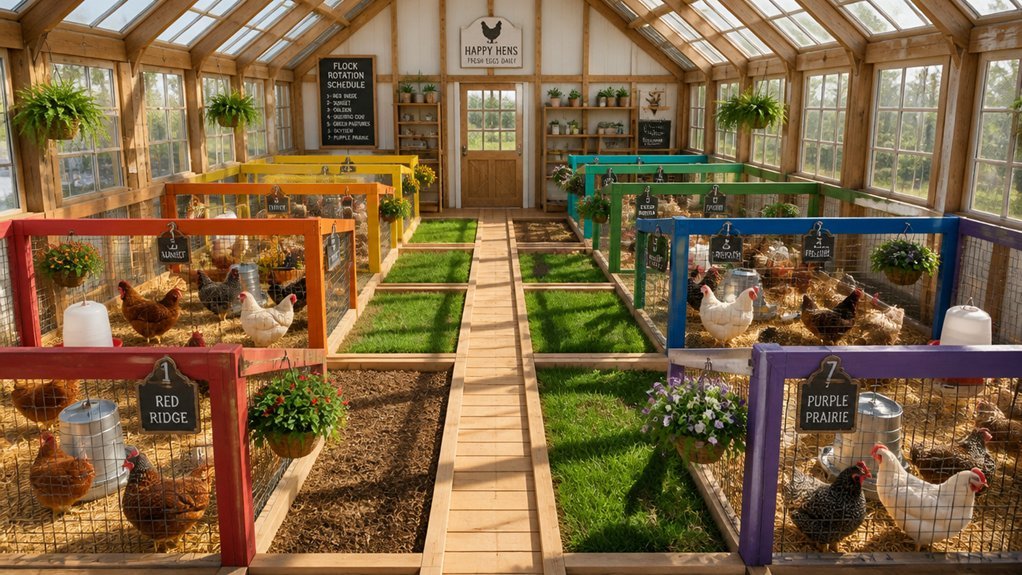
To rotate chickens well, you should match moves to pasture size, flock size, and grass recovery, not a fixed calendar. Move birds before you see bare ground, mud, or heavy manure buildup, and rest each paddock until grass rebounds. In wet weather, shift more often; in drought or heat, slow down. A three-paddock setup can help. After each move, watch appetite, droppings, comb color, and behavior so you catch problems fast and fine-tune your system from there.
How to Choose a Chicken Rotation Schedule

Choosing a chicken rotation schedule starts with your land, your flock size, and how quickly your pasture recovers. You should match the pace of moves to the amount of forage your birds can consume without stripping the ground bare.
Watch grass height, soil cover, and manure buildup, then shift your flock before damage sets in. If your birds stay in one area too long, they’ll compact soil and reduce future growth. If you move them too often, you may waste usable forage and extra labor.
Implementing appropriate netting can help secure pasture areas and make rotational grazing more effective. Set a schedule you can actually maintain, then adjust it after observing feed use, plant regrowth, and flock behavior. Keep records of each move so you can refine timing and protect pasture health over time.
Rotate Chickens by Season
When you rotate chickens by season, you can give spring pastures time to recover and regrow before the flock returns. In winter, you’ll want to shift them into sheltered areas that stay dry, warm, and protected from wind. This seasonal approach helps you support healthier land and keep your birds comfortable year-round. Using raised garden beds with durable construction provides a sturdy and chicken-proof environment that adapts well to seasonal changes.
Spring Pasture Recovery
As spring returns, give your pasture time to rebound by moving chickens off the most tired ground and onto fresher areas by season. You’ll protect tender shoots when you let grass and clover regrow before birds return. Check bare patches, thinning cover, and muddy lanes; if you see them, rest that section longer. Use movable fencing to shorten grazing time and spread pressure across several paddocks. In damp weeks, keep the flock on sturdier ground so roots can recover without getting churned up. You should also watch for fresh insect life and new growth, since chickens thrive when forage improves. By pacing access through spring, you’ll rebuild soil cover, reduce compaction, and set up healthier, more productive pasture for the rest of the year. Incorporating well-placed fencing panels can help manage rotated grazing efficiently and stay adaptable to seasonal changes.
Winter Shelter Rotation
Winter shelter rotation keeps your flock comfortable and protects the ground through the cold months. You can move birds between dry runs, hoop houses, or deep-litter shelters to prevent mud, odor, and frozen wear. Rotate them before bedding gets damp or packed, and give each area time to rest and dry. You’ll reduce disease pressure by limiting buildup of droppings and keeping waterers from leaking in one spot. Use windbreaks, fresh straw, and good ventilation so chickens stay warm without stale air. If snow piles up, clear paths and shift birds to the cleanest, sunniest site available. Proper coop design also plays an important role in winter rotation, ensuring your flock remains healthy and comfortable even when temperatures drop. This seasonal system protects your yard, supports healthier feet, and keeps your flock active when pasture growth slows.
Try a Three-Paddock Rotation System
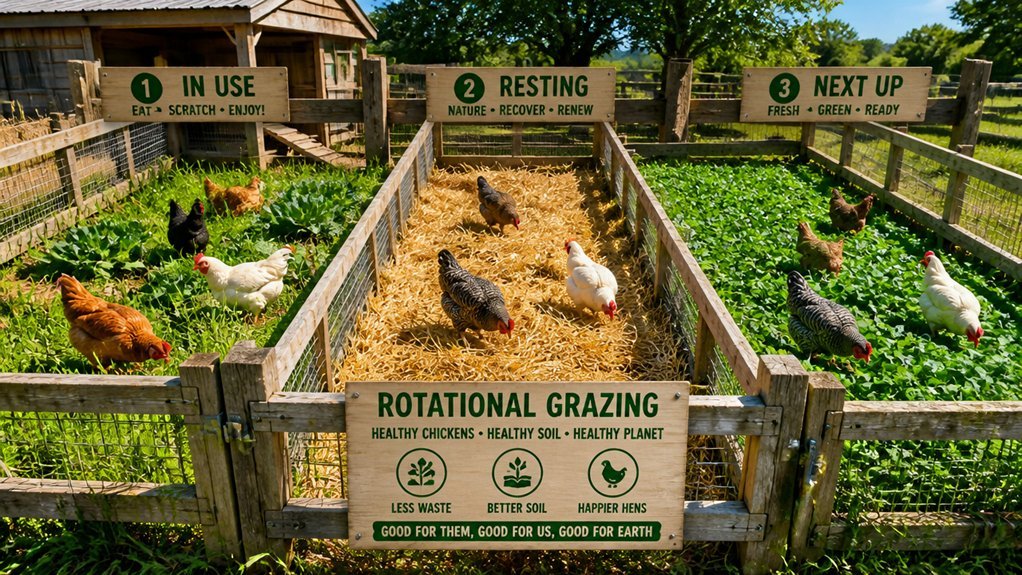
A three-paddock rotation system gives you a simple, effective way to protect pasture and keep your chickens healthier. You divide your run into three sections and let the flock use one area while the other two recover. This breaks parasite cycles, spreads manure more evenly, and keeps forage available longer. Rotate on a steady schedule, but adjust for weather, flock size, and grass growth. Using heavy-duty materials for your fencing can enhance durability and predator protection during rotations.
| Paddock | Use Now | Recover |
|---|---|---|
| 1 | Yes | No |
| 2 | No | Yes |
| 3 | No | Yes |
| 1 | No | Yes |
| 2 | Yes | No |
Watch plant height and ground cover, and move birds when the active paddock starts thinning. Consistent rotation helps you maintain cleaner footing, stronger pasture, and less stress for your flock.
Move Coops Before Pasture Damage Starts
Watch for pasture wear signals like thinning grass, bare soil, and muddy patches, and move your coops before those signs spread.
If you wait until the ground turns to mud, your flock will churn up the area fast and make recovery harder. By shifting early, you protect root growth and keep the pasture healthy for the next rotation.
Pasture Wear Signals
How do you know when your pasture needs a break? You watch for early wear signals and move your coop before the grass disappears. Your flock will tell you plenty if you pay attention.
- Short, clipped grass means chickens are grazing faster than it can recover.
- Bare patches show repeated scratching and pecking in the same spots.
- Thin, dusty soil means roots aren’t holding the ground well anymore.
- Uneven manure buildup signals one area’s getting too much use.
When you see these signs, rotate birds to fresh ground and let the old run rest. That pause helps grass regrow, protects soil structure, and keeps your flock healthier.
You’ll avoid stress on the pasture and keep your rotation plan working smoothly. Proper run covers and protection can also help extend grazing periods and prevent damage from weather or predators.
Move Before Mud
When the ground turns soft, don’t wait for deep ruts to show up—move the coop before mud starts forming. You’ll save your pasture and keep your flock cleaner by acting at the first sign of squish underfoot.
Watch for darkened soil, sticky boot prints, and hens lingering on drier edges instead of ranging widely. Shift portable coops, feeders, and waterers to firmer ground, then give the old spot time to rest.
Keep moves small and frequent during wet stretches so birds spread their impact instead of hammering one patch. If you rotate early, you’ll limit churn, reduce odor, and avoid turning a productive paddock into a slippery mess.
Regularly inspecting weather-resistant materials and ensuring your coop’s design supports easy movement can make early shifts smoother and more effective. The goal is simple: stay ahead of mud, not behind it.
Protect Root Growth
Soft ground isn’t the only warning sign; long before mud shows up, repeated traffic can crush living roots and weaken the pasture from below. You need to move coops early, while grass still springs back and soil stays open. That protects regrowth, soil life, and the next grazing cycle.
- Watch for thinning blades, not bare patches.
- Shift pens before hens scratch the same spot twice.
- Rest each paddock until roots rebuild and crowns thicken.
- Rotate faster during wet weather or heavy stocking.
When you stay ahead of damage, you keep forage productive and reduce feed costs. Healthy roots mean better drainage, stronger resilience, and a flock that gets fresh ground without stripping the pasture bare.
Rest Pasture Between Flock Moves
Resting pasture between flock moves gives the grass time to recover, rebuild root reserves, and break parasite cycles. You should leave a paddock empty long enough for blades to regrow and soil life to rebound. That pause also lets manure decompose and lowers pressure from worms and coccidia. Incorporating easy-clean tray systems can further support sanitation efforts during pasture rest periods.
| Goal | What you do | Benefit |
|---|---|---|
| Recovery | Keep birds off the paddock | Stronger grass |
| Sanitation | Let manure dry and break down | Fewer parasites |
| Planning | Rotate only when the cover rebounds | Better forage use |
Track each move, then return only when the pasture looks ready. If you rush back too soon, chickens will scrape up tender shoots and weaken the stand. Give the ground a real break, and it’ll reward you with thicker, healthier forage.
Adjust for Weather and Forage Growth

Pasture recovery doesn’t happen on a fixed schedule, so you need to adjust flock moves for rain, heat, drought, and fast or slow forage growth. Watch the paddock, not the calendar, and shift birds when conditions change.
Pasture recovery follows the paddock, not the calendar—move birds with rain, heat, drought, and forage growth.
- After steady rain, move sooner if grass rebounds quickly and the ground stays firm.
- In hot spells, shorten stays so chickens don’t strip tender regrowth.
- During drought, give each section extra rest and reduce flock pressure.
- When forage surges, rotate faster to let chickens graze fresh growth without scalping it.
You’ll protect plants, spread manure evenly, and keep your system flexible. Additionally, monitoring hardware cloth integrity around the run can help prevent predator intrusion during different weather conditions.
If growth slows, hold birds back and let the pasture rebuild before the next move.
Watch Flock Health After Each Move
After each move, check your flock closely so you can catch stress before it turns into a problem. Look for signs like panting, limping, loose droppings, pale combs, or birds that hang back from the group.
You should also watch appetite, water use, and egg laying, since sudden drops can signal trouble. Keep notes after every rotation so you can spot patterns fast and decide whether the new pasture needs more rest or better shelter.
If you notice mites, wounds, or parasites, act right away before they spread. Move the flock back only when they’ve settled and started foraging normally. Using poultry dust correctly during and after rotations can also help prevent infestations from taking hold again.
Quick checks help you protect health, reduce losses, and keep each rotation productive.
Frequently Asked Questions
How Many Chickens Can One Acre Support?
You can support about 50 to 100 chickens per acre if you manage pasture well, rotate them often, and supplement feed. You’ll need to adjust for soil, climate, and your birds’ size.
Should Young Chicks Join Rotation Paddocks?
No, you shouldn’t let young chicks join rotation paddocks until they’re feathered, sturdy, and protected. You can start them in a small, secure brooder area, then introduce them gradually to managed pasture later.
What Fencing Works Best for Mobile Coops?
Electrified poultry netting works best for mobile coops because you can move it fast, and it keeps birds contained and predators out. You’ll want sturdy corner posts, grounded chargers, and tight connections for reliability.
How Do Predators Affect Rotation Planning?
Predators force you to rotate birds more cautiously, choosing secure paddocks, shorter stays, and stronger fencing. You’ll also avoid predictable routes, vary timing, and inspect hotspots often so you don’t invite repeated attacks.
Can Water Systems Move With the Flock?
Yes, you can move water systems with your flock. You’ll keep birds hydrated, cut hauling time, and reduce waste. Use lightweight, leak-resistant containers, secure hoses, and place them where chickens can reach them easily.
In Summary
Choosing the right flock rotation strategy keeps your chickens healthier and your pasture more productive. You can rotate by season, use a three-paddock system, and move coops before damage starts. Give each area enough rest, and adjust your schedule for weather and forage growth. After every move, watch your flock closely so you can catch problems early. With a flexible plan, you’ll support stronger birds, better ground cover, and easier chicken care all year.