
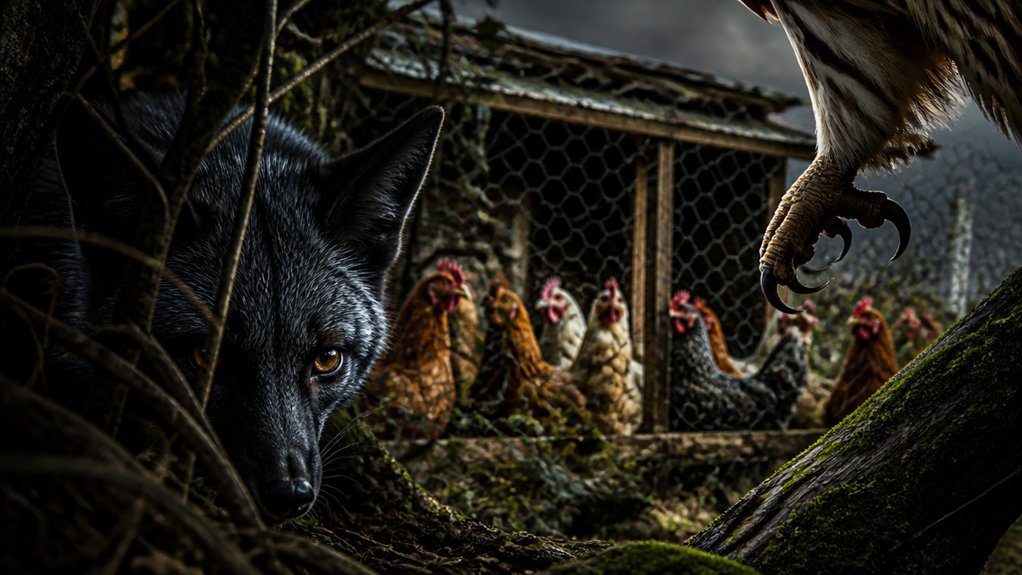
Your chickens face raccoons, foxes, coyotes, hawks, owls, rats, snakes, dogs, weasels, and skunks. Look for missing eggs, scattered feed, feathers, claw marks, or holes under fencing. Protect them by locking birds in a sturdy coop at dusk, using 1/2-inch hardware cloth, securing latches, burying or flaring a fence apron, and covering the run top. After any attack, clean up fast and inspect every weak point. There’s more you can do to keep them safe.
Common Backyard Chicken Predators
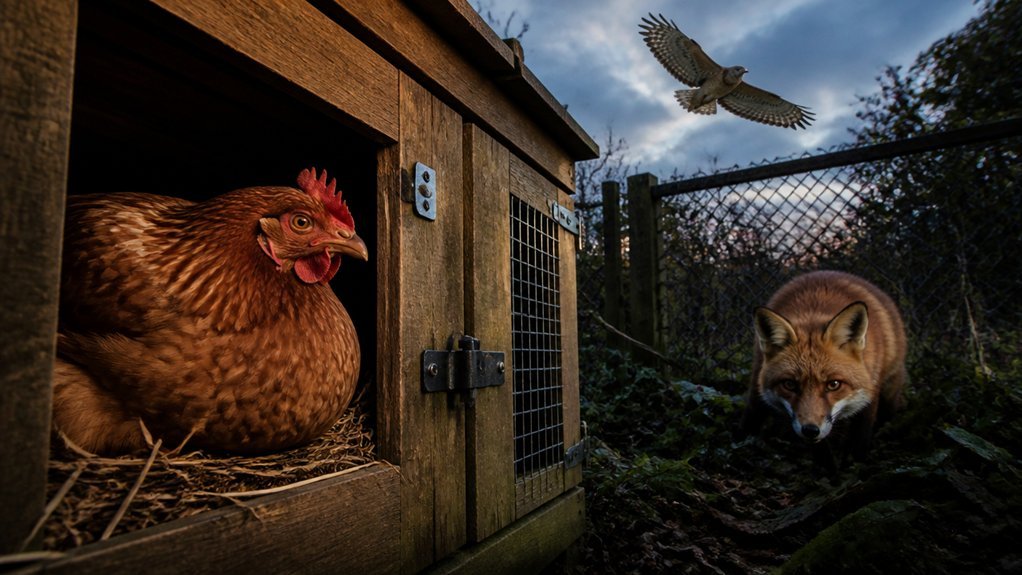
Common backyard chicken predators can turn a peaceful coop into a constant worry, especially when you least expect trouble. You might face raccoons, foxes, coyotes, hawks, owls, rats, snakes, and even neighborhood dogs or cats.
Common backyard chicken predators can turn a peaceful coop into a constant worry, often when you least expect trouble.
Raccoons use nimble paws to pry open latches and reach feed or birds. Foxes and coyotes often stalk at dawn or dusk, when your flock feels safest. Hawks and owls strike from above, targeting chicks and smaller hens.
Rats don’t usually carry off adult birds, but they can steal feed and threaten eggs or chicks. Snakes slip into nesting areas for eggs.
You need sturdy locks, tight wire, and covered runs to reduce risk. Keep feed secured, trim brush, and avoid leaving scraps outside.
Signs a Predator Is Visiting
Once you know which animals might be prowling around your coop, the next step is spotting the clues they leave behind.
You may notice disturbed bedding, scattered feed, or feathers piled near the run. Look for holes under fencing, bent wire, or loose boards that show something tried to force its way in. Fresh tracks in mud, dust, or snow can tell you what type of visitor came by. You might also hear nervous clucking, see hens crowding corners, or find eggs missing without broken shells. Check for droppings, claw marks, and drag lines along the ground.
If your birds act skittish at dusk or dawn, don’t ignore it. These signs help you catch trouble early and tighten your defenses before a predator returns.
Understanding the typical predator signs in your area can further improve your response and prevent future visits.
Foxes, Coyotes, and Dogs
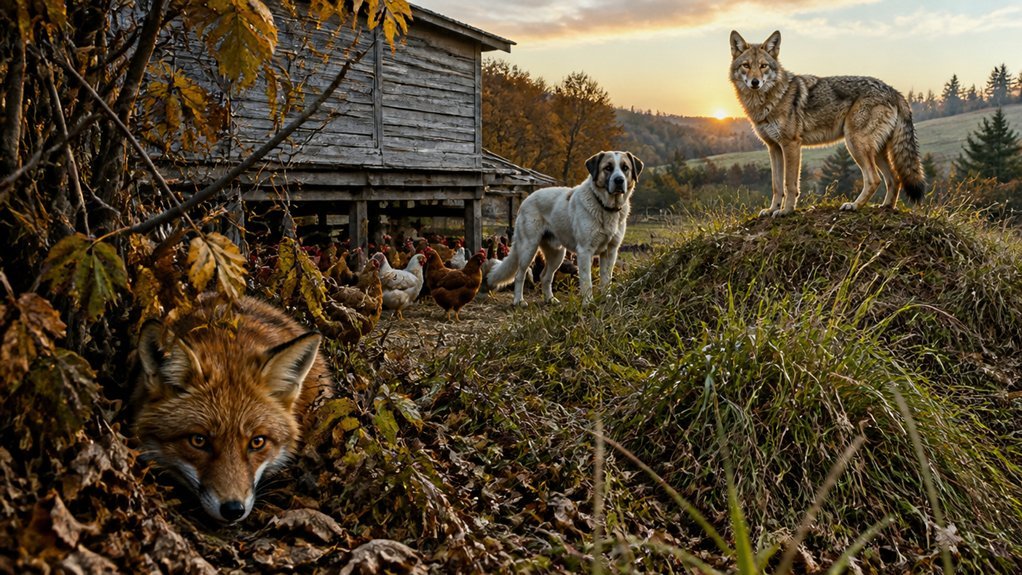
Foxes, coyotes, and loose dogs are some of the most serious threats to chickens because they can dig, climb, jump, or simply blast through weak spots in a hurry. You need tight fencing, buried wire, and secure latches to slow them down. Lock birds in a sturdy coop at dusk, and don’t leave feed outside, since smells draw them in fast. Using appropriate hardware cloth with a 1/2 inch mesh and a 19 gauge wire gauge is essential for predator-proof fencing.
| Predator | Common tactic | Best defense |
|---|---|---|
| Fox | Squeezes gaps | Hardware cloth |
| Coyote | Digs or leaps | Fence apron |
| Dog | Chases and kills | Supervision |
If you free-range your flock, stay nearby and use a covered run when you can’t watch them. Motion lights, noise, and regular patrols help too. Strong habits give your flock the best chance to stay safe.
Raccoons, Weasels, and Skunks
Raccoons, weasels, and skunks can be just as destructive as larger predators, and they often attack in ways that catch chickens off guard. You need to lock birds in a sturdy coop each night, because raccoons pry open latches and reach through wire. Weasels slip through tiny gaps, so seal every crack with hardware cloth, not chicken wire. Skunks usually strike at dusk and dawn, and they’ll raid feed as well as eggs. Remove spilled grain, keep trash secured, and trim brush near the coop to cut hiding spots. Using electric fencing can provide an additional layer of protection against these persistent predators. If you use automatic doors, check that they close firmly. Then inspect the run often for burrows, bent wire, or weak spots. Good housekeeping and strong barriers make your flock far less vulnerable.
Hawks, Owls, and Other Raptors
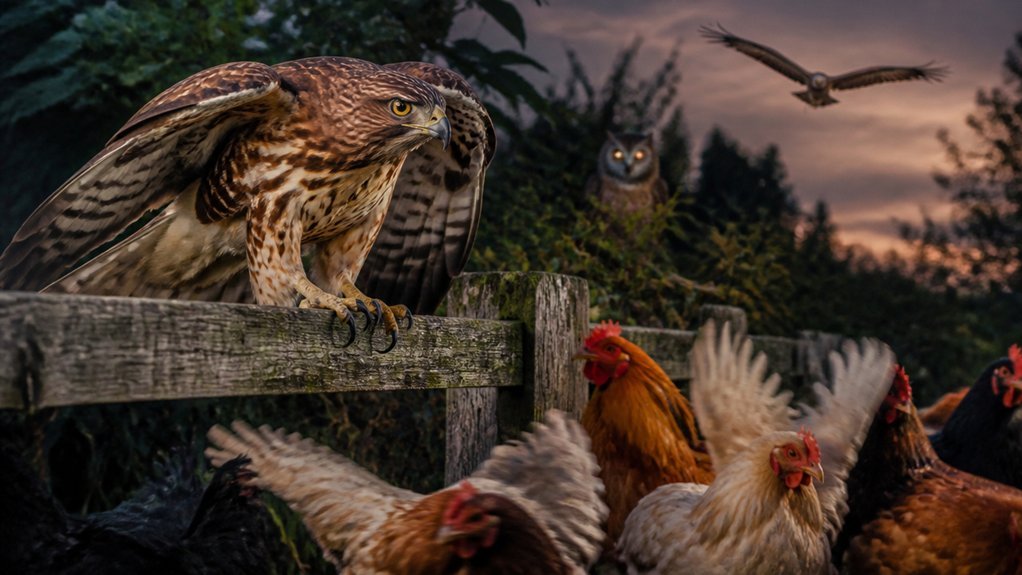
Hawks and owls can spot chickens from far above, then strike when birds are out in the open. You’ll usually notice trouble when a bird vanishes in daylight or at dusk, especially near feed, water, or a bare yard.
Hawks prefer fast, sudden attacks on small hens and chicks, while owls hunt quietly at night and can carry off smaller birds. You may also face falcons, eagles, or other raptors if your flock lacks cover.
These predators watch from poles, trees, and rooflines, waiting for easy access. Your chickens stay safer when they move as a group and have places to duck under fast. Keep an eye on flight paths above the run, since an exposed flock invites a quick, deadly swoop.
Protecting your flock involves understanding predator threats, which often exploit lack of cover and open space.
How to Predator-Proof Your Coop
To predator-proof your coop, start by sealing every weak point that a hungry animal can exploit. Replace flimsy wood, patch gaps, and cover vents with sturdy hardware cloth, not chicken wire. Install a lockable door with predator-resistant latches that raccoons can’t twist open.
Check corners, roof seams, and nesting-box edges for openings, then reinforce them with screws and metal flashing. Raise the coop floor slightly or add a solid skirt to block burrowing under walls. Use strong hinges, and inspect them often for rust or looseness.
At night, shut birds inside and verify every latch engages fully. Keep feed stored in sealed bins nearby, because odors can attract trouble. A weather-resistant, heavy-duty latch gives your coop extra security and peace of mind.
How to Secure the Run and Yard
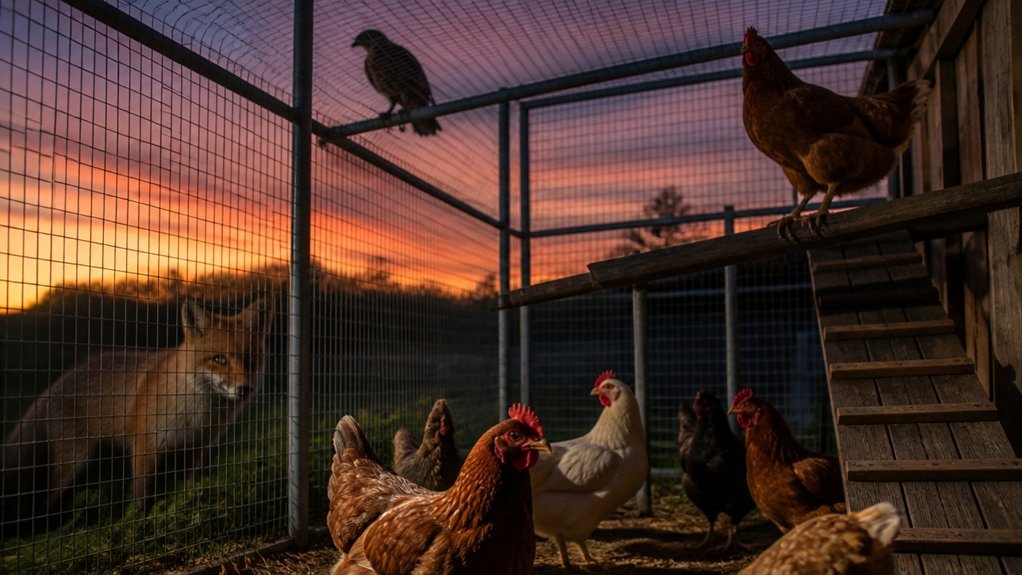
Build the run as if something is always testing it. You should bury hardware cloth around the perimeter, then flare it outward to stop digging. Use sturdy posts, tight wire, and latches that can’t wiggle loose. A sturdy, predator-resistant latch enhances security during routine checks. Cover the top with netting or wire if hawks, owls, or climbing predators are a risk. Keep the ground clear near the fence so raccoons can’t hide while they work. Trim brush, stack lumber elsewhere, and remove low branches that give predators cover or access. Inside the yard, provide shade, water, and dust-bath spots so chickens stay close to safe areas. Lock gates every time you leave, and inspect the run after storms or wind. A small weak spot can become an easy entry. Regularly check for weatherproof materials and secure seals to prevent predator entry.
What to Do After an Attack
After an attack, you should check each chicken right away for wounds, shock, or missing feathers. Then you need to secure the coop and clean it thoroughly to remove scent trails and reduce the chance of another predator returning. Once your birds are safe, keep a close watch on them and make any needed repairs fast. Additionally, inspecting your fencing for predator resistance features can help identify weak points and prevent future breaches.
Assess Injuries Quickly
Move quickly to check every chicken for wounds, shock, or missing feathers, because even a short attack can leave serious injuries. Catch each bird gently and look for bleeding, puncture marks, torn skin, swelling, limping, gasping, or uneven posture. Handle one chicken at a time so you can spot problems fast and avoid missing hidden damage under the wings, around the vent, or on the legs. If a bird seems weak, hunched, or unresponsive, isolate it right away from the flock. Keep your movements calm and steady to limit stress. Don’t ignore small scratches, since predators’ teeth and claws can cause deep tissue damage. Record what you see so you can track changes later and decide whether the bird needs veterinary help. Be aware that wound care options like advanced sprays can support healing and reduce infection risk, especially for deeper injuries.
Secure And Clean Coop
Once the chickens are safe, lock down the coop right away so another predator can’t get back in. Check every door, latch, vent, and window, then repair broken wire, gaps, or weak boards before nightfall.
Remove any dead birds, eggs, spilled feed, and feathers, because blood and scent can draw more predators. Wear gloves, then scrub floors, roosts, and nesting boxes with hot soapy water, and disinfect after cleaning. Replace wet bedding with fresh, dry material.
Inspect the run for dig marks, claw damage, and holes under fences, and bury hardware cloth where needed. If you use lights or alarms, test them now. Ensuring predator protection features are intact can help prevent future breaches.
Keep chickens confined until the coop feels secure again, so you don’t invite a repeat attack.
Frequently Asked Questions
How Can I Tell if My Chickens Are Stressed by Predator Presence?
You’ll notice your chickens huddle tightly, freeze, hide, stop laying, or make alarm calls. They may eat less, stay alert, and avoid open areas. Check for feather damage, panic flights, and restless nighttime behavior.
Do Predator Threats Change Between Day and Night?
Yes, they do. You’ll usually face hawks and other aerial hunters by day, while foxes, raccoons, coyotes, and opossums often strike at night. You should adjust your coop security and supervision accordingly.
Which Chicken Breeds Are Most Alert Against Predators?
You’ll often find Leghorns, Anconas, and Easter Eggers stay most alert. You can also trust Rhode Island Reds and Marans. You should still watch them closely, because breed helps, but your setup protects best.
Can Guard Animals Really Reduce Chicken Losses?
Yes, they can, if you choose the right guardian and train it well. You’ll still need sturdy fencing, but dogs, donkeys, or geese often scare predators off and cut losses noticeably.
How Often Should I Inspect Predator-Proofing Hardware?
You should inspect predator-proofing hardware weekly, and after storms or breaches. Check latches, mesh, screws, and gaps, then tighten, repair, or replace worn parts immediately so you keep predators out and your flock safe.
In Summary
Keeping your chickens safe means staying alert and acting fast. Check your coop and run often, lock birds up at night, and fix any weak spots before predators find them. If you spot signs of an attack, tighten your defenses right away and watch for repeat visits. With sturdy fencing, secure latches, and good habits, you can protect your flock and give your chickens the safe, healthy home they deserve.



