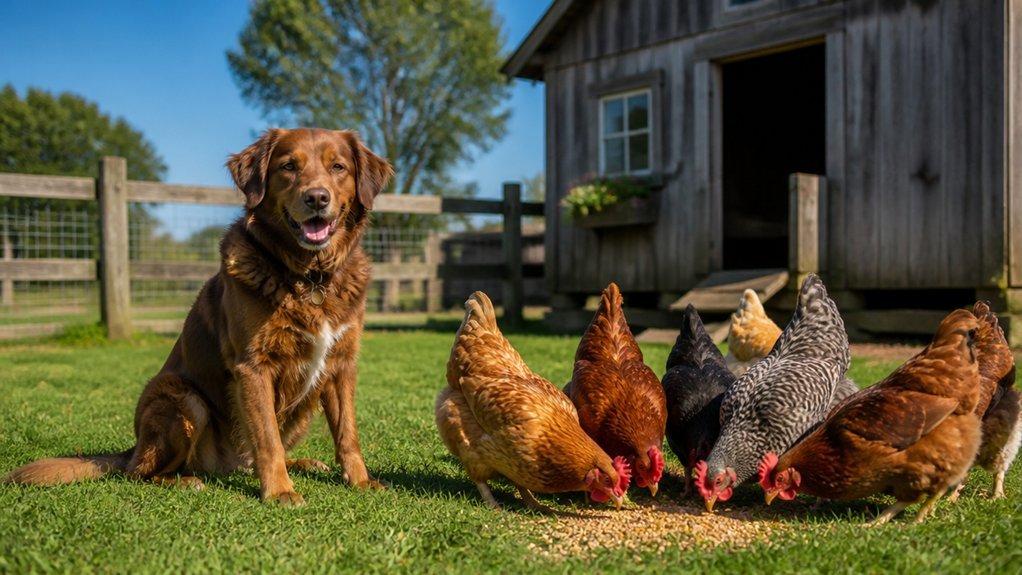
Keep your dog physically separated from chickens with a leash, crate, or closed door, and supervise every outdoor visit. Reward calm behavior near the flock, start training at a distance, and end sessions if your dog fixates or chases. Make runs and gates dog-proof with strong wire, buried edges, and secure latches. If neighbor dogs wander in, call them off and contact owners. Keep going, and you’ll find even more ways to protect both pets and birds.
Start With Immediate Safety Measures
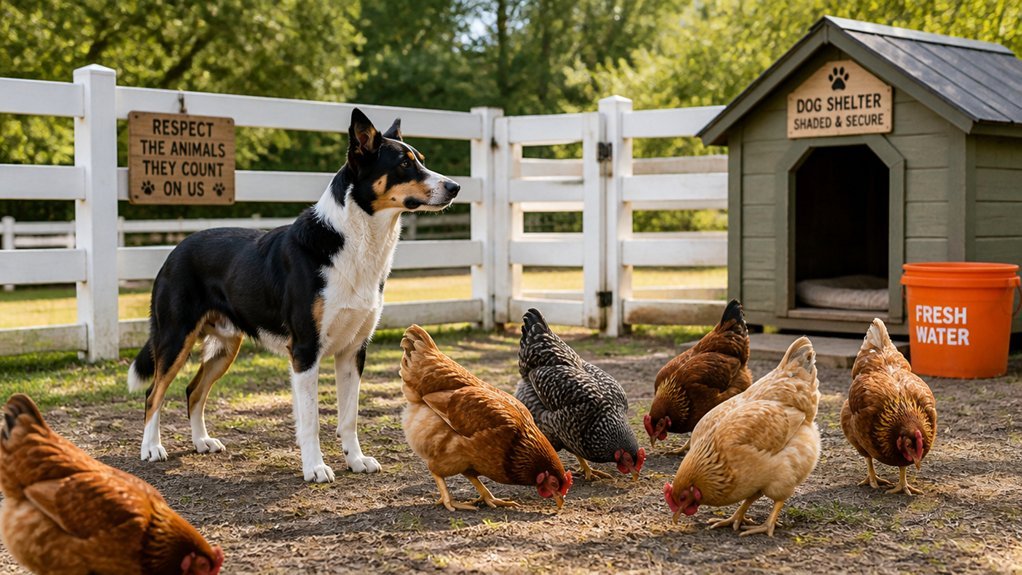
Before you do anything else, keep your dog physically separated from the chickens so nobody gets hurt. Use a leash, crate, or closed room right away, and don’t let your dog roam unsupervised.
Keep your dog physically separated from the chickens right away, using a leash, crate, or closed room.
If your dog already chased or grabbed a bird, stay calm, get the chicken to safety, and check for injuries. Remove distractions that trigger excitement, like loose feed or flapping objects near the coop.
Supervise every outdoor visit until your dog reliably ignores the flock. Reward calm behavior immediately so your dog learns that staying relaxed pays off.
If your dog fixates, barks, or lunges, end the session and try again later. Quick control now helps prevent panic, broken feathers, and bad habits. Incorporating adequate secure enclosures can also reduce the risk of escape and injury during these interactions.
Set Up Chicken Runs Dogs Can’t Enter
Build a chicken run that keeps your dog out even when you’re not watching. Use strong welded wire, not flimsy poultry netting, and bury the bottom at least 12 inches to stop digging.
Make the fence tall enough that your dog can’t jump it, and add a secure gate with a latch you can’t accidentally leave open. If your dog pushes, reinforce corners with sturdy posts and tighten every panel so there’s no gap to squeeze through.
Cover the top with netting or wire if your dog can leap high. Place feeders, waterers, and roosts inside the enclosure so chickens stay put.
Check the run often for damage, loose fasteners, or worn spots, and fix problems right away to keep your flock protected. Incorporating tough waterproof fabric on the top can deter hawks and other predators from gaining access from above.
Train Your Dog to Ignore Chickens
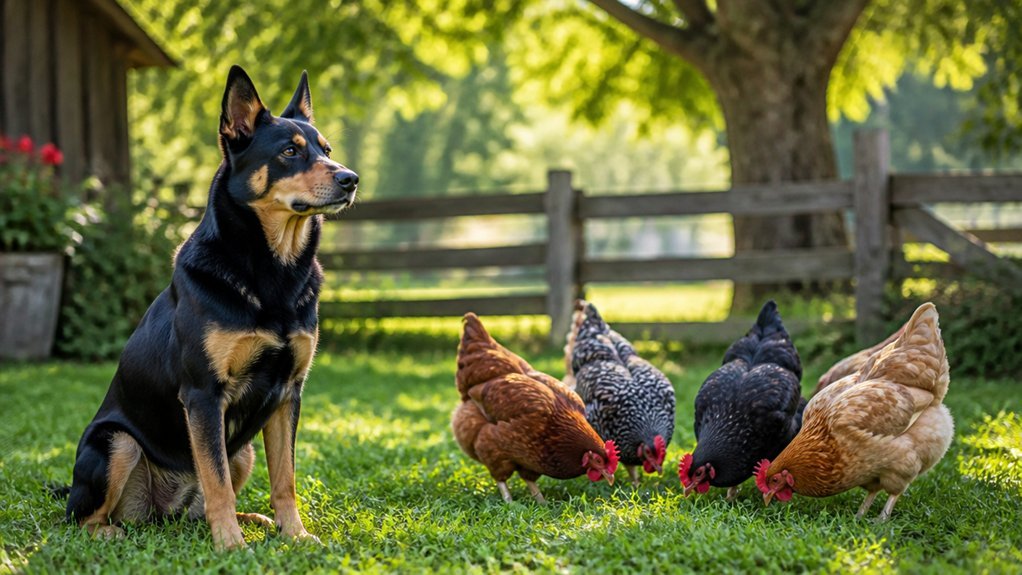
Even with a secure run, your dog still needs training to leave chickens alone. Start indoors or at a distance where your dog notices the birds but stays calm. Reward eye contact with you, loose leash behavior, and quick turnaways from the flock.
Use a cue like “leave it” only when your dog can succeed, then praise immediately. Keep sessions short and end before your dog gets aroused.
- Practice near calm chickens, not during chaos.
- Use high-value treats your dog won’t ignore.
- Repeat daily in brief, focused sessions.
- Increase difficulty only after steady success.
- Incorporate positive reinforcement techniques to strengthen calm, non-aggressive responses around chickens.
Consistency matters more than speed. If you reinforce calm choices every time, your dog learns that chickens aren’t worth attention, and you build reliable habits that support safer barnyard behavior.
Stop Your Dog From Chasing Chickens
If your dog starts to fixate on chickens, interrupt the chase early and redirect him before his excitement climbs. Use a sharp cue he already knows, then reward him the moment he breaks focus. Keep your body between him and the flock, and move him away with purpose, not panic. Reinforce calm behavior by asking for a sit, down, or brief heel, then praise him for settling. Additionally, fence height plays a crucial role in preventing dogs from jumping or climbing over to reach the chickens. You should also remove easy wins. Don’t let him rehearse sprinting after birds, because every successful chase makes the habit stronger. Practice around calm chickens at a distance he can handle, and shorten that distance only when he stays relaxed. If he surges again, reset immediately and lower the challenge. Consistent interruptions teach him that chasing never pays.
Use Leashes and Supervision Outside
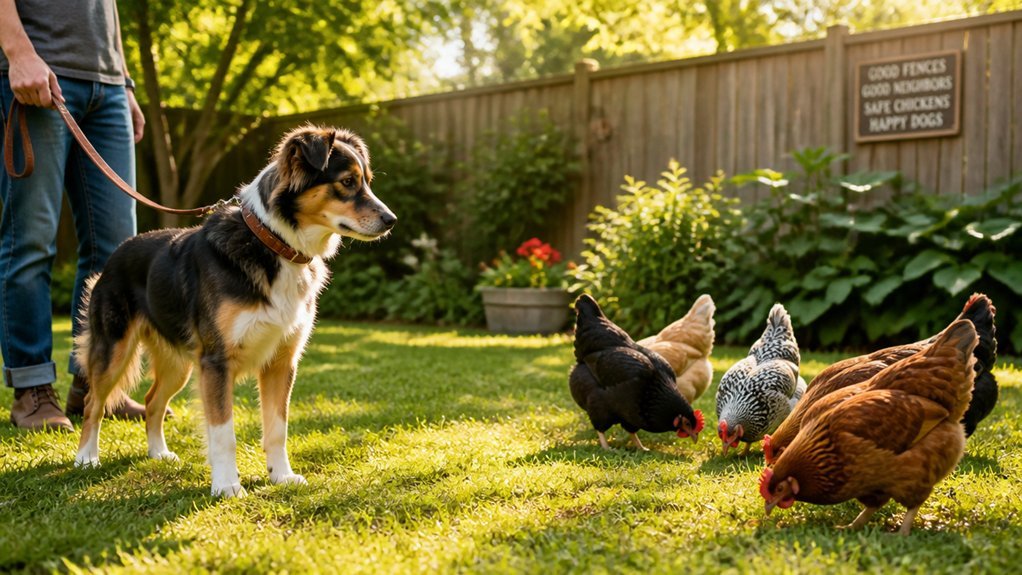
When you’re outside with your dog, keep a leash on so you can guide every move and prevent a sudden rush toward the chickens.
Stay with your dog the whole time, because constant supervision helps you catch problems before they start.
You can also build safe distance training by rewarding calm behavior near the coop and slowly closing the gap.
Using a properly fitted chicken harness and leash set can help ensure your dog remains under control while reducing the risk of escape or injury.
Leash Control Basics
Using a leash and close supervision outside gives you immediate control over your dog’s movements near chickens. Keep the leash short enough to guide quick corrections, but loose enough that your dog can walk calmly without tension. Choose a sturdy six-foot leash and a well-fitted harness or collar that won’t slip.
Practice basic cues like sit, leave it, and heel before you approach the coop, so you can redirect attention fast. If your dog fixates on birds, turn away and reset the moment you see that focus. Reward calm behavior right away so your dog learns that ignoring chickens pays off.
- Hold the leash with both hands for better control.
- Stay between your dog and the flock when possible.
- Avoid retractable leashes near chickens.
- End the outing before your dog gets overly excited.
- Using proper glove protection can also help manage your dog’s behavior by providing a barrier that makes quick adjustments safer for both you and your pet.
Constant Outdoor Supervision
Constant supervision outside is essential because even a well-trained dog can act on impulse around chickens. You should keep your dog in sight every time you enter the yard with birds present. Use a sturdy leash, and hold it short enough to prevent lunging, chasing, or sudden pounces.
Don’t rely on a fence alone, since gates open, gaps appear, and distractions happen fast. Stay alert to your dog’s body language so you can step in before excitement turns into trouble.
If you need to set tools down, bring your dog with you or secure the chickens first. Your attention is the barrier that protects both animals. Consistent oversight builds safer habits and helps your dog learn that chickens aren’t playthings or prey.
Additionally, using cooperative fencing, especially with raccoon-resistant locks, can further prevent your dog from accessing the coop area unsupervised.
Safe Distance Training
Start safe distance training by keeping your dog on a leash and far enough from the chickens that it can notice them without getting overexcited. You’re teaching calm behavior, not chasing, so reward quiet focus the moment your dog looks at the birds and then back at you.
Keep sessions short and end before excitement builds. If your dog lunges, increase distance right away. Use a sturdy leash, a secure harness, and your body position to block forward movement. Stay outside with your dog every time around chickens until good habits stick.
- Practice in low-distraction moments
- Pair chicken sightings with treats
- Slowly shorten distance over days
- Stop before barking starts
Additionally, ensuring the stability and safety features of your training setup, such as a secure leash and an obstacle-free environment, helps maintain control and prevents accidents during these exercises.
Strengthen Fences and Gates
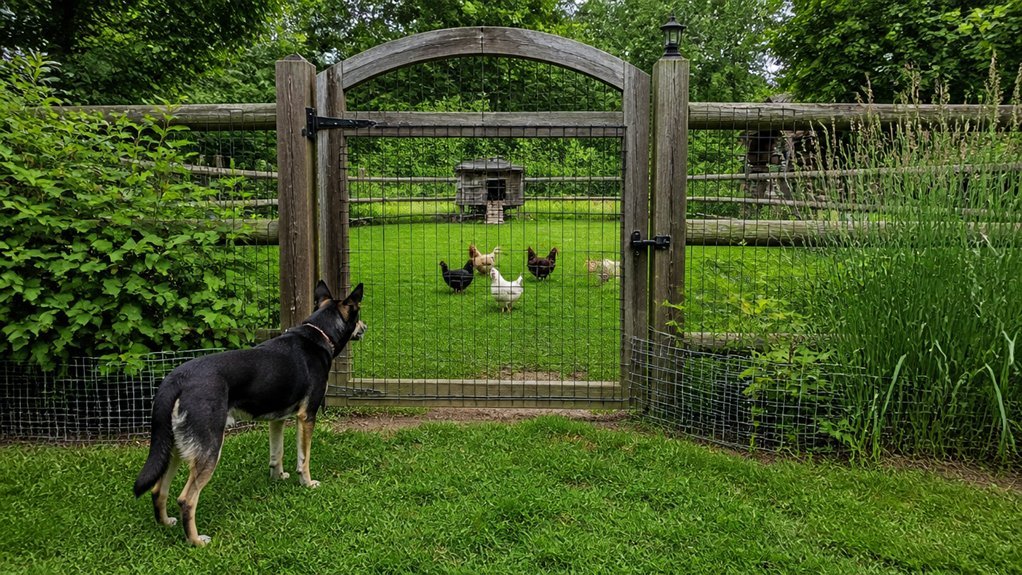
You can keep your chickens safer by reinforcing fence lines so your dog can’t push through weak spots.
Check gate latches often and make sure they close securely every time.
If your dog digs, block those paths with buried barriers or rocks to stop escape attempts.
Adding hardware cloth around vulnerable areas can provide a strong barrier that deters digging and pushing through.
Reinforce Fence Lines
Even a well-behaved dog can test weak spots, so reinforce fence lines before problems begin. Walk the perimeter and spot loose posts, leaning panels, and gaps at ground level. Add sturdy braces where the fence flexes, and fasten wire or boards tightly so your dog can’t push through.
A well-maintained electric fence with properly spaced, durable posts can also enhance predator resistance, preventing dogs from exploiting weak points.
If your run borders rough terrain, level low areas and block crawl spaces with buried edging or hardware cloth. Keep vegetation trimmed back so you can see damage fast and remove hiding spots.
- Check fence joints after storms.
- Replace rusted fasteners right away.
- Press on panels to find movement.
- Patch holes before your dog notices.
Secure Gate Latches
A strong fence won’t matter if the gate latch is weak, so choose hardware that closes firmly and stays locked under pressure. You should install a latch that your dog can’t bump open, nose loose, or lift with a paw.
Spring-loaded, self-latching, or lockable gate hardware works well because it resists force and snaps shut every time. Check that the gate hangs straight, swings smoothly, and meets the post without gaps. Then test the latch daily, especially after wind, rain, or repeated use.
If you lead dogs past the coop, keep the gate latched before you release them. Add a simple clip or carabiner for extra security when you’re away. Reliable latches help you protect chickens and reduce risky surprise access.
Block Digging Paths
To stop a dog from digging under a fence or gate, bury the bottom edge or add a dig guard where the soil meets the barrier. You can also extend hardware cloth outward in an L-shape, so paws hit a hidden obstacle before they make a tunnel.
Keep the ground packed and rock-free along weak spots, and patch any loose boards fast. If your gate has a gap, reinforce it with a threshold strip or concrete curb. Check corners after rain, since soft soil invites digging.
- Use welded wire along fence bases
- Fill holes with compacted gravel
- Inspect for fresh scratch marks daily
- Trim tempting scents near boundaries
Manage Visits From Neighbor Dogs
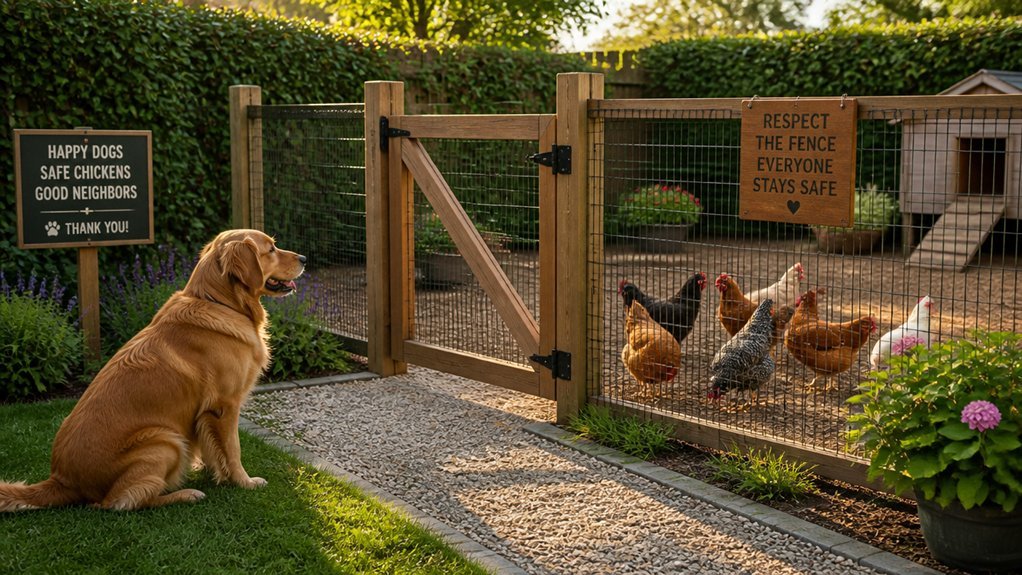
When neighbor dogs stop by, you need to act fast and calmly to protect your chickens. Call the dog away in a firm voice, then guide it off your property without chasing or yelling.
If you know the owner, speak with them right away and explain that even playful visits stress hens and can trigger injury. Ask them to keep their dog leashed or fenced when it’s outside.
You can also post simple signs and keep your coop area tidy so it doesn’t invite curiosity. If a dog keeps returning, document each visit and contact local animal control or your neighborhood association for support.
Clear communication, quick action, and consistent boundaries help you reduce repeat problems and keep your flock safer.
Protect Chickens From Dogs When You’Re Away
Before you leave, secure your coop and run so dogs can’t get in while you’re away. Lock every door, clip every latch, and inspect fencing for gaps, loose wire, or dig spots. You should also move feed indoors so dogs don’t attract pests that stress your flock.
If you’ll be gone longer, ask a trusted neighbor to check on your birds daily.
- Use motion lights to discourage night prowlers.
- Set up a camera so you can spot trouble fast.
- Add buried wire or apron fencing at weak points.
- Leave clear instructions for feeding, locking, and emergencies.
When you return, walk the perimeter and look for prints, scratches, or disturbed bedding. Quick checks help you catch problems before a dog learns your chickens are easy targets.
Frequently Asked Questions
How Do I Introduce My Puppy to Chickens Safely?
Start with a leash, a calm puppy, and a secured chicken area. Let your puppy observe from distance, reward calm behavior, and keep sessions short. Gradually reduce distance only if he stays relaxed and gentle.
What Dog Breeds Are Best With Backyard Chickens?
You’ll usually do best with calm, low-prey breeds like Labrador Retrievers, Golden Retrievers, Poodles, and Great Pyrenees. You should still supervise every dog, train impulse control, and never assume breed alone guarantees chicken safety.
Can Chickens and Dogs Share the Same Yard?
Yes, you can, if you supervise closely and train your dog reliably. You’ll need secure fencing, separate feeding areas, and gradual introductions so your chickens stay calm and your dog learns boundaries.
How Do I Tell if My Dog Sees Chickens as Prey?
You’ll see intense staring, stalking, lunging, whining, or chasing around chickens. Your dog may ignore cues, fixate, and tense up. If it can’t relax near them, it likely sees them as prey.
What Treats Work Best for Training Around Chickens?
Use tiny, high-value treats like chicken, turkey, cheese, or freeze-dried liver; you’ll keep your dog focused better. Reward calm looks, quick recalls, and gentle behavior near chickens, and avoid treats that crumble or take too long.
In Summary
Keeping dogs and chickens safe means staying proactive. You’ll protect your flock best when you act fast, secure runs, train your dog, and never leave introductions unsupervised. Use strong fences, leashes, and clear boundaries, and don’t forget to plan for neighbor dogs, too. If you stay consistent and calm, you can reduce stress for both animals and prevent dangerous chase behavior. With the right setup, your chickens and dogs can live more peacefully together.