
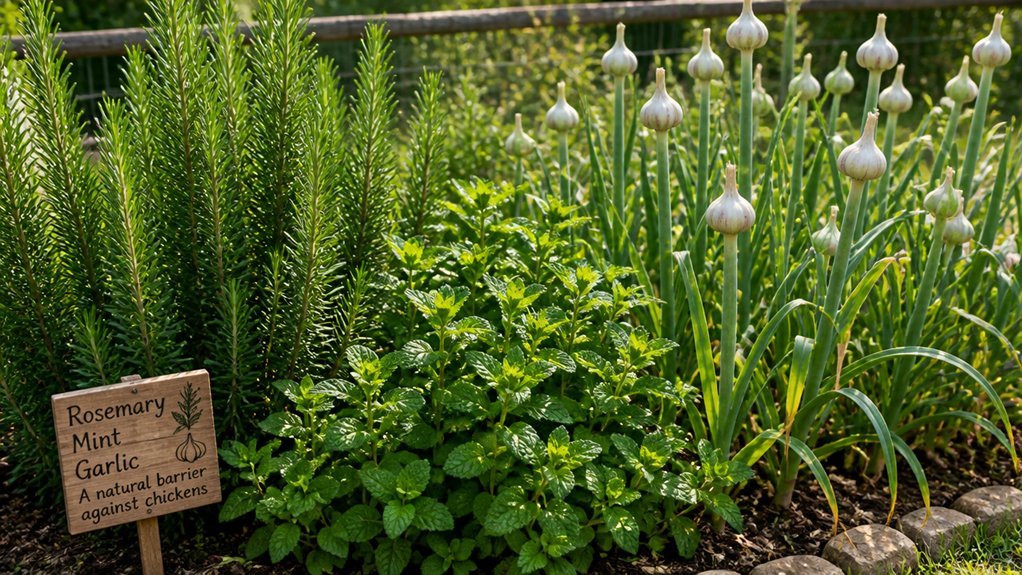
You can help deter chicken predators by planting rosemary, lavender, and marigolds around your coop. Rosemary’s strong scent may mask chicken odors, lavender’s thick, scratchy foliage can make access less inviting, and marigolds give off a pungent smell that discourages small intruders. Place them near fences, gates, and coop entrances for the best effect. They won’t replace secure fencing, but they do add a useful layer of protection, and there’s more to do for stronger defense.
Do Plants Deter Common Chicken Predators?
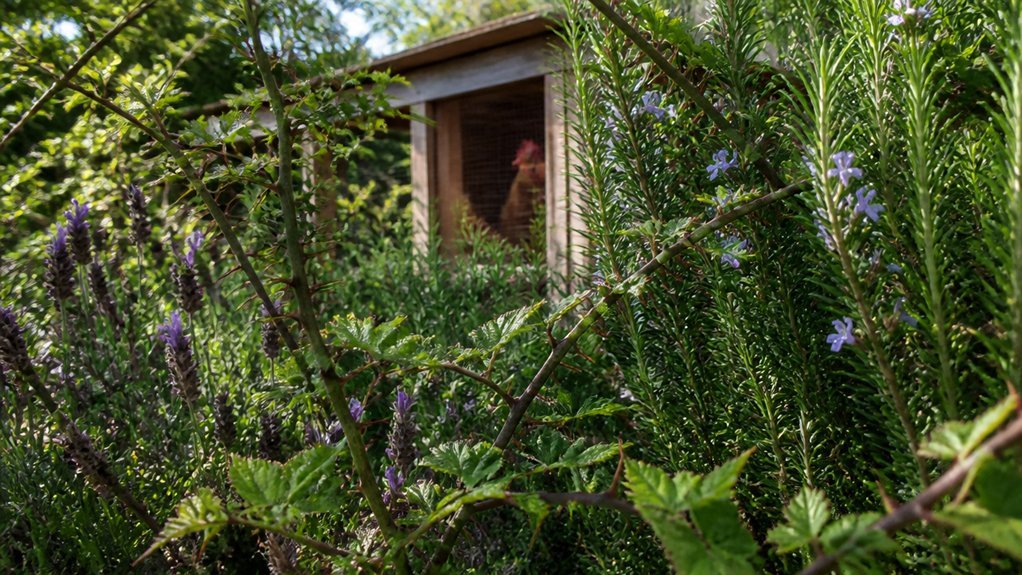
Yes, certain plants can help discourage common chicken predators, but they’re not a stand-alone defense. You can use dense shrubs, thorny borders, and strong-scented foliage to make your coop area less inviting. These barriers can break up sightlines, slow movement, and reduce easy access for foxes, raccoons, and other raiders.
A variety of plants with predator deterrent qualities can enhance your security efforts by blending natural cover with effective barriers. Still, you shouldn’t rely on plants alone. Secure fencing, locked coop doors, and routine checks matter more when you want real protection. If you place vegetation strategically, you can add another layer of security without harming your flock’s space.
Think of plants as support, not the whole solution. They work best when you combine them with good coop design, clean surroundings, and careful observation every day.
3 Plants to Deter Chicken Predators
If you want to add a natural layer of defense around your coop, a few plants can help make the area less appealing to chicken predators. Rosemary gives off a strong scent that can confuse raccoons and mask chicken smells.
Lavender offers a similar benefit while adding thick, scratchy foliage that many animals avoid. You can also rely on marigolds, whose pungent odor may discourage rodents and other small intruders.
These plants won’t stop a determined predator, but they can make your coop perimeter less inviting and support your other safeguards. Visual mimicry is a key aspect in predator deterrent strategies, and incorporating these plants adds an extra layer of natural protection. Choose hardy varieties you like, and let their fragrance, texture, and color work for you. Used together, they create a simple, low-maintenance barrier that fits well in a backyard flock setup.
How to Plant Them Around the Coop
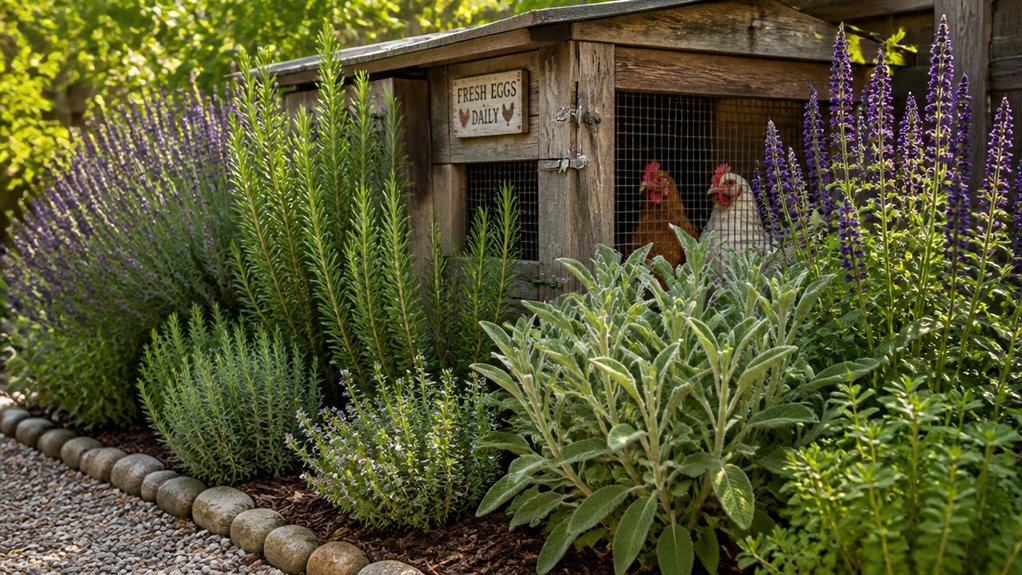
To get the most from these plants, place them where predators are most likely to approach your coop, such as along fences, near entry points, and around feed storage. Use dense, thorny, or strongly scented varieties to create a living barrier that makes access less inviting.
Space plants close enough to form coverage, but leave room for airflow and cleaning.
- Plant lavender and rosemary in sunny spots near doors.
- Add thorny shrubs outside fence lines and gate openings.
- Cluster mint in containers to control spread.
Water new plants regularly until they establish, then prune them so they stay compact and effective.
You’ll get better protection when you combine plants with secure wire, closed feed bins, and good coop sanitation.
Frequently Asked Questions
Which Plants Are Safe for Chickens to Peck?
You can let chickens peck at safe options like grass, clover, dandelion greens, chickweed, kale, parsley, basil, mint, and marigold petals. Avoid onion, garlic, rhubarb, nightshade, avocado, and anything moldy or sprayed.
How Long Until These Plants Grow Enough for Protection?
You’ll usually wait 6-18 months for meaningful protection, depending on the plant and your climate. Fast growers like rosemary or lavender can help sooner, but thicker shrubs often need 2-3 years.
Can Potted Plants Deter Predators Near the Coop?
Yes, you can use potted plants near your coop to add cover and break sightlines, but they won’t stop determined predators. You’ll get better results when you pair them with fencing, lights, and locked housing.
Do These Plants Work Against Aerial Chicken Predators?
No, you can’t rely on them for aerial predators. You’ll need netting, cover, and alert flock supervision, because birds of prey ignore plant barriers and’ll still swoop in if they spot easy targets.
Which Plants Survive Best in Shaded Coop Areas?
You’ll get the best results with hostas, ferns, mint, and lemon balm, since they tolerate shade well. You can also try violets or impatiens, which stay hardy in dim, moist coop areas.
In Summary
When you add the right plants around your coop, you make your flock less attractive to predators and improve your yard at the same time. Choose strong-scented, hardy plants like lavender, rosemary, and marigolds, then place them where predators are likely to approach. While plants won’t stop every threat, they can support a safer setup. Keep your coop secure, stay alert, and use these natural barriers as one more layer of protection for your chickens.



