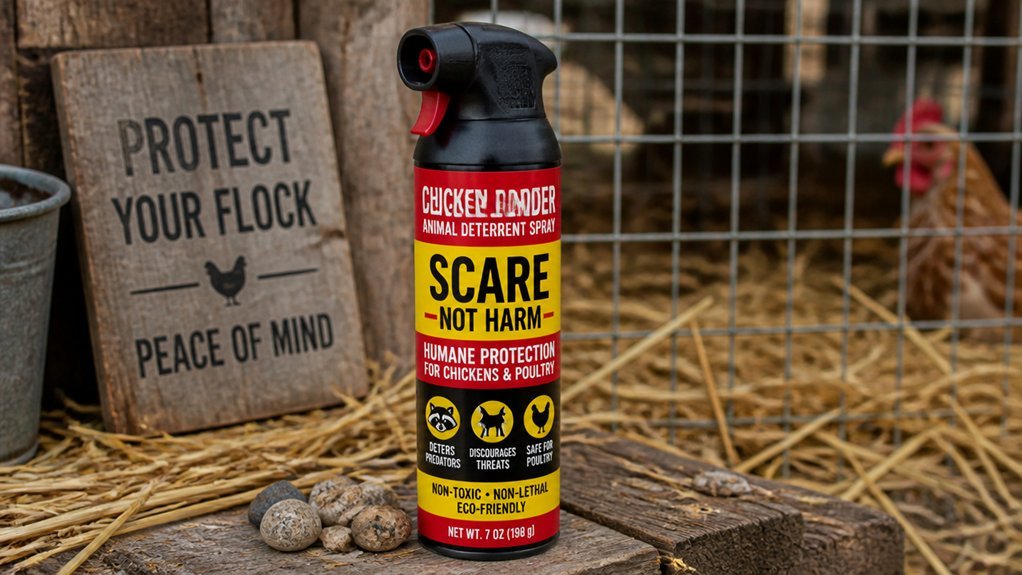
Chicken deterrent sprays are liquids you use to keep chickens out of gardens, patios, planters, walkways, and other off-limits spots. You spray them on surfaces or borders, and the strong smells or tastes make the area less appealing. Many use natural ingredients like vinegar, citrus, garlic, peppermint, or cayenne, while some commercial versions add bittering agents. They can help, but you’ll need to reapply them and pair them with barriers for the best results if you want more details.
What Chicken Deterrent Sprays Are
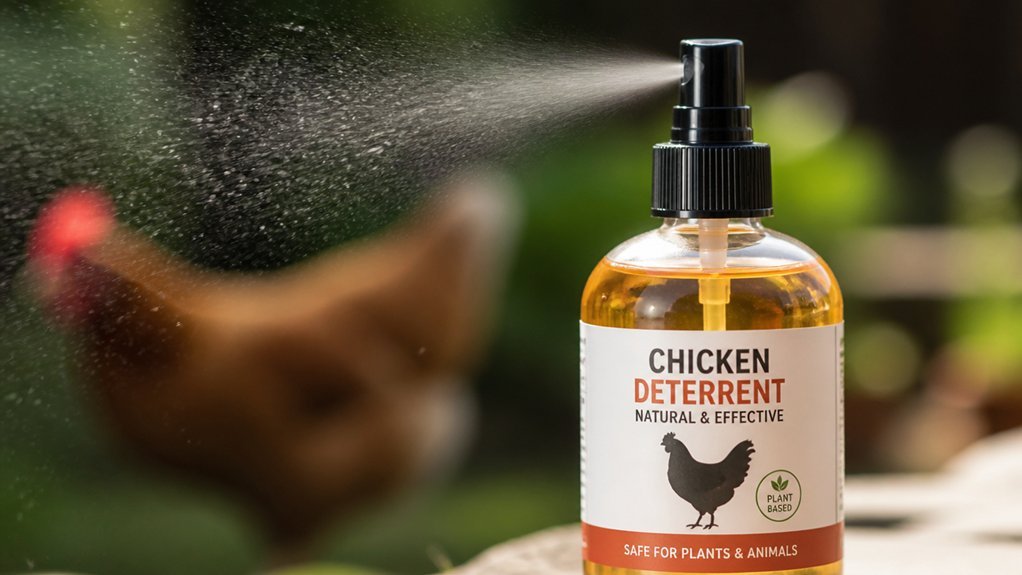
Chicken deterrent sprays are specially formulated liquids that help keep chickens away from areas you want to protect, such as gardens, patios, or entryways. You can apply them to surfaces, borders, or objects where chickens tend to wander. They usually include ingredients with strong odors or tastes that make the area less appealing to birds. You’ll find options for outdoor use that suit fences, plants, planters, and walkways. Because you can spray them directly where needed, they offer a simple way to mark off space without building barriers. You should always check the label before using one, since formulations vary and some aren’t safe for every surface. When you choose the right product, you can better protect your space and reduce unwanted chicken traffic. Safe application methods are crucial for ensuring they won’t harm your plants or other creatures in the environment.
How Chicken Deterrent Sprays Work
When you spray these products on problem areas, they create an odor, taste, or sensory cue that chickens tend to avoid. You use that reaction to steer birds away from gardens, patios, fences, or other spots you want to protect.
Once the chicken notices the treated area, it usually pecks less, scratches less, and moves on. The spray doesn’t harm the bird; it simply makes the location unpleasant enough to discourage repeat visits.
You get the best results when you reapply after rain or heavy watering, because moisture can weaken the effect. Consistent use helps chickens form a habit of staying away, especially when you pair the spray with blocking access, removing food scraps, and keeping tempting areas clean and less inviting for them. Humane deterrent methods are effective in encouraging chickens to avoid certain areas without causing harm.
Common Ingredients in Chicken Deterrent Sprays

When you choose a chicken deterrent spray, you’ll often see natural repellents like garlic, peppermint, or vinegar doing the heavy lifting. You may also find commercial additives that help the spray stick, spread evenly, or last longer outdoors. Knowing these ingredients helps you pick a spray that fits your yard and your birds. For added effectiveness, some formulations include tamper-resistant features to prevent pests from avoiding the spray or causing damage.
Natural Repellent Ingredients
Natural deterrent sprays for chickens often rely on ingredients with strong scents or tastes that birds dislike, such as vinegar, citrus oils, garlic, peppermint, and cayenne pepper.
You can mix these natural repellents with water and spray them around coops, garden borders, and favorite pecking spots to discourage unwanted scratching. Vinegar helps create an acidic smell, while citrus oils add a sharp scent chickens usually avoid. Garlic and peppermint can make treated areas less appealing, and cayenne pepper may irritate sensitive beaks.
Using food-grade diatomaceous earth in the spray can also enhance its effectiveness as a natural deterrent without introducing harmful chemicals.
You should reapply after rain or heavy watering because these ingredients fade quickly. Test any spray on a small area first, and watch how your flock responds. Natural options let you manage behavior without harsh chemicals or complicated routines.
Commercial Spray Additives
Commercial deterrent sprays often include additives like methyl anthranilate, bittering agents, and essential-oil blends designed to make treated surfaces taste or smell unpleasant to chickens. When you choose a product, you should check the label for active ingredients, dilution rates, and any warnings about plants or pets. These additives work by discouraging pecking, scratching, and lingering in treated areas. For long-lasting protection, selecting durable, weatherproof formulations can ensure the deterrent remains effective despite exposure to the elements.
Are Deterrent Sprays Safe for Chickens?
When you use deterrent sprays around chickens, you need to think about their safety first. Some ingredients can irritate their skin, eyes, or breathing, especially if you spray too much or apply it too close.
You should always check the formula carefully so you can avoid risky ingredients and keep your flock protected. Additionally, choosing products with EPA-registered disinfectants or natural enzymes can help ensure safety for your birds.
Chicken Safety Considerations
Deterrent sprays can be safe for chickens, but only if you choose products made for use around poultry and follow the label exactly. You should spray only when birds are out of the area, then let surfaces dry before they return. Keep feed, water, and nesting boxes covered so you don’t create stress or contamination. Watch your flock closely after each use for sneezing, head shaking, or avoidance. A thorough understanding of pest control formulations can help you select the safest and most effective products for your flock.
Spray Ingredient Risks
Even safe-looking sprays can become a problem if their ingredients irritate your flock or leave harmful residues on surfaces and bedding. You should check every label before you spray, because some deterrents use essential oils, vinegar, capsaicin, or synthetic chemicals that can sting eyes, burn skin, or upset your chickens’ breathing.
If you apply a product near feed, water, or roosts, your birds may ingest traces while pecking or preening. You also need to avoid overusing concentrated mixes, since stronger isn’t better for poultry safety. Test a small area first, keep birds away until the surface dries, and choose formulas made for animals whenever possible.
Additionally, selecting products with probiotic balance can help maintain your flock’s gut health while deterring pests or predators.
If you notice coughing, rubbing, or stress, stop using the spray and switch to a gentler option.
Safe Application Tips for Backyard Coops
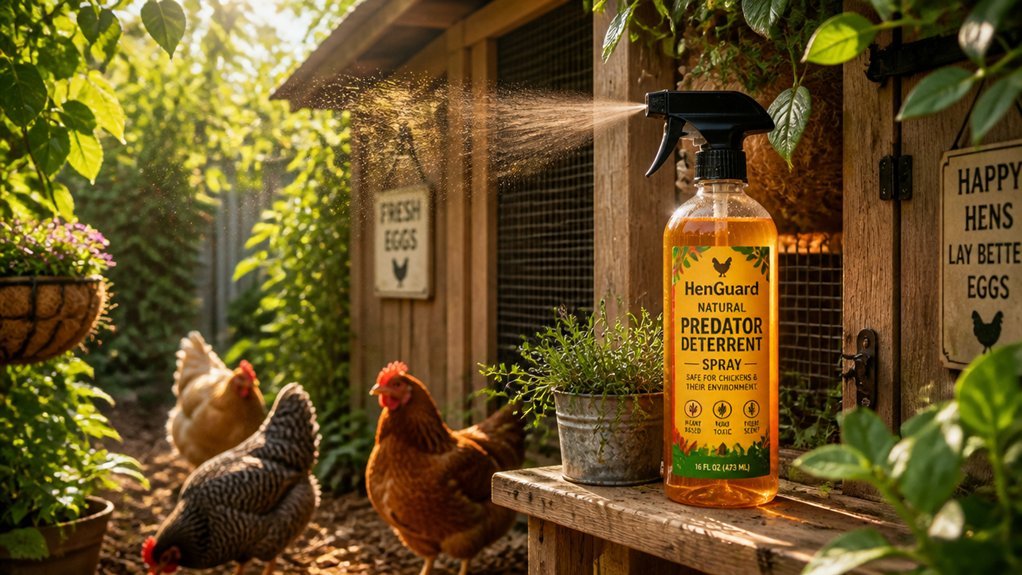
Before you spray anything in a backyard coop, read the label and make sure the product is safe for chickens, nesting areas, and nearby feed or water. Remove birds first if the directions call for it, and keep them out until the surface dries completely.
Open doors and vents so fresh air can move through the coop while you work. Wear gloves, and avoid spraying directly on roosts, eggs, litter, or dust that chickens touch often. Use only the amount listed, because extra product can leave harmful residue.
Test a small hidden spot before treating the whole area. If you spill spray, clean it up right away with water and a cloth. Store the bottle locked away, out of sunlight and reach of curious birds.
Secure hardware such as tamper-resistant latches can further protect your coop from raccoons and other predators.Best Ways to Use Deterrent Sprays
For the best results, apply deterrent sprays where chickens keep scratching, pecking, or roosting, and reapply after rain, cleaning, or heavy activity. Focus on problem spots first: coop edges, garden beds, fence lines, nesting areas, and outdoor furniture. You should test a small area before spraying widely, then coat surfaces evenly without soaking them. Use a light, targeted mist so you don’t waste product or create slick residue. Time applications when chickens are out of the area, and let surfaces dry before they return. Pair sprays with barriers, mulch, or netting to guide birds away from tempting zones. Rotate your spray routine as needed, and keep notes on where chickens still linger so you can adjust placement quickly and effectively. Considering weather resistance and durability in your choice of sprays can enhance effectiveness and longevity.
Limits of Chicken Deterrent Sprays
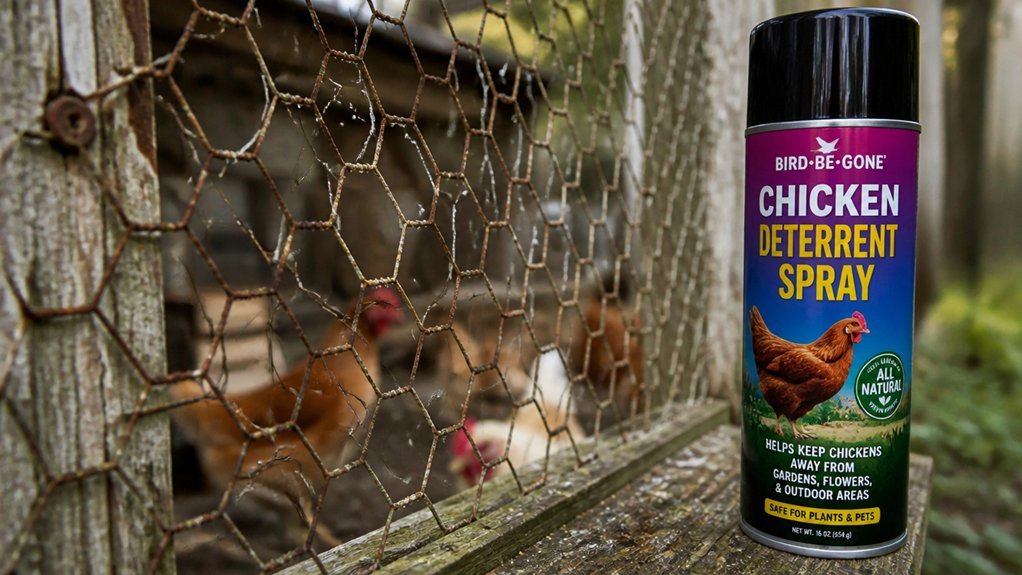
Deterrent sprays can help, but they won’t stop every chicken every time. Some birds ignore the smell after repeated exposure, especially if they’re hungry, curious, or already nesting nearby.
Weather also weakens results, since rain, sun, and wind can wash away or dilute the scent. You’ll need to reapply sprays often, which can get costly and time-consuming. They may also protect only treated spots, leaving gaps where chickens can still enter.
If your fencing, feed storage, or garden layout invites them in, spraying alone won’t solve the problem. You’ll get better control when you pair sprays with barriers, cleanup, and consistent supervision. Think of deterrent sprays as one tool, not a complete fix for keeping chickens out.
Frequently Asked Questions
How Long Do Chicken Deterrent Sprays Usually Last Outdoors?
You’ll usually get a few days to two weeks outdoors, depending on rain, sun, and wind. You should reapply after heavy weather or whenever the scent fades, since chickens can quickly ignore weaker sprays.
Can Deterrent Sprays Affect Egg Flavor or Quality?
You can use deterrent sprays carefully, but some chemicals may taint eggs if chickens eat treated surfaces or plants. You’ll want to keep sprays away from nesting areas and wash eggs before using them.
Do Deterrent Sprays Work on Wild Birds Too?
Yes, you can deter some wild birds, but results vary. You’ll often need species-specific sprays and repeated application. Don’t rely on them alone; combine exclusion, habitat changes, and cleanup for better control around your flock.
Will Rain Wash Away Chicken Deterrent Sprays Quickly?
Yes, rain can wash off chicken deterrent sprays quickly, especially if you spray exposed surfaces. You’ll need to reapply after wet weather, and you may get better results using a longer-lasting, weather-resistant product.
Are There Homemade Alternatives to Commercial Deterrent Sprays?
Yes, you can make homemade alternatives using vinegar, citrus peels, garlic, or hot pepper infusion. You’ll spray them around problem areas, but reapply often because weather and cleaning can reduce their effectiveness quickly.
In Summary
Deterrent sprays can help you protect your chickens by making certain areas less appealing, but they’re not a fix-all solution. You’ll get the best results when you use them alongside good coop management, fencing, and regular cleaning. Always choose a product that’s safe for poultry, and follow the label carefully. If you use sprays wisely, you can reduce unwanted pecking, wandering, or pests while keeping your flock healthier and more comfortable overall.