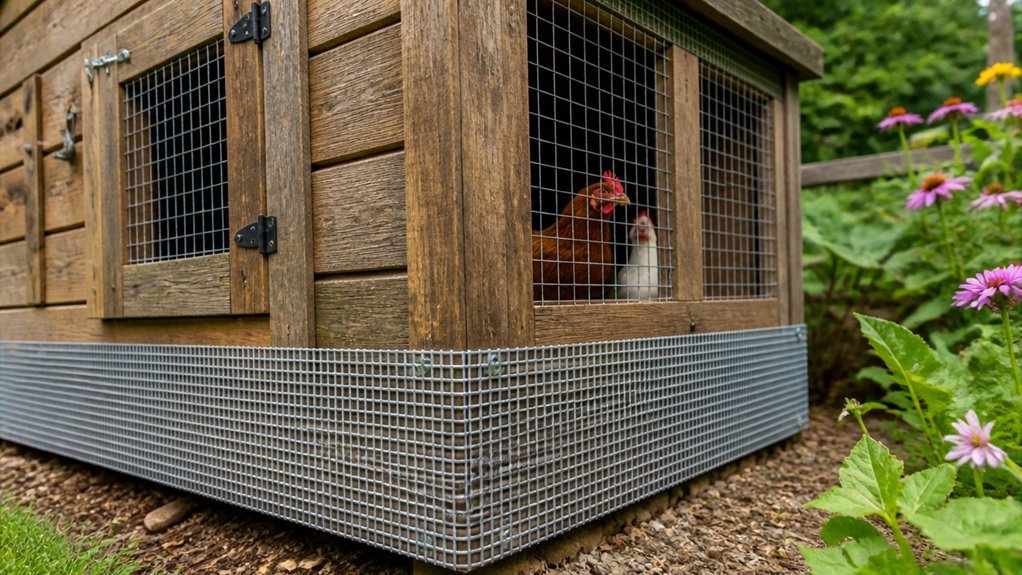
Rodent-proofing your chicken coop protects your flock by keeping disease-carrying pests away from feed, bedding, and water. You also cut down on waste, bad smells, and the stress rodents cause when they chew wood, hide in clutter, and contaminate nesting areas. Sealing gaps, cleaning spills, and removing hiding spots helps you keep the coop cleaner and safer. Keep going, and you’ll see how to spot weak points and stop rodents for good.
Why Rodent-Proofing Matters for Chicken Coops
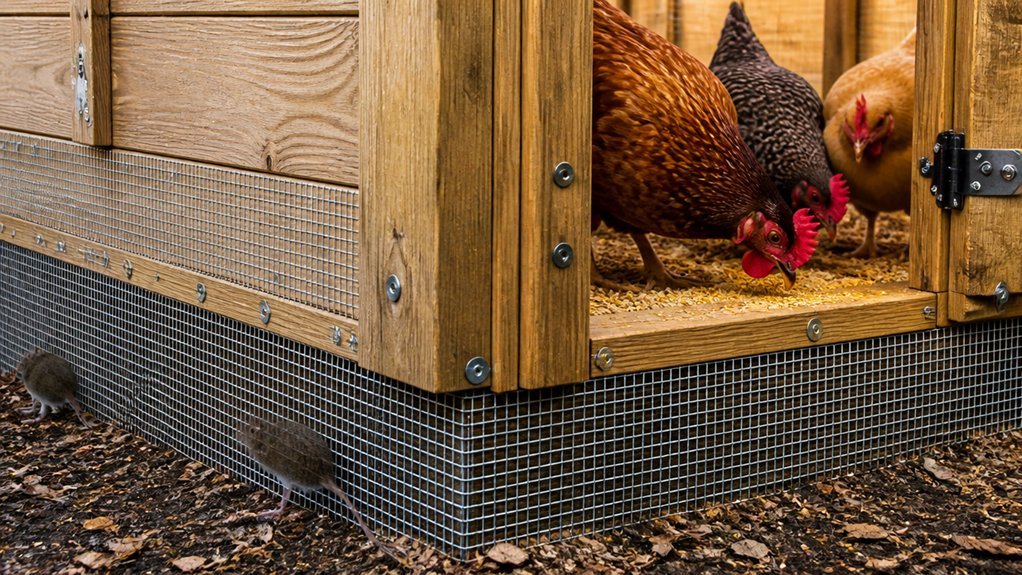
Rodent-proofing matters because mice and rats can quickly turn a healthy chicken coop into a source of disease, stress, and wasted feed. You protect your flock’s health when you keep rodents away from feed, bedding, and water.
Rodent-proofing protects your flock’s health by keeping mice and rats away from feed, bedding, and water.
Rodents spread germs, contaminate supplies, and attract predators that threaten your birds. They also chew wood, insulation, and wiring, which can damage your coop and create costly repairs.
When you ignore them, they multiply fast and make your chickens more stressed, less productive, and less comfortable. By taking rodent-proofing seriously, you save feed, reduce cleanup, and support a safer environment.
You also spend less time dealing with problems later, which helps your coop stay cleaner, stronger, and easier to manage year-round. Ensuring your traps are reusable and easy-to-clean helps maintain a pest-free coop over time.
How Rodents Get Into Chicken Coops
Mice and rats usually get into chicken coops through the smallest openings you might overlook. They squeeze under loose doors, through gaps around vents, and along weak spots where walls meet the floor.
If your coop has unsealed corners, cracked boards, or torn wire, rodents can slip in without much effort. They also chew through soft wood, plastic, and even thin mesh, so a barrier that looks sturdy may not be enough.
Feed spills draw them in, and once they find a reliable source, they’ll keep returning. You can’t rely on luck; you need tight construction, strong hardware cloth, and secure storage for feed. Proper pest-resistant container materials are also essential to prevent gnawing and entry.
When you block their entry points and remove easy access, you make your coop far less inviting to pests.
Signs Your Coop Has Rodents
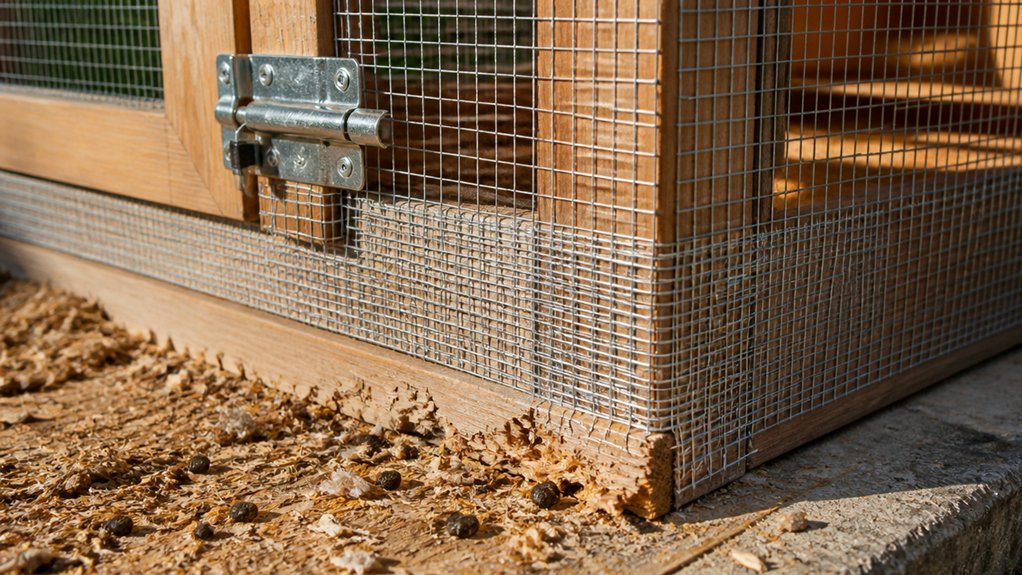
Are rats or mice already making themselves at home in your coop? You can spot trouble fast if you check for fresh droppings, chewed feed bags, and shredded nesting material. You may also notice tiny grease marks along perches or walls, plus scratching at night. Watch your hens, too; they’ll act skittish, crowd away from corners, or avoid certain spots. Regular inspection helps identify rodent-proofing issues early and prevent infestations from worsening.
Rodent-Proof the Coop Floor and Walls
Once you’ve confirmed rodents are around, the next step is to block their easiest entry points: the floor and walls. You should inspect the coop base for soft soil, rotten boards, and chew marks, then repair them fast. Replace damaged wood with pressure-treated lumber or hardware cloth backed by solid framing. Using rodent-proof treadle feeders can also help prevent pests from accessing feed directly, reducing attractants. If your coop sits on dirt, add a buried apron of hardware cloth around the perimeter and cover the floor with a tight, clean surface that rodents can’t tunnel through. Inside, keep bedding shallow and dry so rats can’t hide or nest. Check the lower wall line often, because gnawed spots spread quickly. Strong floors and walls make your coop harder to invade and protect feed, bedding, and birds from costly infestations.
Seal Gaps Around Doors, Vents, and Roofs
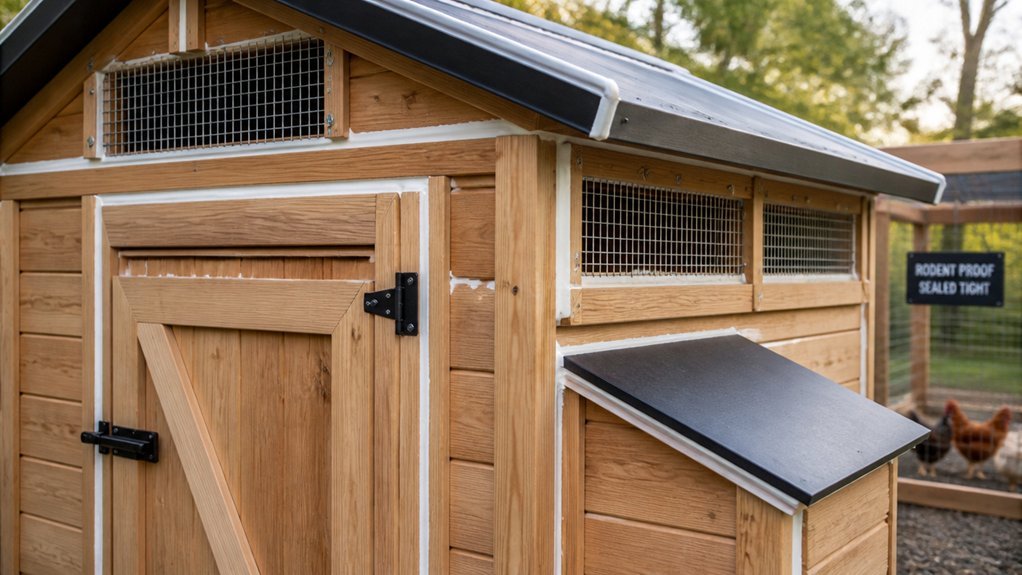
You’ll keep rodents out by sealing every gap around coop doors and vents with sturdy weatherstripping or hardware cloth. A secure latch with padlock compatibility can also prevent raccoons from forcing their way in. Check the roofline too, since even small openings there can give mice and rats easy access. When you block these weak spots, you make your coop much harder to invade.
Door And Vent Seals
Even small gaps around coop doors, vents, and roof edges can become easy entry points for rodents, so seal every opening with hardware cloth, weatherstripping, or metal flashing. You should inspect door frames, hinges, and latch sides for daylight, then close those spaces with tight-fitting strips. Around vents, fasten durable mesh so air still flows but mice and rats can’t squeeze through. Replace cracked trim, warped boards, and loose siding that leave hidden gaps. If you use a sliding or swinging door, check that it closes flush every time. After storms or seasonal changes, recheck seals and repair damage fast. When you block these access points, you make your coop harder to enter, protect feed, and keep your flock safer from contamination and stress. Proper hardware cloth installation, especially with a mesh size of 1/2 inch and a gauge of 19, is essential for predator-proofing your coop effectively.
Roof Gap Barriers
Roof gaps are an often-missed entry point, so seal the edges where roofing meets walls, trim, and overhangs with metal flashing, hardware cloth, or another chew-resistant barrier. You’ll block rats and mice before they slip into nesting areas, steal feed, or shred insulation.
Check these spots closely:
- Eaves where rafters meet the wall
- Roof seams around vents and chimneys
- Any lifted shingles, warped trim, or open corners
Use screws, staples, or nails that hold the barrier tight, and overlap materials so rodents can’t pry them loose. If you spot daylight inside the coop, you’ve found a weak point.
Reinspect after storms, since wind can reopen tiny passages. By sealing roof gaps now, you protect your flock, reduce cleanup, and keep your coop drier and safer.
Use Rodent-Proof Feed Bins
Rodents can chew through flimsy containers, so store chicken feed in sturdy, rodent-proof bins with tight-fitting lids. Choose bins made from heavy-duty metal or thick plastic that won’t crack, warp, or split under pressure.
Make sure the lid seals firmly and locks down, because even a small opening invites mice and rats to climb in, nest, and contaminate the feed. Label each bin so you can track what’s inside without leaving it open longer than needed.
Clean the bin regularly to remove spilled grain, dust, and odors that attract pests. If you buy feed in bulk, divide it into multiple sealed bins to reduce exposure. Using pest-resistant designs can further help prevent rodent entry and protect your flock’s nutrition. By keeping feed protected, you cut off a major food source and make your coop much less appealing.
Keep Chicken Feed Off the Ground
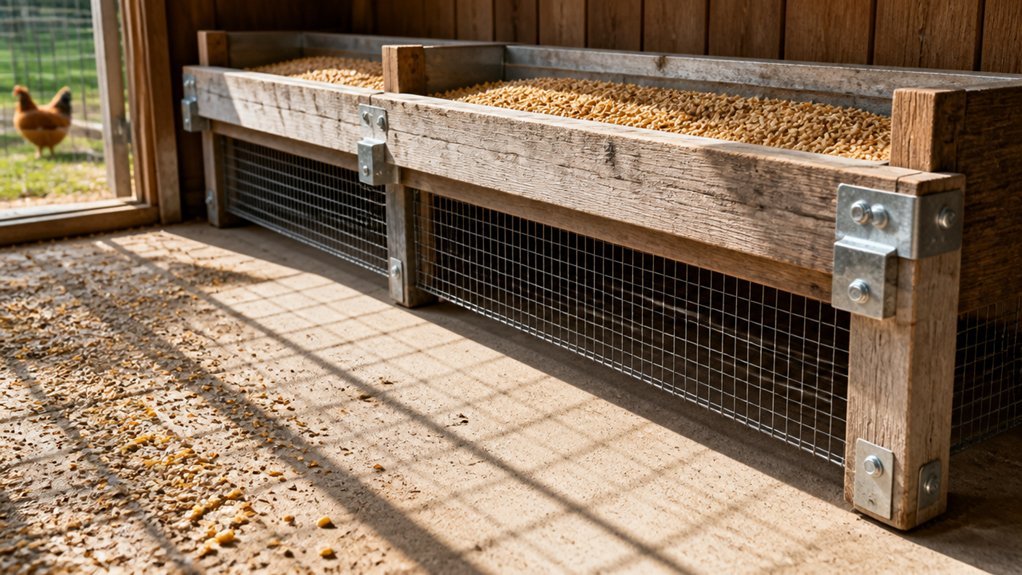
Keeping chicken feed off the ground removes easy access for mice and rats, so use raised feeders, hanging containers, or sturdy platforms that keep grain elevated and contained. You’ll make your coop less inviting and easier to clean. A well-designed feeder placement also reduces rodent access points and discourages burrowing near the coop.
- Mount feeders at chest height for your birds.
- Place containers on a stable stand, not dirt.
- Sweep spills right away to remove scent trails.
When you keep feed elevated, you cut hiding spots and prevent rodents from nesting nearby. Check that your setup stays level, because tipped bins waste feed and attract pests fast. Choose smooth surfaces that rodents can’t grip, and position everything where you can refill it without dropping grain.
Small changes like these help you protect feed, save money, and keep your flock’s space cleaner every day.
Protect Waterers and Nesting Boxes
Once you’ve lifted feed off the floor, turn your attention to waterers and nesting boxes, since both can attract pests if they’re left easy to reach. Hang waterers at a height that keeps them clean and discourages spill-soaked bedding, which can draw rodents.
Check them daily for drips, algae, and muddy areas, and empty any standing water around the coop.
For nesting boxes, keep them tidy and slightly elevated so hens can use them without inviting curious pests. Replace damp bedding often, and remove eggs promptly so nothing lingers as a food source.
If you stack boxes neatly and keep access points clear, you’ll make the coop less appealing to rats and mice while helping your hens stay dry, calm, and productive. Proper nesting box design, such as those with drainage and ventilation features, further discourages pest attractions.
Install Hardware Cloth for Rodent Control
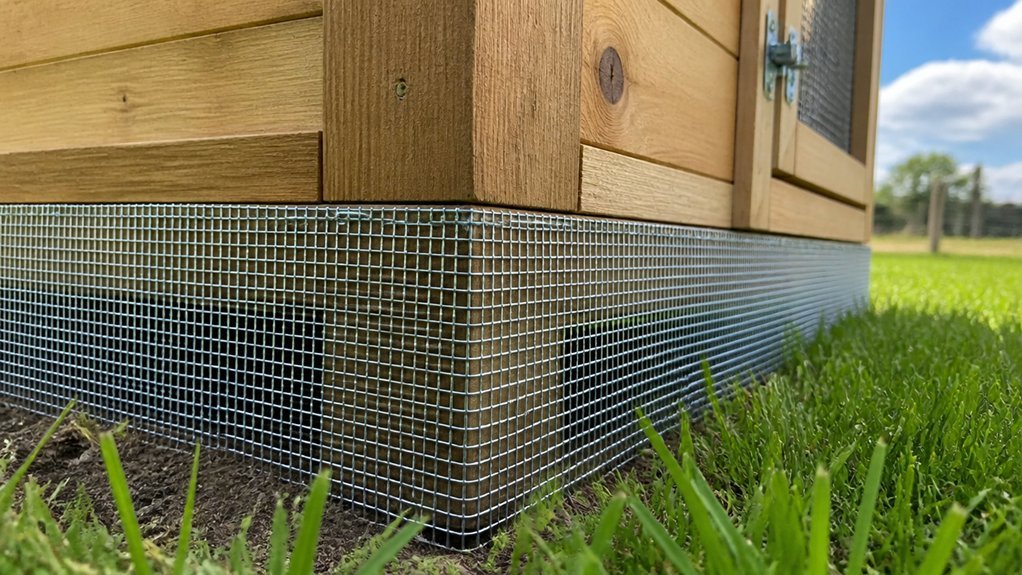
To stop mice and rats from squeezing through weak spots, line vulnerable parts of the coop with hardware cloth instead of flimsy wire mesh. You’ll want 1/4-inch galvanized cloth for vents, windows, and openings around doors. Cut it with heavy snips, then fasten it tightly with screws and washers so predators can’t pry it loose. Keep edges flush and overlap seams to eliminate gaps.
- Measure every opening before you cut.
- Use corrosion-resistant fasteners for lasting strength.
- Inspect corners and repairs after storms.
When you install hardware cloth carefully, you create a tough barrier that rodents can’t chew through or slip past. That extra layer helps protect feed, bedding, and your flock’s health without complicating daily care.
Stop Burrowing Under the Coop
Stop burrowing before it starts by blocking access beneath the coop with a solid perimeter barrier. Bury hardware cloth, welded wire, or pressure-treated boards at least 12 inches deep around the base, then flare it outward to form an apron. This makes digging harder for rats, mice, and even larger pests.
Pack soil tightly against the edge so there’s no loose tunnel entry. If your coop sits on skids or legs, close every gap with metal flashing or mesh, and check corners where soil has eroded.
Raise the coop floor above grade when you can, because dry, elevated structure edges discourage digging. Inspect after heavy rain, since washouts can reopen routes.
Small openings invite trouble fast, so seal them early and keep the perimeter tight.
Clean Up Spilled Feed Daily
Sweep up spilled feed as soon as you spot it, because even a few crumbs can attract mice, rats, and other rodents fast. When you keep the ground clean, you cut off an easy meal and make your coop far less inviting.
Use a broom, scoop, or handheld vacuum to grab loose grain before dusk, when pests start moving.
- Check under feeders and waterers every day.
- Empty trays, pans, and corners where feed collects.
- Store extra feed in sealed bins near the coop.
- Regularly inspect waste reduction features to ensure they are functioning properly and minimizing spills.
You should also watch how much feed you put out, since overfilling often creates waste. Feed your flock in portions they can finish quickly, then tidy up the leftovers.
This simple habit helps protect your birds, your supplies, and your coop’s hygiene.
Remove Hiding Spots Around the Coop
You can make your coop less inviting to rodents by clearing brush and debris around it.
Keep firewood stacked well away from the coop, and trim back overgrown vegetation that gives pests cover. With fewer hiding spots nearby, you’ll make it much harder for rats and mice to settle in.
Clear Brush And Debris
Around the coop, thick brush, stacked lumber, tall weeds, and scattered scraps give rats and mice the cover they need to dart in and out unnoticed. You can cut that advantage fast by clearing every hiding place within a few feet of the run.
Keep the area open, bright, and easy to inspect so rodents don’t feel safe lingering near feed or nesting boxes.
- Pull weeds before they seed and spread.
- Rake up leaves, straw, and broken feed sacks.
- Remove loose boards, buckets, and other clutter.
When you maintain a tidy perimeter, you spot burrows sooner, discourage nesting, and make predators’ work easier.
A clean edge also helps you notice fresh droppings, chew marks, or tracks before a small problem turns into an infestation.
Stack Firewood Away
Stack firewood well away from the coop, because loose woodpiles create perfect cover for rats, mice, and snakes. Keep logs at least 20 feet away and lift them on racks so pests can’t nest underneath. You’ll make your coop less inviting and easier to inspect.
| Do this | Why it helps |
|---|---|
| Store firewood far from the coop | Removes shelter for rodents |
| Raise wood off the ground | Blocks nesting and burrowing |
Check the stack often for droppings, chewed bark, or movement. If you notice activity, move the wood farther out and clean the area underneath. When you deny pests a hidden, quiet spot near your birds, you cut their chances of settling in and raiding feed.
Trim Overgrown Vegetation
Trim grass, weeds, and brush around the coop so rodents and snakes can’t hide close to your birds. Keep a clear buffer at least 3 feet wide, and you’ll make predators feel exposed and unwelcome.
- Mow regularly to prevent thick cover from forming.
- Pull tall weeds by the roots so they don’t return fast.
- Prune shrubs and vines that touch fences or walls.
When you maintain open ground, you also spot droppings, burrows, and trails sooner. That lets you act before pests settle in. Rake clippings away, compost them far from the coop, and check the area after rain, when growth rebounds quickly.
A tidy perimeter improves airflow, reduces dampness, and protects feed, eggs, and chicks from hidden threats.
Protect Your Flock From Rodent-Borne Disease
Rodents can do more than steal feed and scare your hens—they can also spread harmful diseases through droppings, urine, and contaminated surfaces. You protect your flock by keeping feed sealed, cleaning spills quickly, and removing any nesting material rodents leave behind.
Wear gloves and a mask when you clean so you don’t inhale dust from droppings. Wash hands, boots, and tools after each coop visit, and disinfect feeders, waterers, and nesting boxes regularly.
If you spot gnaw marks, droppings, or burrows, act fast before rodents multiply and expose your birds to bacteria and parasites. Healthy chickens start with a clean, dry coop, so reduce contamination risks every day.
Watch for coughing, diarrhea, lethargy, or egg decline, and isolate sick birds promptly.
Keep the Coop Rodent-Proof Year-Round
Keep your coop rodent-proof all year by checking it each season for new signs of wear, gnawing, or nesting spots.
Seal any gaps, cracks, or holes as soon as you spot them so mice and rats can’t get in.
Refresh traps, repellents, and other deterrents regularly so they stay effective as the weather changes.
Seasonal Inspection Checks
As the seasons change, you’ll want to inspect your coop for fresh gaps, weakened wire, wet bedding, and signs of chewing so small problems don’t turn into rodent highways.
Walk the perimeter after storms, snowmelt, or heat waves, and check the roofline, doors, vents, feed storage, and floor area. Keep a simple routine:
- Look for droppings, tunnels, and nesting scraps.
- Test latches, screens, and boards for looseness.
- Replace soggy bedding and spilled feed right away.
When you spot wear early, you cut off shelter and easy meals before rodents settle in. Use a flashlight for dark corners, and note changes in a log so you can catch patterns across the year.
A steady inspection habit keeps your flock’s home cleaner, safer, and far less inviting to pests.
Seal Entry Gaps
Start by sealing every gap you can find, because even a thumb-sized opening can let mice or rats slip into the coop. Walk the coop inside and out, and check corners, joints, vents, roof edges, and the base where wood meets ground.
Patch cracks with hardware cloth, metal flashing, or chew-resistant sealant, not soft filler that rodents can chew through. Replace warped boards, tighten loose siding, and cover openings around pipes and wires.
If you use doors or hatches often, make sure they close snugly without leaving daylight visible. After you finish, test each area again at dusk, when rodents move most.
When you keep these barriers solid, you cut off easy access and protect feed, bedding, and birds from unwanted guests year-round.
Refresh Deterrents Regularly
Once the coop is sealed, don’t assume the job stays done on its own. Rodents test weak spots, so you need to refresh deterrents regularly and keep pressure on every season. Rotate your tools, replace worn materials, and check for smells or signs that’ve faded.
- Reapply peppermint oil or other repellents after rain.
- Swap out snapped traps and empty bait stations safely.
- Inspect bedding, feed storage, and corners for fresh droppings.
You should also trim clutter, because hiding places help mice settle back in fast. When you stay consistent, you make the coop less inviting and protect feed, eggs, and flock health. A quick monthly reset can save you from a bigger infestation later.
Frequently Asked Questions
How Often Should I Inspect My Chicken Coop for Rodent Damage?
You should inspect your chicken coop weekly, and after storms or heavy rain. Check corners, vents, feed storage, and bedding for gnaw marks, droppings, burrows, and gaps so you can catch damage early.
Can Rodents Harm Baby Chicks Differently Than Adult Hens?
Yes—you’ll notice rodents threaten chicks more because they can bite smaller bodies, steal feed, and spread disease quickly. Adult hens usually fend them off better, but rodents still stress birds and contaminate bedding.
Which Rodent-Proofing Materials Last Longest Outdoors?
Galvanized hardware cloth lasts longest outdoors, especially when you fasten it securely. You’ll also get good durability from stainless steel mesh and metal flashing, but avoid plastic, which rodents chew and weather ruins quickly.
Do Electric Fences Help Keep Rodents Away From Coops?
Yes, you can use electric fences to discourage rodents, but they’re usually more effective against larger pests. You’ll still need tight wire mesh, sealed feed, and cleanup to keep mice and rats from sneaking in.
When Should I Replace Worn Coop Seals and Mesh?
Replace worn coop seals and mesh as soon as you spot gaps, fraying, rust, or chewed spots. You’ll prevent rodents quickly by fixing damage before they widen. Check them every season and after storms.
In Summary
Rodent-proofing your chicken coop keeps your flock safer, healthier, and less stressed. When you block entry points, clean up feed, and remove hiding spots, you make it much harder for rats and mice to move in. That means less disease risk, less damage, and fewer late-night surprises. Stay consistent with your prevention routine all year, and you’ll protect both your chickens and your peace of mind.