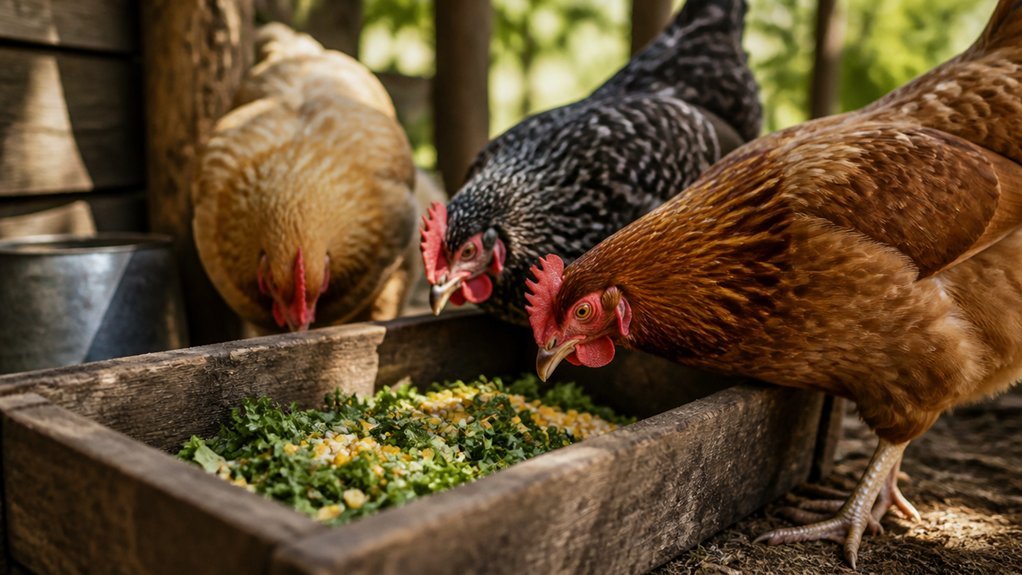
Caring for an injured backyard chicken matters because you can ease pain, stop bleeding, and lower the risk of infection fast. You should move the bird to a quiet, clean space, handle it gently, and give water right away if it’s alert. Careful checks help you spot wounds, limping, or swelling early. With the right steps, you’ll improve healing and help your chicken safely return to the flock, with more useful guidance just ahead.
What to Do When a Chicken Is Injured

When a chicken gets hurt, act quickly but stay calm. Move the bird to a quiet, clean space away from flockmates so you can reduce stress and prevent more damage.
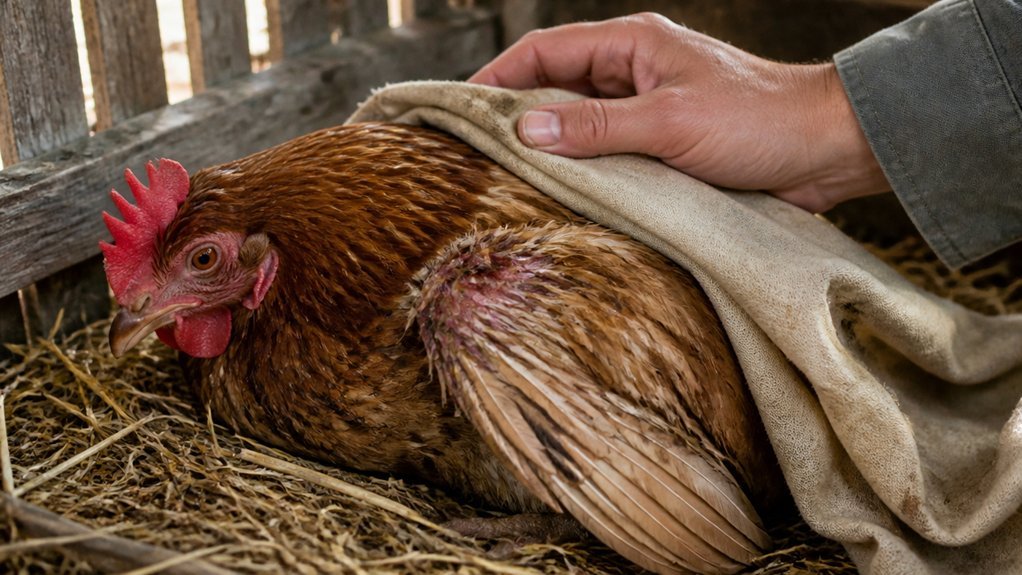
Handle her gently with both hands, supporting her body and wings. Offer fresh water right away, and keep food nearby if she seems alert enough to eat.
If bleeding is present, apply steady pressure with clean gauze or cloth. Keep the area warm, dry, and dim, since rest helps recovery. Using appropriate wound care sprays can support healing and minimize stress for your chicken.
Separate her from aggressive birds until she heals. Watch for shock, trouble breathing, or worsening weakness, and contact a veterinarian if the injury looks serious. Quick, careful action gives your chicken the best chance to recover safely.
How to Examine a Chicken for Injury
Once you’ve moved the chicken to a safe, quiet area, check her from head to toe so you can spot the problem fast.
Move her to a safe, quiet spot, then check her head to toe to spot problems fast.
Gently watch her posture, breathing, and balance before you touch her. Then inspect these areas closely:
- Head and eyes: Look for swelling, bleeding, or a tilted head.
- Beak and comb: Check for cracks, cuts, or pale color.
- Wings and legs: Compare both sides for drooping, limpness, or odd angles.
- Feet and skin: Search for punctures, bruises, heat, or dirt matted around wounds.
Use calm hands and talk softly so she stays still. If she flinches, stop and reassess. Note anything unusual, because small changes can point to serious injury.
It’s also important to monitor ventilation and shelter features, ensuring the environment stays comfortable and free from drafts during recovery.
How to Keep an Injured Chicken Safe

Keep the injured chicken in a calm, enclosed space where she can’t wander, peck at the wound, or get bullied by flockmates. Choose a dry, draft-free pen with easy access to water and feed, and keep it close enough that you can check her often. Limit noise, sudden movement, and curious pets so she stays relaxed. Use clean bedding and remove hazards like sharp edges, loose wire, and high perches. Providing adequate ventilation helps maintain a dry and comfortable environment for her recovery.
How to Treat Cuts, Bleeding, and Limping
For minor cuts, rinse the area with clean saline or lukewarm water to remove dirt, then gently pat it dry and watch for redness, swelling, or discharge.
If bleeding starts, apply steady pressure with clean gauze until it slows. Hold your chicken calmly and keep movements slow so you don’t worsen the wound.
For limping, check the foot and leg for thorns, cuts, or a twisted toe, then let your bird rest in a quiet, padded space.
- A small comb of feathers parted around a pink scratch
- Gauze pressed softly against a smudged wing
- One foot lifted, toes curled, on clean bedding
- A chicken standing still, head alert, while you watch its steps
How to Prevent Infection in Chicken Wounds
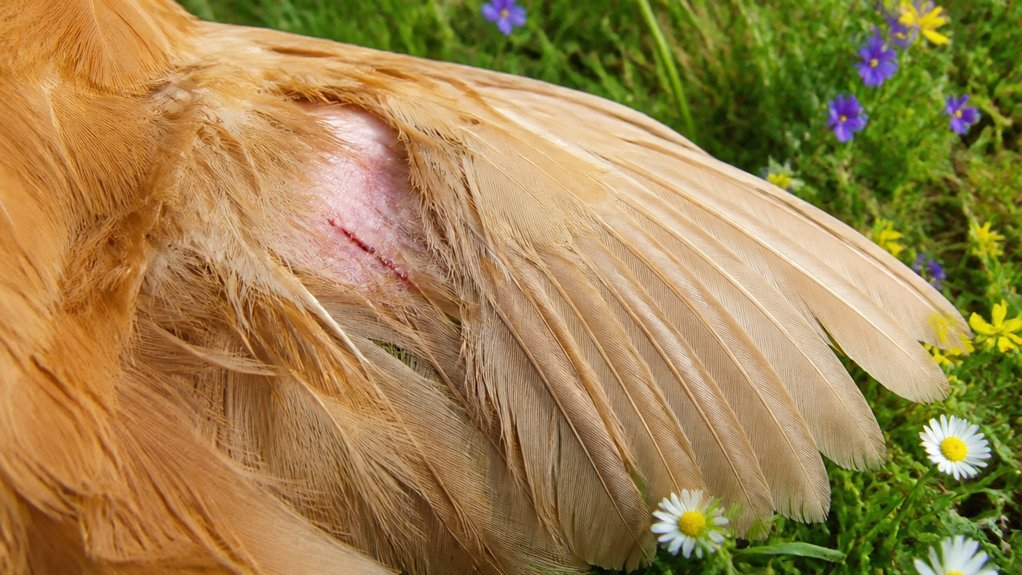
After cleaning a cut or stopping bleeding, your next job is to keep germs out of the wound. Wash your hands before and after touching the chicken. Then, gently rinse the area with sterile saline or clean water, and pat it dry with clean gauze. Use an appropriate disinfectant that is safe for poultry to prevent contamination. Apply a vet-approved antiseptic if needed, but don’t use harsh disinfectants that can damage tissue. Keep the bird in a clean, dry pen with fresh bedding, and change soiled litter often. Remove mud, droppings, and damp feed from the area because bacteria thrive there. Check the wound twice a day for swelling, heat, pus, or bad smell. If you see those signs, contact a veterinarian promptly. Keeping flies away also helps prevent infection and slows wound contamination.
How to Help a Chicken Heal and Rejoin the Flock
Once the wound is clean and protected, focus on giving your chicken a quiet, low-stress place to recover, with easy access to food, water, and a warm, draft-free shelter.
Check the wound daily for swelling, heat, or discharge, and keep her separate until she walks, pecks, and eats normally. When she seems strong, let her see the flock through a fence first.
Then reintroduce her for short supervised visits, preferably during feeding time, so birds stay distracted. Watch for chasing, feather pulling, or bullying, and step in fast if needed.
- A soft coop bed and shaded corner
- A bright water dish beside scratch grains
- A healed comb under calm, alert eyes
- Hens mingling peacefully beside the roost
Additionally, using dust-free bedding can help create a healthier environment that promotes faster healing and reduces respiratory irritation.
Frequently Asked Questions
How Can I Tell if My Chicken Needs Veterinary Attention?
You’ll need veterinary attention if your chicken won’t eat, breathe, stand, or keep bleeding, or if you see swelling, a deep wound, limpness, seizures, or severe lethargy. Trust your instincts and act fast.
What Supplies Should I Keep in a Chicken First-Aid Kit?
You should keep gauze, vet wrap, saline, antiseptic, scissors, tweezers, gloves, towels, electrolyte mix, antibiotic ointment, styptic powder, a thermometer, and a small syringe. Add a notebook, flashlight, and your vet’s contact information.
Can Injured Chickens Still Lay Eggs During Recovery?
Yes, your injured hen can still lay eggs during recovery, but stress, pain, and poor nutrition often reduce laying. You should provide quiet care, clean bedding, and balanced feed to support healing and production.
How Long Does a Chicken Usually Take to Heal?
You’ll usually see a chicken heal in days to weeks, depending on the injury. Minor cuts improve fast; fractures or infections take longer. You’ll need to watch closely, keep her clean, and support recovery.
When Is It Safe to Return a Chicken to the Flock?
You can return her when the wound’s closed, she’s eating, moving normally, and bullying has stopped. Watch her closely for pecking, limping, or stress, and reintroduce her at dusk with supervision.
In Summary
Caring for an injured backyard chicken matters because quick, gentle action can ease pain, prevent infection, and give your bird the best chance to recover. When you know how to examine, protect, and treat injuries, you can respond calmly and confidently. Your attention helps your chicken heal safely and return to the flock stronger. A little care goes a long way, and your bird depends on you to notice, help, and keep it safe.