You can identify egg peritonitis in hens by a swollen, tense belly, puffed feathers, pale comb, droopy posture, weakness, poor appetite, and painful walking or handling. If your hen is isolating, straining, or breathing hard, call a vet quickly. Treatment usually includes antibiotics, anti-inflammatory medicine, fluids, and sometimes surgery or drainage. Keep her warm, quiet, clean, and well hydrated while you watch for worsening signs that point to more urgent care and recovery tips.
What Does Egg Peritonitis Look Like in Hens?
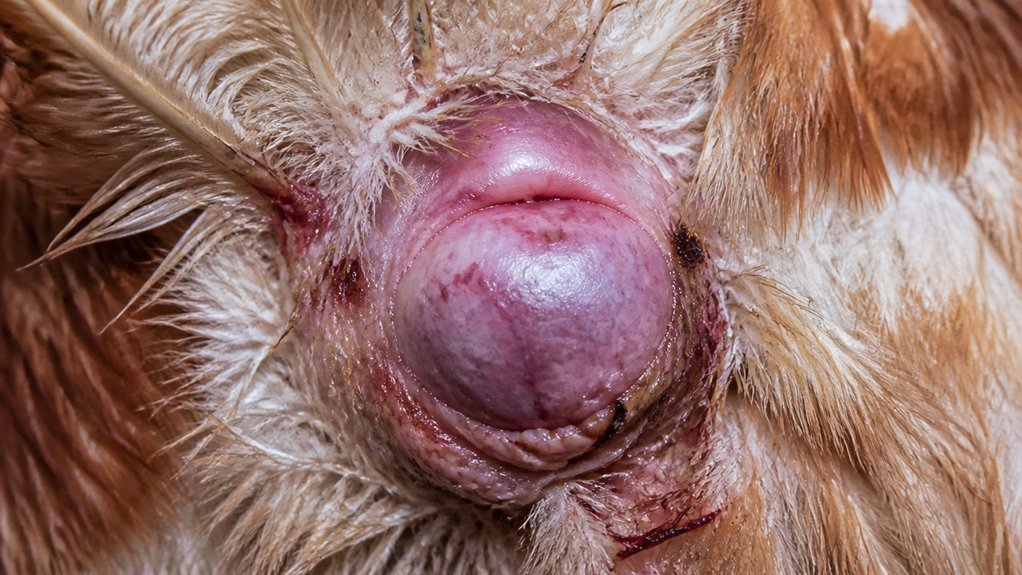
Egg peritonitis in hens often shows up as a swollen, tense abdomen that feels larger than normal and may make the bird look puffed up or uncomfortable. You might notice your hen walking stiffly, standing apart from the flock, or moving less than usual. Her appetite can drop, and she may seem tired, weak, or reluctant to perch.
You could also see a droopy posture, fluffed feathers, or labored breathing if pressure builds inside the body. In some hens, the comb looks paler than usual, and droppings may change. She may squat more often or react painfully when you handle her belly.
If you spot these signs, you should check her closely and act quickly, because the condition can worsen fast without prompt care. Proper electrolyte balance and supportive vitamins can help maintain hydration and strength during recovery heat stress.
What Causes Egg Peritonitis in Hens?
Egg peritonitis in hens often starts when you’re dealing with egg binding, which can cause an egg to rupture or leak.
You may also see it develop after a reproductive tract infection spreads into the abdomen. Oviduct injury can create the same problem by letting egg material escape and trigger inflammation. Additionally, certain wound management practices or injuries in the reproductive area can increase susceptibility to peritonitis by compromising tissue integrity.
Egg Binding
A stuck egg can start a serious chain reaction inside a hen. When you notice egg binding, the egg isn’t moving normally through the oviduct, so pressure builds and the hen strains hard.
That strain can irritate tissue, weaken the shell gland, and cause tiny tears or leakage of yolk and albumen into the abdomen. Once that happens, the body treats the spilled material as a foreign substance, which can trigger peritonitis.
You should watch for:
- repeated squatting or straining
- a swollen, penguin-like stance
- reduced droppings or no egg laid
Heat, dehydration, poor calcium intake, obesity, or a large egg can make binding more likely. Incorporating probiotics may support overall gut health and immune function, which can help prevent issues like egg binding gut health.
Acting quickly matters, because the longer the egg stays stuck, the greater the chance of internal damage and inflammation.
Reproductive Tract Infection
When infection reaches the reproductive tract, it can inflame the oviduct and disrupt normal egg movement, creating the conditions for egg peritonitis. You may notice bacteria climbing from the cloaca into the hen’s reproductive system, especially when sanitation is poor or the flock already carries infection. Common pathogens include E. coli, salmonella, and other opportunistic bacteria that thrive when the bird’s defenses drop. Once inside, they can irritate the lining of the oviduct, trigger swelling, and allow infected fluid or egg material to leak into the abdomen. Maintaining a clean environment with disinfectants safe for poultry can help reduce bacterial buildup and prevent infection. You should watch for reduced laying, lethargy, poor appetite, and a swollen abdomen. Early treatment matters because ongoing infection can spread quickly and make recovery harder.
Oviduct Injury
Oviduct injury can also trigger egg peritonitis by disrupting the normal path an egg takes through the hen’s reproductive tract. When you handle birds roughly, suffer a prolapse, or let a large egg scrape tissue, the oviduct can tear or swell.
That damage may let egg material leak into the abdomen, where it irritates the lining and invites infection. You’ll often notice pain, reduced laying, strained posture, or a swollen belly.
Act quickly if you suspect injury, because delayed care raises the risk of lasting inflammation and severe illness. Understanding breed behaviors can help prevent rough handling that leads to injury.
- Prevent rough handling and overcrowding
- Watch for difficult laying or prolapse
- Seek veterinary help for swelling or pain
When Should You Worry About a Sick Hen?
How can you tell if a hen’s illness is more than a temporary setback? You should worry when she stays fluffed up, won’t eat, drinks less, or isolates herself for more than a day.
Watch for a swollen abdomen, difficulty walking, labored breathing, pale combs, or watery droppings. If she’s losing weight, laying irregularly, or acting weak and hunched, don’t brush it off.
A hen that can’t perch, keeps straining, or seems painful needs prompt attention. Quick changes in behavior matter, especially if several signs show up together.
Trust your eye: if she doesn’t bounce back after rest, warmth, food, and water, act fast. Early action can prevent a minor problem from becoming a serious illness.
Additionally, prevent exposure to pests and rodents which can carry diseases by ensuring your coop is well-maintained and free of entry points, rodent control included.
How Do Vets Confirm Egg Peritonitis?

Your vet will first look for clues on a physical exam, like a swollen belly, pain, or a hen that seems weak and off her feed. They’ll often use imaging, such as X-rays or ultrasound, to spot fluid, yolks, or other signs inside the abdomen. If needed, they may also collect a sample from the belly to confirm egg peritonitis and rule out other causes. Additionally, understanding the bird’s environment and previous health issues can help in making an accurate diagnosis, especially since pest control can sometimes influence overall flock health.
Physical Exam Findings
On exam, vets look for a hen that seems dull, weak, or painful, often with a distended abdomen and a tucked-up posture. You may notice she’s reluctant to move, stands hunched, and guards her belly when handled. The abdomen can feel firm, warm, or full, and the vent may be soiled from reduced droppings. Her comb and wattles often look pale or shrunken, which can suggest illness and poor circulation. Vets also check hydration, body condition, breathing effort, and response to gentle palpation. These findings don’t prove egg peritonitis alone, but they raise strong suspicion. – Pain on abdominal palpation – Enlarged, tense, or fluid-filled abdomen – Lethargy with reduced appetite and droppings and signs of predator protection or environmental stress are also important to assess, as they can influence overall health and recovery potential.
Imaging And Sampling
When the exam findings point toward egg peritonitis, vets usually turn to imaging and sampling to confirm what’s going on inside the abdomen.
An x-ray can show a swollen coelom, retained egg material, or fluid buildup, while ultrasound lets the vet see free fluid, thickened tissues, and possible yolk or shell fragments.
If fluid is present, the vet may use a needle to collect a small sample. This sample helps show whether the fluid is cloudy, infected, or filled with inflammatory debris. In some cases, the vet also runs a culture to identify bacteria and choose the right antibiotic.
These tests don’t just confirm the diagnosis; they also help gauge severity, rule out other causes of distress, and guide treatment choices fast. Considering environmental factors can also be important, as Coop Conditions may influence the development and severity of egg peritonitis in hens.
How Is Egg Peritonitis Treated in Hens?
Treatment starts with a vet’s exam, because egg peritonitis often needs more than home care. Your vet may give antibiotics to fight infection, anti-inflammatory medicine to ease pain, and fluid therapy if your hen is weak or dehydrated.
If she’s trapped yolk or abscess material, your vet might recommend surgery or drainage to remove it safely. Treatment also depends on how sick she’s and whether her condition is chronic or acute.
- Antibiotics target bacteria that worsen the infection.
- Anti-inflammatories can reduce discomfort and swelling.
- Surgery may be needed when the infection won’t clear otherwise.
You should follow your vet’s plan closely, because quick treatment improves the odds of recovery and helps protect the rest of your flock. Ensuring proper incubation conditions and temperature control can also contribute to overall flock health.
How Do You Support Recovery at Home?

At home, you can help your hen recover by keeping her warm, quiet, and separate from the flock so she can rest without stress. Give her easy access to fresh water and a balanced, high-quality feed, and offer soft foods if she’s eating poorly.
Keep bedding clean and dry, because a tidy coop lowers irritation and helps her conserve energy. Handle her gently and only when needed, so you don’t add strain. Watch her appetite, droppings, posture, and breathing each day, and note any changes to share with your veterinarian.
If you were given medications, follow the instructions exactly and finish the full course. Limit crowding, drafts, and sudden changes, and let her return to the flock only when she’s bright, active, and eating well again.
When Is Egg Peritonitis an Emergency?
An egg peritonitis case becomes an emergency if your hen is struggling to breathe, can’t stand, collapses, or seems severely weak, bloated, or unresponsive.
Egg peritonitis is an emergency if your hen is struggling to breathe, collapses, or becomes severely weak or unresponsive.
You should also treat sudden blue combs, open-mouth breathing, or obvious pain as urgent. Call an avian vet right away, and keep your hen warm, quiet, and separate while you arrange care. Don’t wait for her to “perk up” if she’s rapidly declining.
Severe infection can worsen fast, and delays can cost her life. If you notice:
- labored breathing
- inability to stand or walk
- collapse, extreme lethargy, or a cold body
get help immediately.
If she’s only mildly off but still eating and alert, you can monitor closely, but any sharp change means emergency action now.
How Do You Prevent Egg Peritonitis in Hens?
Prevention starts with good hen management: keep your birds on a balanced diet, provide plenty of clean water, and avoid obesity, since excess weight can make egg-laying problems more likely.
You should also give hens enough space to move, perch, dust bathe, and lay comfortably, because stress can disrupt egg production.
Collect eggs often so broken eggs don’t linger in the coop, and keep nesting boxes clean, dry, and lined with fresh bedding.
Watch for weak shells, straining, or reduced laying, and address these signs early.
Trim overgrown nails and check that roosters don’t overmate hens.
When you handle birds calmly and notice changes quickly, you lower the odds of reproductive problems and help your flock stay healthy.
How Do You Protect Hens From Future Infections?
Keep hens’ immune systems strong so they’re less likely to get repeat infections by feeding a complete ration, supplying fresh water, and reducing stress in the flock.
You should also keep bedding dry and replace it often, because damp litter lets bacteria build up fast. Clean nest boxes, feeders, and drinkers on a regular schedule, and quarantine any bird that looks ill before it spreads germs. Watch for mites, lice, and pecking injuries, since each one can weaken your hens and invite infection.
- Give hens plenty of space to reduce crowding.
- Remove eggs promptly to limit contamination.
- Ask your vet about vaccines or long-term prevention.
After illness, support recovery with good nutrition and close observation, so you can catch new problems early and protect the whole flock.
Frequently Asked Questions
Can Egg Peritonitis Spread to Other Hens?
Usually, you won’t see egg peritonitis spreading directly between hens, but you should isolate the sick bird because underlying infections can affect others. Keep your flock clean, monitor symptoms, and call a vet quickly.
Are Certain Chicken Breeds More Prone to Egg Peritonitis?
Yes, you’ll see some heavier-laying breeds, like production hybrids and older hens, develop it more often. You can’t blame breed alone, though; age, egg strain, infections, and husbandry usually raise your risk more.
How Long Does Recovery Usually Take After Treatment?
You’ll usually see improvement within days, but full recovery often takes 1–3 weeks. You should monitor appetite, droppings, and swelling closely, and your vet may need follow-up care if she isn’t bouncing back.
Can a Hen Lay Eggs Again After Egg Peritonitis?
Yes, she can, but you can’t count on it. Recovery depends on damage, treatment, and recurrence risk. You should watch her closely, support her health, and ask your vet about future laying chances.
Is Egg Peritonitis Related to Egg Binding?
Yes, you’re seeing a related but different problem: egg binding can trigger egg peritonitis if an egg breaks or leaks inside. You should treat both as urgent, because infection can develop fast.
In Summary
If you notice swollen belly, trouble breathing, or a hen that seems weak, don’t wait. Egg peritonitis can look like other illnesses, so quick action matters. Call your vet as soon as you can for a proper diagnosis and treatment plan. With prompt care, supportive nursing, and good flock management, you can help your hen recover and lower the risk of future infections. Stay alert, act early, and keep a close eye on your birds.