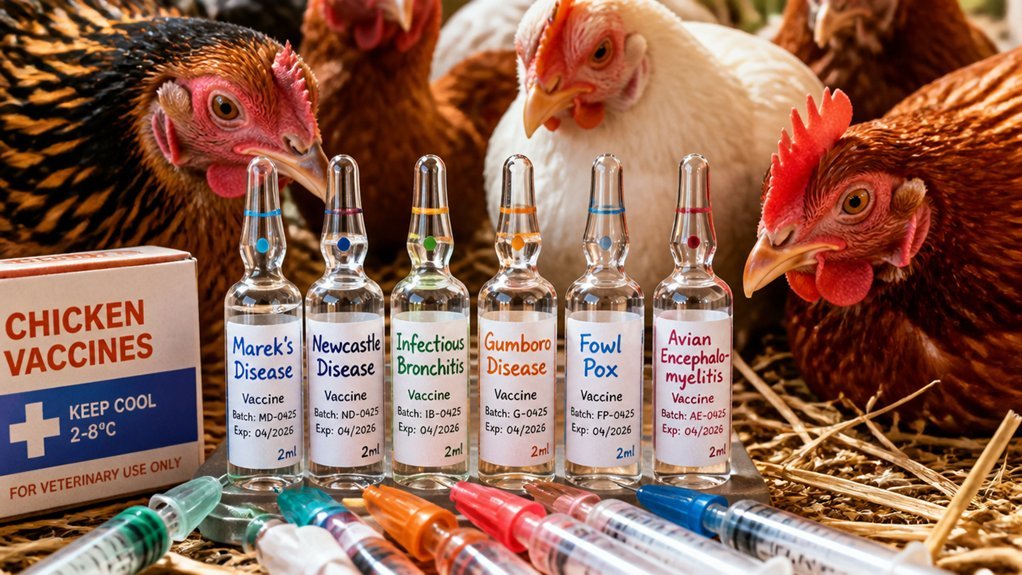
For backyard chickens, you should prioritize Marek’s disease vaccine at hatch, plus Newcastle and infectious bronchitis vaccines early in life. In warm months, use a fowl pox vaccine for young birds, and protect chicks from coccidiosis with dry bedding, clean waterers, and good brooder hygiene. You’ll also need a simple booster plan based on age, risk, and local disease pressure. If you keep going, you’ll see how to time each vaccine and where to get them safely.
Backyard Chicken Vaccines You Actually Need

When you’re raising backyard chickens, you don’t need every vaccine on the shelf—you need the ones that protect against the diseases most likely to hit your flock. You should focus on vaccines that match your birds’ age, location, and exposure risk.
A good understanding of breed suitability and environmental factors can also help prevent health issues before they arise. Breed selection basics can influence your disease prevention strategy and overall flock resilience.
If you keep chickens where respiratory disease, pox, or infectious coryza shows up, ask your poultry vet which products make sense. You’ll also want to vaccinate before stressors like moving, mixing flocks, or summer heat hit.
Follow label directions exactly, store vaccines properly, and use clean equipment every time. Vaccines won’t replace good hygiene, quarantine, or biosecurity, but they can cut losses and keep your birds productive.
Talk with your local extension office, too; regional disease patterns often determine what you actually need.
Marek’s Disease Vaccine for Chicks
You should give chicks the Marek’s disease vaccine as soon as possible, ideally at the hatchery right after they hatch. Hatchery staff usually administer it with a quick injection, which helps protect chicks before they’re exposed to the virus. That early protection can make a big difference in keeping your flock healthy. Using a secure and sterile environment during vaccination can also help prevent infections.
Marek’s Vaccine Timing
Marek’s vaccine works best when you give it to chicks as soon as possible after hatch, because the virus can infect them very early in life. You want immunity developing before exposure, so timing matters more than almost anything else.
If you wait, you leave chicks unprotected during their most vulnerable days, and Marek’s can quietly spread through your flock. Plan ahead so your chicks get vaccinated on day one, or as close to it as you can manage. That early window gives the vaccine the best chance to train the immune system before the disease takes hold.
Keep your schedule tight, follow label directions, and don’t assume older chicks will catch up later; they often won’t fully recover that missed protection. Ensuring the vaccine strains remain viable through proper storage and handling is crucial for effective immunization.
Hatchery Administration Method
A hatchery-administered Marek’s vaccine gives your chicks protection before they ever leave for home, which is why many hatcheries vaccinate on the day they hatch.
You don’t need to inject each chick yourself when you buy vaccinated birds, but you should still confirm the hatchery’s process.
- Ask whether the vaccine was given in ovo or after hatch.
- Check that the hatchery stores and handles the vaccine correctly.
- Keep your receipt or hatch record for reference.
- Follow up with clean brooding and calm handling.
This method helps you start with a uniform flock plan. It also reduces guesswork when you bring chicks home.
Ask the hatchery which product they use, since different strains work differently.
Proper coop design can further support your flock’s health and vaccination efforts at home.
Early Protection Benefits
Because chicks are most vulnerable early on, a Marek’s vaccine gives them protection before exposure can take hold. You help your flock by shielding chicks before the virus reaches their nerves, organs, or feather follicles.
This early defense matters because Marek’s disease spreads fast and can leave lasting damage even after symptoms appear. When you vaccinate at hatch, you don’t wait for risk to rise; you act during the narrow window when immunity can start to build.
That head start lowers losses, supports stronger growth, and gives chicks a better chance to mature into productive birds. You also reduce the odds of silent infection moving through your coop later. Incorporating advanced vaccination techniques can further enhance protective outcomes for your flock.
Early protection isn’t optional insurance—it’s one of the smartest ways to keep backyard chickens healthier from day one.
Newcastle and Bronchitis Vaccines for Chickens
Newcastle and infectious bronchitis vaccines help protect your flock from two highly contagious respiratory diseases that can spread quickly through backyard chickens. You can lower the risk of coughing, sneezing, nasal discharge, and poor egg production by keeping birds vaccinated on schedule.
Work with your poultry vet or hatchery to choose the right vaccine type and timing for your birds’ age and exposure. Proper vaccine administration and adherence to dosage schedules enhance immunity and long-term protection.
- Give chicks the first dose early.
- Follow boosters exactly as directed.
- Keep vaccines refrigerated and handle them carefully.
- Vaccinate healthy birds only.
You’ll get better results when you combine vaccination with clean housing, good airflow, and sensible biosecurity. That way, you help your flock stay productive, hardy, and easier to manage year-round.
Fowl Pox Vaccine for Backyard Chickens
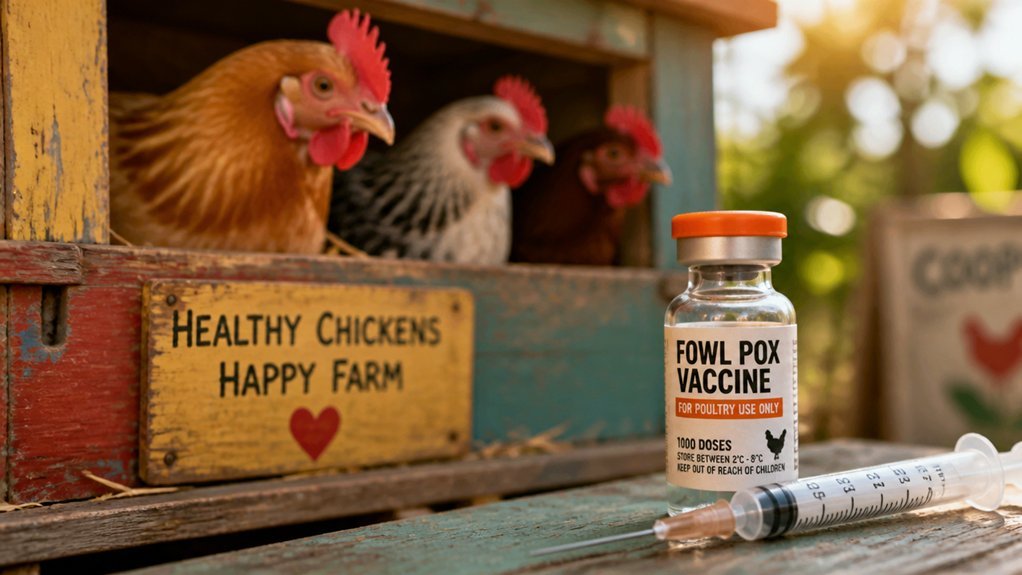
Fowl pox vaccine helps protect your backyard chickens from a slow-spreading virus that causes wart-like lesions, reduced appetite, and lower egg production. You’ll usually give it by wing-web stab, and one dose can build solid protection for months. Check birds before vaccinating, and use a clean, live vaccine kept cold. Proper disinfection of equipment and surfaces is essential to prevent the spread of the virus between birds.
| Item | Guidance |
|---|---|
| Best age | Young birds |
| Route | Wing-web stab |
| Storage | Refrigerated |
| Timing | Warm months |
| Follow-up | Watch for take |
Coccidiosis Prevention for Young Chicks
While fowl pox protection helps older birds stay healthy, young chicks face a different threat: coccidiosis, a common intestinal disease that can spread fast in damp, crowded conditions. You can lower the risk by keeping bedding dry, limiting crowding, and cleaning feeders often. Using appropriate bedding materials that absorb moisture effectively can significantly reduce the likelihood of disease spread. Good management matters because chicks build resistance when you reduce exposure to contaminated droppings.
- Use dry, absorbent litter and replace it when it clumps.
- Give chicks plenty of space so they don’t peck contaminated ground.
- Keep waterers clean and raised to avoid spills.
- Watch for droopiness, bloody droppings, or poor growth.
If you spot signs early, act quickly and separate sick chicks. Prevention works best when you stay consistent every day.
Your Backyard Chicken Vaccine Schedule

Your backyard chicken vaccine schedule should start with the core vaccines at the right age, so you can protect your flock before disease takes hold.
You’ll want to match each shot to your birds’ stage of growth and local risk. After that, you can keep immunity strong with an annual booster plan.
Core Vaccine Timing
A backyard chicken vaccine schedule works best when you plan core shots around your flock’s highest-risk stages. You should vaccinate chicks early, before they face heavy exposure from litter, dust, and older birds.
Then, time the next dose when birds are growing fast and moving outdoors more often. Keep your records simple so you can match each bird’s age with the right window, and don’t delay if weather or travel changes your routine. Using easy-to-access coop features like removable trays and wide doors can make health checks and vaccination procedures more efficient and less stressful for both you and your flock.
- Vaccinate at hatch or arrival, if needed.
- Give the next core dose during the first few weeks.
- Schedule another shot before birds mix with the full flock.
- Mark each date so you can stay consistent.
Annual Booster Plan
As your flock matures, set a yearly booster plan so immunity doesn’t fade between seasons. Mark each bird’s last vaccine date, then schedule reminders for boosters that your vet recommends.
Keep core protections current for Newcastle, Marek’s, and infectious bronchitis if those diseases threaten in your area. You should boost before high-risk periods, like spring hatchings, show season, or heavy travel.
Check label directions, since some vaccines need annual dosing while others protect longer. Handle birds calmly, use clean syringes, and refrigerate vaccines exactly as directed.
If a bird is sick, delay vaccination and ask your vet first. Review your plan after outbreaks, weather changes, or new birds arrive. Consistent boosters help you maintain stronger immunity, fewer losses, and healthier eggs. Be aware of potential pest control considerations that could impact vaccine effectiveness or bird health.
Where to Get Chicken Vaccines Safely
Where should you buy chicken vaccines? You should get them from licensed veterinarians, reputable farm supply stores, or poultry-specific vaccine suppliers that ship with cold packs.
Ask for product labels, storage instructions, and expiration dates before you buy. Keep vaccines refrigerated as directed and avoid any seller that can’t prove proper handling.
If you’re unsure, call your local extension office or avian vet for trusted sources.
- Check that the supplier specializes in poultry.
- Verify cold-chain shipping and delivery times.
- Confirm the vaccine matches your flock’s needs.
- Review dosage, mixing, and administration guidance.
Buying safely protects your birds and helps the vaccine work as intended.
Frequently Asked Questions
Can Vaccinated Chickens Still Spread Disease to Unvaccinated Birds?
Yes, you can still have vaccinated chickens spread some diseases, though they usually shed less and get sicker less often. You should still quarantine new birds and keep hygiene strict to protect unvaccinated flockmates.
Do Broody Hens Need Different Vaccines Than Laying Hens?
No, you usually don’t need different vaccines for broody hens than for laying hens. You should follow your vet’s flock plan, since health, age, exposure, and local disease risk matter more than broodiness.
How Long Do Chicken Vaccines Remain Effective After Storage?
You’ll usually get vaccine protection only until the manufacturer’s expiry after proper storage; once opened or warmed, many lose potency within hours or days, so you should refrigerate them and use them promptly.
Can I Vaccinate Chicks Myself Without Veterinary Help?
Yes, you can vaccinate chicks yourself if you follow label directions, use clean equipment, and handle them calmly. But you shouldn’t skip veterinary guidance for disease risks, local rules, or tricky vaccines.
Are There Vaccine Side Effects That Affect Egg Production?
Yes, you might see a brief drop in egg production after vaccination if your hens feel stressed or mildly ill. You’ll usually notice recovery within days, but persistent decline means you should call a veterinarian.
In Summary
Keeping your backyard chickens healthy doesn’t have to be complicated. By focusing on the vaccines and prevention steps that matter most, you can lower disease risk and give your flock a stronger start. Start chicks with the right protection, follow a simple schedule, and buy vaccines only from trusted sources. When you stay consistent and watch for early warning signs, you’ll help your chickens stay safer, happier, and more productive all year long.