
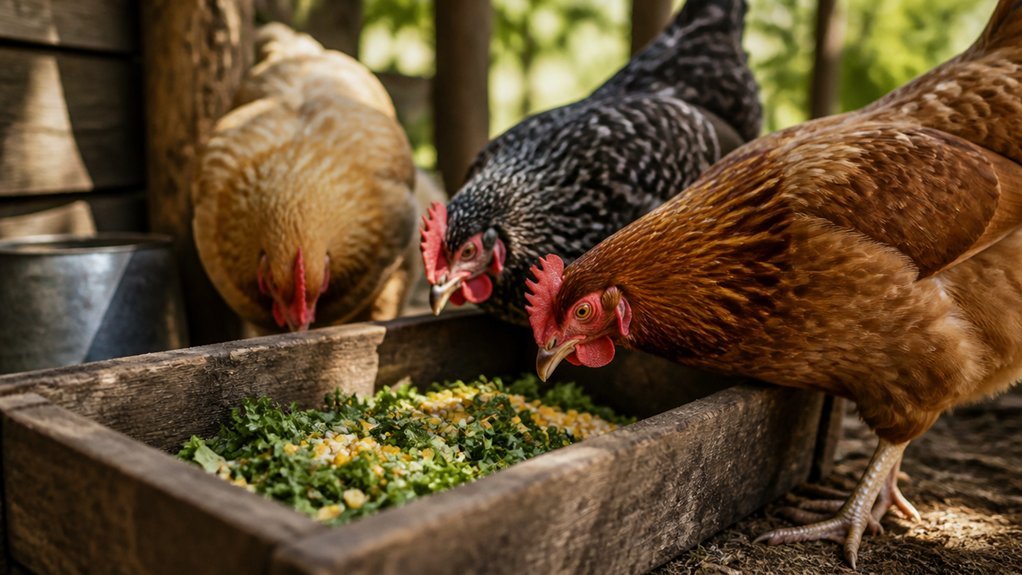
To feed chickens sparingly, give them measured portions of a balanced pellet or crumble on a set schedule, and keep fresh water available at all times. Offer about 1/4 to 1/3 pound per adult hen daily, then adjust for flock size, age, and free-ranging. Use spill-resistant feeders, store feed dry, and clean up waste fast. Keep treats tiny and rare so they don’t crowd out feed, and you’ll spot simple tweaks that help.
How Often Should You Feed Chickens?

How often you feed chickens depends on their age, health, and how much they free-range, but most flocks do best with steady access to feed every day.
Chicks need constant access to starter feed so they can grow quickly and safely. Adult hens usually eat when they’re hungry, so offering feed throughout the day helps them meet their needs without overdoing it.
Chicks need constant starter feed, while adult hens do best with steady access throughout the day.
If your birds roam for insects and plants, they may eat less feed, but you still shouldn’t leave them short. Watch their body condition, egg production, and behavior to judge whether you’re feeding enough.
Clean, reliable feed supports healthy feathers, strong shells, and steady energy. If your flock seems thin or restless, increase access. If they waste too much, adjust the amount, not the timing.
Providing consistent protein levels in their diet helps support muscle development and overall health, ensuring your flock stays strong and productive.
Set a Simple Chicken Feeding Schedule
A simple chicken feeding schedule keeps your flock healthy without wasting feed. You can build a routine that matches your day and your birds’ needs. Feed at the same times each day so chickens learn when to eat and you can spot changes fast. Incorporate adjustable height feeders to better accommodate growing or different-sized birds, minimizing spillage and waste.
Feed Chickens Free-Choice or in Meals

You can feed chickens free-choice or in set meals, and the best option depends on your flock, feed costs, and how much waste you can tolerate. Free-choice feeding lets birds eat whenever they’re hungry, which can support steady growth and reduce competition at the feeder.
However, it often leads to more scratching, spillage, and wasted feed. Set meals give you tighter control. You can offer feed at the same times each day, let birds clean up, and remove leftovers before they spoil.
This approach helps you notice appetite changes sooner, too. If you want to feed sparingly, meals usually work better because you control access and reduce waste. Still, free-choice can suit busy routines if you keep feeders clean, raised, and protected from rain. Using weatherproof feeders with removable covers or hoods can help prevent spoilage during short absences.
Portion Feed by Flock Size
You can start by matching feed portions to your flock size, since a few hens won’t need the same amount as a larger group. A good rule is to offer a measured daily amount and watch how quickly your birds clean it up. As your flock grows, you’ll need to adjust portions so each chicken gets enough without wasting feed. Utilizing programmable feeders can help you fine-tune your feeding schedule and minimize waste.
Flock Size Basics
When you portion feed by flock size, start by knowing exactly how many chickens you’re feeding and how much each bird actually needs each day. Count your birds, then adjust the pile of feed so you don’t overfill the feeder or waste grain. A pest-resistant feeder helps prevent rodents from accessing the feed and reducing waste.
Smaller flocks need tighter control, while larger flocks benefit from measured shares.
- Count hens and roosters separately.
- Watch whether every bird can reach the feeder.
- Divide feed into equal portions for each group.
- Recheck the flock after adding or removing birds.
You’ll save feed when you match portions to the birds in front of you. Keep records of flock changes, and you can stay consistent without guessing. This simple habit helps you feed efficiently and keeps your coop routine orderly.
Daily Feed Amount
Once you know your flock size, measure a daily amount that matches the birds’ age, breed, and activity level so they get enough without leaving extra feed behind. You can start by offering about 1/4 to 1/3 pound of feed per adult hen each day, then multiply that by the number of birds in your flock. For example, six hens may need roughly 1.5 to 2 pounds daily. Divide the total into morning and evening meals if you want tighter control and less waste. Watch the feeder after each feeding; if feed remains, reduce the next portion a little. If the birds finish too fast and act restless, add a small amount. Keep fresh water available, since thirsty chickens eat differently and waste more feed. Ensuring your hens receive balanced vitamins and minerals is key to supporting healthy eggshell formation and overall flock health.
Adjusting For Growth
As your flock grows, adjust feed portions to match the number of birds, not just the age of the hens. You’ll waste less feed when you measure by flock size and watch how quickly they clean up each meal. If feeders empty too fast, add a little more. If grain sits around, cut back.
A good rule of thumb is to consider the grain variety and nutritional benefits, ensuring each bird receives the appropriate amount of energy and nutrients without overfeeding.
- Count your birds weekly.
- Multiply their average daily ration.
- Divide feed among feeders evenly.
- Recheck after growth spurts or new additions.
Young pullets, laying hens, and roosters all eat differently, so track changes as they mature. You can keep portions tight without shortchanging nutrition by observing body condition, egg output, and energy. Small adjustments help you avoid waste and keep every chicken fed well.
Choose Feed That Reduces Waste
You can cut waste by choosing pelleted feed, since it’s easier for chickens to eat and less likely to scatter. Use a feeder that keeps birds from scratching feed onto the ground, and set it at the right height.
A waste reduction feature like adjustable flow settings or spill-resistant lids can help minimize leftover feed and mess. Keep feed dry with covered storage and protected feeders so moisture won’t spoil it.
Pelleted Feed Efficiency
Pellets also help you control portions because hens can’t sort ingredients and leave the best bits behind. For sparing feeding, try this:
- Choose a balanced pellet that matches your birds’ age.
- Store feed in a dry bin so it stays fresh.
- Offer only what they’ll finish in a day.
- Check the area after feeding and remove spilled pellets.
- Using organic, Non-GMO grains in your pellets ensures your flock gets healthy nutrition without undesirable additives.
When you use pellets, you keep feeding simple, reduce leftovers, and stretch every bag farther. That means better efficiency without changing your routine much.
Proper Feeder Design
A good feeder can make a big difference in how much feed your chickens waste, especially if it keeps them from scratching, spilling, or standing in the dish. You should choose a feeder with a narrow lip or raised edges so birds can peck easily without kicking feed out.
A spill-proof design can further minimize waste and keep bedding cleaner. Trough-style feeders often waste more, while tube or treadle designs help limit access and reduce mess. Hang the feeder at back height to discourage scratching and keep birds from climbing in. You can also pick one with compartments that control how much feed drops at once.
Make sure the feeder matches your flock size, because overcrowding leads to jostling and waste. When you use a design that fits your coop and chickens, you’ll save feed and keep the area cleaner.
Moisture Protection Tips
Moisture is one of the quickest ways feed gets ruined, so keep chicken feed dry and covered at all times. You’ll waste less feed when you choose crumble or pellet blends that don’t clump easily.
Store bags in sealed bins, lift them off the floor, and keep them away from rain, humidity, and splash zones. If feed gets damp, chickens may refuse it, and spoilage can spread fast.
- Use weatherproof containers with tight lids.
- Buy only what you’ll use soon.
- Check for leaks after storms.
- Clean spilled feed right away.
You should also place feeders under shelter and refill smaller amounts more often. That way, you protect freshness, reduce mold risk, and make every scoop count.
Offer Treats and Scraps Sparingly
Even when you want to spoil your flock, you should keep treats and kitchen scraps limited so they don’t crowd out their balanced feed. Use snacks as a small bonus, not the main event, and offer them after hens have eaten their regular ration. A simple guide helps you stay consistent:
| Treat/Scrap | Limit |
|---|---|
| Fresh greens | Small handful |
| Fruit pieces | Occasional bites |
| Cooked grains | Light sprinkle |
| Bread scraps | Rarely |
| Mealworms | Few only |
You can mix up safe options, but keep portions tiny and infrequent. When you feed sparingly, you support steady nutrition and avoid turning your coop into a buffet. Store scraps in covered containers, and toss spoiled leftovers right away.
Spot Signs Your Chickens Need More Feed
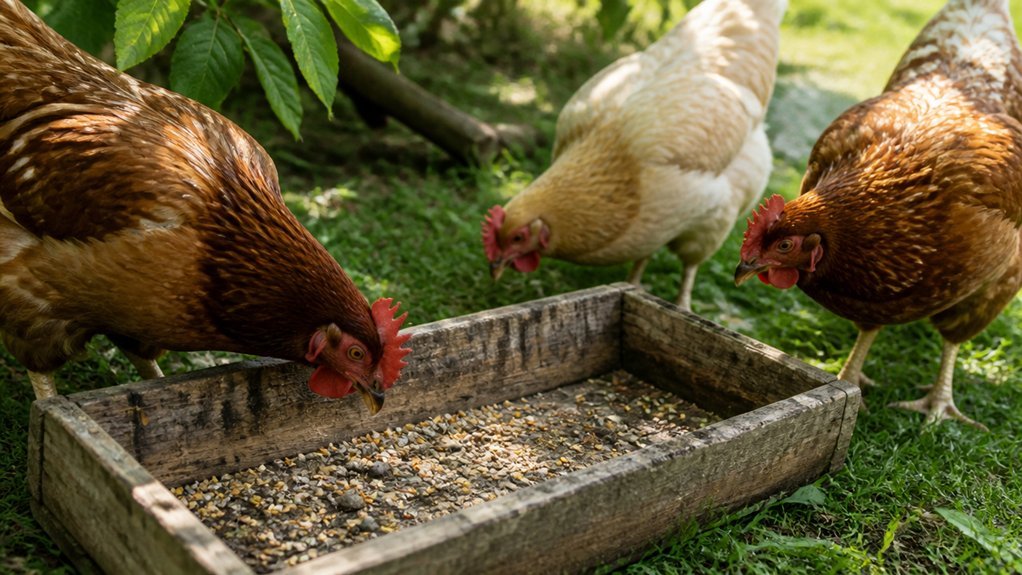
How do you know when you’re feeding too sparingly? Watch your flock closely. If hens seem restless, peck excessively, or rush the feeder, they may need more nutrition. You might also notice thinner combs, fewer eggs, or weak shells.
Restless hens, empty feeders, and fewer eggs can all signal they aren’t getting enough feed.
Check their body condition too; prominent breastbones can signal underfeeding. Act quickly before stress affects health.
- Empty feeders fast: They finish meals and keep searching.
- Dropped egg output: Production falls without another cause.
- Weight loss: Birds feel lighter and look lean.
- Aggressive behavior: Pecking and fighting increase around food.
Adjust feed gradually, and keep fresh water available. If signs continue, review your ration and consult a poultry expert.
Frequently Asked Questions
Can Chickens Eat Kitchen Scraps Every Day?
Yes, you can give chickens kitchen scraps every day, but you should keep them as treats, not a full diet. You’ll need balanced feed, clean water, and avoid salty, moldy, or toxic foods.
What Feeds Are Unsafe for Chickens?
You shouldn’t feed your chickens avocado pits, chocolate, caffeine, raw beans, moldy food, onion, garlic, salty snacks, or spoiled meat. These can poison them, upset digestion, and reduce egg laying, so keep them out.
Do Chicks Need Different Feed Than Adult Hens?
Yes, you should feed chicks starter feed, not adult hen feed, because chicks need extra protein and nutrients for growth. Once they’re about 16 to 18 weeks old, you can switch them gradually.
How Should Feed Be Stored to Stay Fresh?
You should store feed in a cool, dry, sealed container away from sunlight and pests. Rotate bags first-in, first-out, and don’t let moisture get in, so you keep it fresh longer for your chickens.
Can Chickens Overeat if Feed Is Always Available?
Yes, you can overfeed chickens if you leave food out nonstop. You’ll reduce waste by offering measured portions, scattering feed, and removing leftovers daily, so they eat enough without gorging or wasting grain.
In Summary
To feed your chickens sparingly without shortchanging them, stick to a simple schedule, give the right amount for your flock size, and choose feed that limits waste. You can let them eat free-choice or in measured meals, but keep treats and scraps as occasional extras, not main food. Watch their behavior and body condition, and adjust if they seem hungry or lose weight. With a little routine, you’ll keep your flock healthy and your feed bill low.


