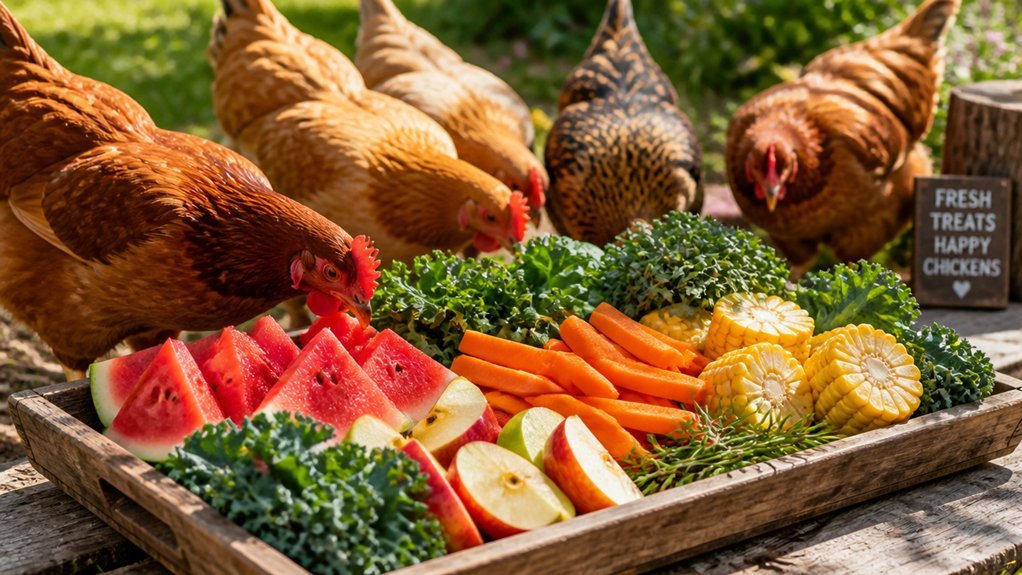
For healthy chicken foraging, you can’t go wrong with tender clover, dandelion greens, chickweed, plantain, and alfalfa. These plants are safe, easy to nibble, and quick to regrow, so your flock gets steady forage without much fuss. You can also add greens like kale, lettuce, and herbs for variety and extra nutrients. Mix them into a sunny patch, and your chickens’ll stay busy, hydrated, and happier while you discover a few smart ways to grow more.
Safe Greens for Chickens

When you offer chickens safe greens, you give them more than a snack—you add variety, hydration, and extra nutrients to their foraging routine. You can toss in lettuce, kale, spinach, Swiss chard, dandelion leaves, and beet greens, and your flock will usually peck them enthusiastically.
Chop larger leaves into manageable pieces so birds can eat them easily, or hang bunches to encourage natural scratching and pecking. Fresh herbs like parsley, basil, cilantro, and mint also work well, and they can keep things interesting in the run.
Always wash greens before serving, and remove anything wilted or moldy. You should introduce new plants gradually, watch for individual reactions, and offer greens as part of a varied foraging setup, not as the only food. Providing natural minerals such as leafy greens helps support your chickens’ overall health and digestion.
Why Greens Matter in a Chicken Diet
Greens do more than add variety to your flock’s menu—they help support hydration, digestion, and overall nutrient intake. When you offer leafy foods, you give your chickens moisture that can be useful on hot days and rough weather spells.
You also help keep their gut moving, since fiber supports regular digestion and steadier droppings. Fresh greens can supply vitamins, minerals, and plant compounds that round out a balanced diet without relying on heavy feeds alone.
You’ll also notice that foraging for greens encourages natural pecking behavior, which can reduce boredom and keep your birds more active. When your flock eats a mix of plant matter, they often stay more engaged, satisfied, and better supported overall. Natural foraging not only provides mental stimulation but also enhances their overall health and well-being.
Best Plants for Chicken Foraging

The best plants for chicken foraging are easy to reach, quick to regrow, and safe for your flock to peck at day after day. You can offer tender clover, dandelion greens, chickweed, plantain, and alfalfa to keep hens busy and nourished. These plants give steady browsing and support healthy digging behavior without adding much fuss. Incorporating safe for poultry plants ensures your flock stays healthy while enjoying natural forage.
How to Plant a Chicken Forage Patch
Once you know which plants your chickens enjoy most, you can set up a forage patch that keeps them fed and busy without much upkeep. Pick a sunny spot with well-drained soil and fence it off so your flock can’t tear it up before plants establish.
Loosen the soil, remove weeds, and mix in compost to help seedlings get started. Sow a blend of grasses, clover, alfalfa, kale, and chickweed, spacing seeds according to the packet directions. Water gently after planting, then mulch lightly to hold moisture and limit weeds.
When sprouts reach a few inches tall, let your chickens in for short visits so they nibble without clearing everything. Rotate access if needed, and replant bare spots quickly to keep the patch productive and inviting. Additionally, ensuring the fence height and gap spacing are adequate to prevent chickens from escaping or digging under will help protect your forage area.
How to Keep Chicken Forage Growing Year-Round

To keep chicken forage growing year-round, plan for changing seasons instead of relying on one planting. You should sow cool-season crops like clover, rye, and brassicas in fall, then rotate in warm-season options such as millet, sorghum, and sunflowers in spring. Mix fast growers with slower perennials so something’s always ready.
Ensure your beds are constructed with a durable, chicken-proof material to withstand scratching and weather, which helps extend the lifespan and safety of your forage patches.
Keep soil fertile by adding compost after grazing and resting patches before birds return. Water during dry spells, mulch bare spots, and overseed thin areas quickly. In winter, protect tender plants with row covers or use cold-hardy greens.
You can also divide your forage into sections, so chickens graze one while others recover. This steady rotation keeps your flock fed, your soil healthier, and your forage patch productive through every season.
Frequently Asked Questions
How Do I Stop Chickens From Destroying Forage Roots?
You can protect roots by rotating chickens, fencing off vulnerable beds, and planting tougher forage species. Mulch heavily, provide scratch areas, and offer feed so they’re less likely to dig up roots aggressively.
Can Chickens Safely Forage in a Shaded Garden?
Yes, chickens can safely forage in a shaded garden if you supervise them, avoid toxic plants, and protect tender roots. You’ll also need fresh water and enough space, or they’ll overwork the area fast.
Which Foraging Plants Attract Beneficial Insects Too?
You can plant clover, alyssum, fennel, dill, calendula, and borage; they’ll feed chickens and attract bees, hoverflies, and ladybugs. You’ll boost forage diversity, support pollination, and reduce pests naturally in your garden.
How Often Should I Rotate Chickens Through Forage Areas?
You should rotate chickens every 1–2 weeks, or sooner if they’ve grazed plants down, scratched bare soil, or left droppings everywhere. Rest each forage area 3–6 weeks so vegetation can recover.
Do Foraging Plants Affect Egg Flavor or Color?
Yes, foraging plants can change your eggs’ flavor and yolk color. You’ll notice richer, more savory eggs and deeper orange yolks when your chickens eat herbs, grasses, flowers, and nutrient-rich greens regularly.
In Summary
If you give your flock the right greens, you’ll keep them active, healthy, and happier every day. Choose safe plants like clover, kale, dandelion, nasturtium, and wheatgrass, and your chickens can forage with confidence. Plant a mix, protect it as it grows, and rotate areas so the patch stays productive. With a little planning, you’ll provide fresh forage year-round and support stronger birds, better nutrition, and more natural behavior.