You can keep chickens sustainably in a small space by building a compact coop with strong roosts, easy-clean floors, ventilation, and good light. Split outdoor space into rotating runs to protect grass and soil. Cut feed waste with right-sized feeders, pellets, and sealed storage. Keep waterers secure, and add bedding often while removing manure regularly. Choose calm, compact breeds that fit your yard and are easier to manage, and you’ll see how each choice pays off.
Choose a Space-Smart Chicken Coop
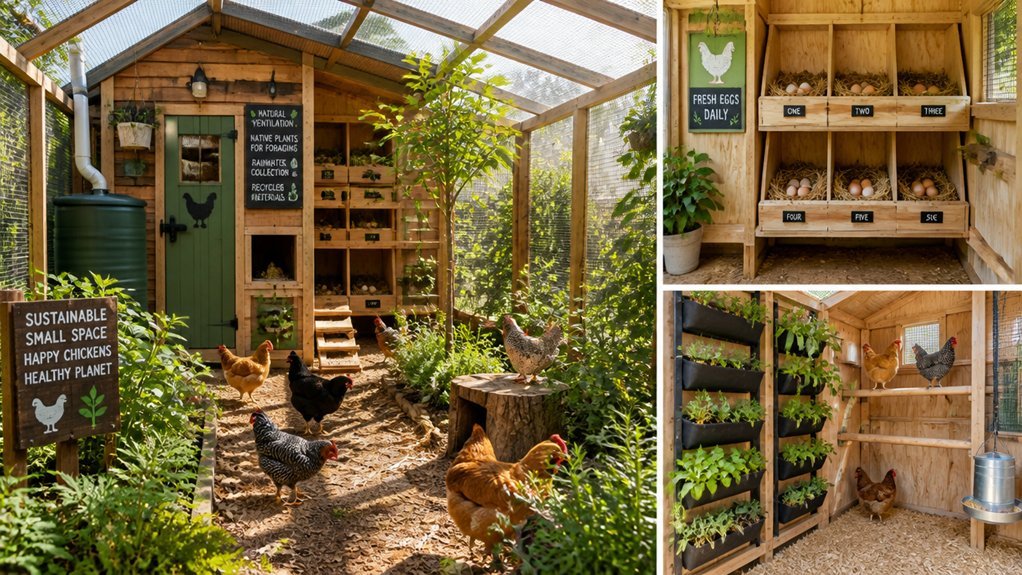
When you choose a space-smart chicken coop, you give your flock enough room to move, roost, and rest without wasting valuable land. Pick a compact design that uses height well, with sturdy roosts, easy-clean floors, and nesting boxes placed where hens can reach them comfortably. You should also plan for good ventilation and natural light, since both help keep birds healthy in tight quarters. Use durable, weather-resistant materials so the coop lasts longer and needs fewer replacements. For added protection and longevity, consider weatherproof materials that can withstand the elements. Make sure you can access feed, water, and eggs without crowding the birds or yourself. If you build or buy with efficiency in mind, you’ll support healthy chickens while keeping your setup practical for a small property.
Set Up Rotational Runs to Protect Soil
Once your coop is set, give your chickens rotating outdoor space instead of letting them wear down one patch of ground.
Divide your yard into two or more runs, and move birds before the grass turns to mud. You’ll protect roots, reduce erosion, and let soil recover between uses. Use temporary fencing, poultry netting, or movable panels so you can shift the run quickly. Place water and shade in each section to keep birds comfortable while they range.
Let rested areas regrow, then reopen them when the ground firms up. If you notice bare spots, seed them with hardy grasses and give them extra rest. Rotational runs also help you keep odors down and make the whole space look healthier, greener, and more productive all season. Proper post spacing ensures your fencing remains stable and effective during rotations.
Reduce Feed Waste in Small Coops

To cut feed waste in a small coop, start by using a feeder that matches your flock size and keeps birds from scratching grain onto the floor. Hang it at back height so hens can eat comfortably without kicking feed out.
Refill it in smaller amounts, and only add what they’ll finish before the next check. Choose pellets or crumbles instead of loose scratch when you want less scatter, and store feed in sealed bins so it stays fresh and doesn’t attract pests. You can also place a tray under the feeder to catch spilled bits and pour them back in.
Watch how your birds eat; if they’re tossing feed, adjust the feeder height or style until waste drops and every scoop goes further. Using a waste reduction design can help minimize spillage and keep your feed fresher longer.
Manage Water, Bedding, and Manure
Keeping water, bedding, and manure under control makes your coop cleaner, drier, and healthier. You should hang or secure waterers so chickens can’t tip them, and place them where splash stays off the bedding. Refresh wet spots right away, because damp litter breeds odor, flies, and bacteria.
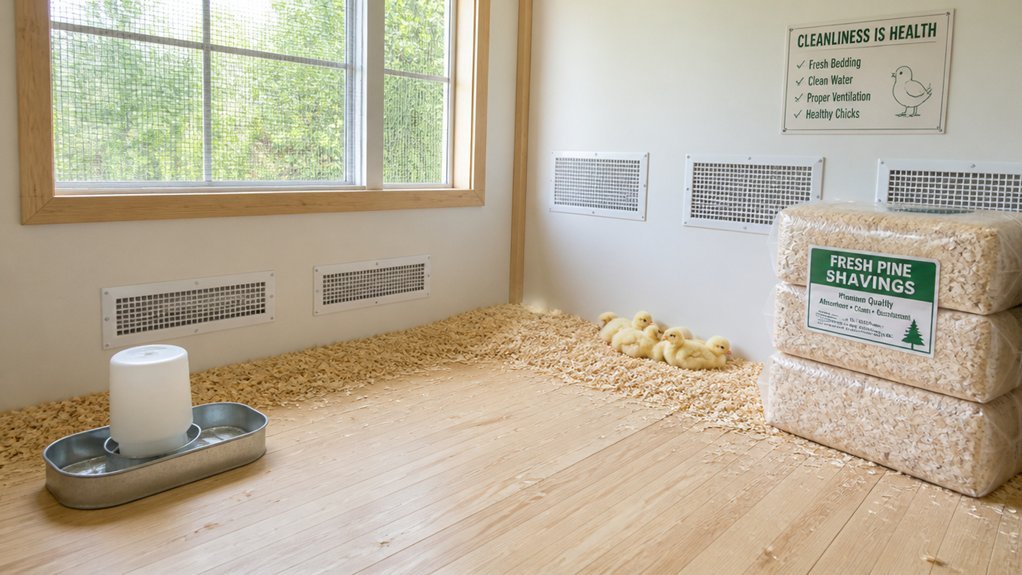
Use absorbent bedding like pine shavings or chopped straw, then add thin layers as needed to keep the floor dry. Stir bedding often to improve airflow and break up packed areas. Remove manure regularly, especially from roosting zones, and compost it outside the coop in a covered bin.
Implementing dust control measures such as high-quality, triple-sifted bedding reduces respiratory irritation and maintains a healthier environment for your flock. You’ll cut smells, reduce pests, and protect your birds’ feet and lungs. Good moisture control also saves time, since you won’t need to deep-clean as often.
Choose Chickens That Fit Small Yards
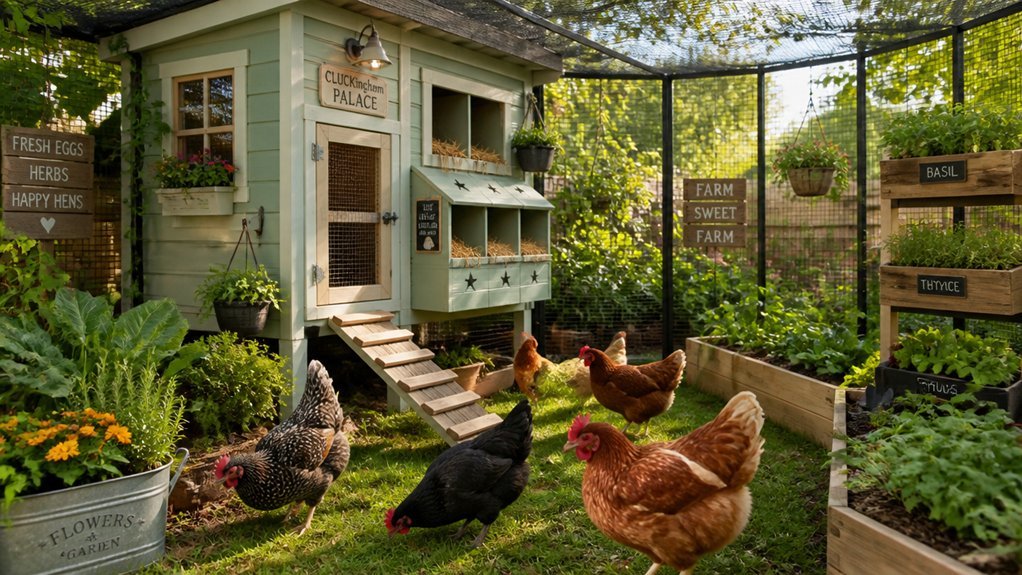
If you’ve got a small yard, choose chicken breeds that stay calm, compact, and efficient. You’ll save space, reduce noise, and make daily care easier. Focus on birds that thrive in confinement and don’t scratch up every corner of your garden. Bantams, Australorps, and Silkies often adapt well, while heavy, flighty, or very active breeds can crowd your run fast. Additionally, selecting breeds with easy-clean coop needs can help streamline maintenance and keep your small space tidy.
You should also watch body size, heat tolerance, and foraging habits. When you select wisely, your flock stays healthier, your yard stays tidier, and your system feels manageable.
Frequently Asked Questions
How Do I Prevent Chicken Noise From Disturbing Neighbors?
You can reduce noise by keeping hens calm, providing plenty of space, feeding on schedule, collecting eggs early, using thicker coop walls, and placing the coop away from neighbors. Avoid roosters, since they crow loudly.
What Permits Are Needed for Backyard Chickens?
You’ll usually need a local zoning permit, and sometimes a backyard livestock or nuisance permit. Check your city, HOA, and health department rules, since coop placement, flock limits, and setback distances often apply.
How Can I Protect Chickens From Raccoons and Hawks?
You can protect chickens with a sturdy, locked coop, hardware cloth, buried fencing, and covered runs; close them at dusk, remove food, and add overhead netting so hawks and raccoons can’t reach them.
Which Chicken Breeds Lay Eggs Best in Winter?
You’ll get the best winter eggs from Rhode Island Reds, Sussex, Australorps, and Leghorns. They keep laying through cold months, handle shorter days well, and you can support production with extra light, feed, and warmth.
How Do I Start Composting Chicken Manure Safely?
You’ll compost chicken manure safely by mixing it with carbon-rich bedding, keeping it moist but not wet, turning it regularly, and letting it fully age before using it. Wear gloves, and don’t apply fresh manure directly.
In Summary
By choosing a space-smart coop, rotating your runs, cutting feed waste, and managing water, bedding, and manure well, you can keep chickens in a small yard without harming the environment. Pick breeds that suit your space, and you’ll make daily care easier, cleaner, and more sustainable. With a few smart habits, you can raise healthy birds, protect your soil, and enjoy fresh eggs from a coop that works for you.